The Uttarakhand High Court has reaffirmed that in motor accident claims, an insurance company cannot evade liability merely by disputing causation without adducing evidence. When the sole eyewitness testimony establishing negligence is unchallenged, the tribunal’s finding stands unassailable on appeal.
Background & Facts
The Dispute
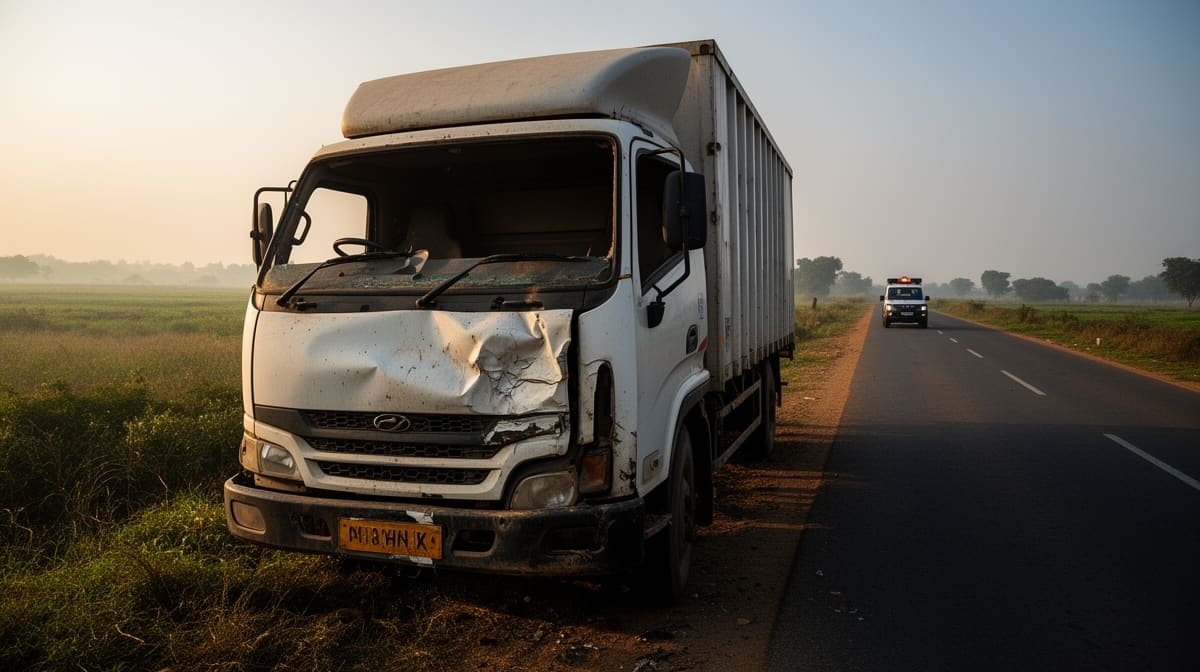
On 11 October 2017, at approximately 3:00 p.m. near Ratnogad, Tehri Garhwal, a truck bearing registration No. UK07CC0797 collided with a motorcycle carrying Rajesh Dangwal (driver) and Prabhat Kukreti (pillion rider). Rajesh Dangwal died instantly, while Prabhat Kukreti sustained grievous injuries. Two separate claims were filed: one by Rajesh’s legal representatives for wrongful death, and another by Prabhat for personal injury. Both claims attributed the accident to the truck driver’s rash and negligent driving.
Procedural History
- 2017: First claim petition (MACP No. 05 of 2017) filed by legal heirs of Rajesh Dangwal
- 2018: Motor Accident Claims Tribunal awarded Rs. 5,96,500/- plus interest; appeal filed by National Insurance Co. Ltd.
- 2018: Second claim petition (MACP No. 07 of 2018) filed by Prabhat Kukreti
- 2019: Tribunal awarded Rs. 3,75,000/- plus interest; appeal filed by same insurer
- 2026: Both appeals heard together by Uttarakhand High Court
Relief Sought
The appellant insurance company sought to set aside both awards, arguing that the accident resulted from the deceased rider’s negligence and that the motorcycle’s insurer should have been impleaded. It sought dismissal of both claims on grounds of lack of evidence and procedural omission.
The Legal Issue
The central question was whether an insurance company can successfully challenge a Motor Accident Claims Tribunal’s finding of negligence when the sole eyewitness testimony establishing the cause of the accident remains uncontroverted and no contrary evidence is adduced.
Arguments Presented
For the Appellant
The insurer contended that the accident was caused by the deceased rider’s own negligence, alleging he slipped and fell, not due to the truck’s collision. It argued that the motorcycle’s insurer was a necessary party under Section 147 of the Motor Vehicles Act, and failure to implead it vitiated the proceedings. No evidence was presented by the insurer, driver, or owner to rebut the claimant’s version.
For the Respondents
The respondents relied on the testimony of Prabhat Kukreti, the injured pillion rider, who provided a detailed, consistent account of the truck’s reckless overtaking and collision. Counsel emphasized that the insurer, as a statutory entity, bears the burden to disprove negligence. Since no evidence was led to contradict the eyewitness, the Tribunal’s finding was entitled to finality.
The Court's Analysis
The Court examined the principle of evidentiary finality in MAC claims, holding that where the claimant’s testimony is credible, unimpeached, and corroborated by circumstantial evidence, appellate courts must not interfere unless there is a palpable error or perversity. The Court noted that the insurer, despite having full opportunity, failed to cross-examine the key witness or present any rebuttal evidence.
"The best witness was the injured witness Prabhat Kukreti. He has stated as to how the accident took place and finding has been given that the accident took place as a result of the negligence on the part of the driver of the truck."
The Court further held that the burden of proving negligence lies initially on the claimant, but once a prima facie case is established through credible testimony, the onus shifts to the insurer to disprove it. Since no such evidence was tendered, the Tribunal’s conclusion was legally sound. Regarding the non-joinder of the motorcycle insurer, the Court observed that no negligence was attributed to the deceased rider, rendering his insurer a non-essential party. The doctrine of res ipsa loquitur implicitly applied: the nature of the collision itself pointed to the truck driver’s fault.
The Verdict
The appellant’s appeals were dismissed. The Court upheld both awards, holding that the insurer is liable when accident causation is established by uncontroverted eyewitness testimony. The insurer was directed to deposit the full compensation amount, including interest, within 30 days, failing which it would incur additional interest at 9% per annum.
What This Means For Similar Cases
Uncontroverted Testimony Is Conclusive
- Practitioners must treat the testimony of an injured eyewitness as a decisive evidentiary pillar in MAC claims
- Insurers cannot rely on speculative denials; they must lead affirmative evidence to rebut credible testimony
- Tribunals’ findings based on unchallenged oral evidence are entitled to high deference on appeal
Non-Joinder of Vehicle Insurer Is Not Fatal
- If the claimant proves the deceased or injured party was not at fault, the insurer of the victim’s vehicle need not be impleaded
- Courts will not allow technical objections to defeat substantive justice where liability is clear
- Advocates should focus on proving absence of negligence by the victim, not procedural compliance with joinder
Burden of Proof Shifts After Prima Facie Case
- Claimants need only establish a plausible, consistent narrative of the accident
- Once that is done, insurers must produce evidence to disprove it
- Silence or non-appearance by the insurer constitutes acquiescence to the claimant’s version