
The Supreme Court has overturned the NCLAT and NCLT decisions, clarifying that an EPC contract remains in force unless properly terminated, that payments due under such contracts qualify as operational debt under the IBC, and that a Section 9 application filed beyond the three-year limitation is barred.
Background & Facts
The Dispute
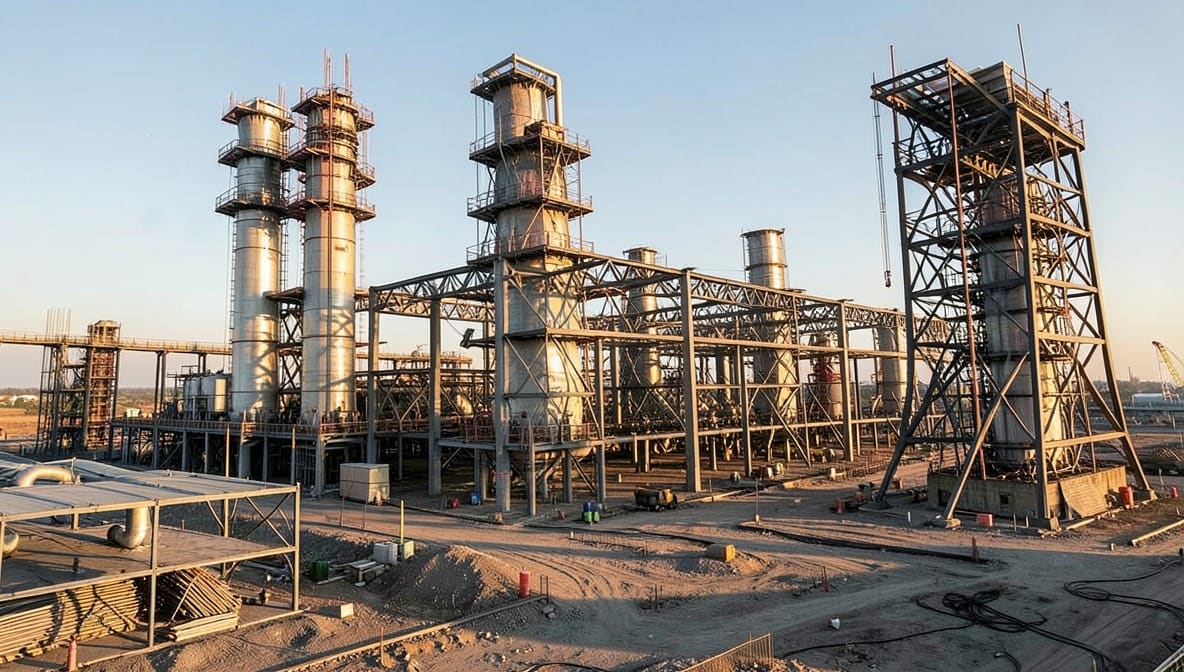
The appellant, Srinivasa Reddy Velagala, a corporate debtor, invited an International Competitive Bid on 13.12.2010 for a 225 MW gas-based combined cycle power station at Bikkavolu, East Godavari District, Andhra Pradesh. The respondent, Sravanti Infratech Pvt. Ltd., was awarded the contract as the lowest bidder. The appellant issued a Letter of Award on 24.12.2010 for Rs 827 crore and the parties executed an EPC agreement on 09.02.2011, stipulating a 14-month completion period and arbitration for dispute resolution.
Key Facts
- Advertisement for bid: 13.12.2010
- Letter of Award (LOA): 24.12.2010, amount Rs 827 crore
- EPC contract execution: 09.02.2011
- Payment schedule: 10 % advance, subsequent milestones totalling Rs 827 crore (see payment break-up in judgment)
- Corporate guarantees provided: 26.04.2011 and 29.04.2011
- Initial advance paid by appellant: Rs 50.15 crore (out of Rs 82.7 crore due)
- Milestone submissions by respondent: Purchase order copy on 15.02.2011; BBU submitted on 13.07.2011 and again on 03.01.2012
- Suspension notice by respondent: 30.07.2011 (pending Rs 32.55 crore)
- Legal notices by respondent: 25.07.2014, 16.09.2014, 15.07.2015 (demanding payment)
- Statutory demand under IBC (Section 8): 02.07.2018, claiming Rs 1,292.13 crore (debt fell due on 25.02.2011)
- Section 9 application filed by respondent: 12.10.2018
- NCLT admission of Section 9 application: 13.12.2019
- NCLAT dismissal of appellant’s appeal: 01.02.2021
- Supreme Court judgment date: 12 August 2026
Procedural History
- 13.12.2010: Advertisement for EPC project
- 24.12.2010: LOA issued to respondent
- 09.02.2011: EPC agreement signed
- 15.02.2011: Purchase order submitted by respondent
- 13.07.2011: First BBU submitted
- 30.07.2011: Suspension notice issued by respondent
- 26.04.2011 & 29.04.2011: Corporate guarantees furnished
- 25.07.2014, 16.09.2014, 15.07.2015: Legal notices demanding payment
- 02.07.2018: Statutory demand under Section 8 of IBC
- 12.10.2018: Section 9 application filed
- 13.12.2019: NCLT admitted Section 9 application
- 01.02.2021: NCLAT dismissed appellant’s appeal, upheld admission
- 12 August 2026: Supreme Court delivered judgment
Parties' Positions
- Appellant: Argued that the claim was time-barred, that a pre-existing dispute existed, and that the EPC contract was frustrated by efflux of time.
- Respondent: Contended that the EPC contract subsisted, the claim amounted to operational debt, no pre-existing dispute existed, and the limitation period had not expired.
Relief Sought
The appellant sought setting aside of the NCLAT judgment dated 01.02.2021 and the NCLT order dated 13.12.2019, and dismissal of the respondent’s Section 9 application on the ground of limitation and pre-existing dispute. The respondent sought confirmation that its claim was operational debt and that the Section 9 application be upheld.
The Legal Issue
The central questions were: (i) whether the EPC contract was frustrated by efflux of time; (ii) whether the amounts claimed under the Section 9 application constitute ‘operational debt’ under Section 5(21) of the IBC; (iii) whether a pre-existing dispute existed between the parties; and (iv) whether the Section 9 application was time-barred under the Limitation Act, 1963.
Arguments Presented
For the Appellant
The appellant relied on Babulal Vardharji Gurjar v. Veer Gurjar Aluminium Industries (P) Ltd. and Sabarmati Gas Ltd. v. Shah Alloys Ltd. to argue that the IBC does not revive time-barred claims, that the limitation period starts from the date of default, and that the EPC contract was frustrated by the passage of time. It also cited Mobilox Innovations Pvt. Ltd. v. Kirusa Software (P) Ltd. to contend that the legal notices indicated a pre-existing dispute.
For the Respondent
The respondent invoked Next Education India (P) Ltd. v. K12 Techno Services and B. Prashanth Hegde v. SBI to emphasize that each invoice generates its own default date and that the limitation period must be assessed per invoice. It relied on the EPC contract’s termination clauses (14.1, 14.2) to show the contract subsisted, and on the definition in Section 5(21) of the IBC to classify the milestone payments as operational debt.
The Court's Analysis
The Court first examined the termination clauses of the EPC agreement. Clause 14.1 allowed termination for convenience on 30-day notice, while Clause 14.2 permitted suspension after 25 days of non-payment and termination after four months of continuous suspension. The Court observed that neither party exercised these termination rights; consequently, the contract continued to subsist.
"We say without any manner of doubt that the EPC contract continued to subsist."
The Court rejected the appellant’s claim of frustration by efflux of time, distinguishing effluxion of time (a natural expiry) from frustration (a supervening impossibility). Citing Boothalinga Agencies v. V.T.C. Poriaswami Nadar, the Court held that self-induced suspension could not amount to frustration.
Regarding operational debt, the Court parsed Section 5(21) of the IBC, noting that payments for goods and services under the EPC contract fell squarely within the definition. However, it clarified that suspension, idling, and demobilisation charges were damages, not operational debt, because they had not been adjudicated.
On the pre-existing dispute, the Court applied the Mobilox test, emphasizing that a genuine dispute must be evidenced by conduct or communication. The appellant’s total silence to the respondent’s notices was deemed strong evidence that no dispute existed.
Finally, on limitation, the Court affirmed that the default dates were 05.01.2012 and 03.02.2012 (acknowledgement of liability). The three-year limitation under Article 137 of the Limitation Act began on those dates. The respondent’s subsequent legal notices did not constitute an acknowledgment of liability; therefore, the limitation period expired well before the Section 9 filing on 12.10.2018. The Court cited Babulal Vardharji Gurjar to underscore that the IBC does not grant a fresh lease of life to time-barred debts.
The Verdict
The appeal succeeded. The Supreme Court set aside the NCLAT judgment dated 01.02.2021 and the NCLT order dated 13.12.2019. It held that the EPC contract subsisted, the milestone payments qualified as operational debt, there was no pre-existing dispute, and the Section 9 application was time-barred. The respondent was directed to pursue its claim in the arbitration forum stipulated in the EPC contract. No monetary award or interest was granted.
What This Means For Similar Cases
EPC Contracts Remain in Force Until Properly Terminated
Practitioners must ensure that any intention to terminate an EPC agreement is exercised in accordance with the contract’s termination clauses. Mere suspension or non-payment does not automatically terminate the contract or render it frustrated.
- Review termination clauses (e.g., notice periods, payment of accrued dues) before invoking termination.
- Document any termination notice and obtain acknowledgment to avoid claims of self-induced frustration.
Operational Debt Must Be Directly Linked to Goods/Services
Only amounts that are consideration for goods or services under the contract qualify as operational debt under Section 5(21) of the IBC. Damages, penalties, or demobilisation charges remain outside this definition unless adjudicated.
- Segregate invoice items into operational debt versus damages.
- Seek adjudication of disputed damages before filing a Section 9 application.
Strict Application of the Three-Year Limitation
The limitation period starts on the date of default for each invoice. Notices of demand or legal notices do not reset the clock unless they contain a clear acknowledgment of liability.
- Identify the exact default date for each claim.
- File the Section 9 application within three years of that date, or obtain condonation under Section 18 of the Limitation Act.
- Avoid reliance on silence or unresponded notices as a basis for extending limitation.





