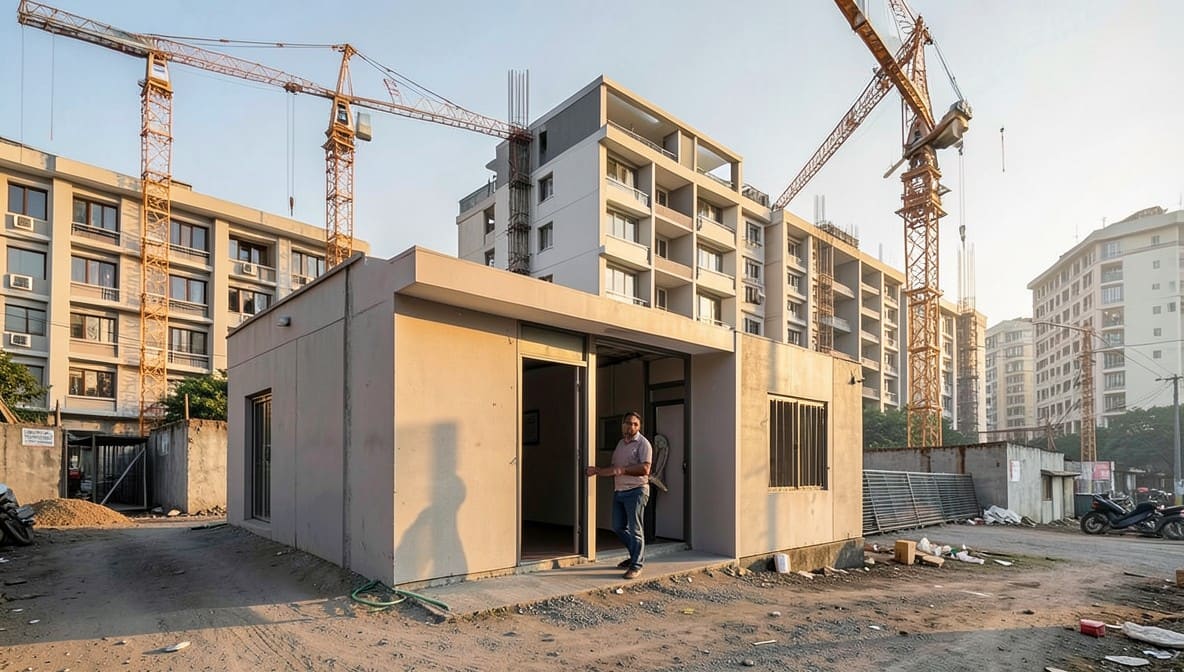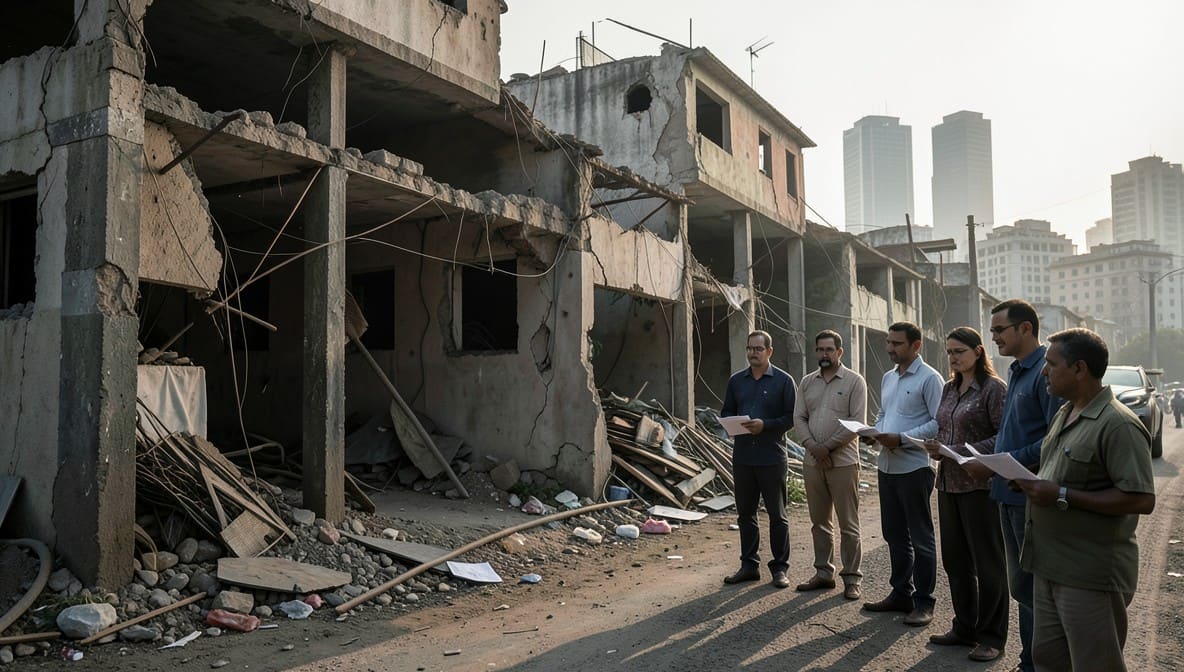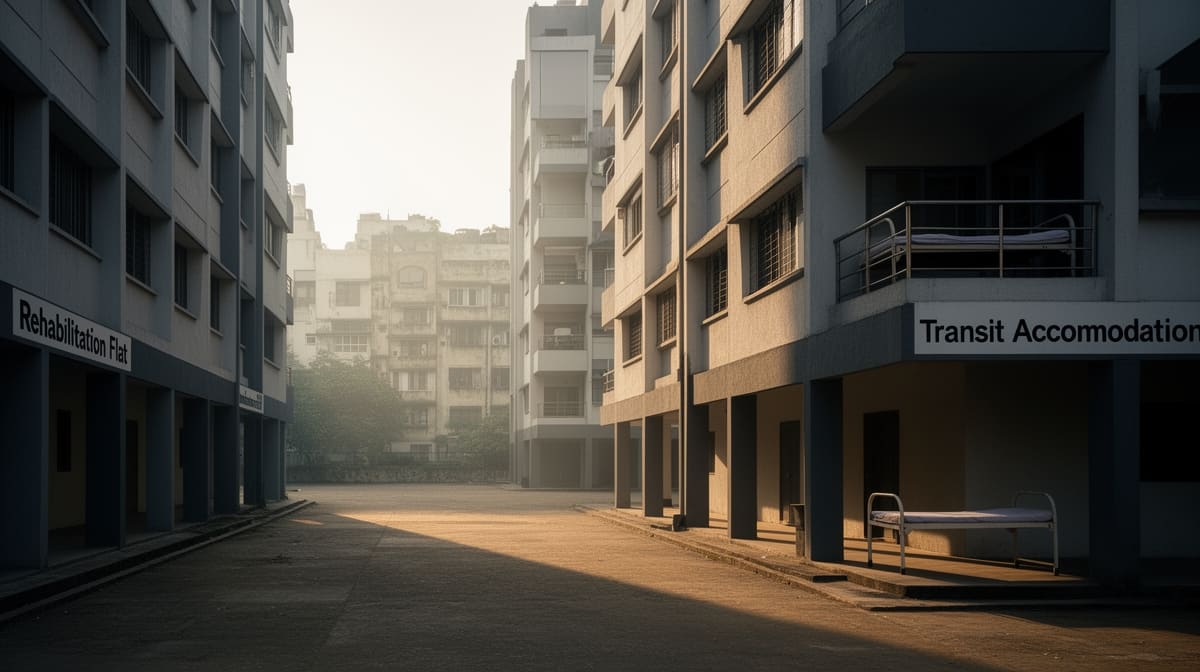
The Bombay High Court has clarified that continued occupation of transit accommodation after receiving possession of a rehabilitated flat is unlawful and cannot be justified under any housing policy. This ruling establishes a clear boundary between temporary relief and permanent entitlement in urban redevelopment schemes.
Background & Facts
The Dispute
The petitioner, M.K. India Enterprises, sought enforcement of its rights under a rehabilitation scheme administered by the Maharashtra Housing and Area Development Authority (MHADA). The petitioner had been allotted a rehab flat in a redevelopment project, but respondents No. 4 and 5 - other beneficiaries of the same scheme - had been allotted transit accommodation during construction. After receiving possession of their own rehab flats, respondents No. 4 and 5 refused to vacate the transit accommodation, thereby denying the petitioner access to the unit intended for them.
Procedural History
- 2025: Petition filed under Article 226 of the Constitution seeking direction to MHADA to enforce vacating of transit accommodation.
- 07/03/2026: Court issued interim order directing MHADA to take appropriate action against respondents No. 4 and 5 for continued occupation.
- 11/03/2026: Respondents No. 4 and 5 failed to appear despite being granted time to engage counsel.
Relief Sought
The petitioner sought immediate eviction of respondents No. 4 and 5 from transit accommodation, restoration of possession of the rehab flat, and direction to MHADA to issue the occupancy certificate upon eviction.
The Legal Issue
The central question was whether beneficiaries of a rehabilitation scheme may lawfully retain possession of transit accommodation after being allotted and taking physical possession of their permanent rehab flats.
Arguments Presented
For the Petitioner
The petitioner argued that transit accommodation is strictly temporary and conditional upon non-possession of a rehab flat. Citing MHADA’s own policy guidelines, the petitioner contended that continued occupation after receipt of possession constitutes misuse of public resources and violates the principle of equitable distribution. Reliance was placed on State of Maharashtra v. Rameshwar to establish that public housing schemes must be implemented in good faith and without undue advantage.
For the Respondent
MHADA did not oppose the petitioner’s prayer but acknowledged procedural delays in enforcement. Respondents No. 4 and 5, though initially present, failed to appear on the final hearing and offered no legal justification for retention of transit accommodation.
The Court's Analysis
The Court examined the nature of transit accommodation under MHADA’s rehabilitation policy and found it to be a temporary measure designed solely to bridge the gap between displacement and possession of the permanent unit. Once possession of the rehab flat is taken, the legal basis for occupying transit accommodation ceases entirely.
"Once possession of the rehab flat has been handed over, the continued occupation of transit accommodation by the allottee is not merely improper - it is unlawful. The scheme does not contemplate dual occupancy, nor does it permit beneficiaries to hold onto temporary facilities beyond their intended purpose."
The Court rejected any implied right to retain transit accommodation, emphasizing that public housing resources are finite and must be allocated equitably. The failure of respondents No. 4 and 5 to appear on the final hearing further undermined any claim of hardship or procedural fairness. The Court held that MHADA, as the implementing authority, has both the duty and the power to enforce compliance with its own policies.
The Verdict
The petitioner succeeded. The Court held that continued occupation of transit accommodation after receipt of rehab flat possession is unlawful and directed MHADA to evict respondents No. 4 and 5 within four weeks, with police assistance. The petitioner’s right to occupancy certificate was preserved subject to fulfillment of other conditions.
What This Means For Similar Cases
Transit Accommodation Is Not a Permanent Entitlement
- Practitioners must now argue that any retention of transit accommodation post-possession is a breach of statutory and policy conditions.
- MHADA and similar housing authorities can invoke immediate eviction powers without needing to initiate lengthy civil proceedings.
Enforcement Powers Are Explicitly Recognized
- Police assistance for eviction is now a judicially sanctioned remedy in housing scheme violations.
- Authorities may recover costs of eviction from the unlawful occupant, as permitted by the Court.
Policy Compliance Overrides Informal Claims
- Claims of hardship, delay in documentation, or informal arrangements cannot override clear policy terms.
- Courts will not entertain equitable defenses when beneficiaries have already received their primary entitlement.