The Himachal Pradesh High Court recently dismissed an appeal by the State challenging the acquittal of an accused in a rash driving case, reinforcing the principle that mechanical defects in a vehicle can override claims of negligence unless the prosecution provides concrete evidence of the accused's breach of duty. The judgment underscores the high evidentiary burden on the prosecution to prove rash or negligent driving beyond mere assertions of 'high speed.'
Background & Facts
The Dispute
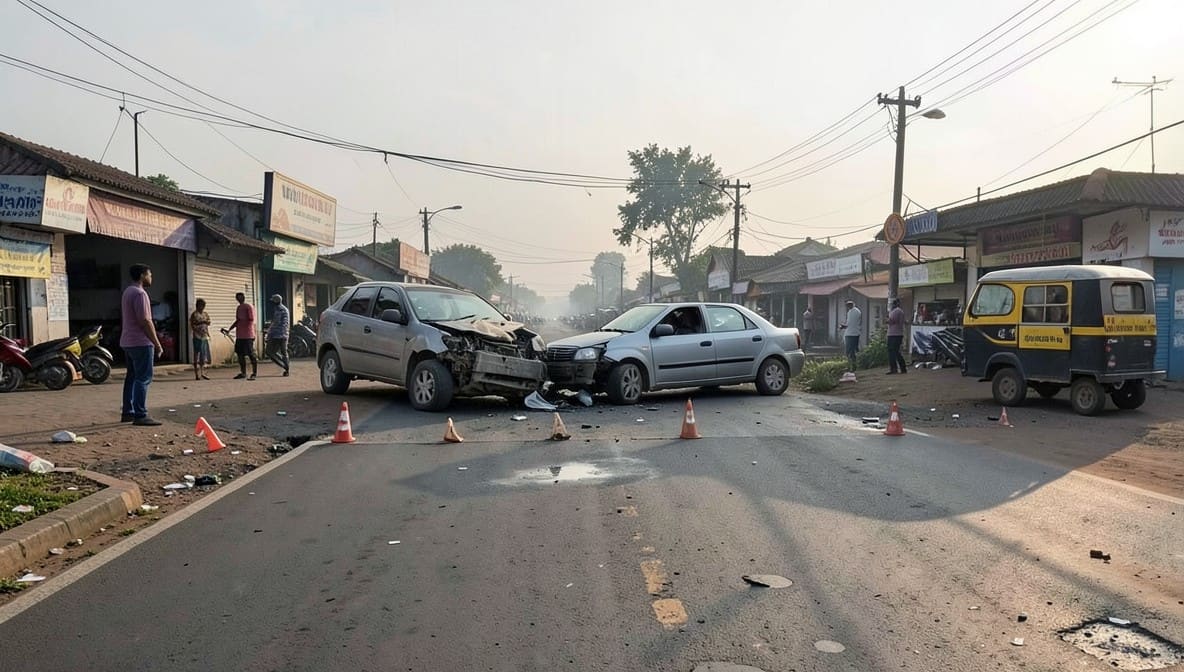
The case arose from a road accident on 01.09.2008 at approximately 04:15-04:30 p.m. near Daulatpur, Himachal Pradesh. The victim, Ranjeet Singh (PW1), alleged that a Mahindra jeep bearing registration number HP-29B-0267, driven by the respondent Praveen Kumar, hit him while traveling at high speed. The jeep subsequently entered a vegetable shop, causing grievous injuries to the victim. The police registered an FIR under Sections 279, 337, and 338 of the Indian Penal Code (IPC), alleging rash and negligent driving.
Key Facts
- The accident occurred on 01.09.2008, with the victim sustaining grievous injuries.
- The vehicle was seized by ASI Vijay Kumar (PW9) and mechanically examined by Durga Dass (PW6).
- The mechanical expert’s report (Ext.PW6/A) revealed that the accident was caused by a mechanical defect: the branding iron and pull-push rod were damaged, causing the front tyre to detach.
- The victim (Ranjeet Singh, PW1) and eyewitnesses (Pradeep Kumar, PW2 and Ramesh Chand, PW3) testified that the vehicle was being driven at high speed.
- The prosecution examined nine witnesses, including the victim, eyewitnesses, a radiographer, a mechanical expert, a photographer, the treating doctor, and the investigating officer.
Procedural History
- 01.09.2008: Accident occurred; FIR registered under Sections 279, 337, and 338 IPC.
- Post-accident: Mechanical examination of the vehicle conducted by Durga Dass (PW6), revealing a mechanical defect.
- Trial Proceedings: The accused was summoned and pleaded not guilty. The prosecution presented its evidence, and the accused was acquitted by the Judicial Magistrate 2nd Class, Kangra, on 29.11.2013.
- 13.01.2014: The State filed Criminal Appeal No. 138 of 2014 before the Himachal Pradesh High Court.
- 03.07.2026: The High Court dismissed the appeal, upholding the acquittal.
The Parties' Positions
For the Appellant (State)
The State contended that the learned Trial Court erred in acquitting the accused, arguing that:
- The prosecution witnesses consistently deposed that the accused was driving the vehicle negligently at high speed.
- The mechanical expert’s report proved that the vehicle was not properly maintained, implying negligence on the part of the accused.
- The Trial Court blew minor contradictions out of proportion, leading to an unjust acquittal.
For the Respondent (Accused)
The respondent’s counsel argued that:
- The accident was caused by a mechanical defect, as evidenced by the mechanical expert’s report.
- The prosecution failed to prove negligence beyond mere assertions of 'high speed.'
- The Trial Court’s acquittal was reasonable, and the High Court should not interfere unless the judgment was patently perverse.
Relief Sought
The State sought the setting aside of the acquittal and the conviction of the accused under Sections 279, 337, and 338 IPC. The respondent sought the dismissal of the appeal and the upholding of the acquittal.
The Legal Issue
The central question before the High Court was:
Whether the prosecution had discharged its burden of proof to establish that the accused was guilty of rash and negligent driving under Sections 279, 337, and 338 IPC, despite evidence of a mechanical defect in the vehicle?
Arguments Presented
For the Appellant (State)
- The prosecution witnesses consistently deposed that the accused was driving the vehicle at high speed and negligently.
- The mechanical expert’s report (Ext.PW6/A) proved that the vehicle was not properly maintained, implying negligence.
- The Trial Court erred in discarding the testimonies of the prosecution witnesses without cogent reasons.
For the Respondent (Accused)
- The accident occurred due to a mechanical defect, as established by the mechanical expert’s report.
- The prosecution failed to prove negligence beyond mere assertions of 'high speed.'
- The Trial Court’s acquittal was reasonable, and the High Court should not interfere unless the judgment was patently perverse.
The Court's Analysis
The High Court conducted a detailed reappraisal of the evidence and applied the legal principles governing appeals against acquittal, as laid down by the Supreme Court in cases such as Surendra Singh v. State of Uttarakhand, State of M.P. v. Ramveer Singh, and Tulasareddi v. State of Karnataka. The Court emphasized that:
"24. It could thus be seen that it is a settled legal position that the interference with the finding of acquittal recorded by the learned trial Judge would be warranted by the High Court only if the judgment of acquittal suffers from patent perversity; that the same is based on a misreading/omission to consider material evidence on record; and that no two reasonable views are possible and only the view consistent with the guilt of the accused is possible from the evidence available on record."
The Court further observed that the mechanical expert’s testimony (PW6) was decisive in establishing that the accident was caused by a mechanical defect - specifically, the damage to the branding iron and pull-push rod, which led to the detachment of the front tyre. The expert clarified that the branding iron could have been damaged due to age or excessive play, and there was no evidence to suggest that the defect was caused by failure to maintain the vehicle.
"The testimony of this witness makes the prosecution's case highly doubtful. He categorically stated that the accident occurred because of a mechanical defect in the vehicle."
The Court relied on the Supreme Court’s judgment in Vaibhav v. State of Maharashtra, which held that when two versions appear on record, the version in favour of the accused must be accepted over the prosecution’s version. The Court noted:
"31. In law, there is a significant difference in the evidentiary burden to be discharged by the prosecution and the accused. Whereas the former is expected to discharge its burden beyond a reasonable doubt, the latter is only required to prove a defence on the anvil of preponderance of probabilities."
The Court also addressed the prosecution’s reliance on the testimonies of witnesses who stated that the vehicle was being driven at high speed. It held that mere assertions of 'high speed' are insufficient to establish negligence or rashness, citing the Supreme Court’s judgments in Mohanta Lal v. State of West Bengal and State of Karnataka v. Satish. The Court observed:
"Merely because the truck was being driven at a 'high speed' does not bespeak of either 'negligence' or 'rashness' by itself. None of the witnesses examined by the prosecution could give any indication, even approximately, as to what they meant by 'high speed.' 'High speed' is a relative term. It was for the prosecution to bring on record material to establish as to what it meant by 'high speed' in the facts and circumstances of the case."
The Court further relied on its own precedents, including State of H.P. v. Madan Lal and State of H.P. v. Parmodh Singh, to hold that speed alone is not a criterion for judging rashness or negligence. The prosecution must prove a breach of duty beyond mere assertions.
Additionally, the Court cited Goddard LJ in Hollington v. Hawthorn, which held that a witness cannot depose about negligence - such inferences must be drawn by the Judge or Jury. The Court observed:
"A witness can only depose about the fact which had occurred in his presence, and he is not permitted to draw inferences from the facts. The inferences have to be drawn by the Jury or the Judge when he is sitting without a Jury."
The Court concluded that the prosecution failed to prove negligence beyond the mechanical defect, and the Trial Court’s acquittal was reasonable.
The Verdict
The High Court dismissed the appeal filed by the State and upheld the acquittal of the respondent (Praveen Kumar). The Court directed the respondent to furnish a bail bond of ₹50,000 with one surety of the like amount, valid for six months, to ensure his appearance before the Supreme Court in the event of a Special Leave Petition being filed. The judgment and record of the Trial Court were directed to be sent back forthwith.
What This Means For Similar Cases
Mechanical Defects Can Override Negligence Claims
- Prosecution’s Burden: The judgment reinforces that the prosecution must prove negligence beyond mere assertions of 'high speed' or 'rash driving.' Evidence of a mechanical defect can override claims of negligence unless the prosecution establishes that the defect was caused by the accused’s failure to maintain the vehicle.
- Expert Testimony: Mechanical expert reports are crucial in road accident cases. If the report establishes a mechanical defect, the prosecution must disprove the defect’s role or prove the accused’s negligence in maintaining the vehicle.
High Speed Alone Is Not Sufficient for Conviction
- Relative Nature of Speed: Courts will not convict an accused based solely on witness testimonies of 'high speed' unless the prosecution provides concrete evidence (e.g., speedometer readings, expert opinions) to quantify the speed and establish its negligent nature.
- Breach of Duty: The prosecution must prove that the accused breached a statutory duty (e.g., violating traffic rules) or acted in a manner that a reasonable person would not under the circumstances.
Witness Testimonies Must Be Corroborated
- Inferences vs. Facts: Witnesses can only depose about facts within their knowledge - they cannot draw inferences about negligence or rashness. Such inferences must be drawn by the Court based on evidence.
- Contradictions: Minor contradictions in witness testimonies, especially due to lapse of time, will not necessarily lead to acquittal. However, material contradictions can weaken the prosecution’s case if they undermine the core allegations.
Appellate Courts Will Not Interfere With Reasonable Acquittals
- Standard for Interference: Appellate Courts will only interfere with an acquittal if the judgment is patently perverse, based on a misreading of evidence, or omits material evidence. If two reasonable views are possible, the acquittal will be upheld.
- Deference to Trial Courts: The judgment underscores the deference given to Trial Courts in assessing evidence, especially in cases where factual disputes arise.