The Gauhati High Court has held that repeated rejection of a land sale application without lawful justification, particularly during a medical emergency, constitutes malice in law. The judgment underscores the duty of revenue authorities to act fairly, transparently, and with proper application of mind when adjudicating applications under land transfer regulations.
Background & Facts
The Dispute
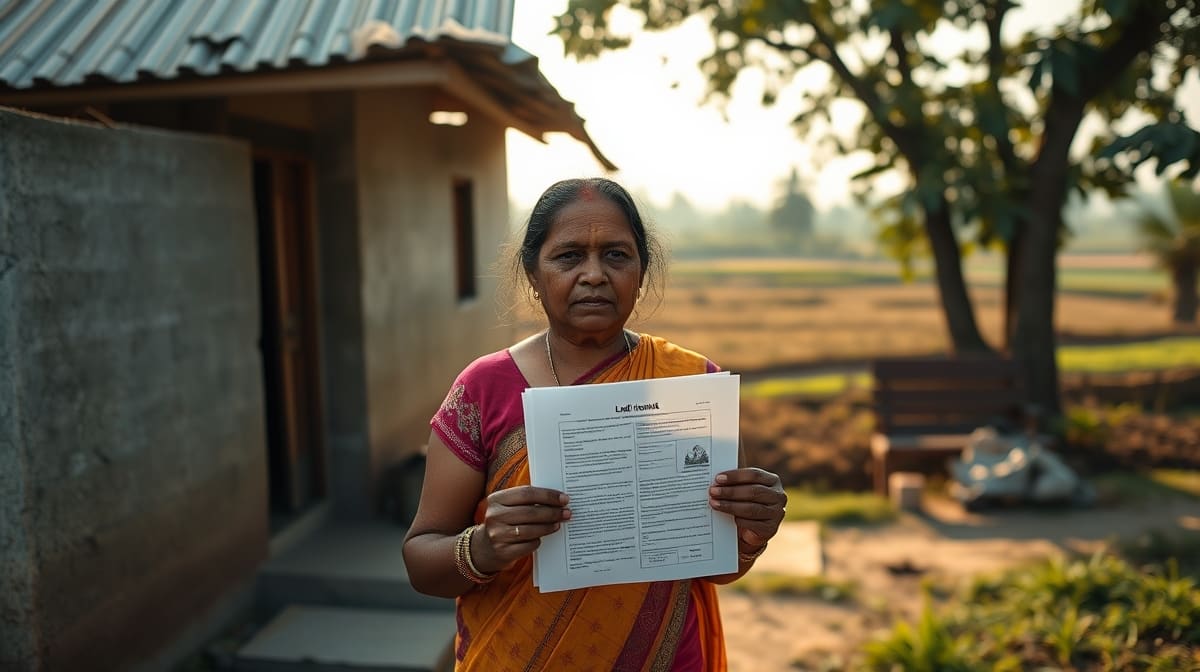
The petitioner, Rita Gowala, is the lawful owner of a plot of land measuring 5 Bighas 5 Kathas 4 Chataks, covered by Kheraj Myadi Patta No. 191, Dag No. 759, in Revenue Village Bidhyanagar, under Ramkrishna Nagar Revenue Circle, District Sribhumi, Assam. Due to urgent financial needs arising from the treatment of her minor daughter suffering from cancer, she sought to sell a portion of her land - 1 Bigha 14 Kathas 8 Chataks - to four individuals: Billal Ahmed, Halal Uddin, Sultan Ahmed, and Jabir Uddin.
Key Facts
- The land in question is located outside any notified town or village.
- The petitioner applied for composite land sale permission/NOC online on 16.08.2025.
- The first application was rejected on 10.10.2025 by the Circle Officer on the ground of "excess area sold in the applied dag."
- A second application was filed on 20.11.2025 and rejected on 05.12.2025 for failure to submit "upto date land revenue receipt and co-pattadar consent."
- The petitioner rectified the defects and filed a third application on 24.12.2025.
- This third application was rejected on 07.01.2026 on the ground of "insufficient documents," specifically alleging that the petitioner had failed to submit an NOC from the local authority, despite no such requirement being stipulated in law.
- The petitioner had no prior history of non-compliance or default in land revenue payments.
- No evidence was produced by the authorities to show that the land fell within any area requiring Panchayat or local body consent for transfer.
Procedural History
- 16.08.2025: First application for sale permission submitted online.
- 10.10.2025: First rejection issued by Circle Officer, Ramkrishna Nagar Revenue Circle.
- 20.11.2025: Second application filed.
- 05.12.2025: Second rejection issued citing missing revenue receipt and co-pattadar consent.
- 24.12.2025: Third application filed after rectifying alleged defects.
- 07.01.2026: Third rejection issued on ground of "insufficient documents," specifically failure to submit NOC from local authority.
- 23.03.2026: Writ petition heard; Court sought instructions from respondents.
- 06.04.2026: Judgment pronounced.
The Parties' Positions
Petitioner: Argued that the rejections were arbitrary, successive, and without legal basis. She contended that no statutory provision requires NOC from a Panchayat or local authority for land transfer outside notified areas. She emphasized the humanitarian context - her daughter’s life-threatening illness - and the absence of any procedural or substantive grounds for denial.
Respondents: Failed to produce any legal provision mandating NOC from local authorities. The Standing Counsel and Government Advocates could not specify what document was allegedly missing in the 07.01.2026 rejection order. No affidavit, rule, or circular was cited to substantiate the requirement.
Relief Sought
The petitioner sought quashing of the impugned order dated 07.01.2026 and a direction to the respondents to consider her application for sale permission within a stipulated time.
The Legal Issue
The central question was whether the repeated rejection of a land sale application, without citing any valid statutory ground and in the face of a demonstrable humanitarian emergency, amounts to malice in law and violates the principles of fair administrative action under Article 14 of the Constitution.
Arguments Presented
For the Petitioner
The petitioner’s counsel relied on the doctrine of proportionality and legitimate expectation, citing State of U.P. v. Raj Narain and Maneka Gandhi v. Union of India. He argued that the authorities had acted in bad faith by raising shifting grounds for rejection, failing to specify the exact document required, and ignoring the absence of any legal mandate for Panchayat NOC in rural, non-notified areas. He emphasized that the petitioner had acted in good faith, corrected all defects, and that the final rejection was capricious and punitive.
For the Respondent
The respondents’ counsel offered no statutory or regulatory basis for the requirement of a local authority NOC. They conceded that no such provision existed under the Assam Land and Revenue Regulation or any other applicable rule. They did not dispute that the land was outside notified areas. Their defense was limited to procedural delays and administrative oversight, without justifying the third rejection.
The Court's Analysis
The Court observed that the three successive rejections were not grounded in any consistent legal standard. The first rejection cited "excess area," the second cited missing revenue receipt and co-pattadar consent, and the third cited an NOC from a local authority - despite no such requirement being prescribed in law. The Court noted that the land was situated in a revenue village outside any town or notified area, and therefore, the jurisdiction of Panchayat authorities did not extend to regulating land transfers.
"The Respondents have failed to point to any rule, regulation or circular which mandates the submission of an NOC from a local authority for sale of land in a revenue village outside notified areas."
The Court further held that the failure of the respondents to produce any document or legal provision to substantiate the final rejection, even after being specifically asked by the Court, amounted to an admission of arbitrariness. The Court emphasized that administrative discretion must be exercised reasonably and not as a tool for delay or obstruction, especially when the applicant is in dire need.
The Court concluded that the cumulative effect of the rejections - each raising a new ground without legal basis - demonstrated a pattern of malice in law. The absence of proper application of mind, the lack of transparency, and the refusal to clarify the nature of the alleged deficiency rendered the order unsustainable.
The Verdict
The writ petition is allowed. The impugned order dated 07.01.2026 rejecting the petitioner’s application for sale permission is set aside and quashed. Respondent Nos. 2 and 5 are directed to consider the petitioner’s application dated 24.12.2025 and dispose of it within one month from the date a certified copy of this judgment is served upon Respondent No. 2. The petitioner’s application shall be decided on its merits, in accordance with law, and without further delay.
What This Means For Similar Cases
Administrative Rejections Must Be Legally Grounded
- Practitioners must challenge successive rejections of land sale applications where no statutory basis is cited.
- Authorities cannot invent new grounds for rejection after prior defects have been cured.
- The burden lies on the state to produce the legal provision relied upon; silence equals arbitrariness.
No Local Authority NOC Required in Rural Areas
- In Assam, for land transfers in revenue villages outside notified towns, no Panchayat or local body NOC is required unless expressly mandated by a rule or notification.
- Any rejection citing such a requirement without citation of law is liable to be quashed.
- Practitioners should request a copy of the specific rule invoked by authorities before filing writ petitions.
Humanitarian Context Enhances Judicial Scrutiny
- Courts will apply heightened scrutiny when administrative delays impact urgent medical needs.
- While humanitarian grounds alone do not create a legal right, they expose the unreasonableness of bureaucratic inertia.
- Delayed decisions in such cases may be viewed as violative of Article 21 through the lens of dignity and access to justice.