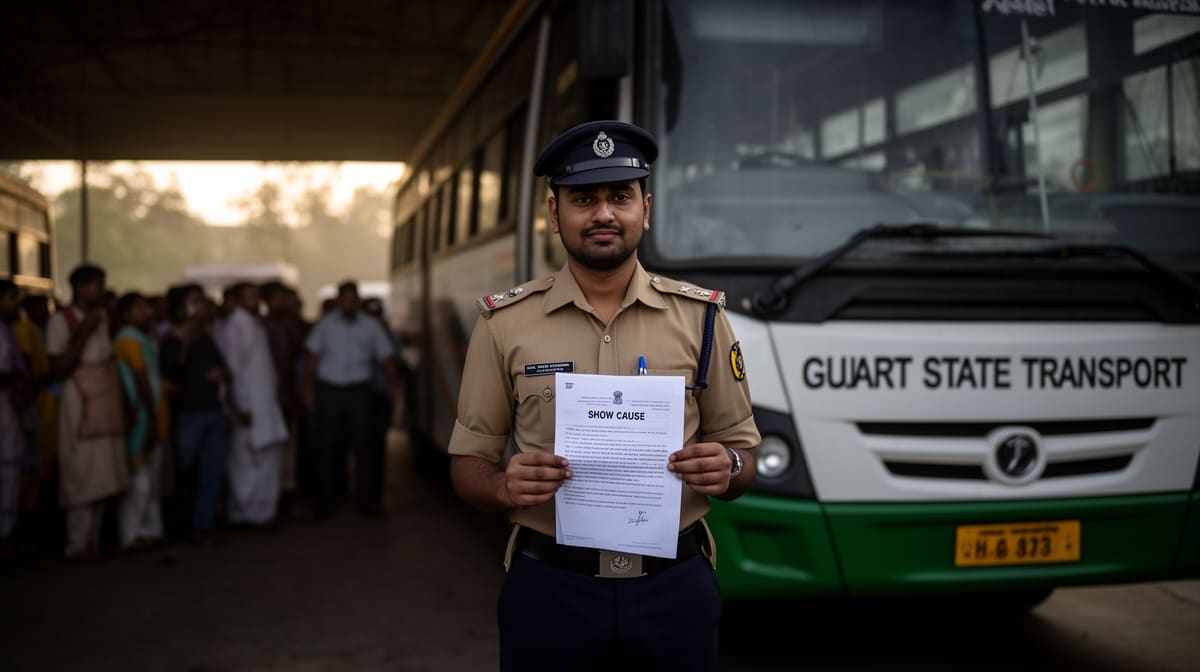
The Delhi High Court has reaffirmed that proven financial misappropriation by an employee entrusted with cash handling constitutes grave misconduct warranting termination, irrespective of long service or subsequent deposit of funds. The judgment underscores the primacy of trust in fiduciary roles and limits judicial interference in industrial adjudication to cases of perversity or illegality.
Background & Facts
The Dispute
The petitioner, Shri Uma Shankar Sharma, was employed as a Sales Clerk with Delhi State Co-operative Union Ltd. from 14.07.1971. He was entrusted with maintaining cash books, stock registers, and accounting for cash receipts, including collections from the Parliament Street counter managed by Shri D.K. Sharma. In 1989, an internal audit revealed significant discrepancies in accounts for the financial years 1986-87, 1987-88, and July 1988 to December 1988.
Key Facts
- The petitioner was served with a charge-sheet dated 12.04.1989 alleging misappropriation of ₹40,403.64 and a cash shortage of ₹916.08.
- The petitioner did not deny the existence of discrepancies in his reply to the charge-sheet but claimed he was falsely implicated to shield Shri D.K. Sharma.
- He admitted in writing on multiple documents that amounts were not posted in the cash book due to oversight and undertook to deposit the same.
- On 23.03.1989, he submitted a written request to adjust the outstanding amounts from his provident fund and security deposit.
- The petitioner later claimed these admissions were made under coercion and inducement, alleging threats of termination.
- The Management conducted a domestic enquiry, which was later held invalid by the Tribunal for violating natural justice.
Procedural History
- 14.07.1971: Petitioner appointed as Sales Clerk.
- 12.04.1989: Charge-sheet issued alleging financial irregularities.
- 30.06.1989: Services terminated following domestic enquiry.
- 1990: Industrial dispute referred to Industrial Tribunal as I.D. No. 293/1990.
- 02.09.1996: Tribunal held domestic enquiry invalid but granted liberty to Management to lead fresh evidence.
- 05.07.2002: Tribunal passed impugned award upholding termination.
- 05.07.2002: Petitioner filed W.P.(C) 6999/2002 before Delhi High Court.
- 08.04.2026: Judgment delivered by Justice Shail Jain.
Relief Sought
The petitioner sought quashing of the Tribunal’s award dated 05.07.2002, reinstatement with back wages, and restoration of service. He argued that termination was disproportionate and based on coerced admissions.
The Legal Issue
The central question was whether the termination of a workman for proven financial misappropriation over a continuous three-year period, supported by documentary evidence and voluntary admissions, constitutes a justifiable ground for dismissal under the Industrial Disputes Act, 1947, and whether such a finding can be disturbed by a writ court under Article 226.
Arguments Presented
For the Petitioner
The petitioner contended that the Management failed to examine independent witnesses who prepared the internal checking reports, violating the principle in Hardwari Lal v. State of U.P. He argued that his written admissions were extracted under threat and inducement, citing J. Shiva Prasad v. Bank of India, and that the punishment of termination was disproportionate given his 18 years of unblemished service. He further asserted that the Tribunal ignored his explanation attributing discrepancies to another employee.
For the Respondent
The Management argued that the Tribunal properly appreciated the evidence, including the petitioner’s own handwritten notings and undertakings, and that the non-examination of audit authors did not prejudice the petitioner since the documents were corroborated by his conduct. It relied on State Bank of India v. T.J. Paul and Janatha Bazar to assert that misappropriation, even of small amounts, justifies dismissal due to loss of trust, and that judicial review under Article 226 cannot substitute the Tribunal’s factual findings.
The Court's Analysis
The Court emphasized that its jurisdiction under Articles 226 and 227 is supervisory, not appellate. It cannot re-appreciate evidence or substitute its own view merely because another conclusion is possible. The Supreme Court in Syed Yakoob v. K.S. Radhakrishnan and Indian Overseas Bank v. I.O.B. Staff Canteen Workers' Union has consistently held that findings of fact based on material evidence cannot be disturbed unless perverse, based on no evidence, or tainted by illegality.
"The jurisdiction to issue a writ of certiorari is a supervisory jurisdiction and the Court exercising it is not entitled to act as an Appellate Court. This limitation necessarily means that findings of fact reached by the inferior Court or Tribunal as result of the appreciation of evidence cannot be reopened or questioned in writ proceedings."
The Tribunal’s findings were grounded in multiple independent strands of evidence: internal audit reports, the petitioner’s handwritten acknowledgments on documents, his written request to adjust dues from provident fund and security deposit, and his admission in the reply to the charge-sheet that ₹25,000 had been used for personal medical expenses. The Court noted that the petitioner’s claim of coercion lacked any particulars - no names, dates, or manner of inducement were provided.
"The particulars of threat or inducements are absolutely lacking in the statement of claim... allegations of undue influence or inducement which are without particulars are meaningless and cannot be looked into."
The Court distinguished Hardwari Lal on the ground that the Tribunal’s findings were not based on uncorroborated oral testimony but on the petitioner’s own admissions and documentary evidence. The absence of independent audit witnesses did not invalidate the findings, as industrial proceedings are not bound by strict rules of evidence under the Indian Evidence Act.
Regarding proportionality, the Court held that misappropriation of funds by an employee in a position of trust strikes at the foundation of the employment relationship. The fact that the petitioner deposited the amount after detection did not negate the initial misconduct. The Court relied on Janatha Bazar and Divisional Controller, KSRTC v. A.T. Mane to affirm that long service or small quantum of loss does not mitigate the gravity of financial dishonesty.
The Verdict
The writ petition was dismissed. The Delhi High Court upheld the Industrial Tribunal’s award dated 05.07.2002, confirming that the termination of the petitioner’s services was legal and justified. The Court found no perversity, illegality, or absence of evidence in the Tribunal’s findings. No reinstatement, back wages, or compensation were ordered. There shall be no order as to costs.
What This Means For Similar Cases
Loss of Confidence Is Sufficient Ground for Termination
- Employers need not prove actual financial loss beyond doubt; proven misappropriation alone justifies termination due to erosion of trust.
- Courts will not interfere with dismissal in cases of financial misconduct, even if the amount is modest or the employee has long service.
- The doctrine of loss of confidence is particularly strong in roles involving cash handling, accounting, or fiduciary duties.
Admissions in Writing Trump Oral Denials
- Handwritten acknowledgments and undertakings by an employee carry significant evidentiary weight, even if later contested.
- Vague allegations of coercion without specific details (who, when, how) will be rejected outright by tribunals and courts.
- Employees must raise allegations of inducement at the earliest opportunity; raising them for the first time in tribunal proceedings without particulars is fatal to the claim.
Writ Courts Will Not Reappreciate Evidence
- Practitioners must avoid filing writ petitions seeking re-appreciation of facts; such petitions are liable to be dismissed summarily.
- Challenges to industrial awards must focus on jurisdictional errors, violation of natural justice, or absence of evidence - not on disputed facts.
- The burden is on the petitioner to demonstrate perversity or illegality, not merely to argue that another view was possible.