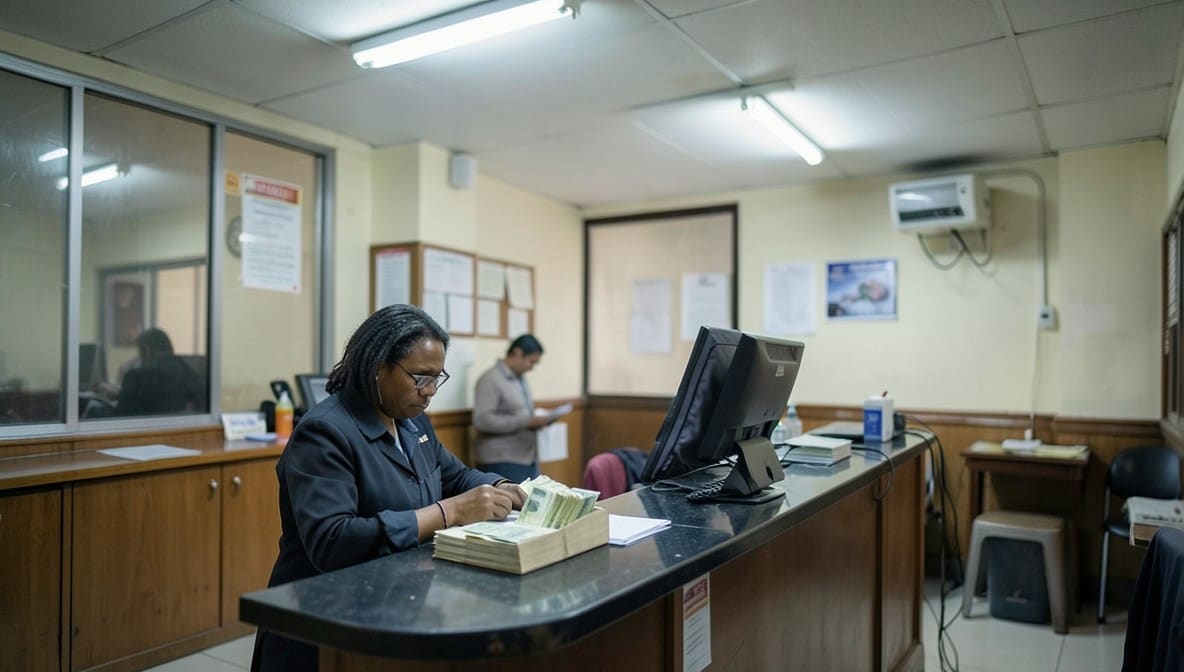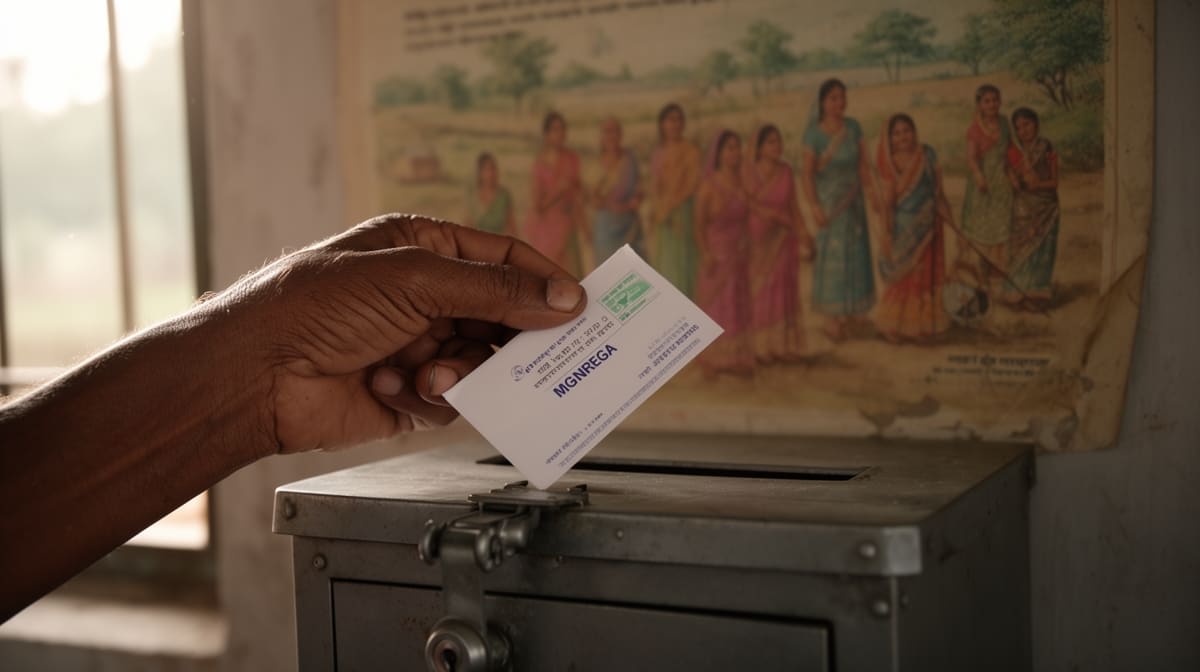
The Central Administrative Tribunal, Patna, has reaffirmed that the misappropriation of funds meant for vulnerable MGNREGA workers constitutes a grave breach of public trust, irrespective of the quantum involved. The judgment underscores that intent, not amount, determines the severity of misconduct in public service, setting a critical precedent for disciplinary actions against government employees handling welfare schemes.
Background & Facts
The Dispute
The applicant, Shri Sita Ram Prasad, served as Sub Postmaster at Chainpur Sub Post Office in Kaimur, Bihar. He was charged with withdrawing Rs. 100 and Rs. 400 from two MGNREGA accounts on 22.10.2014, amounts later credited back on 29.07.2015 by the Gram Panchayat Rojgar Sewak. A memorandum of charges was issued on 04.01.2017, over two years after the transactions, and a departmental inquiry was conducted under CCS (CCA) Rules, 1965. The applicant accepted the charges during the inquiry on 07.03.2017, after being assured by the Inquiry Officer that he would be granted compulsory retirement instead of dismissal. He was dismissed on 17.03.2017, just 14 days before his retirement.
Procedural History
- 22.10.2014: Alleged excess withdrawal from MGNREGA accounts
- 29.07.2015: Amounts credited back by Gram Panchayat Sewak
- 04.01.2017: Memorandum of charges issued by SPOs Sasaram
- 21.02.2017: Inquiry Officer and Presenting Officer appointed
- 07.03.2017: Inquiry concluded after applicant accepted charges
- 17.03.2017: Dismissal order passed
- 17.05.2017: Appeal filed before Director Postal Services (Central Region), Patna - no decision received
- 05.02.2026: Original Application dismissed by CAT Patna
Relief Sought
The applicant sought quashing of the dismissal order, restoration of service, payment of salary from date of dismissal to retirement (31.03.2017), and all retiral benefits. He also challenged procedural violations under Rule 14 and Rule 15 of CCS (CCA) Rules, 1965.
The Legal Issue
The central question was whether dismissal from service is justified for misappropriation of a small sum (Rs. 500) from MGNREGA accounts, where the amount was later repaid, and whether procedural lapses - including failure to supply the inquiry report and alleged coercion during inquiry - vitiate the disciplinary proceeding.
Arguments Presented
For the Petitioner
The applicant’s counsel argued that:
- The Inquiry Officer misled him into accepting charges by falsely promising compulsory retirement and pension eligibility
- The inquiry report was never supplied to him, violating Sub-Rule 2 of Rule 15 of CCS (CCA) Rules, 1965
- The penalty of dismissal was disproportionate to the alleged offense, especially given the imminent retirement date
- The charges were limited to Rs. 500, while the respondents’ reply alleged a Rs. 42.5 lakh fraud - an entirely different case not part of the charge sheet
- Relied on Ishwar Chandra Jayaswal v. Union of India to argue that minor financial irregularities cannot justify dismissal
For the Respondent
The State countered that:
- The applicant admitted to entrusting MGNREGA ledger work to an outsider and permitting withdrawals without cross-verification, constituting gross negligence
- The misappropriation involved funds meant for daily wage earners under a welfare scheme, making it a breach of public trust
- The applicant’s acceptance of charges during inquiry negated the need to supply the inquiry report
- The Supreme Court has consistently held that even small misappropriations by public servants warrant dismissal, as integrity is non-negotiable
- No violation of natural justice occurred; the applicant was given full opportunity to defend himself
The Court's Analysis
The Tribunal examined the nature of the offense, the procedural compliance, and the precedents governing public servant misconduct. It rejected the applicant’s claim of coercion, noting the absence of any documentary or corroborative evidence to support the assertion that the Inquiry Officer made false promises.
"Once misappropriation is proved, the fact that the amount is small or that it has been repaid is irrelevant."
The Court cited Janatha Bazar v. Secretary, Sahakari Naukara Sangha and Karnataka State Road Transport Corporation v. B.S. Hullikatti to affirm that integrity of a public servant cannot be compromised on the ground of smallness of the amount. The Tribunal emphasized that MGNREGA funds are not ordinary government money but lifelines for the poorest citizens. The act of withdrawing even Rs. 500 from such accounts constitutes gobbling up money from vulnerable wage earners, a deliberate abuse of position.
Regarding procedural compliance, the Court held that since the applicant admitted the charges during inquiry, the requirement to supply the inquiry report under Rule 15(2) was waived. The Tribunal distinguished Md. Ramzan Khan v. Union of India, noting that the obligation to supply the report arises only when the charged official contests the charges. Here, the admission rendered the step redundant.
The Court further rejected the argument of disproportionality, observing that the timing of dismissal - days before retirement - does not mitigate the gravity of the offense. The intention to misappropriate, not the timing or repayment, is the decisive factor.
The Verdict
The applicant’s Original Application was dismissed. The Tribunal held that misappropriation of MGNREGA funds, however small, constitutes serious misconduct warranting dismissal, and that the applicant’s admission of guilt during inquiry, coupled with the breach of public trust, justified the penalty. No procedural violation was established, and the penalty was not disproportionate under the law.
What This Means For Similar Cases
Intent Trumps Repayment
- Practitioners must argue that repayment or credit of misappropriated funds does not absolve a public servant of misconduct under CCS (CCA) Rules, 1965
- Even if funds are returned, the act of unauthorized withdrawal from welfare accounts remains a breach of trust
- This principle applies to all schemes involving public funds - PMAY, NSAP, MGNREGA, etc.
Admission During Inquiry Waives Procedural Safeguards
- If a charged official admits guilt during inquiry, the requirement to supply the inquiry report under Rule 15(2) is not mandatory
- Practitioners should assess whether the admission was voluntary and unambiguous before challenging procedural lapses
- Coercion claims must be substantiated with contemporaneous evidence - mere assertion is insufficient
Dismissal Is Presumptively Valid for Welfare Fund Misuse
- Disciplinary authorities may impose dismissal for misappropriation from welfare schemes even if the amount is nominal
- Courts and tribunals will not interfere unless the penalty is manifestly arbitrary or the procedure is fundamentally flawed
- This judgment reinforces that public servants handling welfare funds are held to a higher standard of accountability