The Gujarat High Court has clarified that the acquittal of a probationary employee in a criminal case for drinking on duty does not entitle him to reinstatement, especially when the employer has established serious misconduct warranting termination. This judgment reinforces the distinction between criminal liability and service discipline, affirming that employers retain discretion to act on internal standards of conduct.
Background & Facts
The Dispute
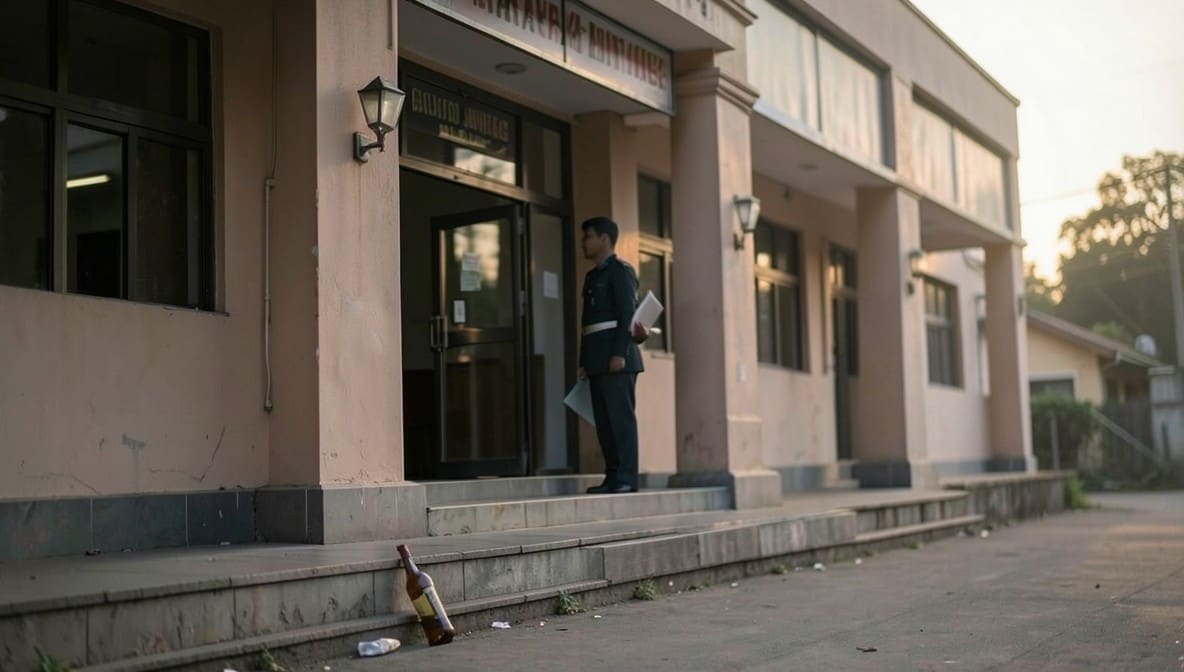
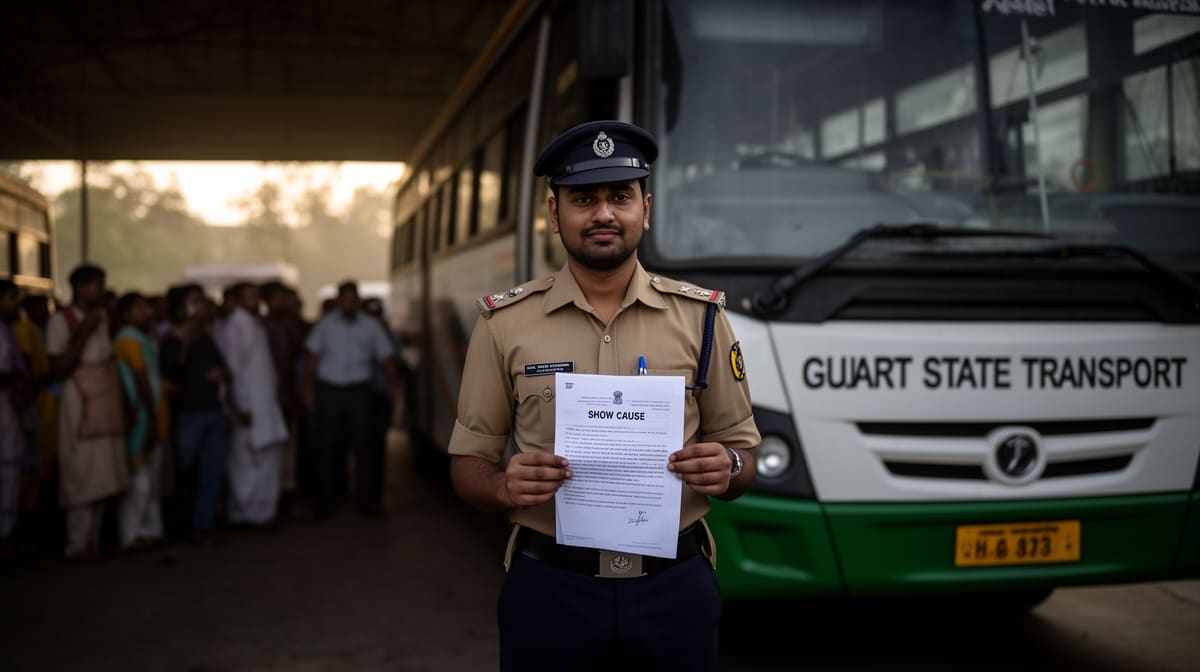
The petitioner, a bus driver employed by the Gujarat State Road Transport Corporation, was terminated during his two-year probation period after being found intoxicated while operating a public bus on the Jhalod-Jasdan route. Although he was acquitted in a criminal case under the Prohibition Act due to insufficient evidence, the employer proceeded with disciplinary action based on internal findings of misconduct.
Procedural History
- 30 September 2014: Petitioner allegedly consumed liquor while on duty, abandoned the bus at Gondal depot, and sought medical treatment.
- 9 June 2015: Show-cause notice issued by the employer under Standing Orders and Discipline and Appeal Rules.
- 2 December 2015: Petitioner terminated without a formal departmental inquiry.
- 2018: Petitioner filed Reference (LCR) No. 49/2018 before the Labour Court.
- 22 November 2019: Labour Court upheld termination, holding the charge proved and punishment proportionate.
- 2020: Both parties filed Special Civil Applications under Articles 226 and 227 before the Gujarat High Court.
Relief Sought
The petitioner sought reinstatement with back wages and quashing of the termination order. The employer sought dismissal of the petitioner’s application and confirmation of the Labour Court’s award.
The Legal Issue
The central question was whether a probationary employee may be terminated without a formal departmental inquiry for serious misconduct, and whether acquittal in a criminal case automatically negates the employer’s right to impose service discipline.
Arguments Presented
For the Petitioner
The petitioner’s counsel argued that termination without a departmental inquiry violated principles of natural justice and the requirement of fair procedure under service law. Reliance was placed on Ram Lal v. State of Rajasthan and Pinky Meena v. High Court of Judicature for Rajasthan, asserting that even probationary employees are entitled to a hearing before dismissal. It was contended that the Labour Court erred in upholding termination without examining the proportionality of punishment.
For the Respondent
The employer’s counsel argued that the petitioner was on probation and had not completed the mandatory two-year period, thereby not acquiring permanent status. The show-cause notice was issued, and the petitioner was given an opportunity to respond but failed to produce any medical evidence or documentation to substantiate his claim of illness. The employer emphasized the gravity of the misconduct - operating a public bus while intoxicated - and cited Uttar Pradesh State Road Transport Corporation v. Vinod Kumar and P. Gunasekaran v. Union of India to argue that courts must not interfere with disciplinary decisions unless they shock the conscience.
The Court's Analysis
The Court examined the distinction between criminal proceedings and service discipline, noting that the former requires proof beyond reasonable doubt, while the latter operates on a preponderance of evidence standard. The Court held that the petitioner’s conduct - abandoning a bus carrying passengers while intoxicated - constituted serious misconduct that directly endangered public safety.
"Integrity according to Oxford dictionary is 'moral uprightness; honesty'. It takes in its sweep, probity, innocence, trustfulness, openness, sincerity, blamelessness, immaculacy, rectitude, uprightness, virtuousness, righteousness, goodness, cleanness, decency, honour, reputation, nobility, irreproachability, purity, respectability, genuineness, moral excellence etc."
The Court relied on P. Gunasekaran to affirm that judicial review under Articles 226 and 227 is limited to whether the punishment shocks the conscience. It found no such shock here, given the nature of the duty and the absence of any credible evidence from the petitioner to rebut the charge. The Court also rejected the argument that a formal inquiry was mandatory, noting that the show-cause notice and opportunity to reply satisfied procedural fairness for probationary employees under the Corporation’s rules.
The Labour Court’s finding that the petitioner failed to challenge the legality of the inquiry before it was deemed decisive. The Court concluded that the termination was neither arbitrary nor disproportionate, and that the employer acted within its domain of administrative discretion.
The Verdict
The petitioner lost. The Gujarat High Court upheld the Labour Court’s award, holding that a probationary employee may be terminated without a formal departmental inquiry for serious misconduct, and that acquittal in a criminal case does not preclude service discipline. The petitions were dismissed.
What This Means For Similar Cases
Probationary Status Does Not Shield from Disciplinary Action
- Employers may terminate probationary employees for serious misconduct without initiating a full departmental inquiry, provided a show-cause notice and opportunity to respond are given.
- Practitioners must advise clients that probationary status does not equate to immunity from dismissal for grave breaches of conduct.
Criminal Acquittal Is Not a Service Law Shield
- Acquittal in criminal proceedings cannot be invoked as a standalone ground for reinstatement in service matters.
- Labour Courts and High Courts will not equate the burden of proof in criminal cases with the standard of proof in service jurisprudence.
Courts Will Not Interfere Unless Punishment Shocks the Conscience
- The threshold for judicial interference in disciplinary punishments remains high: only if the penalty is so excessive that it shocks judicial conscience.
- Practitioners must focus arguments on proportionality and institutional norms, not merely on procedural technicalities.