The Calcutta High Court clarified that leave granted under Clause 12 of the Letters Patent, 1865, cannot stand where the plaint fails to disclose a territorial nexus, revoking the leave and directing the suit to be filed before a court with appropriate jurisdiction.
Background & Facts
The Dispute
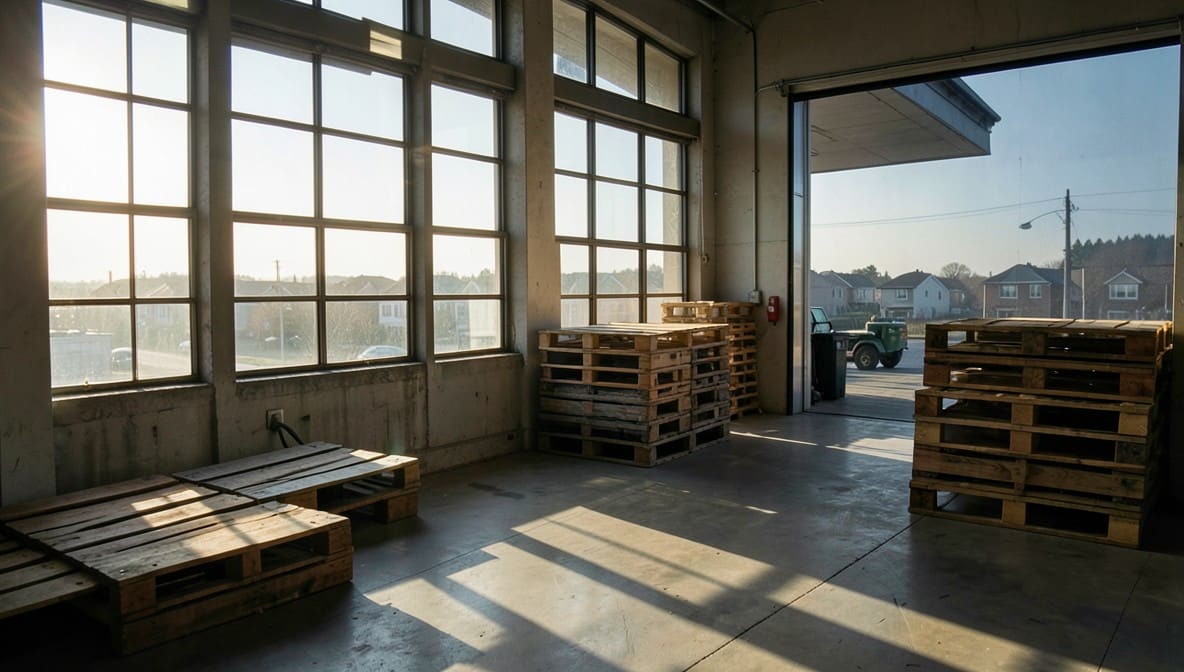
The plaintiff, Bhutoria Brothers Private Ltd, owned a godown of approximately 5,600 square feet situated at N.H.6, Village Dhulagori, P.S. Sankrail, District Howrah. The plaintiff claimed that the premises had been let to M/s Vrinda Texprints under a tenancy agreement dated 1 January 2003. On 23 August 2003, Customs authorities searched the godown, sealed it, and retained control until 2 April 2013. The plaintiff alleged loss of rent, deprivation of use and damage to the premises, seeking damages of Rs.1,32,72,600.
Key Facts
- 1 January 2003: Tenancy agreement with M/s Vrinda Texprints.
- 23 August 2003: Customs search and sealing of the godown.
- 2 April 2013: End of Customs' control over the premises.
- 2005: Plaintiff instituted Title Suit No.29 of 2005 before the Civil Court at Howrah against the tenant.
- 19 August 2010: Decree passed in Title Suit No.29 of 2005.
- 2014: Original suit (CS/86/2014) filed for recovery of damages, interest and ancillary reliefs against the Union of India.
- Leave under Clause 12 of the Letters Patent, 1865 was previously granted to the plaintiff to institute the suit in the Calcutta High Court.
Procedural History
- 2005: Title Suit No.29 of 2005 filed before the Civil Court at Howrah.
- 19 August 2010: Decree issued in Title Suit No.29 of 2005.
- 2014: Plaintiff filed suit CS/86/2014 in the Calcutta High Court seeking damages of Rs.1,32,72,600.
- Date not specified: Leave under Clause 12 of the Letters Patent, 1865, was granted to the plaintiff.
- 31 August 2026: The Union of India filed an application (IA No. GA/8/2026) seeking revocation of the leave and rejection of the plaint.
- 31 August 2026: Judgment delivered by Justice Ananya Bandyopadhyay.
Relief Sought
The plaintiff sought:
- Recovery of damages quantified at Rs.1,32,72,600, alternatively an enquiry into damages,
- Interest on the claimed amount,
- Ancillary reliefs as deemed appropriate.
The Legal Issue
Whether the plaint, on its face, discloses any material part of the cause of action that occurred within the territorial jurisdiction of the Calcutta High Court as contemplated by Clause 12 of the Letters Patent, 1865, thereby justifying the leave that was granted.
Arguments Presented
For the Defendant (Union of India)
- The plaintiff’s averments place every material event - search, sealing, control, and alleged loss - at Dhulagori, Howrah, which lies outside the territorial jurisdiction of the Calcutta High Court.
- Correspondence or demands emanating from Kolkata do not constitute a material part of the cause of action.
- Citing Indian Mineral & Chemicals Co. v. Deutsche Bank (2004) 12 SCC 376, the defendant argued that jurisdictional questions apparent from the plaint must be decided at the leave stage.
For the Plaintiff (Bhutoria Brothers Private Ltd)
- The plaintiff contended that the involvement of the Union of India, a central authority, warranted the exercise of jurisdiction by the High Court.
- It argued that the decree in Title Suit No.29 of 2005 demonstrated a nexus to the High Court’s jurisdiction.
- Relied on the principle that leave under Clause 12 can be granted when the cause of action is not confined to a single locality.
The Court's Analysis
The Court first examined the scope of Clause 12 of the Letters Patent, 1865, which permits a court to entertain a suit when a material part of the cause of action arises within its territorial limits. It observed that the plaint itself must be the source of the jurisdictional fact; disputed facts are for trial, not for jurisdictional determination.
"The plaint itself places every material event constituting the alleged wrong at Dhulagori, Howrah. The search was conducted there; the premises were sealed there; the alleged control was assumed there; and the deprivation of use and alleged damage, for which compensation had been claimed, related to the same premises."
The Court relied on Indian Mineral & Chemicals Co. v. Deutsche Bank (2004) 12 SCC 376, stating that when the want of jurisdiction is apparent from the plaint, the court may decide the issue without deferring to trial. It further cited Excel Dealcomm (P) Ltd. v. Asset Reconstruction Co. (India) Ltd. & Ors. (2015) 8 SCC 219, emphasizing that the character of the suit is derived from the relief claimed, not from ancillary considerations.
Applying these principles, the Court found that no material part of the cause of action occurred within Kolkata or the Calcutta High Court’s territorial jurisdiction. The mere fact that correspondence or demands may have been issued from Kolkata does not satisfy the jurisdictional requirement. Consequently, the leave granted under Clause 12 was untenable.
The Court also noted that the decree in Title Suit No.29 of 2005 pertained to a landlord-tenant dispute distinct from the present claim against the Customs authorities and therefore could not confer jurisdiction.
The Verdict
The Court revoked the leave granted under Clause 12 of the Letters Patent, 1865, and ordered the plaint to be returned to the plaintiff for presentation before a court having appropriate territorial jurisdiction. No order as to costs was made. The decree dated 19 August 2010 in Title Suit No.29 of 2005 remains open for consideration by the competent court.
What This Means For Similar Cases
Territorial Nexus Must Be Evident in the Plaint
- Practitioners must ensure that the plaint discloses a material event occurring within the forum’s territorial limits before seeking leave under Clause 12.
- Mere correspondence or demand letters issued from the forum’s city are insufficient.
Leave Under Clause 12 Is Not a Jurisdictional Bypass
- Courts will scrutinize the factual matrix of the plaint at the leave stage; if jurisdiction is lacking, leave will be revoked.
- Parties should be prepared to file the suit in the appropriate forum from the outset to avoid procedural setbacks.
Prior Decrees Do Not Extend Jurisdiction
- A decree in a related matter does not automatically confer jurisdiction over a distinct cause of action against a different defendant.
- Each cause of action must independently satisfy the territorial requirement.