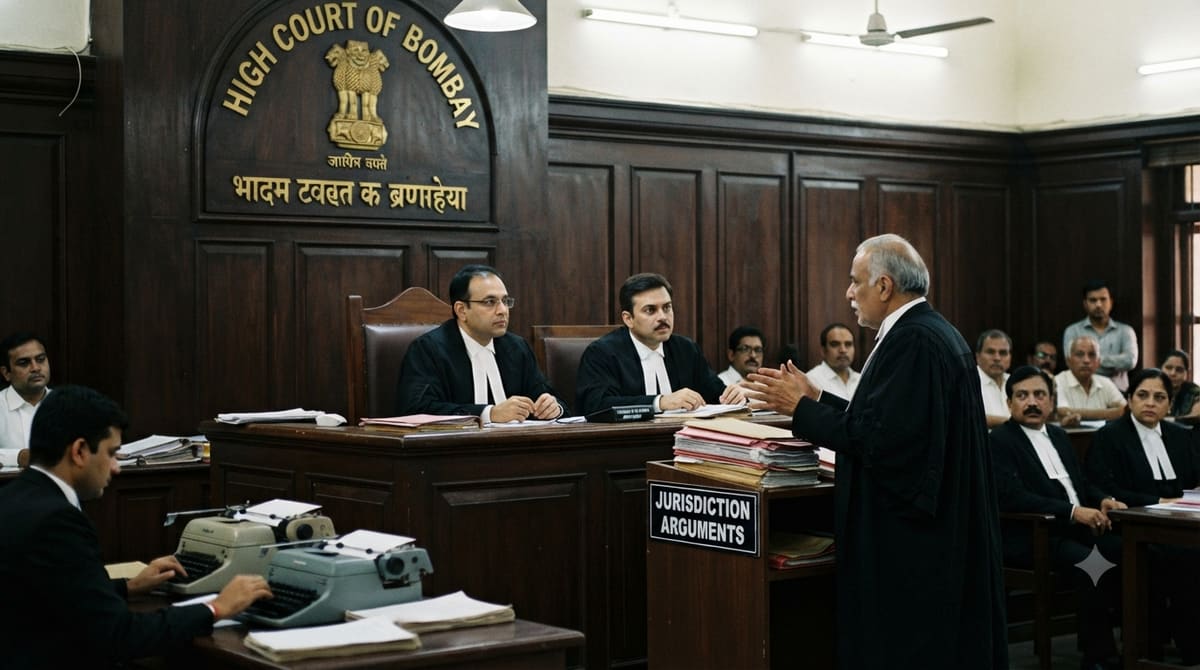
The Bombay High Court has clarified that a suit seeking partition of immovable property, regardless of the presence of other reliefs, constitutes a suit for land under Clause XII of the Letters Patent. The failure to obtain prior judicial leave when part of the property lies outside the court’s territorial jurisdiction renders the entire plaint unsustainable under Order VII Rule 11 of the CPC, even if some assets fall within jurisdiction.
Background & Facts
The Dispute
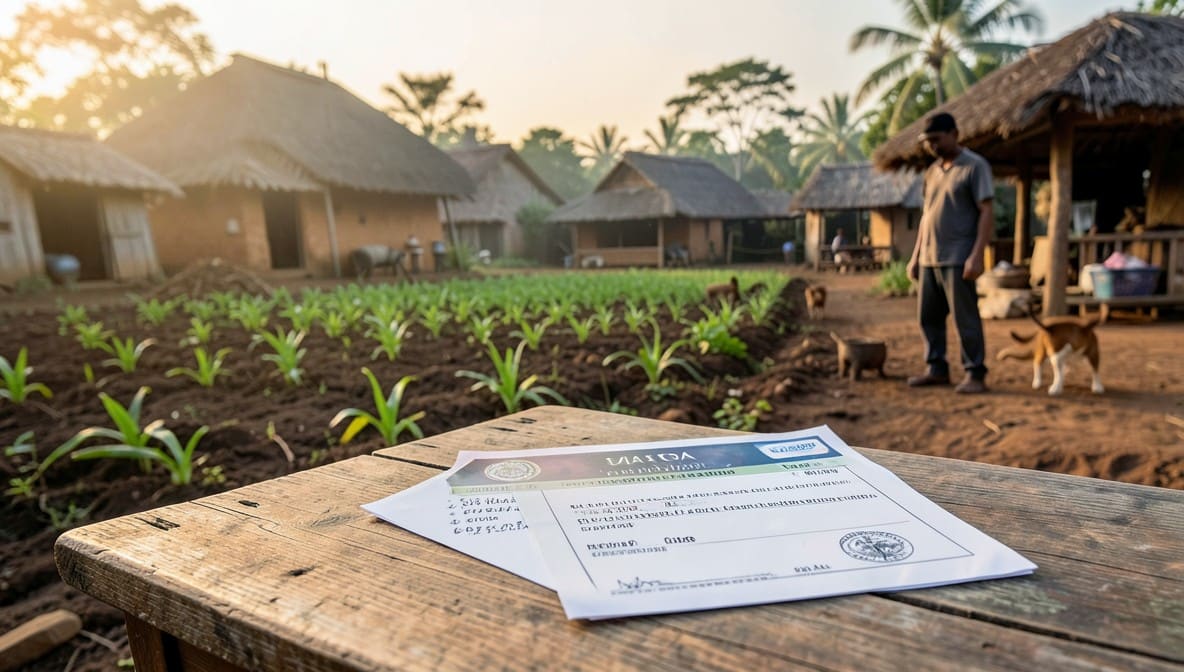
The plaintiff, Renu Balwant Maru, filed a suit seeking declaration of her 1/7th share in the ancestral estate of her deceased father, Shri. Damodar Damjibhai Tank, who was the karta of a Hindu Undivided Family (HUF). The estate included both movable and immovable properties across multiple states: land in Dindoshi, Mumbai; agricultural land in Wardha, Maharashtra; property in Talaja, Gujarat; flats in Bandra, Mumbai; bank deposits; and gold ornaments. The plaintiff sought partition of these properties, declaration of invalidity of agreements entered into by defendants without her consent, and recovery of her share of sale proceeds.
Procedural History
- 2012: Original suit filed in the Bombay High Court under its original civil jurisdiction.
- 2025: Defendants Nos. 1, 3, and 4 filed Interim Application (L) No. 26145 of 2025 under Order VII Rule 11 CPC seeking rejection of the plaint.
- 2026: The matter was heard and reserved on October 8, 2025, and pronounced on February 23, 2026.
Relief Sought
The plaintiff sought:
- Declaration of her 1/7th share in the HUF property.
- Decree for partition of the suit properties by metes and bounds.
- Declaration that agreements executed by defendants 1 to 4 with defendant 7 (dated 30.12.2006 and 06.01.2010) were illegal and not binding.
- Direction to deposit sale proceeds equivalent to her 1/7th share.
- Declaration that all post-death transactions by defendants without her consent were void.
The Parties' Positions
- Defendants: Argued the suit was for partition of immovable property, some of which lay outside the Bombay High Court’s jurisdiction, and that leave under Clause XII of the Letters Patent was mandatory and not obtained.
- Plaintiff: Contended the suit was not a suit for land, but a personal claim for share and declaration; alternatively, even if it were, only part of the plaint could be rejected, not the whole.
The Legal Issue
The central question was whether a suit seeking partition of immovable property, even when accompanied by declarations and injunctions, qualifies as a suit for land under Clause XII of the Letters Patent, and whether failure to obtain prior leave mandates rejection of the entire plaint under Order VII Rule 11 CPC when part of the property lies outside jurisdiction.
Arguments Presented
For the Appellant/Petitioner
Defendants relied on Shiv Bhagwan Moti Ram Saraoji v. Onkarmal Ishar Dass and Vishram Parbat H.U.F. v. Shruti Builders to argue that a suit for partition of immovable property is a suit for land. They cited Adcon Electronics Pvt. Ltd. v. Daulat and Sumer Builders Pvt. Ltd. v. Narendra Gorani to establish that relief involving possession or title to land falls within Clause XII. They further relied on Quadricon Pvt. Ltd. v. Bajrang Alloys to assert that leave must be obtained before institution of the suit and cannot be granted retrospectively. They also invoked Kenchegowda v. Siddegowda to argue that partial partition is not maintainable, rendering the suit defective even for properties within jurisdiction.
For the Respondent/State
The plaintiff argued that the suit was not substantially for land, as the primary relief was declaration of share and not possession. She cited Adcon Electronics to contend that a suit is for land only if title or possession is the principal object. She relied on Central Bank of India v. Prabha Jain and Vinod Infra Developers v. Mahaveer Lunia to assert that a plaint cannot be rejected under Order VII Rule 11 if any relief is maintainable. She further argued that since all defendants resided within jurisdiction, Clause XII’s third limb applied, negating the need for leave. She also contended that prayers (c), (c)(i), (c)(ii), and (c)(iii) related solely to Malad property within jurisdiction and were independent.
The Court's Analysis
The Court undertook a structured analysis of whether the suit fell within Clause XII of the Letters Patent. It began by examining the nature of the reliefs sought. The Court noted that prayer (b) explicitly sought a decree of partition and handover of the plaintiff’s share in the suit properties, which included land and immovable property. The Court held that this constituted a claim for delivery of possession, thereby bringing the suit squarely within the definition of a suit for land as laid down in Adcon Electronics and Sumer Builders.
"A suit for land is a suit in which the relief claimed relates to title to or delivery of possession of land or immovable property."
The Court rejected the plaintiff’s argument that the suit was merely for declaration of share, emphasizing that partition inherently involves determination of title and physical division of property, which is inseparable from possession. It affirmed the binding precedent of Shiv Bhagwan, which held that a suit for partition of immovable property is a suit for land, and dismissed the plaintiff’s reliance on two single judge orders as non-precedential.
The Court further held that since part of the immovable property (in Wardha and Talaja) lay outside the Bombay High Court’s jurisdiction, leave under Clause XII was mandatory. The Court cited Benoy Shankar Dhandani v. Choteylal Dhandania to affirm that leave is required even if only a portion of the property lies outside jurisdiction. It emphasized that leave must be obtained before institution of the suit, as per Quadricon, and cannot be granted after the plaint is admitted.
Crucially, the Court addressed the plaintiff’s fallback argument - that even if leave was required for properties outside jurisdiction, the suit should proceed for properties within jurisdiction. The Court rejected this on the basis of Kenchegowda v. Siddegowda, which held that a suit for partial partition is not maintainable in law. The Court reasoned that the plaintiff’s prayers for partition and declaration of share were interdependent; granting relief on the Malad property alone would amount to partial partition, which is legally impermissible. Thus, the entire plaint was barred by law.
The Court concluded that Order VII Rule 11 applies to the plaint as a whole, not in part, because the defect - lack of leave and the bar on partial partition - rendered the entire suit legally unsustainable. The plaintiff’s reliance on cases permitting partial rejection of reliefs was inapplicable, as the defect was jurisdictional and fundamental.
The Verdict
The defendants won. The Court held that a suit for partition of immovable property is a suit for land under Clause XII of the Letters Patent, and failure to obtain prior leave when part of the property lies outside jurisdiction renders the entire plaint barred by law. Further, a suit for partial partition is not maintainable. Consequently, the plaint was rejected under Order VII Rule 11 of the CPC in its entirety.
What This Means For Similar Cases
Partition Suits Are Presumptively Suits for Land
- Practitioners must treat any suit seeking partition of immovable property as a suit for land, regardless of accompanying declarations or injunctions.
- The presence of movable assets or monetary claims does not alter the character of the suit if partition of land is sought.
- Counsel must assess jurisdictional reach of all properties before filing and secure leave under Clause XII if any immovable property lies outside the court’s territorial limits.
Partial Partition Is Not a Workaround
- A plaintiff cannot circumvent jurisdictional defects by seeking partition of only some properties.
- Even if some properties fall within jurisdiction, the bar on partial partition under Kenchegowda invalidates the entire suit.
- Applications under Order 6 Rule 17 CPC to amend prayers to limit partition will not cure this defect.
Leave Must Be Obtained Before Filing
-
Leave under Clause XII is a condition precedent, not a curable irregularity.
-
Courts will not entertain applications for leave after the plaint is admitted.
-
Practitioners must file applications for leave concurrently with or prior to filing the suit, and retain proof of grant.
-
If leave is not obtained, the entire plaint is liable to be rejected under Order VII Rule 11, even if some reliefs appear sustainable.
-
This ruling reinforces the primacy of procedural compliance in jurisdictional matters and closes a common litigation loophole.