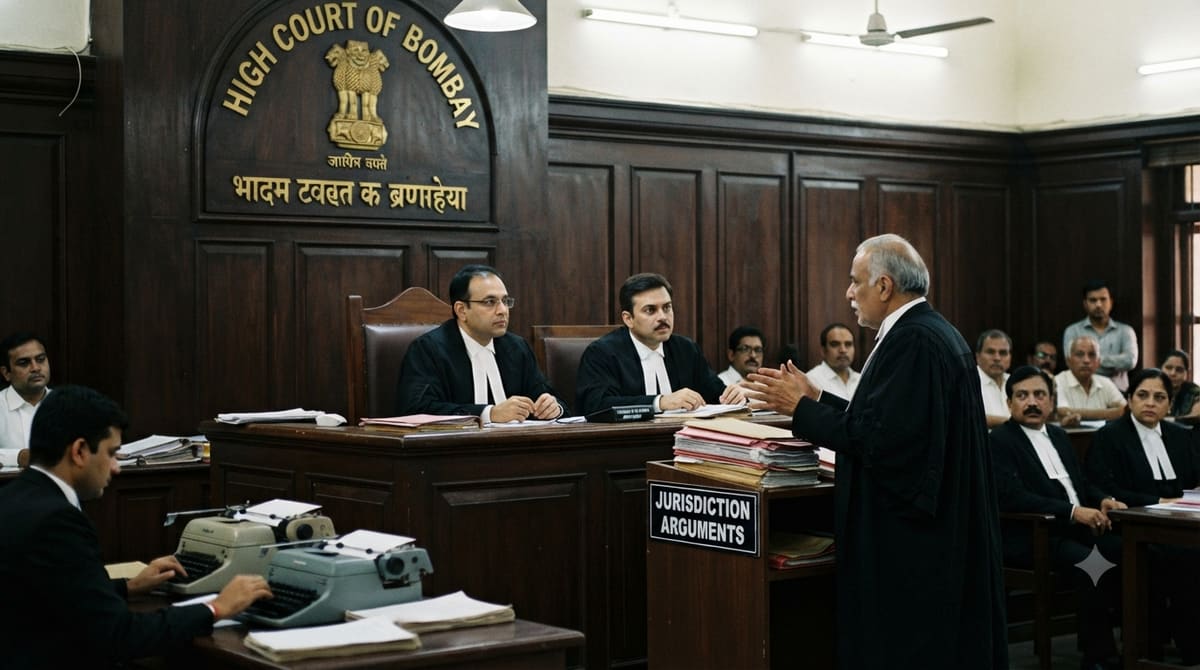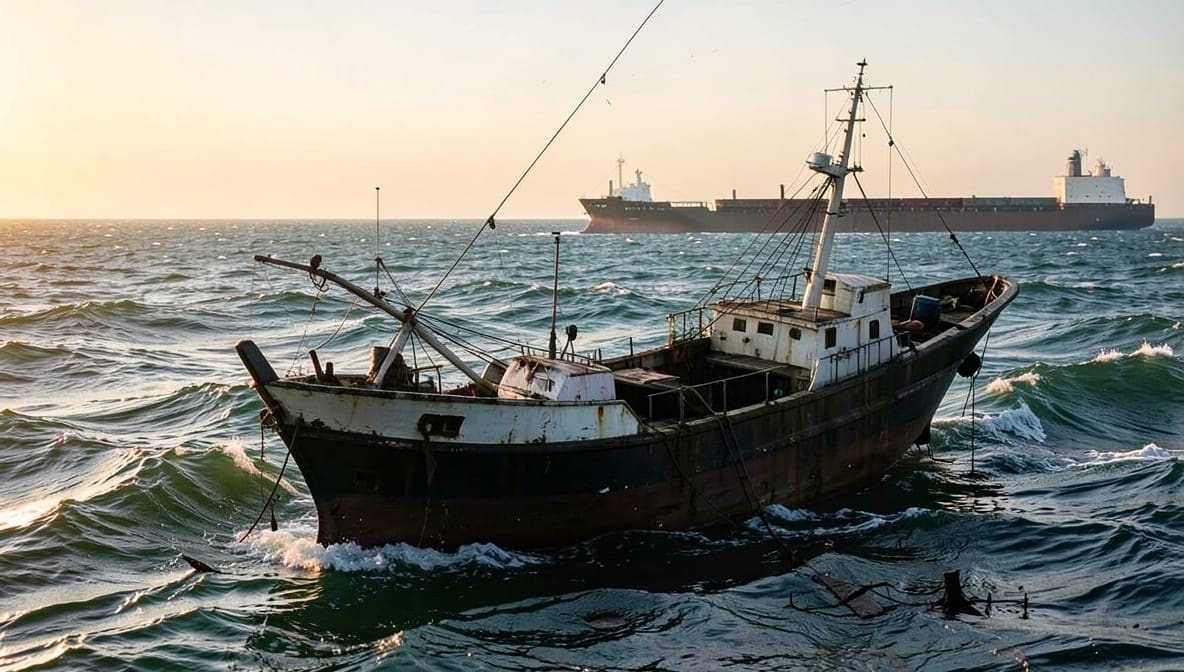
The Bombay High Court clarified admiralty jurisdiction principles, holding that no leave under Clause XII of the Letters Patent Act, 1865 is required to entertain a suit in personam under the Admiralty Act, 2017 if the cause of action arises wholly or in part in India. The court emphasized that Section 17 of the Admiralty Act, 2017 repealed the applicability of the Letters Patent Act, 1865 to admiralty proceedings, thereby removing the prerequisite for such leave. This ruling significantly expands the jurisdictional reach of Indian admiralty courts over maritime incidents with connections to Indian territory or business operations.
Background & Facts
The Dispute
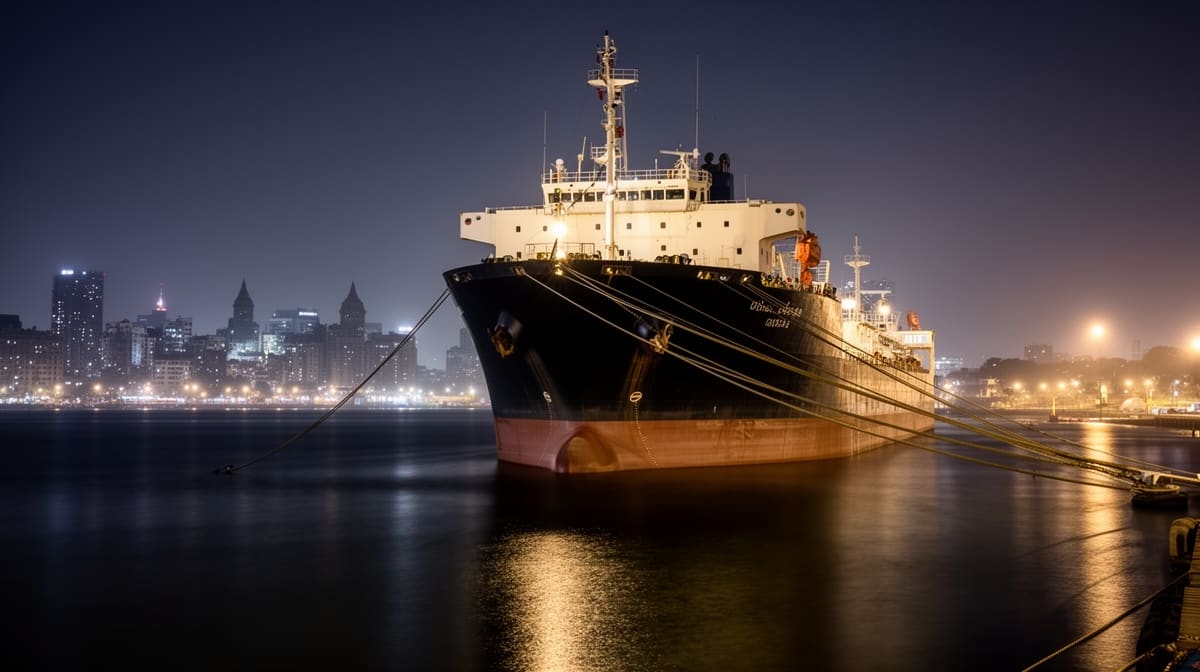
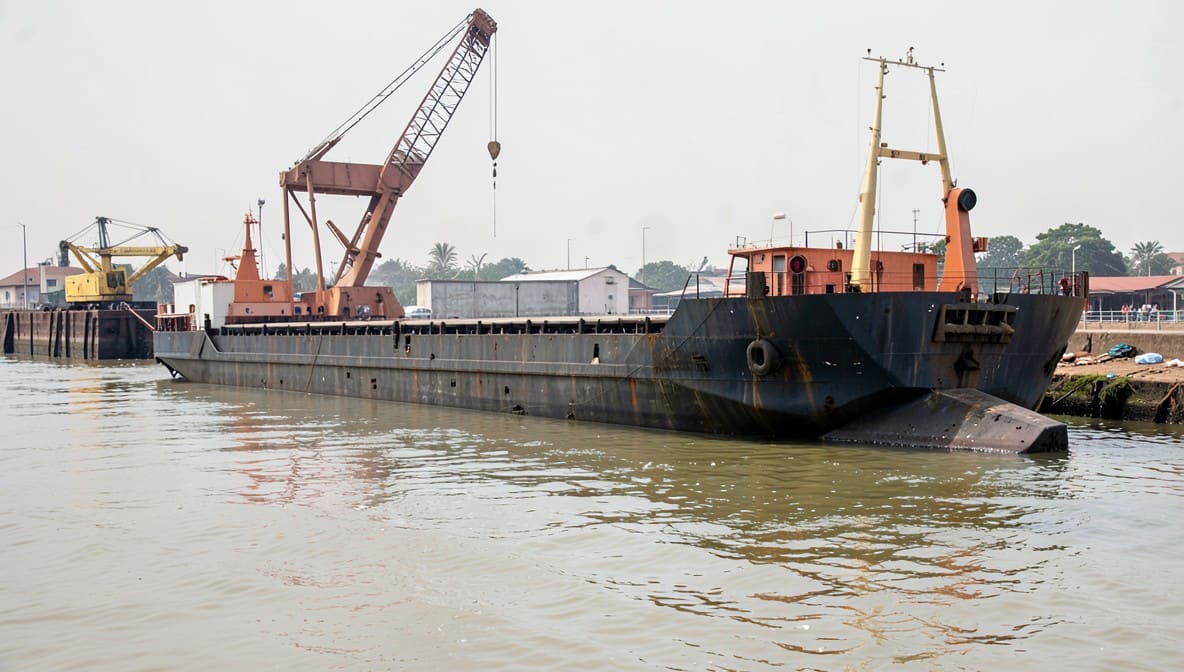
The petitioner, Anthonythasan Decarthus, owner of the Indian fishing boat IFB Ruby, sought compensation and damages from the respondent, Anglo Eastern Tanker Management Hong Kong Ltd., owner of the vessel M.V. New Frontier, following a collision between the vessels in international waters. The petitioner alleged the collision rendered IFB Ruby a total loss, caused personal injury to him and his crew, and deprived him of his sole means of livelihood, resulting in continuing financial hardship.
Key Facts
- The collision occurred off the coast of Kerala, beyond 200 nautical miles from the Kerala coast and beyond 400 nautical miles from the Tamil Nadu coast
- The petitioner’s fishing boat IFB Ruby was rendered totally unfit for fishing operations due to the collision
- The petitioner suffered personal injuries, and his crew was also injured in the incident
- A legal notice was issued to the captain of the respondent’s vessel and its manager following the collision
- Based on the petitioner’s complaint, Crime Register No. 7/2023 was filed on 30th March 2023 at the Colachel Marine Police Station, Kanyakumari District, under Sections 280, 337, and 427 of the Indian Penal Code, 1860
- During investigation, it was revealed that the place of collision was beyond 200 NM from Kerala coast and 400 NM from Tamil Nadu coast
- The papers and proceedings were transferred from the Director General of Police, Tamil Nadu to the Director General of Police, Mumbai, Maharashtra, as the Yellow Gate Coastal Police Station, Mumbai, had been declared the jurisdictional police station for the west coast from Gujarat to Tamil Nadu via communication dated 14th February 2024
- A chargesheet was filed in the Mazgaon Court, Mumbai, and the criminal trial was ongoing at the time of the suit
- The petitioner’s managing director, Mr. Vineet Kumar, was issued a summons under Sections 91 and 160 of the Code of Criminal Procedure, 1973 to appear for further investigation, and his detailed statement was recorded
- The suit was filed as an admiralty suit in personam under Section 6 of the Admiralty (Jurisdiction and Settlement of Maritime Claims) Act, 2017
- The claim was premised on Sections 4(1)(d), (e), and (f) of the Admiralty Act, 2017, covering collision between vessels, loss of property, personal injury, and consequential loss
- The respondent carries on business and exercises management and operational control over its vessel from Mumbai, Maharashtra
- The respondent is incorporated in Hong Kong, but its operational headquarters are situated in Mumbai
Procedural History
- 30.03.2023: Crime Register No. 7/2023 filed at Colachel Marine Police Station based on petitioner’s complaint
- 14.02.2024: Communication declaring Yellow Gate Coastal Police Station, Mumbai, as jurisdictional for west coast from Gujarat to Tamil Nadu
- 02.09.2026: Court heard Ms. Lara A. Jesani, counsel for petitioner, and recorded brief facts leading to the filing of the petition seeking leave under Clause XII of the Letters Patent Act, 1865
- 21.09.2026: Date of judgment (as per coram and date lines in judgment)
The Parties' Positions
For the Petitioner: Ms. Jesani submitted that the claim for compensation and damages arose from the collision, rendering IFB Ruby a total loss and causing injuries. She argued that since the respondent’s business operations and management were carried out from Mumbai, the criminal investigation and chargesheet were filed in Mumbai, and pre-litigation demands occurred through the respondent’s Mumbai office, a substantial part of the cause of action arose in Mumbai. She further contended that Section 17 of the Admiralty Act, 2017 repealed the applicability of the Letters Patent Act, 1865 to admiralty jurisdiction, making leave under Clause XII unnecessary. She relied on the Madras High Court decision in Shipping Corporation of India Limited v. Nicholas John Richardson to support her position on similar facts.
For the Respondent/Registry: The Registry raised two objections: (i) leave under Clause XII of the Letters Patent Act, 1865 was required but not obtained, and (ii) the cause of action did not arise within the jurisdiction of the Bombay High Court.
Relief Sought
The petitioner sought leave under Clause XII of the Letters Patent Act, 1865 to enable the registry to number the admiralty suit, thereby allowing the court to entertain, try, and dispose of the suit.
The Legal Issue
The central question was whether the Bombay High Court required the petitioner to obtain leave under Clause XII of the Letters Patent Act, 1865 to proceed with the admiralty suit, given that the maritime collision occurred in international waters beyond India’s territorial waters, and whether Section 17 of the Admiralty Act, 2017 had repealed the applicability of the Letters Patent Act, 1865 to such proceedings.
Arguments Presented
For the Petitioner
The petitioner contended that Section 17 of the Admiralty Act, 2017 expressly repealed the application of the Letters Patent Act, 1865 to the admiralty jurisdiction of the Chartered High Courts, including the Bombay High Court. Consequently, no leave under Clause XII was necessary for suits instituted under the Admiralty Act, 2017. The petitioner emphasized that the respondent’s business operations, management, and operational control were exercised from Mumbai, Maharashtra, leading to the criminal investigation and chargesheet being filed in Mumbai. Pre-litigation demands, negotiations, and refusals occurred through the respondent’s Mumbai office and its representatives. Relying on paragraphs 44, 45, and 46 of the plaint along with exhibits M to Q, the petitioner argued that the material part of the cause of action arose within the court’s jurisdiction because the defendant actually and voluntarily carried on business in India. The petitioner further cited the Madras High Court’s decision in Shipping Corporation of India Limited v. Nicholas John Richardson (supra) as persuasive authority for sustaining leave in analogous circumstances, though noting that decision did not consider Section 17 of the Admiralty Act, 2017.
For the Respondent/State
The Registry, acting as the respondent in this leave petition, objected that the petitioner had failed to obtain the mandatory leave under Clause XII of the Letters Patent Act, 1865 before filing the suit. It further contended that since the collision occurred in international waters beyond 200 nautical miles from the Kerala coast and 400 nautical miles from the Tamil Nadu coast, the cause of action did not arise within the territorial or jurisdictional limits of the Bombay High Court, thereby ousting its jurisdiction to entertain the admiralty suit.
The Court's Analysis
The court began by noting that Section 17 of the Admiralty Act, 2017 expressly provides that "the application of the Letters Patent Act, 1865 as applicable to the admiralty jurisdiction of this Court, Calcutta High Court and Madras High Court has been repealed." This repeal meant that for proceedings instituted under the admiralty jurisdiction of the Bombay High Court, no leave under Clause XII of the Letters Patent Act, 1865 would be necessary. The court then examined Section 7 of the Admiralty Act, 2017, which governs restrictions on actions in personam. Sub-section (1) of Section 7 states that the High Court shall not entertain any action under Section 6 unless either (a) the cause of action, wholly or in part, arises in India, or (b) the defendant, at the time of commencement of the action, actually and voluntarily resides or carries on business or personally works for gain in India. The court found that paragraphs 44, 45, and 46 of the plaint, along with exhibits M to Q, clearly indicated that the material part of the cause of action had arisen in Mumbai, India, satisfying condition (a) of Section 7(1). Although the conditions in Section 7(1)(a) and (b) are in the alternative, the court held that satisfaction of either condition was sufficient to confer jurisdiction. The court further noted that Sub-section (6) of Section 7 provides that the provisions of Sub-sections (2) and (3) shall not apply if the defendant submits or agrees to submit to the jurisdiction of the High Court. Given that the respondent carried on business from Mumbai and participated in the criminal proceedings there, the court inferred voluntary submission to jurisdiction. The court distinguished the Madras High Court decision in Shipping Corporation of India Limited v. Nicholas John Richardson on the ground that it predated the Admiralty Act, 2017 and did not consider the effect of Section 17, which repealed the Letters Patent Act’s applicability. Consequently, the court concluded that the Registry’s objections were untenable, and no leave under Clause XII was required.
The Verdict
The petitioner succeeded in obtaining the desired relief. The court held that no leave under Clause XII of the Letters Patent Act, 1865 was required to entertain the admiralty suit, as the cause of action arose wholly or in part in India under Section 7(1)(a) of the Admiralty Act, 2017, and Section 17 of the said Act had repealed the applicability of the Letters Patent Act, 1865. The court directed the registry to number the suit, subject to any other objections, thereby allowing the proceedings to continue. No specific monetary relief, interest rates, or compliance timelines were granted in this interlocutory order, as the suit was merely allowed to proceed to trial.
What This Means For Similar Cases
Jurisdiction Turns on Territorial Connection, Not Defendant’s Nationality
Admiralty suits in personam under the Admiralty Act, 2017 can proceed in Indian courts if the cause of action arises wholly or in part in India, regardless of the defendant’s foreign incorporation or the incident’s occurrence in international waters. Practitioners must now focus on demonstrating territorial connections - such as the defendant’s business operations, residence, or voluntary submission to jurisdiction in India - rather than solely relying on the location of the maritime incident. This lowers the threshold for establishing admiralty jurisdiction over foreign shipping entities with Indian operational bases.
Section 17 of the Admiralty Act, 2017 is a Complete Code for Jurisdiction
The repeal of the Letters Patent Act, 1865’s applicability by Section 17 of the Admiralty Act, 2017 means that leave under Clause XII is obsolete for all admiralty suits filed under the 2017 Act. Lawyers need not plead or prove compliance with the colonial-era Letters Patent requirements when invoking the Admiralty Act, 2017. This simplifies procedural compliance and removes a historical hurdle that previously delayed or defeated meritorious maritime claims.
Burden of Proof Lies on Plaintiff to Show Territorial Nexus
While the court found the cause of action arose in India based on pleadings and exhibits, it placed the onus on the plaintiff to establish that either condition in Section 7(1)(a) or (b) is satisfied. Plaintiffs must now meticulously plead and produce evidence - such as business registration documents, operational records, or communication trails - showing the defendant’s Indian connections. Mere allegation of jurisdiction is insufficient; concrete proof of territorial nexus is essential to withstand jurisdictional challenges.