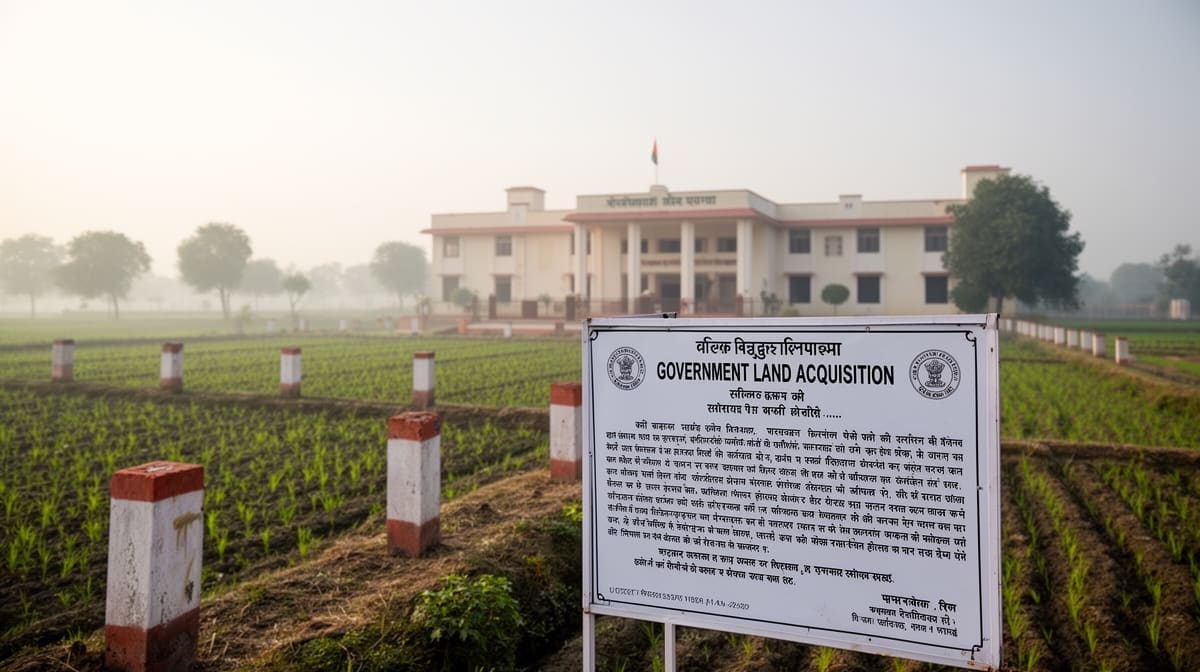
The Himachal Pradesh High Court has affirmed that landholders granted land under the Nautor Rules are not barred from receiving compensation when the State acquires such land for public purposes under the Land Acquisition Act, 1894. This ruling reinforces the principle that statutory acquisition procedures override restrictive grant conditions, ensuring fair valuation for all affected landowners.
Background & Facts
The Dispute
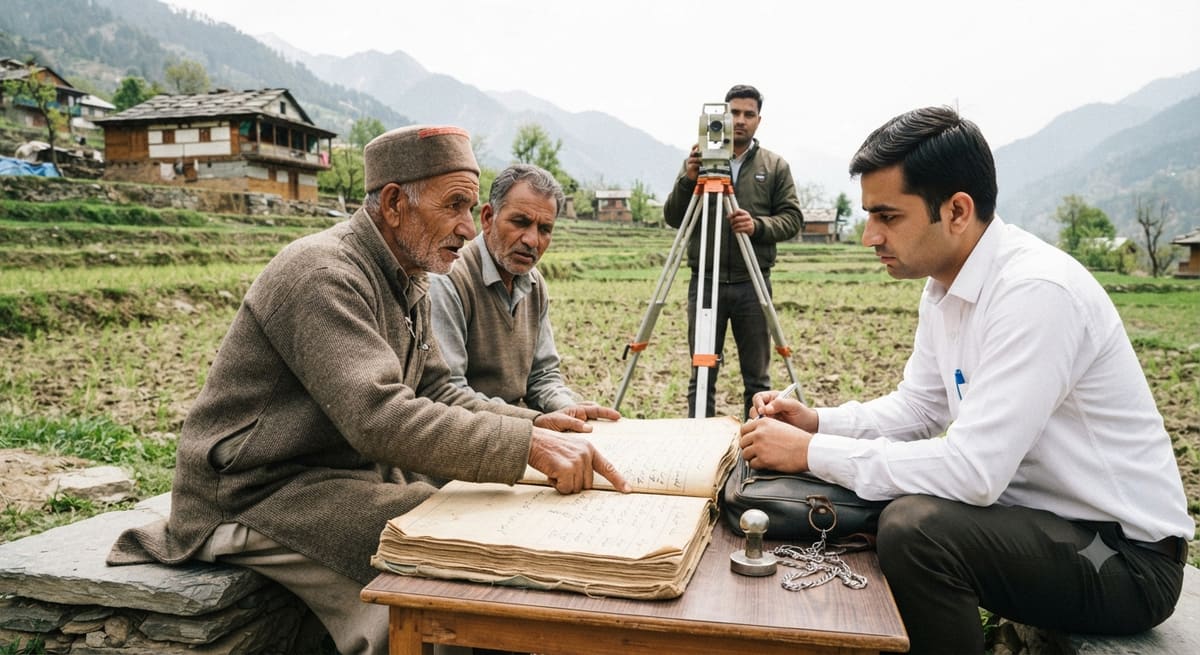
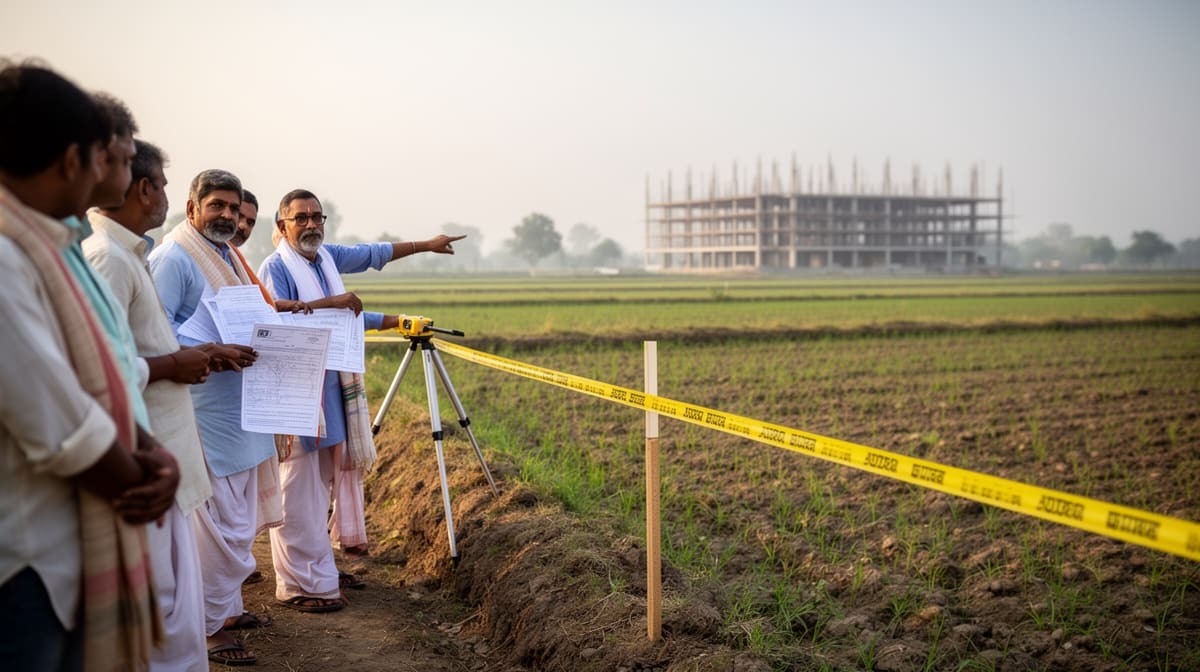
The dispute arose from the acquisition of land for the construction of the Syanj link road in District Mandi, Himachal Pradesh. The respondents, landowners holding Khasra No. 502/1 measuring 1-8-17 bighas in Mauza Sainj HB 70 Illaqua Kasan, Tehsil Chachiot, had originally obtained this land from the State under the Himachal Pradesh Nautor Rules, 1968. The Land Acquisition Officer refused to grant compensation for this parcel, relying on the condition in the Nautor grant that no compensation would be payable if the land was later acquired by the State for public works.
Key Facts
- The land was granted to the respondents under the Himachal Pradesh Nautor Rules, 1968
- The State issued a notification under Section 4 of the Land Acquisition Act, 1894 on 20.09.2006, published in Rajpatra and newspapers (Amar Ujala on 09.08.2006 and Dainik Tribune on 10.08.2006)
- Local publicity was completed on 04.10.2006
- The Land Acquisition Collector excluded Khasra No. 502/1 from the award, citing the Nautor grant condition
- The respondents challenged this exclusion under Section 18 of the Land Acquisition Act, 1894 before the Additional District Judge-II, Mandi
- The Reference Court held the respondents entitled to compensation, referencing a prior common judgment dated 17.03.2012 (Ex. PW-1/B) in related cases
Procedural History
- 20.09.2006: Notification under Section 4 of the Land Acquisition Act, 1894 issued and published
- 04.10.2006: Local publicity completed
- 27.04.2016: Land Acquisition Collector issued award excluding Khasra No. 502/1
- 2015: Petition filed under Section 18 of the Act before the Additional District Judge-II, Mandi (LAC Petition No. 1/2015/2011)
- 17.03.2012: Common judgment by Additional District Judge-I, Mandi, in related references (Ex. PW-1/B) established compensation rate
- 27.04.2016: Award passed by Land Acquisition Officer excluding compensation for Khasra No. 502/1
- 2016: Reference Court allowed petition, directing compensation with solatium, additional compensation, and interest
- 11.05.2026: Appeal filed by State under Section 54 of the Land Acquisition Act, 1894 before the High Court of Himachal Pradesh
Relief Sought
The respondents sought compensation for Khasra No. 502/1 at the same rate, terms, and conditions as determined in the common judgment dated 17.03.2012, along with solatium at 30%, additional compensation at 12% per annum, and interest as provided under the Act. The appellants sought to set aside the award and deny compensation on the basis of the Nautor grant conditions.
The Legal Issue
The central question was whether landholders granted land under the Himachal Pradesh Nautor Rules, 1968, are entitled to compensation under the Land Acquisition Act, 1894, when the State acquires such land for public purposes, despite restrictive conditions in the grant prohibiting compensation.
Arguments Presented
For the Appellant
The Additional Advocate General contended that the Nautor Rules, 1968, imposed a condition that no compensation would be payable if the State resumed the land for public purposes, such as road construction. He argued that the Reference Court erred in ignoring this contractual limitation and that the State, as grantor, retained the right to resume land without payment. He further submitted that the Reference Court improperly relied on a prior judgment in unrelated cases without independently assessing the facts.
For the Respondent
The respondents’ counsel argued that once the State chose to acquire land under the Land Acquisition Act, 1894, it was bound by its statutory framework, which mandates compensation based on market value. He emphasized that the Nautor grant conditions cannot override the statutory right to compensation under the Act, especially where the State has not formally resumed the land under the Rules but instead initiated acquisition proceedings.
The Court's Analysis
The Court examined the nature of the Nautor grant and the statutory framework of the Land Acquisition Act, 1894. It noted that the State, by issuing a notification under Section 4 and proceeding with acquisition under the Act, had elected to follow the statutory procedure for compulsory acquisition. The Court held that once this path is chosen, the State cannot invoke private grant conditions to deny compensation.
"The Government could not, after adopting the procedure prescribed by the Land Acquisition Act, seek to resort to the conditions of the grant and claim that no compensation for acquisition of the land was payable."
The Court relied on the binding precedent of the Supreme Court in The Special Land Acquisition and Rehabilitation Officer, Sagar v. M.S. Seshagiri Rao & another, AIR 1968 SC 1045, which held that the measure of compensation must reflect the market value of the landholder’s interest, even if subject to restrictive conditions. The Court further cited its own decision in Vijay Kumar & others v. State of H.P., which held that the mere existence of a Nautor grant does not extinguish the right to compensation under the Act.
The Court emphasized that the State had not produced any evidence of formal resumption under the Nautor Rules. Absent such revocation or resumption, the land remained vested in the respondents, and the State’s acquisition under the Act triggered the statutory obligation to pay compensation. The Reference Court’s reliance on the common judgment dated 17.03.2012 was deemed appropriate as it provided a consistent benchmark for valuation in the same acquisition project.
The Verdict
The appeal was dismissed. The High Court upheld the award of the Reference Court dated 27.04.2016, confirming the respondents’ entitlement to compensation for Khasra No. 502/1 at the rate determined in the common judgment dated 17.03.2012, along with solatium at 30%, additional compensation at 12% per annum, and interest as provided under Section 23(1A) of the Land Acquisition Act, 1894. All pending applications were disposed of.
What This Means For Similar Cases
Nautor Grants Do Not Bar Statutory Compensation
- Practitioners must argue that any restrictive condition in a Nautor grant is superseded once the State initiates acquisition under the Land Acquisition Act, 1894
- The burden lies on the State to prove formal resumption under the Nautor Rules before denying compensation
- Merely citing grant conditions without evidence of resumption is legally insufficient
Market Value Must Reflect Actual Interest Held
- Compensation must be calculated based on the market value of the landholder’s interest, even if subject to restrictions
- The Supreme Court’s test in Seshagiri Rao requires courts to assess what a willing buyer would pay for the land as held by the grantee
- Valuation cannot be arbitrarily reduced or denied based on speculative or unenforced grant conditions
Consistency in Valuation Across Similar Cases
- Reference Courts may rely on common judgments in related acquisitions within the same project to ensure uniformity
- This prevents arbitrary disparities in compensation and promotes equitable treatment of similarly situated landowners
- Practitioners should cite prior awards in the same acquisition project as persuasive authority