The Punjab and Haryana High Court has clarified that a mere entry in revenue records, without proof of actual possession or lawful tenancy, cannot override the rights of the true owner to full compensation under the Land Acquisition Act, 1894. This judgment reinforces the principle that compensation must reflect substantive ownership, not merely documentary entries.
Background & Facts
The Dispute
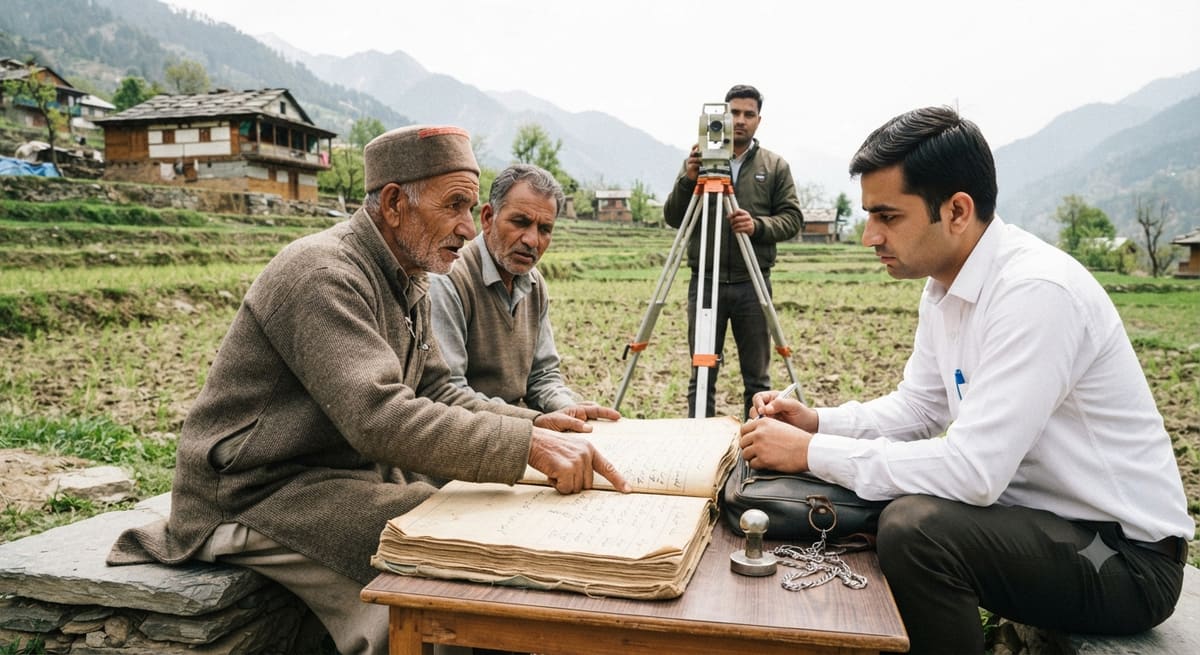
The appellant, Vidya Sagar (now deceased), was the recorded owner of land measuring 2 kanal 11 marla in Khewat No.617/562, Khatoni No.738, Rect. No.34, Khasra No.25/2(1-11), situated in Village Patti Taraf Afghan, Tehsil and District Panipat, Haryana. The land was acquired by the State for development of Industrial, Commercial and Transport Nagar in Sector 25 Part-II under Notification dated 23.10.1989 issued under Section 4 of the Land Acquisition Act, 1894. A declaration under Section 6 followed on 22.10.1990. The Land Acquisition Collector issued Award No.18 dated 25.03.1991, assessing market value at varying rates. However, due to an entry in the revenue record identifying respondent No.3, Mai Chand, as a 'gair marusi' tenant, the Collector withheld payment to the appellant and proposed apportionment.
Key Facts
- The appellant was the sole recorded owner in the revenue records prior to the disputed entry
- Respondent No.3, Mai Chand, was listed as a 'gair marusi' tenant in the revenue record, but no rent or batai payments were recorded
- The appellant filed a reference under Sections 18 and 30 of the Act seeking enhancement of market value and full compensation
- The Land Acquisition Collector deposited ₹93,754/- and referred the matter to the Reference Court
- The appellant appeared as PW-1 and testified that he had been in continuous, exclusive, self-cultivation of the land since acquisition and had never leased it to respondent No.3
- The jamabandi for 1993-94 recorded the appellant as owner in possession
- Respondent No.3 did not appear before the Reference Court despite service, nor filed any claim or evidence
- No independent reference was filed by respondent No.3 under Section 30
Procedural History
- 23.10.1989: Notification issued under Section 4 of the Land Acquisition Act
- 22.10.1990: Declaration issued under Section 6
- 25.03.1991: Award No.18 issued by Land Acquisition Collector
- 1991: Reference filed under Sections 18 and 30
- 20.10.2007: Reference Court awarded market value of ₹140/- per square yard, apportioning 25% to appellant and 75% to respondent No.3
- 2008: Appeal filed before the High Court as RFA No.790 of 2008
- 29.04.2016: Service of respondent No.3 dispensed with by order
- 16.03.2026: Appeal reserved for judgment
- 18.03.2026: Judgment pronounced
- During pendency, appellant Vidya Sagar passed away; his legal representatives (widow and two sons) were brought on record
Relief Sought
The appellant sought: (1) enhancement of market value to ₹147/- per square yard as per binding precedent in Gulab Singh v. State of Haryana; (2) full compensation payable exclusively to him; (3) setting aside of apportionment in favour of respondent No.3; and (4) payment of statutory benefits.
The Legal Issue
The central question was whether a mere 'gair marusi' entry in the revenue record, without proof of actual possession, tenancy, or payment of rent, is sufficient to justify apportionment of compensation under the Land Acquisition Act, 1894.
Arguments Presented
For the Appellant
Learned Senior Advocate Ashwani Talwar contended that respondent No.3 had neither appeared nor led any evidence to establish possession or tenancy. He relied on Haryana Wakf Board v. State of Haryana (2019) 13 SCC 382, which holds that compensation must be awarded only to persons with lawful and settled possession. He argued that the appellant’s unrebutted testimony and the 1993-94 jamabandi confirmed exclusive ownership and cultivation. He further submitted that the apportionment under Mangat Ram v. State of Haryana was mechanically applied without examining the factual basis.
For the Respondent
The State counsel conceded that the market value issue was covered by Gulab Singh but did not contest the apportionment issue, as respondent No.3 had not appeared and was not represented.
The Court's Analysis
The Court examined the nature of revenue records and their evidentiary weight in land acquisition proceedings. It noted that while revenue entries are prima facie evidence of title, they are not conclusive, especially when contradicted by actual possession and unrebutted testimony.
"It is well settled that a mere stray or unexplained entry in the revenue record, without any supporting evidence of actual possession or tenancy, cannot be made the sole basis for depriving the true owner of compensation."
The Court emphasized that Haryana Wakf Board laid down a clear standard: compensation apportionment requires proof of lawful and settled possession. Respondent No.3 failed to meet this threshold. He did not file an independent reference under Section 30, did not contest proceedings, and offered no evidence of rent, batai, or cultivation. The Reference Court erred in mechanically applying Mangat Ram, which dealt with cases where tenancy was substantiated.
The Court further held that the appellant’s testimony as PW-1 remained unchallenged and was corroborated by the 1993-94 jamabandi, which recorded him as owner in possession. The absence of any counter-evidence from respondent No.3 rendered the apportionment unjustified.
The Verdict
The appeal is allowed. The impugned award dated 20.10.2007 is modified: (1) the market value of the acquired land is enhanced to ₹147/- per square yard along with all statutory benefits; (2) the entire compensation amount is payable exclusively to the appellant’s legal representatives - his widow and two sons - in equal shares; (3) the apportionment of 75% to respondent No.3 is set aside; and (4) all pending applications stand disposed of.
What This Means For Similar Cases
Revenue Entries Are Not Conclusive Without Possession
- Practitioners must challenge apportionment based solely on revenue entries where no rent, batai, or physical possession is proven
- The burden shifts to the claimant asserting tenancy to prove actual possession, not merely rely on jamabandi entries
- In cases where the alleged tenant does not appear or file a reference under Section 30, courts must not presume rights
True Owner Must Be Protected Against Mechanical Application of Precedents
- Courts must distinguish between cases where tenancy is substantiated (Mangat Ram) and those where it is not
- The Haryana Wakf Board standard must be applied rigorously: lawful and settled possession is mandatory for apportionment
- Legal representatives of landowners should immediately file affidavits of possession and obtain jamabandi extracts to rebut spurious claims
Procedural Default by Claimants Is Fatal to Their Claims
- Failure to appear before the Reference Court, even after service, extinguishes any claim to compensation
- No independent reference under Section 30 = no legal standing to claim apportionment
- Courts may treat non-appearance as abandonment of rights, especially in the absence of any documentary or oral evidence