The Himachal Pradesh High Court has clarified the legal position on ownership of Shamlat land, holding that continuous possession and payment of land revenue by proprietors override vesting entries made under the H.P. Village Common Land (Vesting and Utilization) Act, 1974. This judgment reinforces the principle that revenue records serve as primary evidence of ownership, particularly when vesting entries are not supported by actual dispossession or surrender of rights by the recorded proprietors.
Background & Facts
The Dispute
The case arose from a land acquisition proceeding initiated by the State of Himachal Pradesh under Section 4 of the Land Acquisition Act, 1894 for the construction of an airport at Jubber Hatti. The land in question, measuring 12 bighas (khasra No. 184 min), was situated in Mauja Khalag, Pargana Bagi, Tehsil and District Shimla. The State issued a notification on 19.05.1988, acquiring the land, which was recorded as Shamlat Deh (village common land) in revenue records.
The Land Acquisition Collector initially ordered that half of the compensation be paid to the State of Himachal Pradesh (as the recorded owner) and the remaining half to Shri Chet Ram, a non-occupancy tenant. The petitioner, Chandermani Sharma, challenged this order, contending that the land was Shamlat Deh of revenue estate Khalag and was in cultivating possession of the proprietors of Khewats No. 1 to 15. He further argued that the land was assessed to land revenue, which was being paid by the proprietors as per their shares, and that the vesting entries in favor of the Panchayat and the State were wrong and illegal.
Key Facts
19.05.1988: Notification issued under Section 4 of the Land Acquisition Act, 1894 for acquisition of 12 bighas of land for airport construction.
Ownership Dispute: The land was recorded as Shamlat Deh in revenue records, with entries showing ownership as "Shamlat Deh Hasab Rasad Araji Khewat" and possession with the proprietors of Khewats No. 1 to 15.
Vesting Entries: The land was purportedly vested in the Panchayat under the Punjab Village Common Land Act, 1961 and later in the State of Himachal Pradesh under the H.P. Village Common Land (Vesting and Utilization) Act, 1974.
Petitioner’s Claim: Chandermani Sharma alleged that he was in continuous cultivating possession of his share in the land since before 26.01.1950 and was paying land revenue. He contended that the vesting entries were paper entries and did not confer any right on the State or Panchayat.
Compensation Demand: The petitioner sought enhanced compensation @ Rs. 25,000 per bigha, arguing that neither the State nor Shri Chet Ram (or his legal representatives) were entitled to any compensation.
Procedural History
03.04.2010: The learned Additional District Judge, Shimla (Reference Court), allowed the reference petition filed by Chandermani Sharma under Section 54 of the Land Acquisition Act, 1894, holding that he was entitled to the entire compensation and that the respondents (State and Shri Chet Ram’s legal representatives) were not entitled to any compensation.
RFA No. 171 of 2010: The State of Himachal Pradesh and the Land Acquisition Collector filed the present appeal against the Reference Court’s award.
Positions Before the High Court
For the Appellants (State and Land Acquisition Collector)
Argued that the Reference Court erroneously held the petitioner entitled to compensation, as he had no existing right, title, or interest in the land.
Contended that the land was vested in the State of Himachal Pradesh without encumbrances and that the petitioner was not entitled to any compensation.
For the Respondents (Chandermani Sharma and Others)
Supported the impugned award, arguing that the petitioner’s predecessor-in-interest was the owner-in-possession of the disputed land, as evidenced by land revenue payments.
Relied on revenue records (jamabandis) to establish continuous possession and ownership.
The Legal Issue
The central question before the High Court was whether revenue records demonstrating continuous possession and payment of land revenue by a proprietor override vesting entries made under the H.P. Village Common Land (Vesting and Utilization) Act, 1974, thereby entitling the proprietor to compensation under the Land Acquisition Act, 1894.
Arguments Presented
For the Appellants
The State contended that the land was vested in it under the H.P. Village Common Land Act, 1974, and that the petitioner had no subsisting right to claim compensation.
Relied on the vesting entries to argue that the petitioner’s claim was legally unsustainable.
For the Respondents
Argued that the revenue records (jamabandis) clearly established the petitioner’s continuous possession and ownership since 1953-54.
Contended that the vesting entries were mere paper entries and did not disturb the petitioner’s actual possession.
Cited the judgment in State of H.P. v. Beli Ram & others (1997(3) Simla Law Cases 245) to support the proposition that sanction of mutation does not vest title in the absence of actual dispossession.
The Court's Analysis
The High Court conducted a detailed examination of the revenue records and the testimonies of the petitioner and his witnesses to determine the true nature of possession and ownership of the land.
Examination of Revenue Records
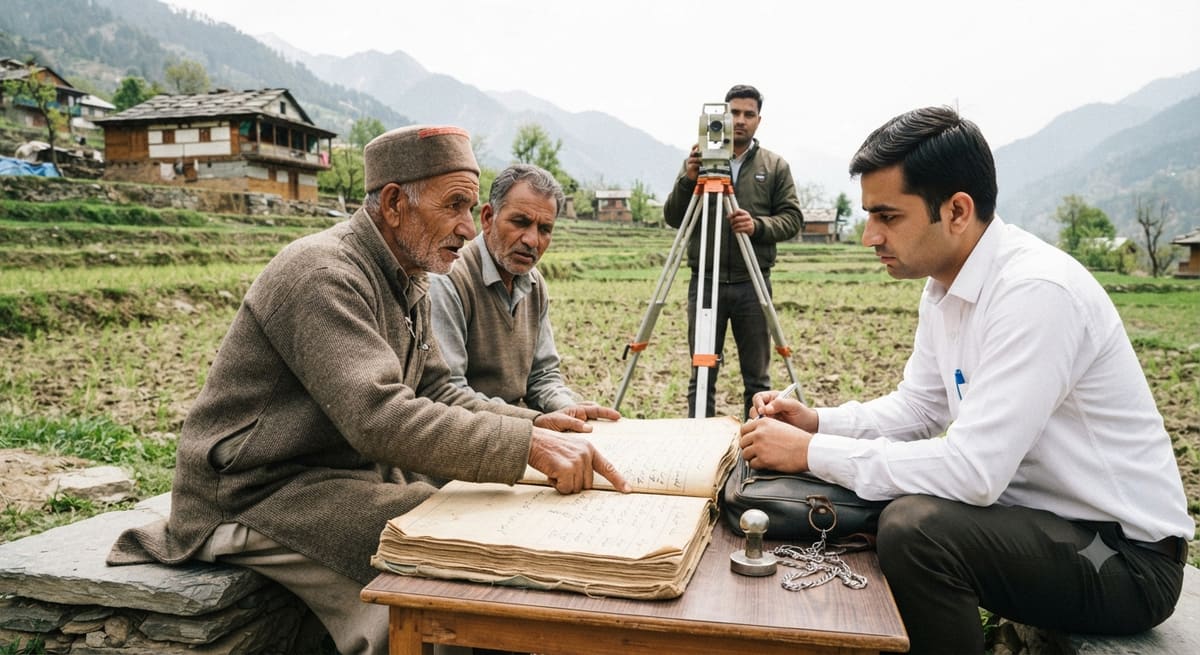
Exhibit PA: Copy of jamabandi for 1953-54 showing the land as Shamlat Deh in possession of "Makbuja Malkaan" (Khewat Nos. 1 to 15). The ownership column read "Shamlat Deh Hasab Rasad Araji Khewat," and the land was assessed to land revenue.
Exhibit PG: Copy of jamabandi pertaining to Malkiti land of Smt. Molku Devi (predecessor of the petitioner), showing her as co-owner-in-possession with a 1/3rd share and payment of land revenue for both ownership and Shamlat land.
Exhibit PX-1: Copy of Fard Bachh (revenue receipt) showing payment of rent by the owners, including the petitioner, for their respective shares.
The Court observed that the revenue records established the petitioner’s continuous possession since 1953-54 and that there was no evidence of the petitioner ever surrendering his rights or being dispossessed from the land.
Testimonies of Witnesses
The petitioner (PW-1) and his son (PW-4) testified that the petitioner was in cultivating possession of his 1/3rd share in the Shamlat land, as per the partition among co-sharers.
The Court noted that the testimonies aligned with the revenue records, leading to the only inference that the petitioner was in continuous possession and was paying land revenue.
Precedent Analysis
The Court relied on the judgment in State of H.P. v. Beli Ram & others, which held that:
"Mere sanction of mutation in favour of a person does not vest any right, title or interest in the given situation."
The Court further quoted:
"Only that kind of land can be recorded as ‘Shamlat Taraf Pati’ which, according to the entries comprising record-of-rights, is used by the villagers or is reserved for their benefit. If it is proved that the land was never put to use for common purposes and was in exclusive possession of the proprietors and was also subject to the payment of land revenue, the land would be excluded from the definition of ‘Shamlat Deh.’"
Applying this principle, the Court held that the vesting entries in favor of the Panchayat and the State were not supported by actual dispossession of the petitioner. Therefore, the revenue records prevailed, and the petitioner was entitled to compensation.
The Verdict
The High Court dismissed the appeal filed by the State of Himachal Pradesh and the Land Acquisition Collector, upholding the Reference Court’s award dated 03.04.2010. The Court held that:
The petitioner, Chandermani Sharma, was entitled to the entire compensation for the acquired land, as he was the rightful owner-in-possession based on revenue records and continuous payment of land revenue.
The State of Himachal Pradesh and Shri Chet Ram’s legal representatives were not entitled to any compensation, as the vesting entries were mere paper entries and did not confer any right.
The impugned award was upheld in its entirety, and the appeal was dismissed with no costs awarded.
What This Means For Similar Cases
Revenue Records Trump Vesting Entries
Primary Evidence: Courts will prioritize revenue records (jamabandis, Fard Bachh, etc.) over vesting entries under statutes like the H.P. Village Common Land Act, 1974, when determining ownership and possession.
Continuous Possession: Proprietors who can demonstrate continuous possession and payment of land revenue since before 26.01.1950 (or as per applicable cut-off dates) are likely to prevail over vesting entries.
Vesting Without Dispossession Is Ineffective
No Automatic Title: Vesting entries under statutes like the H.P. Village Common Land Act, 1974 do not automatically confer title if the proprietors were never dispossessed or disturbed in possession.
Burden of Proof: The State must prove actual dispossession or surrender of rights to rely on vesting entries. Mere paper mutations are insufficient.
Implications for Land Acquisition Compensation
Compensation Entitlement: Proprietors recorded in revenue records as owners-in-possession are entitled to compensation under the Land Acquisition Act, 1894, even if vesting entries exist in favor of the State or Panchayat.
Exclusion of Non-Proprietors: Parties relying solely on vesting entries (e.g., the State or tenants) may be excluded from compensation if they cannot prove actual possession or title.
Practitioners should:
Rely on revenue records (jamabandis, Fard Bachh, mutation orders) to establish continuous possession and ownership.
Challenge vesting entries if the proprietor was never dispossessed or disturbed in possession.
Argue for compensation based on revenue records even if vesting entries exist in favor of the State or Panchayat.