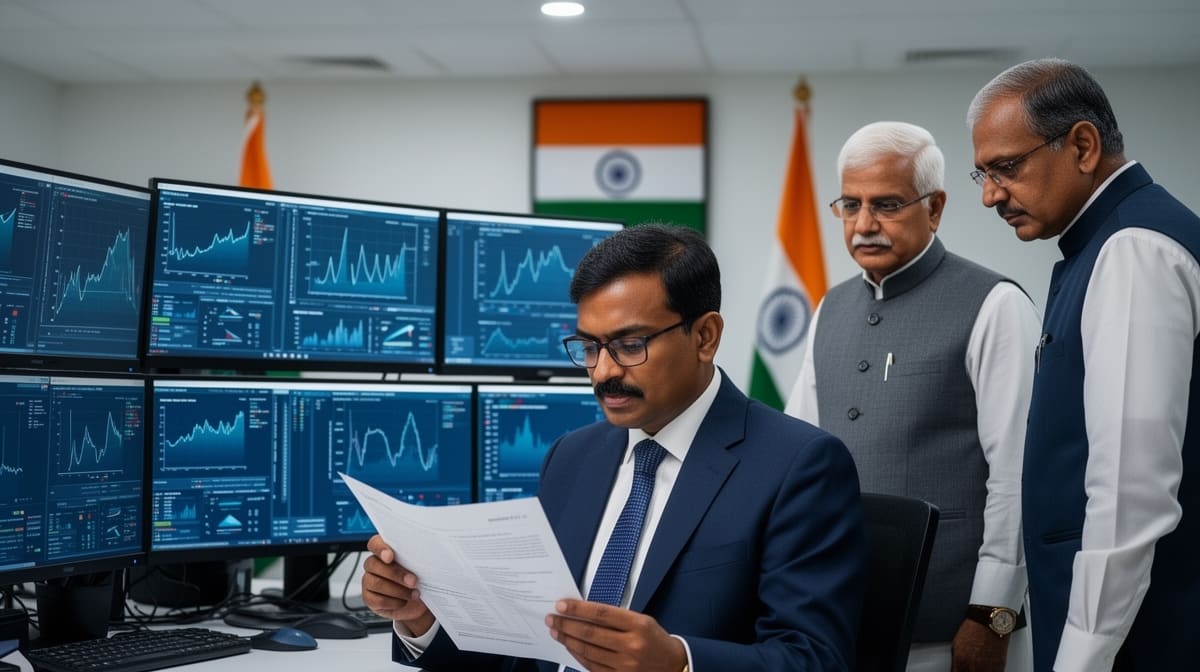
In a significant assertion of judicial oversight over executive data analysis, the Supreme Court has directed the appointment of a former Chief Statistician of India as Technical Consultant to a National Task Force. The judgment underscores the court's role in ensuring scientific rigor in government surveys while mandating administrative compliance with its directives, setting a precedent for judicial intervention in technical domains of governance.
Background & Facts
The Genesis
The case originated from an interlocutory application filed in Criminal Appeal No. 1425 of 2025. The appellants sought judicial intervention to ensure scientifically robust analysis of survey data collected by a National Task Force. The specific reliefs included:
- Appointment of an independent technical expert
- Administrative support from the Ministry of Education
- Appropriate remuneration for the consultant
Procedural History
The matter came before the Supreme Court in its criminal appellate jurisdiction:
- 2025: Criminal Appeal No. 1425 filed
- 2026: Interlocutory Application No. 25652 filed seeking technical consultant appointment
- February 6, 2026: Final order passed by the Supreme Court
Relief Sought
The appellants prayed for:
- Appointment of Dr. T.C.A. Anant, former Chief Statistician of India, as Technical Consultant
- Direction to the Ministry of Education to provide administrative support, infrastructure, and data access
- Fixation of appropriate remuneration/honorarium for the consultant
The Legal Issue
The central question was whether the Supreme Court could direct the executive to appoint a specific technical expert and mandate administrative support for data analysis, particularly when the original proceedings were criminal in nature. Additionally, the court had to determine the scope of its supervisory jurisdiction over technical aspects of government functioning.
Arguments Presented
For the Appellants
The appellants contended that:
- Scientific integrity of survey data analysis was crucial for the underlying criminal proceedings
- The National Task Force required independent technical expertise to ensure unbiased analysis
- The court had inherent powers under Article 142 of the Constitution to pass orders for complete justice
- Previous judgments like Vineet Narain v. Union of India established the court's role in ensuring transparency in government functioning
For the Union of India
The Additional Solicitor General argued that:
- The appointment of technical consultants fell within the executive's domain
- The court should not interfere in matters of administrative discretion
- The Ministry of Education had its own mechanisms for data analysis
- The original proceedings being criminal in nature limited the scope of interlocutory reliefs
The Court's Analysis
The Supreme Court examined the intersection of judicial oversight and executive functioning through several legal prisms:
-
Scope of Article 142: The court reaffirmed its plenary powers under Article 142 to pass any order necessary for complete justice. It observed that ensuring scientific rigor in data analysis was essential for the proper administration of justice in the main criminal proceedings.
-
Judicial Review of Technical Matters: The judgment distinguished between policy decisions and technical implementation. While policy formulation remained the executive's prerogative, the court held that it could intervene to ensure technical competence in execution.
"The court is not substituting its technical expertise for that of the executive. Rather, it is ensuring that the executive's technical decisions meet minimum standards of scientific rigor, particularly when such decisions impact fundamental rights or criminal proceedings."
-
Administrative Law Principles: The court applied the principle of proportionality in directing administrative support. It held that the Ministry of Education's obligation to provide infrastructure and data access was a reasonable restriction on executive discretion when balanced against the need for accurate data analysis.
-
Precedent Analysis: The judgment distinguished Union of India v. Prakash P. Hinduja where the court had declined to interfere in technical appointments. The present case was distinguished on the grounds that:
- The technical expert was being appointed for a specific, time-bound task
- The appointment was directly linked to the fair administration of justice in the main proceedings
- No permanent administrative position was being created
- Remuneration Framework: The court clarified that its direction regarding remuneration was not an encroachment on the executive's financial powers. It merely required adherence to prevalent norms, leaving the actual determination to the executive.
The Verdict
The Supreme Court allowed the interlocutory application and directed:
- Appointment of Dr. T.C.A. Anant as Technical Consultant to the National Task Force
- The Ministry of Education to issue the appointment order at the earliest
- Provision of all necessary administrative support, including infrastructure and data access
- Payment of appropriate remuneration/honorarium in accordance with prevalent norms
What This Means For Similar Cases
Judicial Oversight of Technical Domains
The judgment expands the scope of judicial review in technical matters:
- Courts may now intervene to ensure scientific rigor in government data analysis when it impacts legal proceedings
- The distinction between policy decisions and technical implementation becomes crucial for practitioners
- Article 142 can be invoked for technical appointments when necessary for complete justice
Limits of Executive Discretion
- Administrative discretion in technical appointments is not absolute when linked to judicial proceedings
- The principle of proportionality will be applied to balance executive autonomy with judicial oversight
- Government departments must be prepared to justify technical competence in data analysis
Practical Implications for Practitioners
-
For Public Interest Litigators: New avenues to challenge technical aspects of government functioning when they impact fundamental rights
-
For Government Counsel: Need to demonstrate technical competence in data analysis when defending executive decisions
-
For Technical Experts: Increased opportunities for court-mandated appointments in government projects
-
Documentation Requirements: Government departments must maintain clear records of technical decision-making processes
-
When challenging government data analysis, focus on the scientific rigor rather than policy choices
-
In criminal cases involving survey data, consider seeking independent technical oversight
-
For government departments, establish clear technical competence frameworks to preempt judicial intervention
-
Document all technical decisions with scientific methodology to defend against judicial review