The Supreme Court has delivered a definitive ruling affirming that the National Green Tribunal (NGT) cannot outsource its judicial function to expert committees, even when technical expertise is involved. This judgment resolves a six-year stalemate over the establishment of a petrol pump, clarifying the limits of administrative delegation and reinforcing the foundational principle of natural justice in environmental adjudication.
Background & Facts
The Dispute
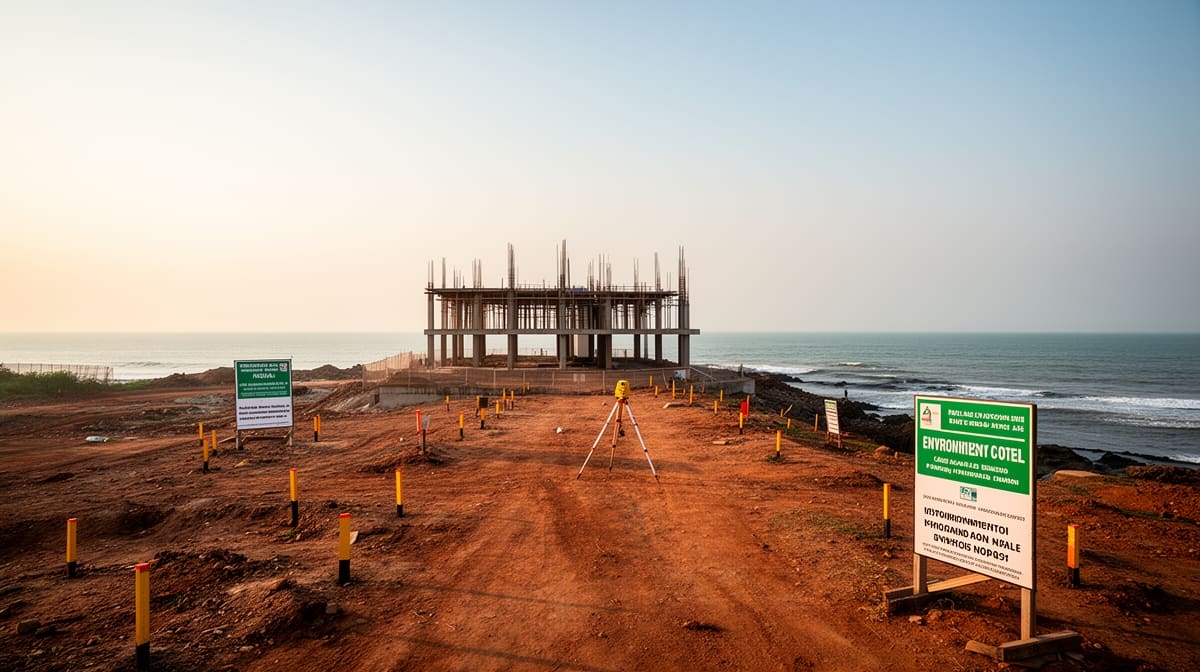
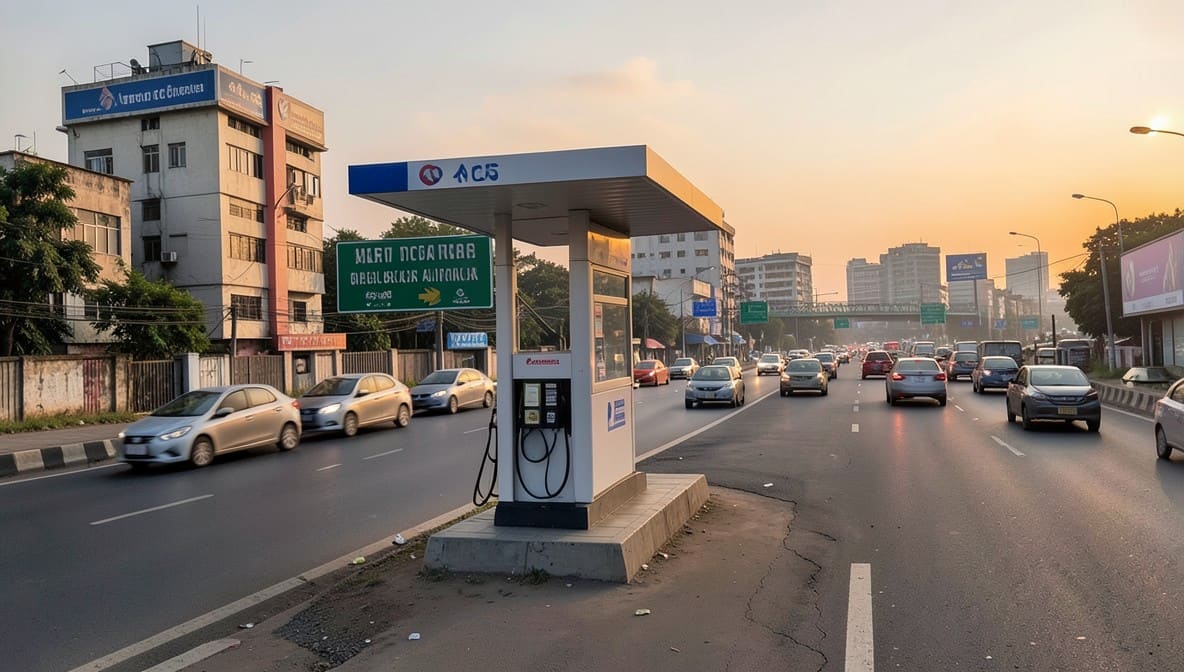
The dispute arose over the proposed establishment of a petrol pump by Indian Oil Corporation Limited (IOCL) at a site on National Highway in Haridwar, Uttarakhand. The 1st respondent, Deepak Sharma, filed an application before the National Green Tribunal (NGT), alleging that the proposed site violated environmental siting guidelines issued by the Central Pollution Control Board (CPCB) dated 07.01.2020. The guidelines required a minimum radial distance of 50 meters from schools, hospitals (with 10 or more beds), and designated residential areas. A relaxation to 30 meters was permitted only if additional safety measures, as prescribed by the Petroleum and Explosives Safety Organization (PESO), were implemented. No high-tension line was to pass over the outlet.
Key Facts
- IOCL was granted a Letter of Intent on 15.09.2017 for the petrol pump
- Multiple No Objection Certificates (NOCs) were obtained from statutory authorities between 2018 and 2021, including from:
- District Supply Officer, Haridwar
- Uttarakhand Power Corporation
- National Highways S & R (P&B) Section
- Senior Superintendent of Police, Haridwar
- PESO (dated 08.06.2021)
- The Haridwar Master Plan, 2025, classified the proposed site as a commercial zone
- The alleged nearby school was found to be non-operational
- The only residence within 30 meters belonged to the husband of the IOCL franchisee
- A high-tension line was located approximately 5 meters away from the proposed site
- The 1st respondent did not establish residence in the vicinity or any direct grievance
Procedural History
- 07.01.2020: CPCB issued guidelines on siting of new petrol pumps
- 01.02.2021: NGT passed its first order, relying on precautionary principle, directing a Joint Committee (CPCB, State PCB, SEIAA) to decide on compliance, while keeping NOCs in abeyance
- 08.03.2021: Committee submitted Annexure-A7 report concluding the site could not be allowed, citing proximity to one residence and a residential colony (without details)
- 19.07.2021: IOCL submitted Annexure-A9 requesting reconsideration; Annexure-A10 (joint report by CPCB and Uttarakhand PCB) was issued on 20.07.2021, finding full compliance with guidelines
- 11.11.2022: NGT passed second order on first hearing, without notice to IOCL, directing District Magistrate to enforce the 01.02.2021 order, ignoring Annexure-A10
- 23.03.2026: Supreme Court delivered judgment on Civil Appeal No. 3042 of 2023 and connected appeals
The Parties' Positions
For IOCL (Appellants):
- All statutory clearances were obtained prior to NGT’s intervention
- The site lies in a commercially designated zone per Haridwar Master Plan, 2025
- The alleged school was non-functional; the only residence was owned by the franchisee
- No high-tension line passed over the site
- Annexure-A10, though not from the NGT-appointed committee, was a joint technical report by CPCB and State PCB, confirming compliance
- The 1st respondent lacked locus standi and filed the petition with ulterior motives
For Respondents:
- The site violated CPCB guidelines by proximity to residential areas and a school
- The NGT-appointed Committee’s report (Annexure-A7) must prevail
- Annexure-A10 was not issued by the NGT-mandated committee and was therefore inadmissible
- The precautionary principle required strict adherence to distance norms
- The NGT’s orders were necessary to protect public health and environment
Relief Sought
IOCL sought:
- Setting aside of NGT orders dated 01.02.2021 and 11.11.2022
- Permission to establish the petrol pump in compliance with extant laws
- Dismissal of the NGT application as frivolous
Relief Sought by Respondents
Deepak Sharma sought:
- Enforcement of NGT’s orders
- Prevention of petrol pump establishment until full compliance with 50-meter distance norms
- Continuation of NOC suspension
The Legal Issue
Can the National Green Tribunal abdicate its adjudicatory function under the NGT Act, 2010, by delegating final decision-making to an expert committee, and can it pass orders without notice or consideration of relevant evidence in violation of the principles of natural justice?
Arguments Presented
For the Appellant
Senior Counsel Neeraj Malhotra argued that the NGT’s orders were procedurally and substantively flawed. He cited Sanghar Zuber Ismail v. Union of India, Kantha Vibhag Yuva Koli Samaj Parivartan Trust v. State of Gujarat, and Singrauli Super Thermal Power Station v. Ashwani Kumar Dubey to establish that the NGT, as a statutory adjudicatory body under Sections 14 and 15 of the NGT Act, cannot delegate its core judicial function to committees. He emphasized that expert committees serve only as assistants to the tribunal, not as decision-makers. He further contended that Annexure-A10, though not from the NGT-appointed committee, was a joint technical report by CPCB and State PCB, and thus reliable. He highlighted that the 1st respondent failed to establish locus standi or any demonstrable harm.
For the Respondent
Learned ASG Raghavendra P. Shankar and counsel Siddhartha Iyer argued that the NGT’s orders were grounded in the precautionary principle and that the 50-meter distance rule was non-negotiable. They contended that Annexure-A10 was not issued by the NGT-mandated committee and therefore could not be considered. They asserted that the proximity of even a single residence, however owned, violated the guidelines. They maintained that the NGT’s role was protective and that procedural lapses were immaterial given the environmental stakes. However, they could not substantiate the 1st respondent’s residence near the site or his standing to file the petition.
The Court's Analysis
The Supreme Court conducted a rigorous analysis of the NGT’s statutory mandate under the National Green Tribunal Act, 2010. It emphasized that the NGT is not an administrative body but a specialized adjudicatory tribunal, composed of both judicial and expert members under Section 3, designed to function as a court of law. The Court held that while expert committees may be appointed to assist in fact-finding, they cannot be entrusted with the final adjudicatory function.
"The role of an expert committee appointed by an adjudicatory forum is only to assist and not to adjudicate. The adjudicatory functions conferred on the NGT... must be exercised by the NGT itself."
The Court found the first order dated 01.02.2021 to be a clear abdication of jurisdiction. It merely directed the Committee to decide the matter, without any substantive analysis of the facts or application of the guidelines. The second order dated 11.11.2022 compounded the error by disposing of the execution petition without notice to the appellants, without considering Annexure-A10, and without any hearing - a flagrant violation of Section 19(1) of the NGT Act, which mandates adherence to principles of natural justice.
The Court further noted that the NGT’s reliance on the precautionary principle was unsubstantiated. The judgment observed:
"We are also a little perturbed by the bland finding, without reference to any studies, of fumes emitted on fuel dispensation leading to environmental depredation, when definitely burning it would result in a more onerous consequence."
The Court examined Annexure-A10, which confirmed compliance with CPCB guidelines. Although not issued by the NGT-appointed committee, it was a joint technical report from CPCB and State PCB - statutory bodies with domain expertise. The Court held that such reports, even if not formally appointed by the tribunal, may be relied upon if they are credible and based on factual inspection.
Crucially, the Court found no evidence that the proposed site lay within a "designated residential area" as required by the CPCB guidelines. The Haridwar Master Plan, 2025, classified the area as commercial. The single residence within 30 meters was owned by the franchisee, and the alleged school was non-functional. The high-tension line was 5 meters away - well within the permissible limit.
The Court concluded that the 1st respondent failed to establish locus standi. A mere resident of the district, without proximity or demonstrable harm, cannot invoke the NGT’s jurisdiction as a public interest litigant in this context.
The Verdict
The appeals were allowed. The Supreme Court set aside the NGT orders dated 01.02.2021 and 11.11.2022. The District Magistrate, Haridwar, was directed to reconsider the matter afresh, taking into account all statutory clearances, including Annexure-A10 and the Haridwar Master Plan, 2025. The petrol pump shall be permitted if it complies with extant laws, including CPCB guidelines, PESO safety norms, and fire safety requirements. All pending applications before the NGT stand disposed of.
What This Means For Similar Cases
Adjudication Cannot Be Outsourced
- Practitioners must challenge any NGT order that delegates final decision-making to committees
- Any tribunal order that says "the committee shall decide" is void ab initio
- The tribunal must record its own reasons, even if relying on committee reports
Natural Justice Is Non-Negotiable
- Orders passed without notice to affected parties are void
- Reports submitted after hearing must be disclosed and considered
- Section 19(1) of the NGT Act is mandatory - no exceptions for "environmental urgency"
Locus Standi Requires Concrete Harm
-
Mere proximity or general concern is insufficient to invoke NGT jurisdiction
-
Petitioners must demonstrate direct, personal, and demonstrable harm
-
Public interest litigation in environmental matters requires more than speculative apprehension
-
A commercial zone designation under a master plan overrides vague residential proximity claims
-
Technical reports from statutory agencies (CPCB, PCB, PESO) carry weight even if not NGT-appointed
-
The precautionary principle cannot be invoked without scientific or factual basis