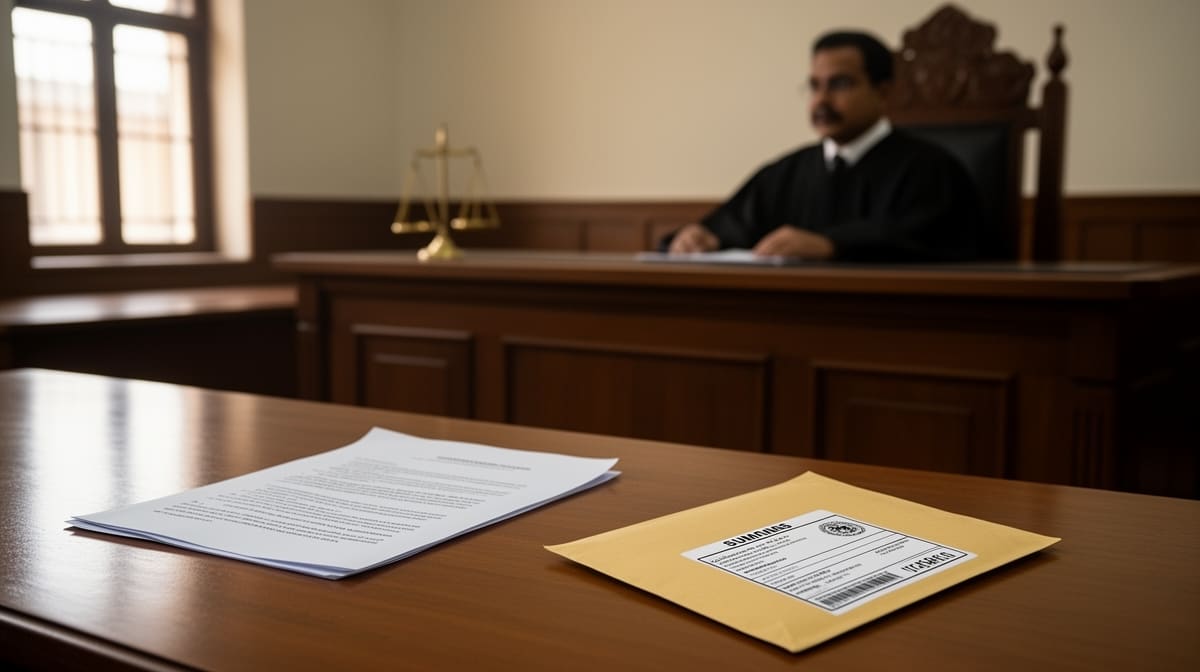
The Punjab & Haryana High Court has reaffirmed a fundamental principle of civil procedure: parties must be afforded a fair opportunity to tender admissible documentary evidence at the close of their case, even if a witness previously examined failed to produce it. This ruling prevents procedural technicalities from undermining substantive justice.
Background & Facts
The Dispute
The petitioners, plaintiffs in a civil suit concerning title and possession of agricultural land, sought to establish their ownership through documentary evidence including jamabandis (land revenue records) for the years 2007-08, 2012-13, 2017-18, and 2022-23, as well as a certified copy of a judgment dated 28.11.2003. These documents were critical to proving continuous possession and title over the disputed property.
Key Facts
- The suit was filed by the petitioners against the Committee Dera Baba Tehal Dass and others, who claimed adverse possession.
- The petitioners called PW Balraj Dass, one of the plaintiffs, as their first witness.
- During PW Balraj Dass’s examination-in-chief, no jamabandis or the 2003 judgment were produced.
- On 03.02.2026, while closing their evidence, the petitioners sought to tender the four jamabandis and the 2003 judgment.
- The Trial Court refused permission, citing that PW Balraj Dass had already been examined and had not produced the documents during his testimony.
- The petitioners had previously filed Civil Revision No. 9462 of 2025, which was disposed of by a coordinate Bench of this Court on 22.12.2025, granting them two opportunities to lead evidence.
- The 03.02.2026 order was the second such opportunity.
Procedural History
- 22.12.2025: Coordinate Bench of Punjab & Haryana High Court disposed of Civil Revision No. 9462 of 2025 and granted petitioners two opportunities to lead evidence.
- 03.02.2026: Trial Court, Civil Judge (Junior Division), Moga, refused to permit tendering of jamabandis and the 2003 judgment during evidence closure.
- 18.03.2026: Petitioners filed this revision petition under Article 227 of the Constitution.
Relief Sought
The petitioners sought quashing of the order dated 03.02.2026 and a direction to the Trial Court to permit them to tender the jamabandis and the certified copy of the judgment dated 28.11.2003 in evidence.
The Legal Issue
Can a Trial Court refuse to permit a party to tender otherwise admissible documentary evidence at the close of its case merely because a witness who could have produced it had already been examined without doing so?
Arguments Presented
For the Petitioner
Learned counsel for the petitioners argued that the jamabandis and the 2003 judgment were relevant, material, and prima facie admissible under Section 65 of the Indian Evidence Act, 1872. The failure of PW Balraj Dass to produce them during his examination did not bar the petitioners from producing them later, especially at the stage of closing evidence. The petitioners emphasized that the right to lead evidence is a substantive right, not a procedural formality, and that the Trial Court’s refusal amounted to a denial of natural justice.
For the Respondent
No notice was issued to the respondents, and no arguments were presented on their behalf, as the Court dispensed with notice to avoid unnecessary delay and expense.
The Court's Analysis
The Court observed that the Trial Court’s reasoning was legally untenable. The fact that PW Balraj Dass, a plaintiff and witness, had already been examined did not extinguish the petitioners’ right to produce documents at the close of evidence. The Court emphasized that the production of documents is not tied exclusively to the witness who may have knowledge of them. Counsel for the party may tender documents at any stage before evidence is closed, provided they are relevant and admissible.
"The petitioners thus could not have been denied the opportunity to tender these documents while closing their evidence in the affirmative."
The Court further noted that the jamabandis were official records under Section 35 of the Indian Evidence Act, and the 2003 judgment was a certified copy admissible under Section 74. Their exclusion was not only erroneous but also prejudicial to the petitioners’ right to a fair trial. The Trial Court’s action amounted to a manifest error and material illegality, warranting interference under Article 227.
The Court held that procedural rigidity cannot override substantive fairness. The right to present evidence is a cornerstone of adversarial justice, and courts must ensure that parties are not deprived of this right on technical grounds.
The Verdict
The petitioners succeeded. The impugned order dated 03.02.2026 was set aside. The Trial Court is directed to permit the petitioners to tender the jamabandis for the years 2007-08, 2012-13, 2017-18, and 2022-23, and the certified copy of the judgment dated 28.11.2003, in evidence. All pending miscellaneous applications are disposed of.
What This Means For Similar Cases
Documentary Evidence Cannot Be Barred on Technical Grounds
- Practitioners may now confidently seek to tender admissible documents at the close of evidence, even if the witness who could have produced them was examined earlier.
- Trial Courts must not treat the failure of one witness to produce documents as a waiver of the party’s right to produce them later.
Article 227 Jurisdiction Applies to Procedural Injustices
- This judgment reinforces that High Courts will intervene under Article 227 where Trial Courts commit manifest errors affecting the right to a fair trial.
- Procedural missteps that deprive a party of substantive rights - such as presenting key documents - are now clearly actionable.
Counsel Must Act Proactively at Evidence Closure
- Advocates should explicitly state at the close of evidence that they seek to tender documents, even if previously unproduced.
- A formal application or oral request at the time of evidence closure is sufficient; no prior notice is required.
Precedent for Admissibility of Jamabandis and Judgments
- Jamabandis are official records under Section 35 and are presumed authentic unless rebutted.
- Certified copies of judgments under Section 74 are prima facie admissible and require no further proof of authenticity.
The Burden of Justifying Exclusion Lies with the Court
- Courts must articulate a legally valid reason for excluding documents - not mere procedural convenience.
- Absent a statutory bar or prejudice to the opposite party, exclusion is impermissible.