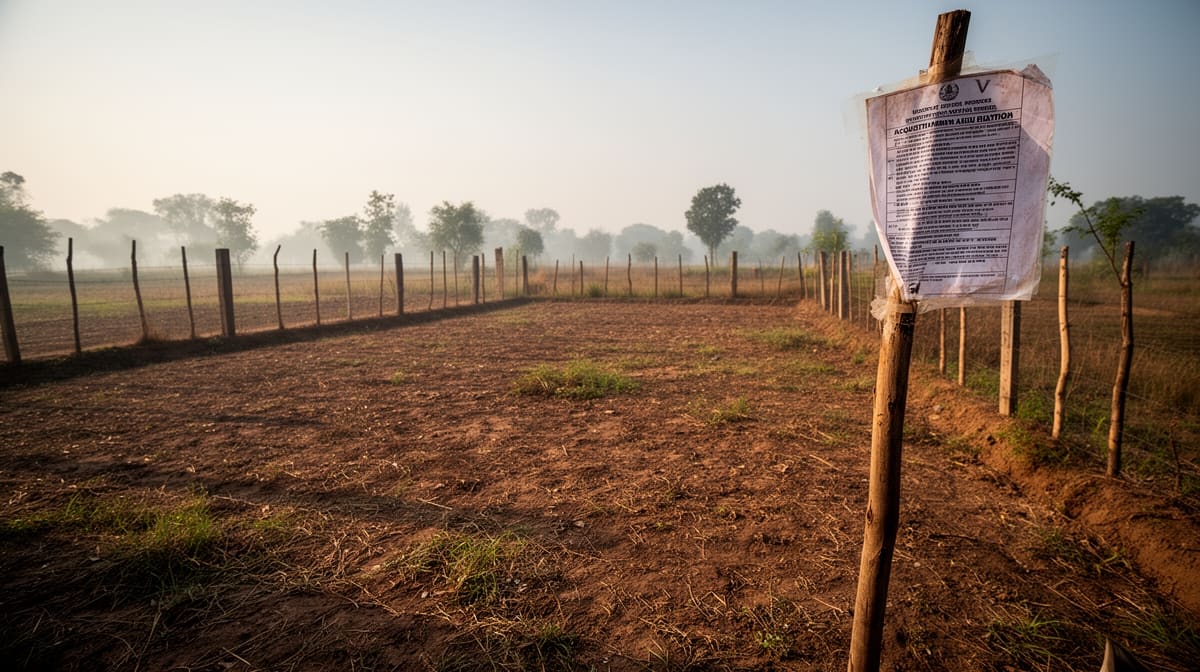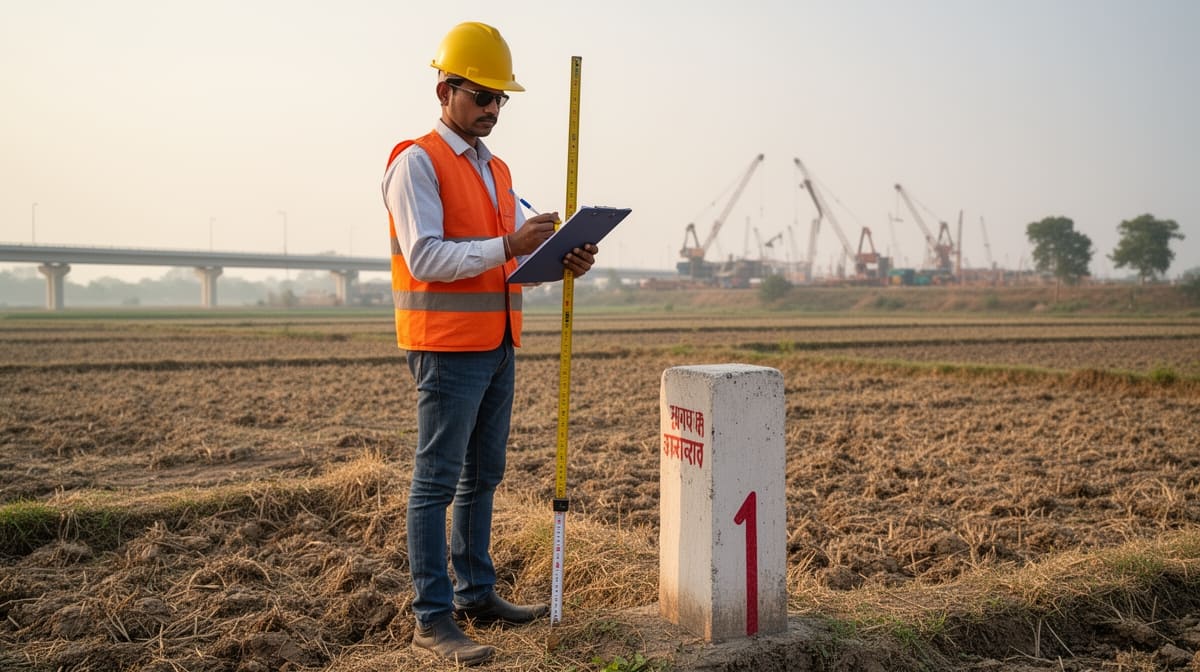
The Bombay High Court has declined to adjudicate the constitutional validity of Sections 3G(5) and (6) of the National Highways Act, 1956, pending the Supreme Court’s final determination on identical challenges. This decision underscores the principle of judicial comity and the need to avoid conflicting rulings on matters of national importance.
Background & Facts
The Dispute
The petitioners challenged the constitutional validity of Section 3G(5) and Section 3G(6) of the National Highways Act, 1956, which empower the Central Government to determine compensation for land acquisition without recourse to civil courts. They argue these provisions violate Article 14 (equality), Article 19(1)(f) (right to property), and Article 21 (due process) by depriving landowners of judicial redress and fair valuation.
Procedural History
- The High Court of Punjab and Haryana, in a parallel proceeding, declared Sections 3G and 3J unconstitutional.
- The Supreme Court stayed that judgment on 30 May 2025.
- A writ petition under Article 32 is currently pending before the Supreme Court on identical grounds.
- A similar petition is also pending before the Bombay High Court’s Goa bench, where the court had previously directed circulation of pleadings pending Supreme Court orders.
Relief Sought
The petitioners sought a declaration that Sections 3G(5) and (6) are ultra vires the Constitution. In the alternative, they requested the Court to direct that compensation amounts, currently being disbursed by the acquiring authority, be deposited with the Bombay High Court pending final adjudication.
The Legal Issue
The central question was whether the Bombay High Court should proceed to examine the constitutional validity of Sections 3G(5) and (6) of the National Highways Act, 1956, when the Supreme Court has already stayed a similar ruling and is actively considering the same legal issues.
Arguments Presented
For the Petitioner
The petitioners relied on the principle of judicial consistency and argued that delaying adjudication would cause irreparable harm to landowners, as compensation disbursements are already underway without judicial oversight. They cited State of Maharashtra v. Milind to assert that the right to fair compensation is a fundamental aspect of Article 21, and that administrative determinations without judicial review violate natural justice.
For the Respondent
The State contended that the matter is sub judice before the Supreme Court and that any ruling by the Bombay High Court would create legal uncertainty and potential conflict. The State invoked the doctrine of comity of courts and emphasized that the Supreme Court’s stay order implicitly signals the need for restraint.
The Court's Analysis
The Court emphasized that constitutional challenges to central legislation, particularly those already under review by the Supreme Court, require a unified and authoritative resolution. The Court noted that the Punjab and Haryana High Court’s judgment, though persuasive, had been stayed and could not serve as binding precedent. The Court observed:
"The constitutional validity of a central statute cannot be authoritatively determined by multiple High Courts in divergent directions while the Supreme Court is seized of the same issue. To do so would undermine the hierarchical structure of the judiciary and invite chaos in implementation."
The Court further held that while the petitioners’ concern regarding compensation disbursement is valid, it does not justify premature adjudication on the constitutional question. The Court clarified that interim relief on compensation disbursement is a separate matter and can be addressed on its own merits, but the core constitutional challenge must await the Supreme Court’s final pronouncement.
The Verdict
The petitioners did not obtain the relief sought. The Court held that constitutional adjudication on Sections 3G(5) and (6) must await the Supreme Court’s decision, and adjourned the petitions for directions on 13 March 2026.
What This Means For Similar Cases
Judicial Restraint Prevails in Pending Constitutional Challenges
- Practitioners must refrain from filing parallel constitutional challenges in High Courts when the Supreme Court is already hearing the same issue.
- Courts will routinely adjourn such matters to prevent conflicting judgments and preserve judicial hierarchy.
Compensation Disbursement Is Not Automatically Suspended
- The Court did not stay compensation payments, indicating that administrative disbursements may proceed unless specifically restrained.
- Landowners may still seek interim relief on procedural fairness or delay in payment, but not on the validity of the statute itself.
Stay Orders Carry De Facto Precedential Weight
- A Supreme Court stay on a High Court judgment effectively neutralizes its precedential value until final adjudication.
- Lower courts must treat such stays as signals to defer, even if the stay is procedural and not substantive.