The Bombay High Court has affirmed that even in the absence of conclusive proof of termination or permanent employment, a daily rated worker may be entitled to equitable monetary compensation when prolonged litigation and incomplete records leave his claim in a grey area. This judgment establishes a pragmatic standard for relief in industrial disputes involving informal employment.
Background & Facts
The Dispute
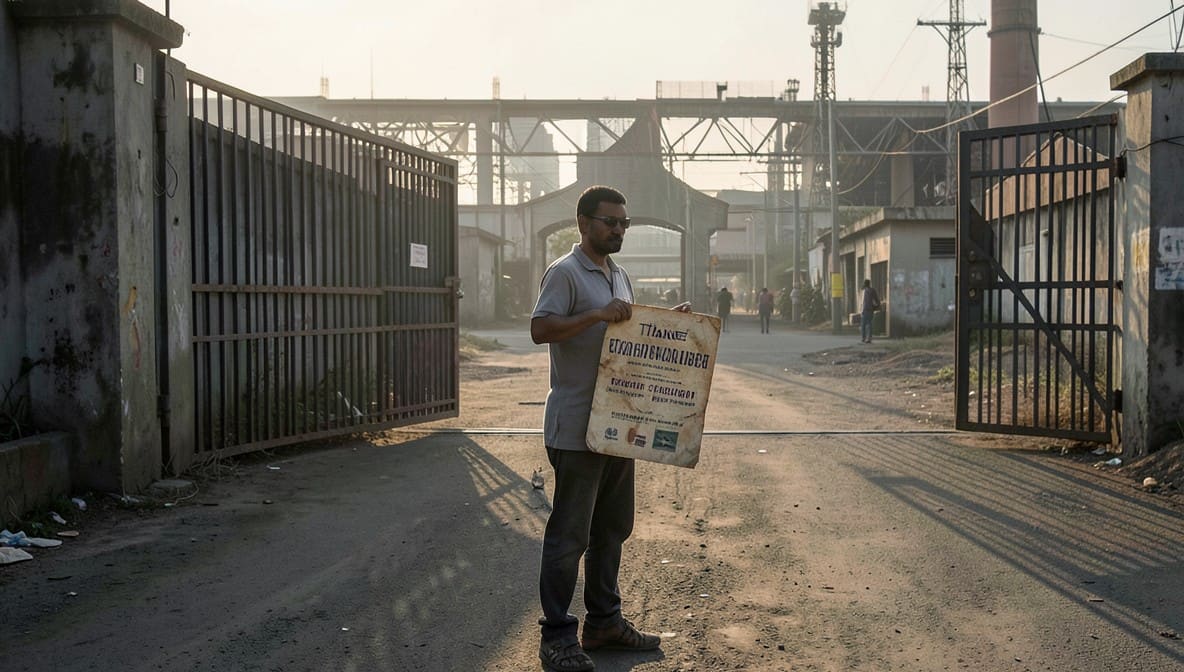
The dispute arises from the engagement of daily rated workers by the Pune Zilla Parishad for rural road construction projects between 1981 and 1989. The workers, including the respondent Shivaji Kisan Danawale, were hired on a daily wage basis through muster rolls, with no formal appointment or job security. The engagement was governed by the "Kalelkar Award," which provided that workers completing five years of continuous service - defined as at least 240 days of work per year - could be considered for absorption into the temporary establishment upon State Government approval.
Key Facts
- The respondent, Shivaji Kisan Danawale, was engaged from April 1985 on the Bhor - Pasure Road project.
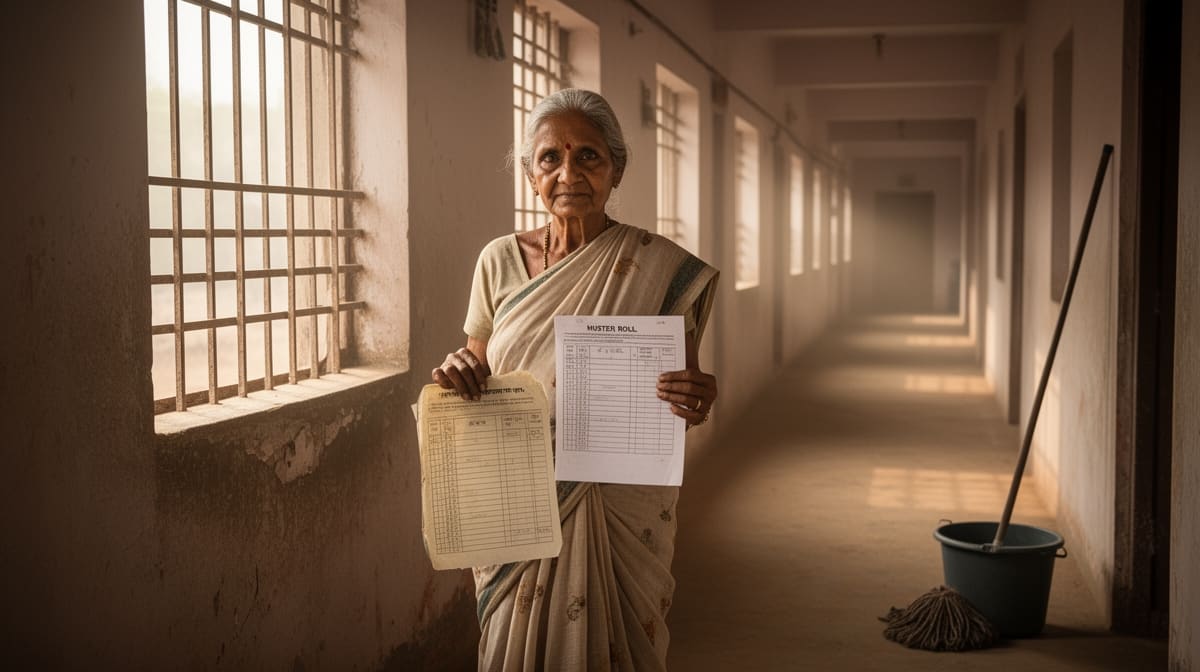
- Muster roll records for the period 1984 - 1989 show the following days of work: 43 days (1984), 67 days (1985), 231 days (1986), 53 days (1987), 110 days (1988), and 71 days (1989).
- The respondent did not complete 240 days of work in any single year, thus failing to meet the Kalelkar Award’s eligibility for permanency.
- He was allegedly orally terminated on 09.12.1989 when the muster roll was closed.
- The petitioner, Pune Zilla Parishad, claimed that work was seasonal and contingent on availability, with no employer-employee relationship in the legal sense.
- The respondent admitted during cross-examination on 20.06.1997 that he was not a permanent employee.
- The muster rolls for the period from 27.03.1989 to 09.12.1989 (the critical period after alleged termination) are missing.
- Several gaps exist in the muster rolls: 21.11.1981 - 23.04.1982, 25.05.1982 - 04.03.1983, April 1983, 30.01.1987 - 16.06.1987, 19.08.1987 - 05.11.1987, 12.06.1988 - 31.07.1988, and 26.03.1989 - 09.12.1989.
- The petitioner claimed original muster rolls were destroyed in a fire, relying only on oral testimony from witnesses Mr. Malunde and Ms. Naikwadi.
- The Inspection Report in Reference (IDA) No. 223 of 1991 contradicted the petitioner’s assertion that complete muster rolls were available.
Procedural History
- 1985: Respondent begins work as daily rated labourer.
- 09.12.1989: Alleged oral termination.
- 1991: Industrial dispute filed before Conciliation Officer.
- 05.07.1991: Deputy Commissioner of Labour refers dispute to Labour Court under Section 10(1)(c) read with Section 12(5) of the Industrial Disputes Act, 1947.
- 29.08.1991: Respondent files Statement of Claim.
- 04.08.1992: Petitioner files Written Statement.
- 05.10.1998: Labour Court dismisses claim, holding respondent did not meet 240-day threshold.
- 19.08.2016: Bombay High Court sets aside 1998 Award, citing failure to prove muster rolls, and remands for fresh adjudication.
- 03.08.2017: Labour Court, Pune (Presiding Officer, Labour Court No. 3), awards lump sum compensation of Rs. 3,00,000/- to respondent for life, with costs of Rs. 5,000/-.
- 2018 - 2022: Multiple writ petitions filed by Pune Zilla Parishad challenging the 2017 Award.
- 30.04.2026: Judgment reserved.
- 07.05.2026: Judgment pronounced.
The Parties' Positions
Petitioner (Pune Zilla Parishad): Argued that no employer-employee relationship existed; work was casual and contingent; respondent failed to meet Kalelkar Award conditions; oral termination denied; muster rolls were incomplete due to fire; no legal obligation to reinstate or compensate.
Respondent (Shivaji Kisan Danawale): Contended that despite lack of permanency, his long-term engagement (over four years) and sudden cessation of work without explanation amounted to unfair termination; incomplete records were due to employer’s failure to maintain documents; prolonged litigation (26 years) rendered reinstatement impractical; compensation was equitable.
Relief Sought
The petitioner sought quashing of the Labour Court’s Award dated 03.08.2017. The respondent sought dismissal of the writ petitions and enforcement of the Award, including interest at 12% per annum from the date of the Award until realization.
The Legal Issue
The central question was whether a daily rated worker, who has worked for several years but failed to meet the statutory threshold for permanency under the Kalelkar Award, is entitled to monetary compensation when the employer fails to produce complete muster rolls and the termination is neither proved nor disproved.
Arguments Presented
For the Petitioner
The petitioner contended that the Labour Court erred in awarding compensation because: (1) the respondent was never a permanent employee and admitted as much; (2) the Kalelkar Award’s conditions for absorption were not met; (3) the engagement was purely casual and contingent on work availability; (4) the absence of muster rolls was due to destruction in a fire, not employer negligence; (5) the respondent’s claim of termination was uncorroborated; and (6) the award of Rs. 3,00,000/- was arbitrary and without statutory basis.
For the Respondent
The respondent argued that: (1) the employer’s failure to maintain complete muster rolls created a presumption against its version; (2) the gaps in records, especially from March to December 1989, made it impossible to disprove termination; (3) the respondent had worked for nearly five years under a structured system of daily wages; (4) the 26-year litigation had consumed his working life; (5) reinstatement was impractical due to age and delay; and (6) the Labour Court’s award was a just and equitable substitute for lost livelihood.
The Court's Analysis
The Court emphasized that while the respondent did not qualify for permanency under the Kalelkar Award, this did not preclude him from seeking redress for unfair cessation of work. The admission of non-permanency was acknowledged but not treated as dispositive. The Court held that even casual workers are protected against arbitrary disengagement under the Industrial Disputes Act, 1947.
"The admission of non-permanency cannot automatically defeat his grievance. A daily rated worker also has certain protection in law. If his service is brought to an end in arbitrary or unfair manner, he can question it."
The Court scrutinized the muster rolls and found them materially incomplete. Critical periods, including the final nine months before the alleged termination, were unaccounted for. The employer’s claim that records were destroyed in a fire was unsupported by independent evidence and contradicted by the Inspection Report. The Court noted:
"The employer is expected to maintain such documents carefully. When such record is not produced in full, it becomes difficult for Court to accept the employer’s version without reservation."
The Court rejected the petitioner’s argument that no termination occurred because work was seasonal. It held that prolonged engagement followed by sudden cessation without explanation raises a presumption of unfairness. The absence of a formal termination order, combined with missing records, created a "grey area" where strict proof was unattainable.
The Court further recognized the extraordinary delay of 26 years in adjudication, during which the respondent had lost his productive years. Reinstatement was deemed impractical. The Labour Court’s decision to award lump sum compensation was therefore viewed as a reasonable, equitable remedy.
"Compensation is given as substitute remedy when original relief becomes impracticable. Considering long delay and age of respondent, such approach appears reasonable and justified."
The Court concluded that the Labour Court had adopted a balanced, fact-sensitive approach - denying permanency and reinstatement while granting compensation based on probabilities and the employer’s failure to discharge its evidentiary burden.
The Verdict
The writ petitions were dismissed. The Labour Court’s Award dated 03.08.2017 was upheld. The petitioner was directed to pay Rs. 3,00,000/- as lump sum compensation to the respondent within eight weeks from the date of this order. In the event of non-compliance, the amount shall carry interest at the rate of 12% per annum from the date of the Award until realization. Costs were not awarded.
What This Means For Similar Cases
Equitable Compensation Can Replace Reinstatement in Delayed Cases
- Practitioners must now argue that where litigation exceeds 15 - 20 years and the worker is elderly or retired, reinstatement is not a viable remedy.
- Courts may award lump sum compensation even without proof of termination if the employer’s records are incomplete and the worker’s engagement was prolonged.
- The burden shifts to the employer to prove the absence of unfair termination when records are missing.
Incomplete Employer Records Create Presumptions Against the Employer
- Failure to maintain or produce complete muster rolls, attendance records, or termination orders will be viewed as adverse to the employer’s case.
- Courts will draw reasonable inferences from gaps in documentation, especially in industries with informal employment.
- Oral testimony unsupported by contemporaneous records is insufficient to rebut a worker’s claim.
Kalelkar Award Conditions Are Not Absolute Bar to Relief
-
Workers who do not meet the 240-day threshold for permanency are not without recourse.
-
The Award governs absorption, not the right to fair treatment upon cessation of work.
-
Labour Courts retain discretion to grant equitable relief under Section 11A of the Industrial Disputes Act, 1947, even in the absence of statutory entitlement.
-
Practitioners representing daily wage workers should emphasize the duration of service, employer’s record-keeping failures, and the impact of litigation delay.
-
Employers must ensure systematic, unbroken maintenance of muster rolls and termination records to avoid adverse inferences.
-
Compensation awards in such cases should be framed as substitute remedies, not punitive damages, and must be tied to the worker’s lost earning capacity.