The Bombay High Court has affirmed that an inordinate delay in raising an industrial dispute does not automatically extinguish the right to relief when the employee’s continuity of service and discriminatory treatment by the employer are substantiated. The judgment reinforces that equitable principles and procedural fairness must prevail over rigid limitation doctrines in cases involving long-term casual workers.
Background & Facts
The Dispute
The dispute arose from the termination of Mr. Zamir Abdul Sattar Mohamed Shaikh, an ad hoc or Badli worker employed by the Brihanmumbai Mahanagarpalika (BMC). He claimed he was illegally terminated on 25 June 2003 and sought reinstatement with full back wages from that date. The BMC contended he was never a regular employee, had no vested right to employment, and had abandoned service after prolonged absence. The matter was referred to the Labour Court under Section 10 of the Industrial Disputes Act, 1947, after conciliation failed.
Key Facts
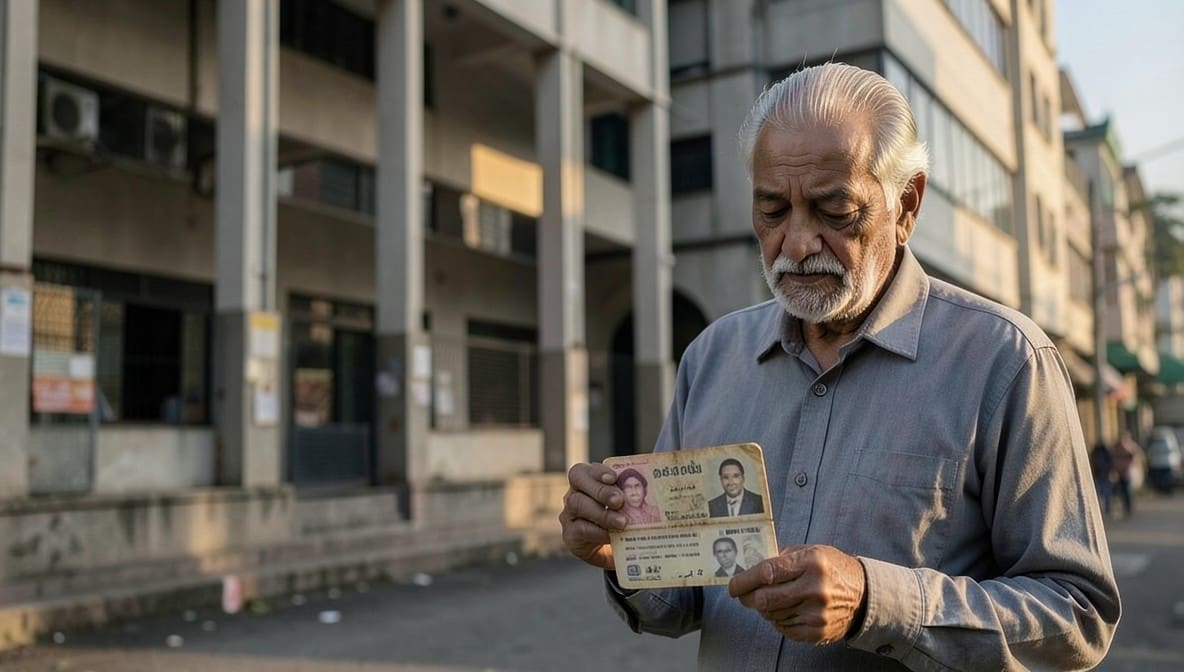
- Mr. Zamir was engaged as a Badli worker from at least 1997, as evidenced by his identity card issued by BMC, which recorded his date of appointment as 18 July 1997 and last working date as 13 June 2003.
- He was paid wages regularly from May 1999 to February 2002, indicating sustained engagement.
- He was included in a list of employees proposed for absorption as permanent staff, alongside 15 others who were later regularised.
- He suffered illness from 25 June 2003 onwards and submitted a medical certificate dated 2 December 2003 seeking permission to resume duties.
- He sent multiple letters between 2003 and 2008 requesting reinstatement, addressed to the Commissioner, Additional Municipal Commissioner, and Chief Labour Officer.
- The BMC issued a termination letter on 14 December 2007, alleging unauthorised absence from 25 June 2003.
- The BMC rejected his applications for ad hoc appointment in July 2010 citing non-availability of vacancies, not lack of prior service.
- Mr. Zamir filed two writ petitions before the Bombay High Court (WP 6279/2009 and WP 6329/2011), both of which led to directions to pursue remedies under the Industrial Disputes Act.
- He died on 9 November 2014, and his legal heirs were brought on record.
Procedural History
- 18 July 1997: Date of appointment recorded on BMC identity card.
- 25 June 2003: Alleged date of termination; workman ceased reporting due to illness.
- 2 December 2003: Medical certificate submitted seeking return to duty.
- 9 December 2003: Oral termination alleged by BMC; no written notice issued.
- 11 July 2005 and 15 July 2005: First formal written requests for reinstatement.
- 14 February 2007: BMC issued notice under circular for absence exceeding 90 days.
- 14 December 2007: Formal termination letter issued by BMC.
- 17 January 2008: Representation filed by workman challenging termination.
- 26 March 2008: Mayor’s office recommended reinstatement.
- 8 December 2009, 4 January 2010, 19 January 2010: Applications filed pursuant to High Court’s direction in WP 6279/2009.
- 8 July 2010: BMC rejected applications citing no vacancy.
- 2011: WP 6329/2011 filed; High Court held industrial dispute remedy available.
- 12 July 2013: Industrial dispute referred to Labour Court under Section 10 of the Industrial Disputes Act, 1947.
- 9 November 2014: Deceased workman passed away; legal heirs substituted.
- 11 April 2019: Labour Court awarded reinstatement with full back wages from 25 June 2003 to 9 November 2014.
- 8 July 2019: Award published by Government.
- 2023: Writ Petition No. 9089 of 2023 filed before Bombay High Court.
- 9 April 2026: Judgment reserved.
- 16 April 2026: Judgment pronounced.
The Parties' Positions
For the Petitioner (BMC)
- Argued that the deceased was a Badli worker with no right to permanency or continuity.
- Contended that no industrial dispute existed on 12 July 2013 due to 10-year delay.
- Asserted that the workman had not completed 240 days of continuous service in the 12 months preceding 25 June 2003.
- Claimed absence exceeding 90 days under applicable circular invalidated his service lien.
- Alleged that the Labour Court ignored binding precedents in Nedungadi Bank Ltd. v. K.P. Madhavankutty and Krishi Utpadan Mandi Samiti v. Ved Ram.
For the Respondents (Legal Heirs)
- Presented identity card, wage slips, and correspondence proving continuous association.
- Highlighted inclusion in the list of employees proposed for regularisation.
- Pointed out that 15 others in the same category were regularised, making exclusion discriminatory.
- Argued that BMC’s failure to respond to repeated requests amounted to constructive termination.
- Contended that the dispute remained live due to persistent efforts to seek redressal.
- Relied on ONGC v. Krishan Gopal to assert that discrimination in treatment among similarly placed workers justifies judicial intervention.
Relief Sought
The legal heirs sought enforcement of the Labour Court’s award granting:
- Reinstatement with continuity of service from 25 June 2003.
- Full back wages from 25 June 2003 to 9 November 2014.
- Consequential service benefits including pension and gratuity.
The Legal Issue
The central question was whether an industrial dispute raised after a delay of nearly ten years could still be adjudicated under the Industrial Disputes Act, 1947, when the workman had demonstrated continuous association, persistent efforts to resume duty, and was discriminatorily excluded from regularisation despite being similarly placed with others who were granted permanency.
Arguments Presented
For the Petitioner
The BMC relied on Nedungadi Bank Ltd. v. K.P. Madhavankutty and Krishi Utpadan Mandi Samiti v. Ved Ram to argue that stale disputes cannot be referred under Section 10. It contended that the absence of a live dispute on the date of reference (12 July 2013) rendered the Labour Court’s jurisdiction invalid. It further argued that the workman had not completed 240 days of continuous service as required under Section 25B of the Industrial Disputes Act, and that his status as a Badli worker conferred no right to permanency or back wages. The BMC also cited administrative circulars to assert that unauthorised absence beyond 90 days terminated service.
For the Respondent
The legal heirs countered that the workman’s identity card, wage history, and repeated representations established continuous service. They relied on ONGC v. Krishan Gopal to argue that where an employer regularises some employees from a class but excludes others without justification, it constitutes discriminatory arbitrariness under Article 14 of the Constitution. They emphasized that the BMC’s own conduct - issuing a termination letter in 2007 and rejecting applications only on grounds of vacancy - confirmed the existence of a live dispute. The delay, they argued, was excusable due to the workman’s illness and persistent administrative appeals.
The Court's Analysis
The Court rejected the BMC’s argument that delay alone invalidated the dispute. It held that while Nedungadi Bank and Krishi Utpadan Mandi Samiti establish that stale disputes are not entertainable, their application depends on factual context. Here, the workman’s conduct - repeated letters, judicial proceedings, and administrative appeals - demonstrated continuous assertion of rights, not abandonment.
"The issuance of such termination letter [on 14 December 2007] weakens the stand that no termination ever took place. If the employer had already considered the deceased workman as having ceased to be in service long prior thereto, the necessity of issuing termination communication in December 2007 itself requires explanation."
The Court found the identity card to be a significant document emanating from the employer, carrying evidentiary weight. It noted that inclusion in the list of proposed regularisations, coupled with the subsequent regularisation of 15 others in the same category, created a prima facie case of discrimination. The Court relied on ONGC v. Krishan Gopal to hold that where an employer grants benefits to some members of a class, it cannot deny the same to others without a reasonable classification.
"Once the employer itself had considered the deceased workman together with those other employees as belonging to one class for the purpose of consideration of permanency, there remained no lawful basis thereafter to deny to the deceased workman the same treatment which came to be extended to the others."
The Court further held that the Labour Court was justified in drawing reasonable inferences from the totality of evidence, including wage slips and correspondence, to conclude that the workman had rendered service over a meaningful period. The absence of a formal termination prior to 2007, combined with the employer’s silence on repeated requests, supported the inference of constructive termination.
The Court also dismissed the BMC’s argument regarding the 240-day requirement under Section 25B, noting that the Labour Court had sufficient evidence to infer continuous service, and that artificial breaks in service were admitted by the employer’s own witness.
The Verdict
The writ petition was dismissed. The Bombay High Court upheld the Labour Court’s award dated 11 April 2019, directing the BMC to:
- Reinstate the deceased workman’s legal heirs with continuity of service from 25 June 2003.
- Pay full back wages from 25 June 2003 to 9 November 2014.
- Disburse all monetary benefits within eight weeks from the date of judgment (16 April 2026).
- Grant consequential service benefits including pension and gratuity. No costs were awarded.
What This Means For Similar Cases
Discrimination in Regularisation Is a Ground for Judicial Intervention
- Practitioners must now argue that exclusion of a worker from regularisation, while others in the same category are absorbed, constitutes arbitrariness under Article 14.
- Employers must justify differential treatment with objective, non-discriminatory reasons.
- Labour Courts may now enforce parity even without creating a new right - merely correcting employer-initiated inequality.
Delay Alone Cannot Defeat a Live Industrial Dispute
- Persistent correspondence, judicial proceedings, and administrative appeals can rebut allegations of laches.
- A dispute remains live if the employee has not acquiesced and has consistently sought redressal.
- Courts must examine the nature of delay - not just its duration - before dismissing claims on limitation grounds.
Identity Documents and Employer Records Carry Weight
- Identity cards, wage slips, and internal lists prepared by employers are admissible as corroborative evidence of service.
- Employers cannot rely solely on muster rolls or unverified records to disprove long-term association.
- Courts will infer continuity where official documents and conduct of the employer support the worker’s claim.