The Gauhati High Court has clarified that railway employees are not entitled to House Rent Allowance (HRA) merely because they vacate official accommodation and move into private residences, if suitable quarters of their entitled class remain available and unclaimed. The judgment reinforces the mandatory obligation to apply for such accommodation under Railway Board circulars, setting a clear doctrinal boundary for HRA claims in public employment.
Background & Facts
The Dispute
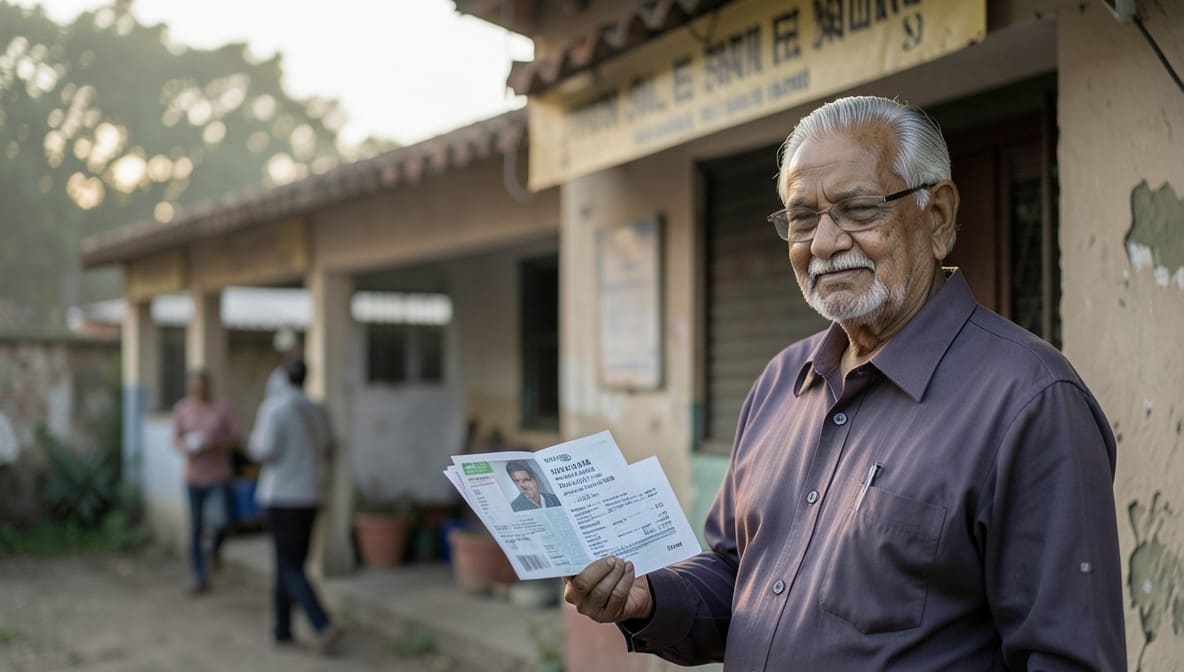
The petitioner, Kandarpa Kanta Sarma, a retired employee of the North East Frontier Railway (NEFR), sought HRA for the period from 25.09.2007 to 13.07.2009, after vacating his allotted Type-II government quarter to occupy his privately constructed residence. The Railway authorities denied his claim on the ground that Type-IV quarters, to which he was entitled upon promotion, were available and he had not applied for them. The Central Administrative Tribunal (CAT) upheld this denial in its order dated 30.01.2015. The petitioner challenged this before the High Court via WP(C)/2576/2016.
Key Facts
- The petitioner was appointed as Jr. Accounts Assistant in 1981 and posted in Maligaon, Assam.
- He was promoted to Senior Assistant Financial Advisor in 2008, entitling him to Type-IV accommodation.
- He vacated his Type-II quarter on 22.09.2007 upon completion of his private house.
- He applied for HRA from 25.09.2007, the date his quarter was reassigned to another official.
- HRA was granted only with effect from 14.07.2009, leaving the period 25.09.2007 to 13.07.2009 unpaid.
- An RTI reply dated 03.05.2011 revealed that seven Type-IV quarters were vacant on 25.09.2007.
- A departmental communication dated 23.03.2011 listed 15 officers who received HRA during the same period, but only five were similarly placed (entitled to Type-IV and posted in the same division).
- The petitioner never submitted an application for any Type-IV quarter during the relevant period.
Procedural History
- 25.09.2007: Petitioner vacated Type-II quarter and moved into private residence.
- 2008: Petitioner promoted to Senior Assistant Financial Advisor, eligible for Type-IV accommodation.
- 14.07.2009: HRA granted with effect from this date.
- 2013: Original Application No. 119/2003 filed before CAT seeking HRA for 25.09.2007 - 13.07.2009.
- 30.01.2015: CAT dismissed the application, holding that HRA was not admissible due to availability of vacant Type-IV quarters.
- 2016: Writ Petition WP(C)/2576/2016 filed before Gauhati High Court.
- 21.05.2018: High Court allowed the writ, directing payment of HRA, citing lack of evidence on vacancy status and inconsistency in treatment of other officers.
- 2019: Union of India filed Review Petition No. 9/2019 challenging the 21.05.2018 order.
- 30.01.2019: Railway authorities paid HRA amount to petitioner, subject to final outcome of review.
- 01.12.2022: High Court allowed the Review Petition, set aside its 21.05.2018 order, and restored the original writ petition for fresh consideration.
- 15.05.2026: Present judgment delivered by Division Bench.
The Parties' Positions
For the Petitioner
The petitioner argued that he was entitled to HRA from the date he vacated official accommodation, as he was not at fault for non-allotment. He contended that the Railway authorities failed to prove that no Type-IV quarters were available, and that other officers received HRA under similar circumstances, making the denial discriminatory.
For the Respondents
The Railway authorities contended that the petitioner was ineligible for HRA under the Railway Board’s circulars dated 07.06.1988 and 09.05.2003, which mandate that HRA is not payable if accommodation of the entitled class is available and the employee fails to apply for it. They submitted that seven Type-IV quarters were vacant on 25.09.2007 and that the petitioner never applied for any.
Relief Sought
The petitioner sought: (1) payment of HRA for the period 25.09.2007 to 13.07.2009; (2) interest on the amount; and (3) direction to the Railway to regularize his entitlement. The respondents sought dismissal of the writ petition and recovery of the HRA already paid, subject to final order.
The Legal Issue
The central question was whether a railway employee is entitled to House Rent Allowance under Railway Board Circulars dated 07.06.1988 and 09.05.2003 when suitable quarters of the entitled class are available, but the employee has not applied for them.
Arguments Presented
For the Petitioner
The petitioner relied on the High Court’s earlier 2018 order, which found inconsistency in the treatment of other officers and lack of evidence on vacancy. He argued that the burden lay on the Railway to prove that no accommodation was available, and that non-application alone could not disentitle him if the system failed to proactively offer quarters. He cited principles of equity and natural justice, asserting that the denial was arbitrary.
For the Respondent
The Railway authorities relied on paragraphs 1, 3, and 6 of the 07.06.1988 circular and paragraph 3 of the 09.05.2003 circular, which explicitly condition HRA eligibility on the absence of available accommodation in the entitled class and the employee’s failure to apply. They submitted that the RTI reply and departmental records proved the existence of surplus Type-IV quarters, and that the five officers who received HRA were either posted elsewhere or their grants were erroneous. They emphasized that the circulars are binding and must be strictly applied.
The Court's Analysis
The Court undertook a detailed textual analysis of the Railway Board’s circulars. It held that paragraph 1 of the 07.06.1988 circular permits HRA only if the number of available units does not exceed the number of eligible employees, and crucially, if no unit remains vacant as a result of non-application or surrender. The proviso to paragraph 1 explicitly bars HRA where surplus accommodation exists.
"...the number of units available for allotment does not exceed the number of eligible employees, and there is no prospect of any residential unit remaining vacant as a result of such refusal, surrender or non-application for accommodation."
The Court further noted that paragraph 3 of the same circular requires HRA to be paid only from the date the Accommodation Controlling Authority certifies that no accommodation in the entitled class is available. The petitioner had not sought certification, nor applied for any Type-IV quarter.
The Court examined the RTI reply dated 03.05.2011, which confirmed seven Type-IV quarters were vacant on 25.09.2007. The number of eligible officers for Type-IV quarters in the relevant zone was less than seven. Thus, surplus accommodation existed.
The Court rejected the petitioner’s argument based on differential treatment of other officers. It held that even if some officers received HRA erroneously, that cannot create a right for others. The Court cited Lalit Popli v. Canara Bank and Shamshad Ahmed v. Tilak Raj Bajaj to emphasize that under Article 226, the High Court cannot act as an appellate forum to re-appreciate facts or correct errors of administrative discretion unless there is a manifest illegality or violation of natural justice.
"...the power of the High Court under Article 226 is supervisory in nature and must be exercised most sparingly only in appropriate cases, in order to keep the District Courts and the Tribunals within the limits of law."
The Court concluded that the CAT’s finding was supported by evidence and that the petitioner’s failure to apply for available accommodation was fatal to his claim. The circulars were clear, binding, and uniformly applicable.
The Verdict
The writ petition was dismissed. The Court held that the petitioner was not entitled to HRA for the period 25.09.2007 to 13.07.2009, as he failed to apply for available Type-IV quarters. The HRA amount of Rs. 1,28,400 already paid to him during this period must be refunded to the respondents within one month of receipt of this order. No interest shall be payable on the refund.
What This Means For Similar Cases
Application for Quarters Is Mandatory
- Practitioners must advise public sector employees that HRA cannot be claimed merely by vacating official accommodation.
- The onus is on the employee to apply for accommodation of the entitled class; non-application is a disqualifying factor under Railway Board circulars.
Surplus Accommodation Defeats HRA Claim
- If records show more quarters of the entitled class than eligible employees, HRA is not admissible regardless of personal preference or private housing.
- Employers must maintain and produce vacancy data upon request; failure to do so may lead to adverse inference.
No Equitable Relief for Erroneous Grants
- Past errors in granting HRA to other employees do not create a precedent or right for claimants.
- Courts will not perpetuate illegality by allowing claims based on administrative mistakes.
Judicial Review Is Limited
- High Courts will not re-examine factual findings of tribunals unless there is a clear legal error or violation of natural justice.
- HRA disputes are primarily administrative; courts will defer to policy-based circulars absent arbitrariness or mala fide.