The Bombay High Court has clarified that tribunals under the Motor Vehicles Act cannot deny compensation for non-economic losses like pain and suffering merely because the claimant lacks detailed documentary proof. This ruling reinforces the principle that compensation in motor accident cases must be holistic, equitable, and oriented toward restoring the victim’s dignity and quality of life.
Background & Facts
The Dispute
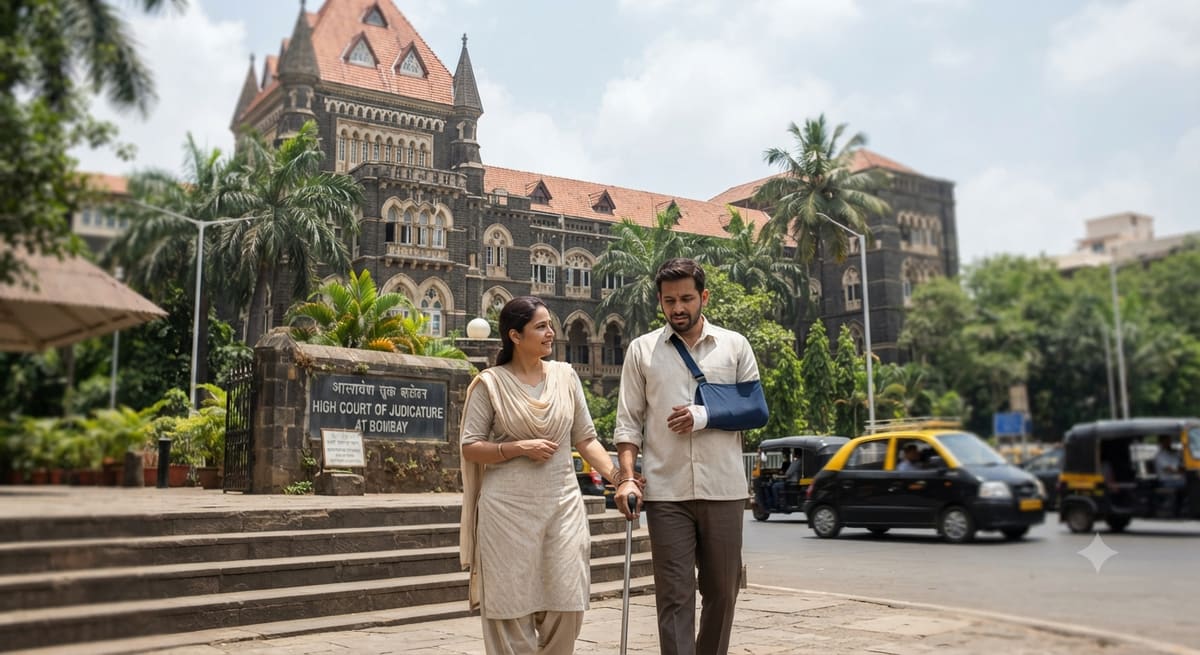
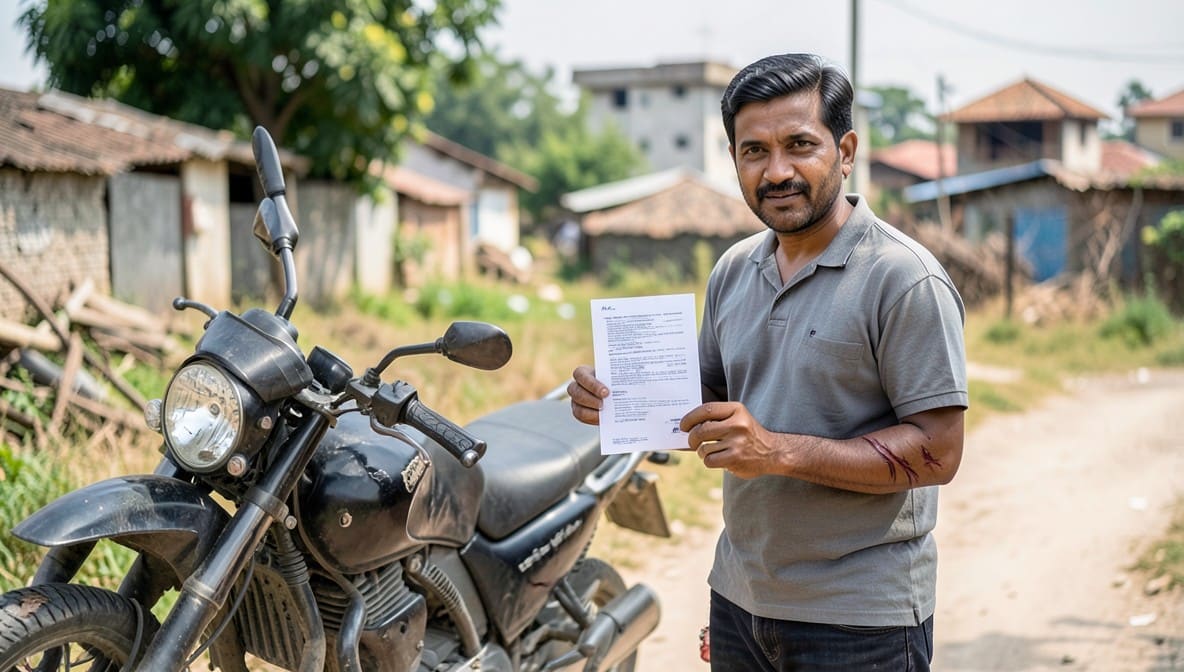
The appellant, Jairam S/o Sakharam Karhale, sustained a severe fracture to his leg in a road accident on 18 May 1998 while working as a supervisor on the Arni-Mahur Road. A truck owned by respondent no.1, M/s. Saikripa Transport Company, allegedly ran over his leg, necessitating surgical insertion of a metal rod. He claimed permanent disability of 30%, loss of income, and incurred medical expenses, but submitted limited documentary evidence on income and future treatment costs.
Procedural History
- 1999: Original claim filed under Section 166 of the Motor Vehicles Act as M.A.C.P. No.150/1999
- 2000: Case renumbered as M.A.C.P. No.237 of 2000
- 2005: Motor Accident Claims Tribunal (M.A.C.T.), Hingoli, awarded Rs.55,000 inclusive of non-fault liability (NFL) under Section 140
- 2014: First Appeal filed before Bombay High Court, Aurangabad Bench, challenging inadequacy of compensation
Relief Sought
The appellant sought enhancement of compensation to include: (i) pain and suffering, (ii) attendant charges, (iii) special diet, (iv) medical expenses incurred, (v) future medical costs, and (vi) loss of amenities. He argued that the Tribunal erred by relying on an unfinalized Lok Adalat compromise of Rs.45,000 as a benchmark.
The Legal Issue
The central question was whether Section 166 of the Motor Vehicles Act permits a claims tribunal to deny compensation for pain, suffering, medical expenses, and attendant care solely due to absence of specific documentary evidence, or whether a lumpsum award is mandated under the principle of equitable justice.
Arguments Presented
For the Appellant
Counsel argued that the Tribunal’s reliance on an unapproved Lok Adalat compromise (Exh.19) was legally impermissible, as no final award was recorded. He cited Kishan Singh v. State of Rajasthan to assert that compensation under the Motor Vehicles Act is not contractual but statutory, and must reflect the victim’s actual suffering. He emphasized that while exact medical bills may be unavailable, the nature of a fracture requiring surgical intervention inherently justifies an award for pain, suffering, and incidental expenses.
For the Respondent
The Insurance Company contended that the claimant had agreed to Rs.45,000 at Lok Adalat and failed to appear for finalization, thereby waiving further claims. It relied on National Insurance Co. Ltd. v. Swaran Singh to argue that compensation must be strictly proven and that speculative claims for future expenses cannot be granted without evidence.
The Court's Analysis
The Court rejected the notion that an unconfirmed Lok Adalat settlement could bind the Tribunal or limit its statutory duty to award just compensation. It held that while the claimant did not produce receipts for medical expenses or attendant care, the Tribunal’s obligation under Section 166 is not to demand rigid proof but to apply reason and equity.
"The nature of the injury - fracture requiring insertion of a rod - is itself sufficient to infer enduring pain, suffering, and need for medical attention. To deny compensation under these heads merely because of absence of bills is to defeat the very purpose of the Act."
The Court distinguished Swarn Singh by noting that case involved speculative future loss without any medical confirmation, whereas here, the injury was objectively verified. It emphasized that lumpsum compensation for non-economic losses is a well-established practice in MACT jurisprudence, particularly where the victim is from a low-income background and cannot maintain detailed records.
The Court further held that the Tribunal’s award of Rs.55,000 was manifestly inadequate given the permanence of disability and the cost of living in rural Maharashtra. The inclusion of Rs.25,000 as NFL under Section 140 was correct, but the remaining Rs.30,000 was insufficient to cover pain, suffering, and incidental medical costs.
The Verdict
The appellant succeeded. The Bombay High Court enhanced the compensation to Rs.1,00,000, including Rs.25,000 as NFL under Section 140. The Court held that compensation for pain, suffering, and medical expenses must be awarded as a lumpsum even without itemized proof, provided the injury is objectively established.
What This Means For Similar Cases
Lumpsum Awards for Non-Economic Losses Are Mandatory
- Practitioners must now argue for lumpsum compensation under heads like pain, suffering, and medical care even when receipts are unavailable
- Tribunals cannot dismiss such claims on grounds of "lack of evidence" if the injury is medically verified
- Use Kishan Singh and this judgment to counter arguments that rely on strict documentary proof
Lok Adalat Compromises Are Not Binding Unless Finalized
- An unapproved Lok Adalat settlement cannot be used to cap statutory compensation
- The Tribunal must independently assess the claim based on evidence and equitable principles
- Always object to reliance on draft compromise papers in MACT proceedings
Medical Verification Trumps Documentation
- A fracture requiring surgical intervention is sufficient to infer ongoing medical needs
- Courts will infer reasonable expenses for diet, attendant care, and transport based on injury severity
- Advocate for judicial notice of common medical realities in rural and semi-urban contexts