The Kerala High Court has reaffirmed that authorities cannot rely solely on third-party reports when deciding whether to exclude land from the paddy land data bank under the Kerala Conservation of Paddy Land and Wetland Rules, 2008. The judgment mandates direct assessment by the authorised officer, reinforcing procedural integrity in land use decisions with significant environmental and agrarian implications.
Background & Facts
The Dispute
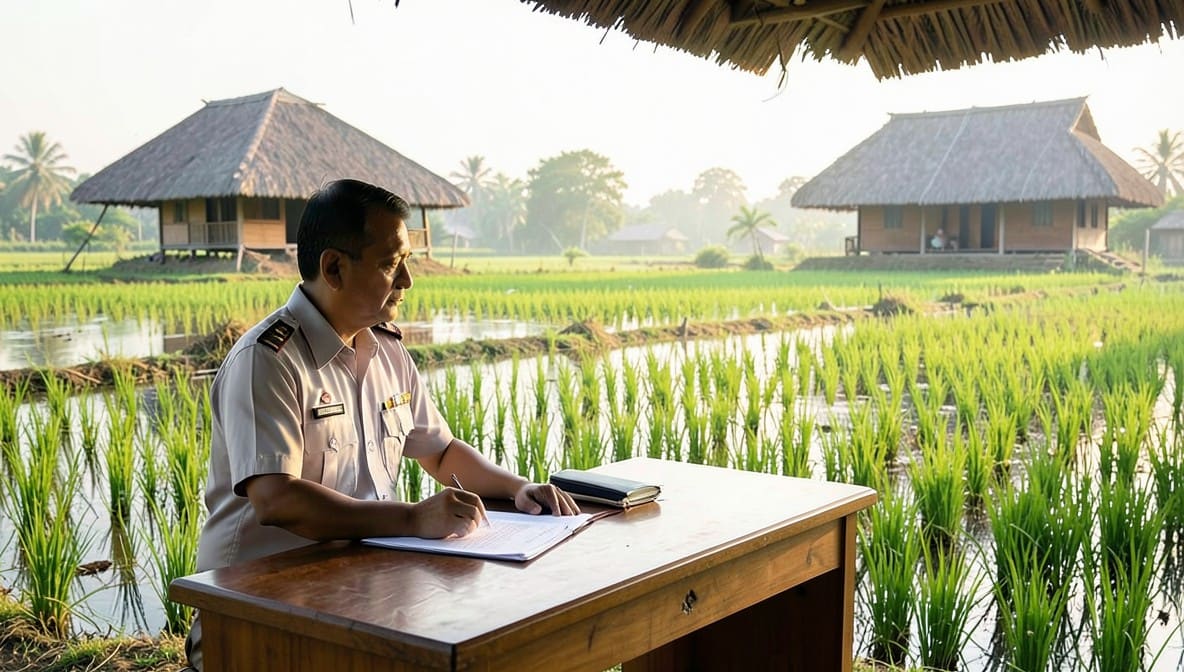
The petitioner, Shafeek Othalakattil, applied for exclusion of his property from the Kerala Paddy Land and Wetland Data Bank by submitting Form-5 under the Kerala Conservation of Paddy Land and Wetland Rules, 2008. The application sought recognition that the land in question, located in Ezhuvathiruthi, Ponnani, Malappuram District, was not suitable for paddy cultivation and therefore eligible for exclusion. The 2nd respondent, the Revenue Divisional Officer, rejected the application by order dated 04.07.2025 (Exhibit P4), relying exclusively on the report of the Agricultural Officer without conducting any independent evaluation.
Key Facts
- The petitioner submitted Form-5 on 05.06.2024, accompanied by tax receipts (Exhibit P1), photographs of the property (Exhibit P2), and proof of application submission (Exhibit P3)
- The property is situated in a region historically used for mixed cultivation, with no active paddy farming observed in recent years
- The Agricultural Officer’s report, dated 20.06.2025, concluded the land was not suitable for exclusion, citing general observations without site-specific data
- The impugned order (Exhibit P4) did not reference any satellite imagery, personal inspection, or analysis of the land’s character as of 12.08.2008 - the statutory benchmark
- The petitioner’s application was rejected without addressing whether exclusion would adversely affect surrounding paddy fields, as required under Rule 4(4f)
Procedural History
- 05.06.2024: Petitioner submitted Form-5 application for exclusion of land from the paddy land data bank
- 20.06.2025: Agricultural Officer submitted report recommending rejection of application
- 04.07.2025: 2nd respondent issued Exhibit P4 order rejecting application based solely on Agricultural Officer’s report
- 08.04.2026: Writ Petition (WP(C) No. 13426 of 2026) filed before the High Court of Kerala at Ernakulam
Relief Sought
The petitioner sought:
- Quashing of Exhibit P4 order
- Direction to the 2nd respondent to obtain satellite imagery or conduct personal inspection as mandated under Rule 4(4f)
- Direction to reconsider the Form-5 application with due regard to the satellite data or inspection report
- Dispensation of translation requirements for vernacular documents
The Legal Issue
The central question was whether the authorised officer under the Kerala Conservation of Paddy Land and Wetland Rules, 2008, may reject an exclusion application under Rule 4(4f) without personally inspecting the land or obtaining satellite imagery, relying solely on the report of the Agricultural Officer.
Arguments Presented
For the Petitioner
The petitioner’s counsel argued that Rule 4(4f) imposes a non-delegable duty on the authorised officer to independently determine the nature, lie, and character of the land as of 12.08.2008. Reliance on the Agricultural Officer’s report without corroboration through satellite imagery or personal inspection violates the statutory mandate. The petitioner cited Muraleedharan Nair R v. Revenue Divisional Officer, Sudheesh U v. The Revenue Divisional Officer, and Joy K.K. v. The Revenue Divisional Officer to establish that the authority must conduct a substantive assessment, not a rubber-stamp review.
For the Respondent
The Government Pleader contended that the Agricultural Officer’s report was a technical assessment and that the authorised officer was entitled to rely on it as an expert opinion. It was argued that requiring personal inspection in every case would create administrative burden and delay, and that the rejection was based on a reasonable reading of available data.
The Court's Analysis
The Court held that Rule 4(4f) of the Kerala Conservation of Paddy Land and Wetland Rules, 2008, is explicit in requiring the authorised officer to "assess the nature, lie and character of the land" and to "call for satellite pictures or conduct personal inspection". The Court observed that the impugned order contained no indication that the authorised officer had performed any of these duties.
"There is no indication in the order that the authorised officer has directly inspected the property or called for the satellite pictures as mandated under Rule 4(4f) of the Rules."
The Court emphasized that the statutory framework was designed to prevent arbitrary exclusions and to protect paddy land from unregulated conversion. The Agricultural Officer’s report, while relevant, is merely an input - not a substitute for the officer’s own statutory duty. The Court further noted that the order failed to evaluate whether exclusion would prejudicially affect surrounding paddy fields, a mandatory consideration under Rule 4(4f).
The Court distinguished the present case from situations where administrative convenience might justify reliance on subordinate reports. Here, the legislature had deliberately prescribed specific methods of assessment, and deviation from them rendered the order legally unsustainable.
The Verdict
The writ petition is allowed. The order dated 04.07.2025 (Exhibit P4) is set aside. The 2nd respondent is directed to reconsider the Form-5 application in accordance with Rule 4(4f). The authorised officer shall either conduct a personal inspection of the property within two months of receiving a copy of this judgment, or obtain satellite imagery at the petitioner’s cost, and dispose of the application within three months of receiving such imagery. A speaking order, as required by Vinumon v. District Collector, must be passed upon disposal.
What This Means For Similar Cases
Personal Inspection or Satellite Imagery Is Mandatory
- Practitioners must now insist that authorities produce evidence of compliance with Rule 4(4f) in every Form-5 rejection
- Applications rejected on the basis of subordinate reports alone are vulnerable to writ relief
- The burden shifts to the authority to demonstrate compliance, not to the applicant to prove non-compliance
Speaking Orders Are Non-Negotiable
- Any order allowing or rejecting exclusion must articulate reasons addressing: (a) land character as of 12.08.2008, (b) impact on surrounding paddy fields, and (c) basis for reliance on evidence
- Generic or boilerplate orders will be struck down as violative of natural justice
Statutory Deadlines Are Enforceable
- The Court’s two-month and three-month timelines are binding and may be invoked for contempt proceedings if violated
- Petitioners may now seek compliance directions under Article 226 if authorities fail to act within the stipulated period