The Supreme Court has delivered a landmark ruling affirming that a duly notified Master Plan for urban development takes precedence over claims of "deemed forest" status arising from post-planning vegetation growth. This judgment clarifies the legal boundaries between environmental protection and statutory urban planning, with profound implications for infrastructure projects across India.
Background & Facts
The Dispute
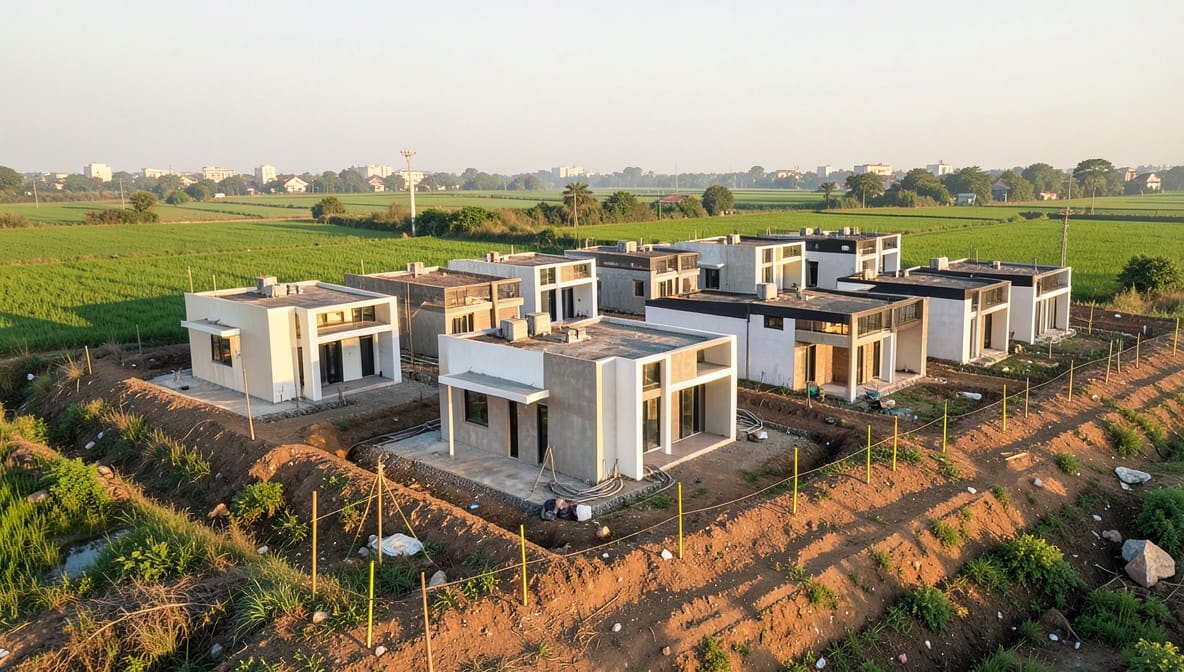
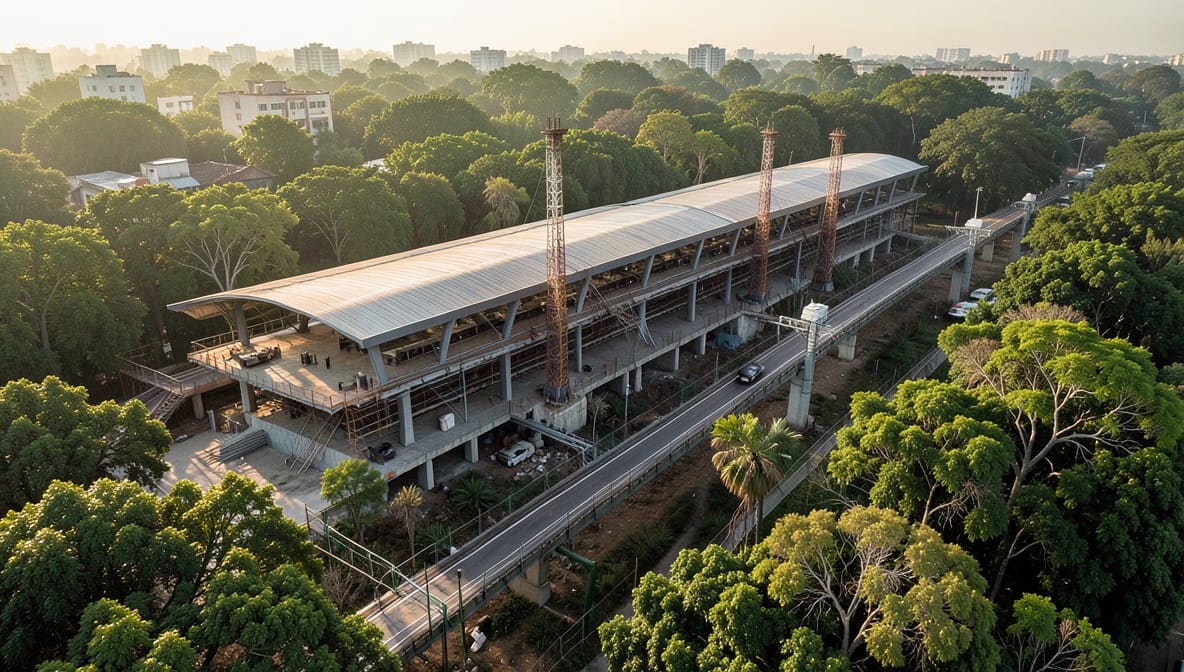
The dispute centers on a 12.40-hectare (124,000 sq. mtrs.) parcel of railway land - designated as MU4+MU5+MU6 - at New Bijwasan Railway Station, Delhi - intended for mixed-use development (55% residential, 45% commercial) under a 99-year lease. The land was originally acquired by the Delhi Government in 1986 from Village Bharthal as agricultural land with standing crops. It was subsequently allotted to the Railway Authority by the Delhi Development Authority (DDA) on 21.01.2008 for the Integrated Metropolitan Passenger Terminal (IMPT) project. The Rail Land Development Authority (RLDA), a statutory body under the Ministry of Railways, issued Request for Proposal (RFP) No. RLDA/RFP/CD-85 of 2022 on 19.12.2022 for the development. Bagmane Developers Private Limited (BDPL) became the successful bidder on 25.05.2023.
Key Facts
- The land was recorded in the 1986 acquisition award as agricultural land with standing crops.
- Possession was handed over to the Railway Authority on 01.07.2009; satellite imagery from that period confirms the land was barren with no significant vegetation.
- A boundary wall was constructed around the land in 2009.
- The Master Plan of Delhi, 2015 and its successor, the Master Plan of Delhi, 2021, classified the subject land as a Multi-Use parcel for integrated transit-oriented development.
- The RFP dated 19.12.2022 explicitly required bidders to obtain all statutory clearances, including forest/tree permissions, if required.
- Respondent No. 5, R.M. Asif, filed Original Application No. 697 of 2023 before the National Green Tribunal (NGT) alleging the land was a "deemed forest" due to the presence of approximately 1,100 trees.
- The NGT dismissed the OA on 13.02.2024, holding that the land did not meet the criteria for deemed forest under the Forest (Conservation) Act, 1980.
- The Appellants, Naveen Solanki and another - advocates not parties before the NGT - filed this appeal challenging the NGT’s order.
- A survey dated 06.06.2024 by Sky Blue Engineering Consultant claimed 530 trees on 2.5 acres (212 trees per acre), but was challenged as unauthorized.
- An affidavit dated 29.01.2025 by the Deputy Conservator of Forests, West Division, identified three patches within the subject land as deemed forest: Patch 1 (14.5 ha, 5,494 trees), Patch 2 (16.9 ha, 6,083 trees), and Patch 3 (19.39 ha, 7,810 trees), with approximately 70% of trees being invasive species (Vilayati Kikar and Subabul).
- The Delhi Preservation of Trees Act, 1994, governs tree removal in non-deemed forest areas.
Procedural History
- 22.09.1986: Land acquired from Village Bharthal as agricultural land.
- 21.01.2008: DDA allotted 110.07 hectares to Railway Authority for IMPT project.
- 01.07.2009: Possession handed over; boundary wall constructed.
- 19.12.2014: DDA’s UTTIPEC approved redevelopment of Bijwasan Railway Station.
- 2015: Master Plan of Delhi 2015 included subject land as MU4+MU5+MU6.
- 2021: Master Plan of Delhi 2021 formally designated the land for mixed-use transit-oriented development.
- 19.12.2022: RLDA issued RFP for 99-year lease.
- 25.05.2023: BDPL awarded lease.
- 2023: OA No. 697 filed before NGT by R.M. Asif.
- 13.02.2024: NGT dismissed OA.
- 17.09.2024: Supreme Court stayed tree felling and construction on subject land.
- 03.03.2025: Supreme Court clarified stay applies only to subject land of OA.
- 20.03.2026: Supreme Court delivered judgment.
The Parties' Positions
Appellants (Naveen Solanki and another): Argued the land qualifies as deemed forest under T.N. Godavarman Thirumulkpad v. Union of India due to tree density exceeding 100 trees per acre. Contended that the 2023 amendment to the Forest (Conservation) Act did not eliminate the concept of deemed forest. Relied on Article 21 and the right to a pollution-free environment.
Respondents (RLDA, Ministry of Railways, Department of Forests, BDPL): Maintained the land was never notified or recorded as forest in revenue or planning records. Emphasized that the Master Plan of Delhi, 2021, was formulated with the land classified as non-forest. Argued that the tree cover consists predominantly of invasive alien species (Vilayati Kikar) that disrupt ecological balance and do not constitute a natural forest. Cited Re: Construction of Park at NOIDA and Chandra Prakash Budakoti to argue that subsequent vegetation cannot alter land classification.
Relief Sought
The Appellants sought: (1) quashing of the NGT’s order dated 13.02.2024; (2) declaration that the subject land is deemed forest under the Forest (Conservation) Act, 1980; (3) direction to obtain prior Central Government approval under Section 2 before any development; and (4) injunction against tree felling.
The Legal Issue
The central questions were: (i) whether land classified as non-forest in statutory Master Plans can later be declared a "deemed forest" due to subsequent natural vegetation growth; and (ii) whether the relevant date for determining deemed forest status is the date of Master Plan notification or the date of actual project implementation.
Arguments Presented
For the Appellant
The Appellants relied on T.N. Godavarman Thirumulkpad v. Union of India to argue that "forest" must be interpreted broadly to include any land meeting the dictionary definition, irrespective of ownership or record. They contended that the presence of over 100 trees per acre on 2.5 acres satisfies the test for deemed forest. They challenged the NGT’s reliance on the 2023 amendment to exclude deemed forests, asserting that the amendment only clarified exemptions for certain railway lands, not the definition of forest. They cited Narinder Singh v. Divesh Bhutani to invoke Article 21 and the right to a clean environment. They argued that the survey by Sky Blue Engineering Consultant, though contested, established sufficient tree density.
For the Respondent
The Respondents emphasized that the land was recorded as agricultural in 1986 and remained unclassified as forest in all revenue and planning records up to the formulation of the Master Plan of Delhi, 2021. They relied on Re: Construction of Park at NOIDA and Chandra Prakash Budakoti v. Union of India to argue that subsequent tree growth cannot retroactively convert land into forest. They highlighted that 70% of the trees are invasive species (Vilayati Kikar), which degrade biodiversity and do not constitute a natural forest ecosystem. They pointed to the RFP’s mandatory compliance clause and the undertaking to obtain permissions for identified patches. They also cited Essar Oil Ltd. v. Halar Utkarsh Samiti and The Auroville Foundation v. Navroz Kersasp Mody to argue for sustainable development and the primacy of statutory Master Plans.
The Court's Analysis
The Supreme Court undertook a comprehensive review of the jurisprudence on "deemed forest" under the Forest (Conservation) Act, 1980, beginning with T.N. Godavarman Thirumulkpad v. Union of India. While affirming that the term "forest" must be interpreted broadly to include areas recorded as such in government records, the Court emphasized that this principle cannot be applied mechanically.
"It would be inconceivable that land, which was forever agricultural, could, within a span of a few years, be converted into forest land merely on account of subsequent plantation or tree growth."
The Court relied on Re: Construction of Park at NOIDA to hold that historical land use and official records at the time of Master Plan formulation are decisive. The Master Plan of Delhi, 2021, was prepared after extensive surveys and was notified in accordance with law. At that time, the land was neither notified as forest nor recorded as such in revenue records. The Court held that treating subsequent vegetation as altering the legal character of the land would introduce "perpetual uncertainty" into statutory planning.
The Court further analyzed the nature of the vegetation. Citing the Department of Forest and Wildlife’s publication Delhi’s Forest at a Glance, it noted that invasive species like Prosopis juliflora (Vilayati Kikar) dominate the area, displace native flora, reduce biodiversity, and disrupt ecological balance. The Court observed that such vegetation does not constitute a natural forest ecosystem and cannot be equated with protected forest land.
The Court also examined the statutory force of Master Plans, citing The Auroville Foundation v. Navroz Kersasp Mody, and held that once a Master Plan is duly approved and notified, it attains binding legal status. Judicial intervention cannot override such plans merely because vegetation has grown on land that was never classified as forest at the time of planning.
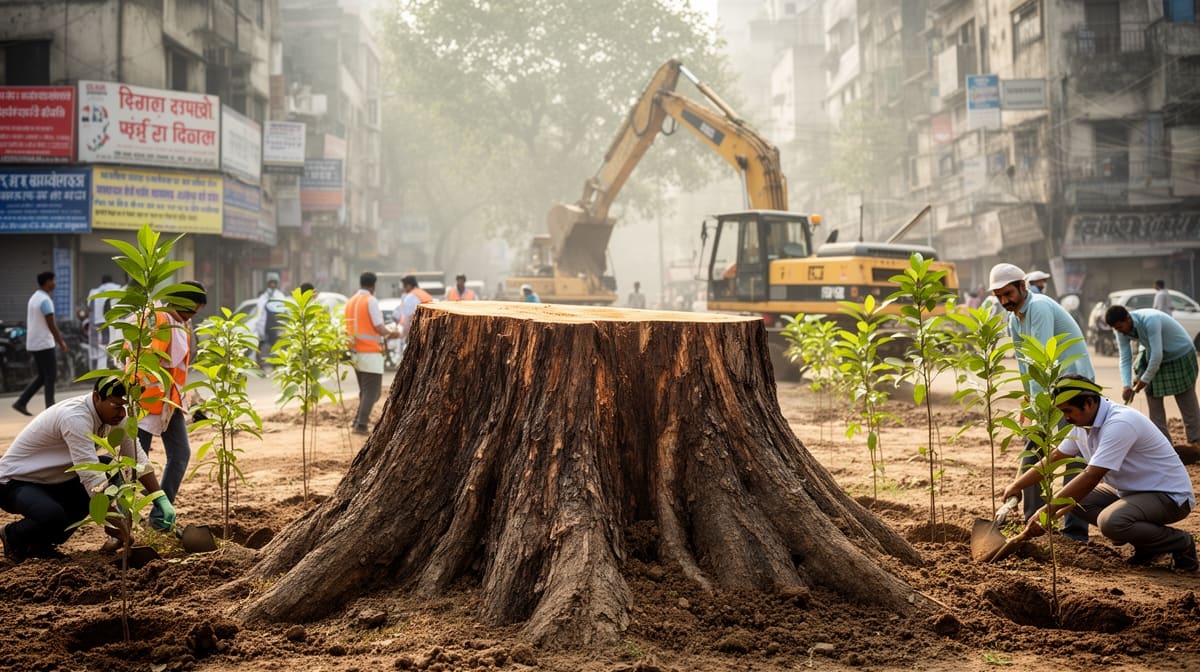
The Court acknowledged the affidavit dated 29.01.2025 identifying three patches as deemed forest but clarified that these areas are subject to separate permissions under the Delhi Preservation of Trees Act, 1994, and not the Forest (Conservation) Act. The Court emphasized that the project’s design includes 20% green cover, mandatory tree transplantation, and compensatory afforestation.
The Verdict
The appeal was dismissed. The Supreme Court held that the subject land, having been classified as non-forest in the Master Plan of Delhi, 2021, and not recorded as forest in revenue records at the time of its formulation, cannot be deemed a forest under the Forest (Conservation) Act, 1980, merely due to subsequent tree growth. The relevant date for determining deemed forest status is the date of the Master Plan’s notification. The Court directed all authorities to ensure transplantation of native species, preserve existing native trees, and undertake compensatory afforestation strictly in accordance with statutory provisions. The Contempt Petition was also disposed of. There shall be no order as to costs.
What This Means For Similar Cases
Master Plans Override Post-Hoc Ecological Claims
- Practitioners must now assess land status based on official records and planning documents as of the Master Plan’s notification date, not current vegetation.
- Environmental challenges based on tree density alone will fail if the land was not classified as forest in statutory planning records.
- Developers can rely on approved Master Plans as conclusive evidence of land use eligibility, absent formal forest notification.
Invasive Species Do Not Constitute Deemed Forest
- The presence of invasive alien species (e.g., Vilayati Kikar) does not satisfy the ecological criteria for deemed forest under Godavarman.
- Courts will distinguish between natural forest ecosystems and monocultures of non-native, ecologically disruptive species.
- Environmental compliance must now include species-specific assessments, not just tree counts.
Statutory Compliance Must Be Proactive, Not Reactive
-
RFPs and development agreements must explicitly require bidders to obtain all statutory clearances, including tree permissions under state laws.
-
Developers must conduct pre-construction ecological audits identifying native vs. invasive species.
-
Compensatory afforestation and transplantation plans must be detailed, approved, and integrated into project timelines - not treated as afterthoughts.
-
Project proponents must now maintain a public registry of tree transplantation and native species planting to demonstrate compliance.
-
State forest departments must update land records to reflect changes in vegetation status, particularly where deemed forest patches are identified.
-
Legal challenges to infrastructure projects must be framed around the statutory status of land at the time of planning, not current conditions.
-
The judgment reinforces that environmental protection and urban development are not mutually exclusive, but must be harmonized through statutory compliance and ecological science.