The Madras High Court has directed Railway authorities to reconsider a petitioner’s request for a 273-day extension of a multipurpose stall license, recognizing that pandemic-related operational delays constitute a valid Force Majeure event under contractual terms. This ruling reinforces the principle that administrative bodies must apply contractual clauses fairly when external circumstances beyond a licensee’s control disrupt performance.
Background & Facts
The Dispute
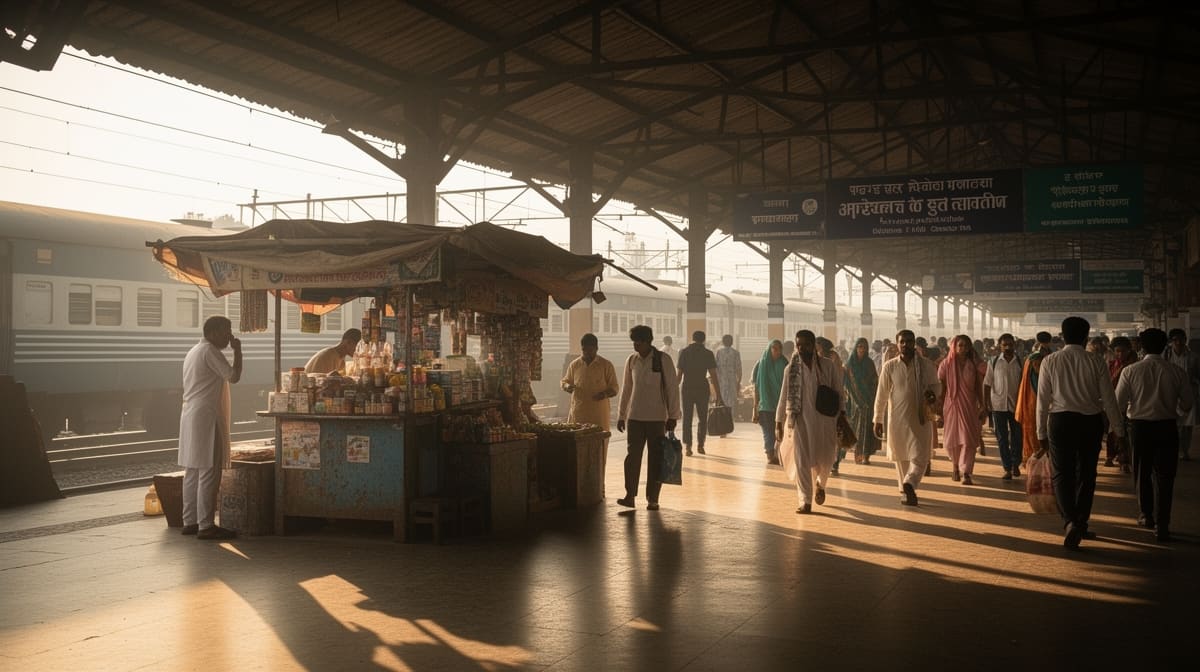
The petitioner sought extension of a five-year license for a Multipurpose Stall (MPPS-02) at Puratchi Thalaivar Dr.M.G.Ramachandran Central Railway Station (MAS), ‘A1’ Category, after the effective operational period was disrupted by the COVID-19 pandemic. The license was awarded through an e-auction process, with the Letter of Award (LOA) dated 02.03.2020 and a formal agreement executed on 21.06.2023. The petitioner contends that the pandemic rendered the stall non-operational for a significant portion of the contractual term, entitling him to an extension under Clause 20.11 of the agreement.
Key Facts
- Tender Notice No.COMML.19525-MPPS-02-MAS was issued on 08.01.2020
- Letter of Award (LOA) dated 02.03.2020 granted the license for five years
- Clause 6 of LOA stipulated that the tenure commences from the date of commencement of sale or within 30 days of space allocation, whichever is earlier
- Petitioner endorsed the LOA on 07.03.2020, acknowledging the commencement schedule
- Petitioner requested permission to commence operations on 19.01.2021, citing improved pandemic conditions
- Railway Administration permitted commencement on 18.03.2021 via letter dated 12.02.2021, received by petitioner on 17.02.2021
- Actual business operations commenced on 01.10.2021
- First quarterly Advance Licence Fee was remitted on 26.08.2021, prior to operations
- The original five-year term was recalculated to expire on 17.03.2026
- Petitioner submitted a representation dated 20.01.2026 seeking 273-day extension due to Force Majeure
- No response was issued to the representation by the date of the writ petition
Procedural History
- 08.01.2020: Tender Notice issued by Southern Railway
- 02.03.2020: Letter of Award issued to petitioner
- 07.03.2020: Petitioner endorsed LOA, acknowledging terms
- 19.01.2021: Petitioner requested permission to commence operations
- 12.02.2021: Railway Administration permitted commencement with deadline for payment
- 17.02.2021: Petitioner received permission letter
- 01.10.2021: Actual commencement of business operations
- 26.08.2021: First quarterly fee paid
- 21.06.2023: Formal Multipurpose Stall Licence Agreement executed
- 20.01.2026: Petitioner invoked Force Majeure clause and sought 273-day extension
- 16.03.2026: Writ petition filed before Madras High Court
Relief Sought
The petitioner sought quashing of E-Auction Catalogue No.MPS-06 dated 24.01.2026 insofar as it relates to Seq.No.AA5, and directed the fourth respondent to grant a 273-day extension of the license period, retroactively applied to account for pandemic-related non-operation, and to amend the license agreement accordingly.
The Legal Issue
The central question was whether the petitioner, having been prevented from operating the stall due to the COVID-19 pandemic, is entitled to an extension of the license period under the Force Majeure clause of the agreement, and whether the Railway authorities are obligated to consider such a claim in good faith.
Arguments Presented
For the Petitioner
The petitioner argued that the pandemic constituted a classic Force Majeure event under Clause 20.11 of the agreement, which explicitly includes acts of God and government-imposed restrictions. He submitted that the delay in commencement (from March 2020 to October 2021) was entirely beyond his control, and that he had acted in good faith by paying fees in advance. He relied on the judgment in Poorna Caterers v. Union of India (W.P.Nos.28631 & 28633 of 2024) where the Andhra Pradesh High Court granted a similar extension under comparable circumstances.
For the Respondent
The respondents contended that the petitioner had accepted the revised commencement date of 18.03.2021, which was communicated in writing and acknowledged by the petitioner. They argued that the five-year term was recalculated accordingly and expired on 17.03.2026, and that no contractual provision allowed for further extension beyond the recalibrated period. They further submitted that the petitioner’s representation dated 20.01.2026 was submitted after the expiry of the term and was therefore untimely.
The Court's Analysis
The Court observed that the facts were not in dispute and that the petitioner had acted in compliance with all contractual obligations, including timely payment of fees and adherence to administrative directives. The Court emphasized that Clause 20.11 of the agreement explicitly permits extension of the license period if mutually agreed upon, in the event of Force Majeure. The Court noted that the pandemic, with its nationwide lockdowns and restrictions on public movement, clearly fell within the scope of the clause.
"In such event of force majeure, if mutually agreed by both parties, the tenure of this Agreement may be further extended for the period during which license was not operational."
The Court held that the petitioner’s representation dated 20.01.2026 was a legitimate invocation of the clause and that the respondents had an obligation to consider it substantively. The Court declined to decide the merits of the extension claim, but directed the fourth respondent to examine the representation in light of the Force Majeure clause and the precedent set in Poorna Caterers v. Union of India. The Court underscored that administrative bodies must not treat contractual remedies as mere formalities, particularly when external events have rendered performance impossible.
The Verdict
The writ petition was disposed of with directions. The fourth respondent is directed to consider the petitioner’s representation dated 20.01.2026 and grant an extension of the license period by 273 days, in accordance with Clause 20.11 of the agreement and the judgment in Poorna Caterers v. Union of India, within four weeks from the date of receipt of this order. The petitioner is permitted to continue operations in the stall until such decision is made, and no coercive action shall be taken against him. There shall be no order as to costs.
What This Means For Similar Cases
Force Majeure Must Be Evaluated Substantively
- Practitioners must now argue that administrative contracts with Force Majeure clauses require active, reasoned consideration - not mere procedural acknowledgment
- Delayed commencement due to government-imposed restrictions qualifies as Force Majeure even if the contract term was later recalculated
- Failure to respond to a timely Force Majeure claim may constitute arbitrariness under Article 14 of the Constitution
Precedent from Other High Courts Is Binding in Principle
- Judgments from other High Courts on identical contractual clauses, such as Poorna Caterers, are persuasive and must be considered in administrative decisions
- Courts will not permit authorities to rely on technical expiry dates when the underlying cause of delay was a recognized Force Majeure event
- Administrative agencies must align their interpretations with judicial guidance on equitable contract enforcement
Timeliness of Representation Is Not Fatal if Action Is Pending
- A representation made near the end of the term does not automatically become invalid if the event triggering it occurred during the term
- The obligation to respond arises upon receipt of the claim, not upon its timing relative to expiry
- Petitioners may seek interim relief to preserve status quo while administrative review is pending, as permitted in this case