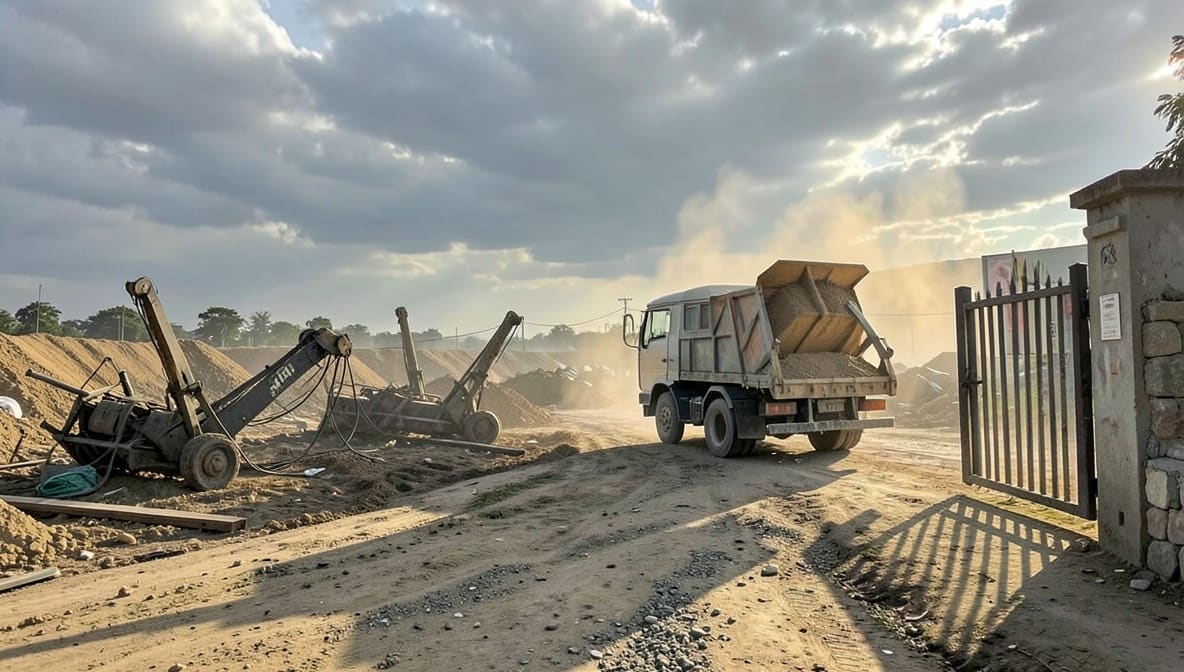
The Calcutta High Court has clarified that a nationwide Covid-19 lockdown constitutes a force majeure event under mining lease agreements, entitling lessees to extension of lease periods when operations are halted due to circumstances beyond their control. This ruling redefines the scope of force majeure in public-private contractual arrangements involving natural resource extraction.
Background & Facts
The Dispute
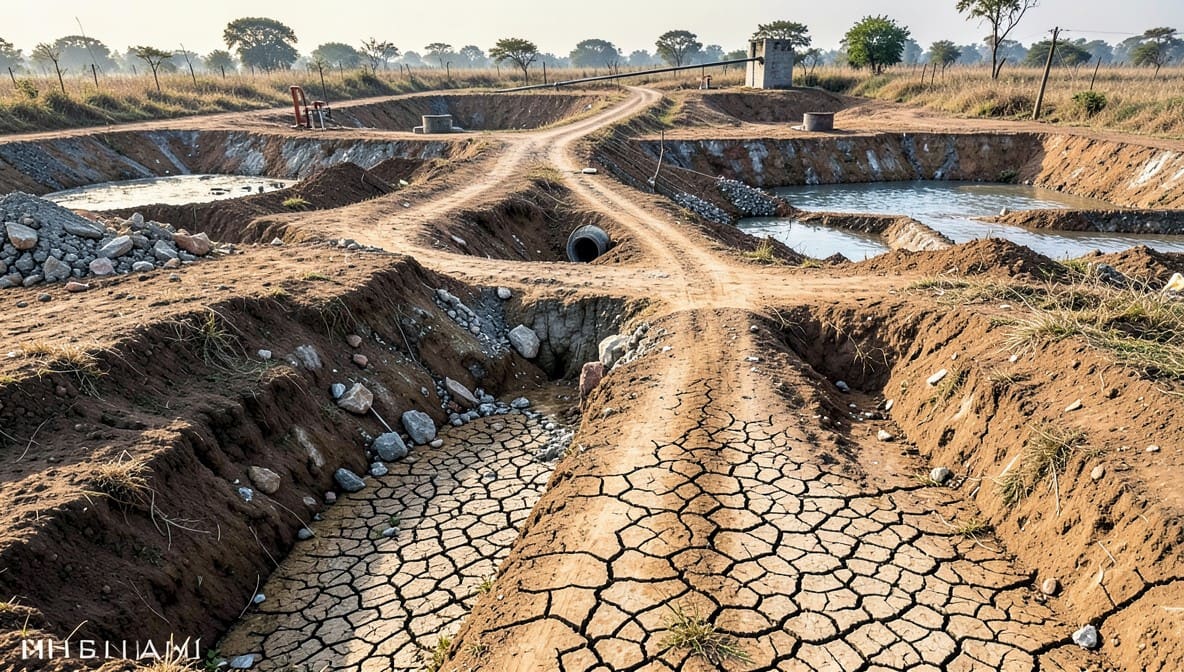
The petitioner, Pal Enterprise, was granted a long-term sand mining lease for a block located at Mouza Shikarpur, Police Station Galsi, Purba Bardhaman, following a successful bid in an e-auction conducted on 18.11.2017. A Letter of Intent was issued, and a formal lease deed was executed on 27.02.2018, registered on 06.03.2018. The lease term was fixed at five years, expiring on 05.03.2023. The petitioner took possession of the mining site on 07.03.2018 and commenced operations.
Key Facts
- The lease deed contained Clause 5 under Part IX, defining force majeure as: "act of God, war, insurrection, riot, civil commotion, strike, earthquake, tide, storm, tidal wave; flood, lightning, explosion, fire and other happenings, which the Lessee/Lessees could not reasonably prevent or control."
- On 01.01.2020, a road accident at Simultala triggered law and order issues, leading to unilateral suspension of sand extraction by authorities via order dated 02.01.2020.
- On 23.03.2020, the Block Land and Land Reforms Officer, Galsi II, ordered suspension of mining activities, which was withdrawn effective 13.05.2020.
- From March 2020 to mid-2021, nationwide lockdowns under the Disaster Management Act, 2005, halted all mining and transportation activities.
- From February 2021 to 31.01.2022, movement of sand-loaded trucks was restricted due to road construction between Shikarpur and Galsi.
- This restriction was further extended until 07.04.2022.
- The petitioner submitted a representation on 10.06.2022 seeking extension of the lease period to compensate for lost operational time.
- The representation was received by authorities on 13.06.2022, after the lease had expired on 05.03.2023.
Procedural History
- 18.11.2017: E-auction conducted for sand mining lease
- 27.02.2018: Long-term mining lease executed
- 06.03.2018: Lease deed registered
- 07.03.2018: Petitioner took possession of mining site
- 02.01.2020: First suspension of mining activities
- 23.03.2020: Suspension order issued by Block Land Officer
- 13.05.2020: Suspension withdrawn
- March 2020 - June 2021: Nationwide Covid-19 lockdown
- February 2021 - 31.01.2022: Truck movement restriction due to road construction
- 07.04.2022: Final lifting of truck movement restriction
- 10.06.2022: Petitioner’s representation submitted for lease extension
- 10.05.2023: Additional District Magistrate rejected extension request
- 31.07.2025: Commissioner, Burdwan Division dismissed appeal (Appeal No. 53 of 2023)
- 28.12.2025: Writ Petition (WPA 28376 of 2025) filed before Calcutta High Court
- 30.04.2026: Judgment delivered
Relief Sought
The petitioner sought extension of the lease period by the total duration of operational disruption (approximately 21 months), including 5 months due to accident-related suspension, 15 months due to lockdown, and 2 months due to road construction. Alternatively, the petitioner sought remand for reconsideration of the extension request in light of force majeure.
The Legal Issue
The central question was whether the nationwide Covid-19 lockdown and restrictions on truck movement imposed by authorities qualify as "other happenings" under the force majeure clause of the mining lease, thereby entitling the lessee to an extension of the lease term.
Arguments Presented
For the Petitioner
Mr. Ashoke Banerjee, Senior Advocate, argued that the force majeure clause in Clause 5 of the lease deed explicitly includes "other happenings" beyond the lessee’s control. He contended that the Covid-19 lockdown, being a government-mandated nationwide restriction under the Disaster Management Act, 2005, falls squarely within this definition. He relied on the Government of India’s Office Memorandum dated 13.05.2020, which explicitly recognized Covid-19 disruptions as force majeure events in government contracts, entitling contractors to extension of performance timelines by 3 to 6 months. He further cited Radharaman Constructions and Marketing Pvt. Ltd. v. State of West Bengal (2023 SCC Online Cal 4791), where a coordinate bench granted lease extension for similar restrictions on vehicle movement.
For the Respondent
Mr. Sanjay Saha, appearing for the State, argued that the force majeure clause cannot be invoked after the lease has expired. He contended that the petitioner failed to formally invoke the clause during the lease term and submitted the representation only after expiry. He further relied on Dilip Mondal v. State of West Bengal (MAT 1304 of 2025), where the Division Bench held that restrictions imposed by authorities - even if unlawful - do not constitute force majeure as they are not "supervening impossibilities" beyond human control. He also invoked Clause 6(iii) of the West Bengal Sand Mining Policy, 2021, which bars renewal of expired leases, arguing that extension is tantamount to renewal.
The Court's Analysis
The Court began by distinguishing between "renewal" and "extension" of a lease, citing State of Gujarat v. Nirmalaben S. Mehta (2016) 9 SCC 240. It held that extension is a prolongation of the existing lease, not a fresh grant, and therefore not barred by Clause 6(iii) of the 2021 Policy, which only prohibits renewal.
The Court then examined the force majeure clause. It noted that the clause’s definition of "other happenings" is broad and non-exhaustive. The Government of India’s Office Memorandum dated 13.05.2020, issued under the Disaster Management Act, explicitly recognized the Covid-19 lockdown as a force majeure event affecting contractual obligations. The Court observed:
"It prima facie appears to this Court that the lock down imposed on account of Covid 19 pandemic may fall within the expression ‘other happenings’ used in Clause 5 of part IX of the lease deed."
The Court further held that while the Dilip Mondal judgment correctly ruled that unlawful state action does not qualify as force majeure, the lockdown was not an unlawful act but a lawful, nationwide public health measure. The restriction on truck movement due to road construction, however, was held not to qualify as force majeure under Dilip Mondal, as it was an administrative decision by the State.
The Court found that the appellate authority erred in failing to consider the Office Memorandum and the Radharaman precedent. It also noted that the rejection of the representation on the ground of belatedness was perverse, as the petitioner had no opportunity to invoke the clause during the lease term due to the continuous nature of the disruptions.
The Verdict
The writ petition was allowed. The order of the Commissioner, Burdwan Division dated 31.07.2025 was set aside. The appeal was restored to the file of the appellate authority, which was directed to reconsider the petitioner’s request for lease extension in light of the Court’s observations. The appellate authority must afford a hearing to the petitioner and other affected parties and issue a reasoned order within ten weeks of receiving a certified copy of this judgment. The Court clarified that the authority may consider the applicability of the Government of India’s Office Memorandum dated 13.05.2020, but must do so in accordance with law.
What This Means For Similar Cases
Force Majeure Includes Legally Mandated Lockdowns
- Practitioners can now invoke force majeure clauses in mining, construction, and supply contracts to seek time extensions when operations are halted by government-mandated lockdowns under the Disaster Management Act, 2005
- The Government of India’s 13.05.2020 Office Memorandum provides binding administrative guidance for interpreting force majeure in public contracts
- Failure to formally invoke the clause during the contract term does not automatically bar relief if the disruption was continuous and beyond the lessee’s control
Administrative Restrictions Are Not Force Majeure
- Restrictions imposed by state authorities for infrastructure projects, even if prolonged, do not qualify as force majeure under Dilip Mondal
- Lessees must distinguish between public health emergencies (force majeure) and administrative delays (not force majeure)
- Claims for extension must be supported by documentary evidence of government orders causing the disruption
Policy Changes Cannot Override Contractual Rights
- Post-contract policy changes, such as the West Bengal Sand Mining Policy, 2021, cannot nullify pre-existing contractual rights to extension
- Extension is a contractual remedy; renewal is a policy discretion
- Courts will uphold the sanctity of contract terms unless explicitly overridden by statute