The Tripura High Court has clarified that when a government agency like the Food Corporation of India (FCI) creates conditions of extraordinary delay through its own infrastructure failures, contractors are entitled to compensation under tender agreements - even in the absence of explicit rate clauses. This judgment reinforces the principle that contractual obligations must be interpreted in light of party conduct and factual reality, not technical omissions.
Background & Facts
The Dispute
The dispute arose from a transport contract between Sri Suvajit Paul, a private trucking contractor, and the Food Corporation of India (FCI) for the transportation of food grains and allied materials from railway sidings at FSD Dharmanagar to FSD Nandannagar in Agartala, Tripura. The contract was awarded pursuant to a tender issued on 13.09.2011, with formal acceptance on 25.04.2012 for a two-year term, later extended by two months until 29.04.2014. The contractor was responsible for loading, transporting, and unloading food grains under road movement permits issued by FCI, each valid for three days including dispatch and delivery.
Key Facts
- The contractor operated under the business name M/s Suvajit Paul.
- Transportation commenced on 27.04.2012.
- Road movement permits were issued by FCI’s Depot-in-charge, specifying a 3-day validity window.
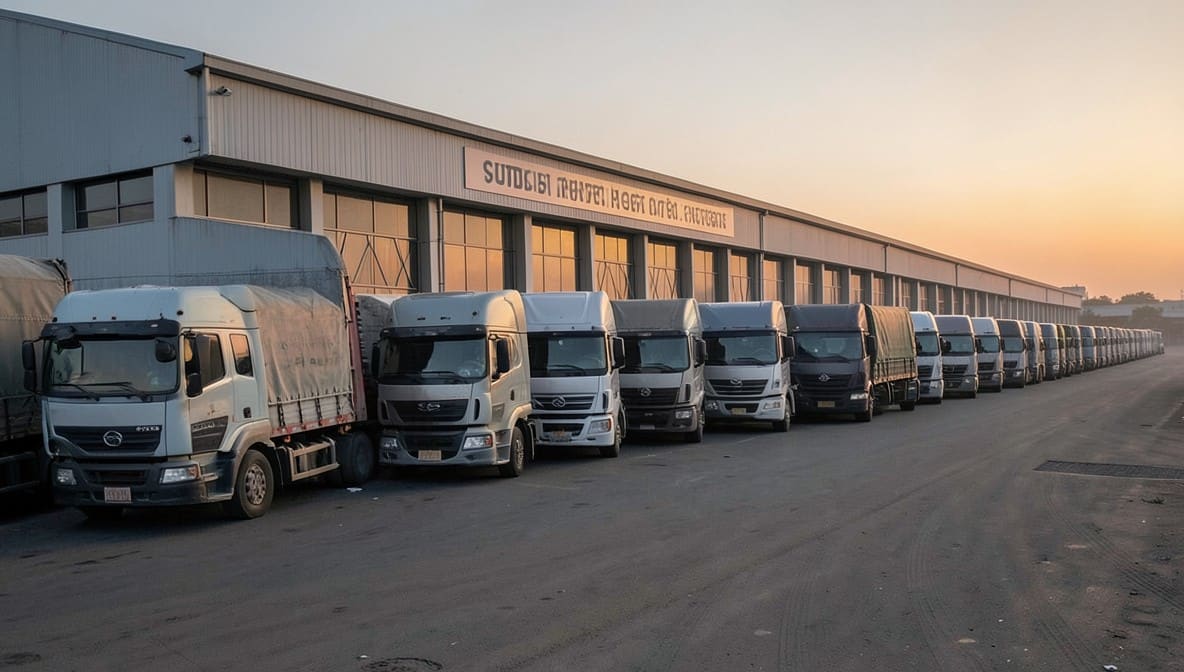
- From mid-2012 to mid-2013, the contractor repeatedly reported that trucks were detained at Nandannagar depot for 4 to 20 days due to insufficient storage space.
- On 12.07.2013, FCI’s General Manager, NEFR, Shillong, wrote to the Director of Food, Civil Supplies & Consumer Affairs, Tripura, admitting: "About 450 trucks are standing today at different depots in Agartala Complex... The Area Manager, Agartala is not in a position to unload the stocks."
- The contractor submitted multiple letters (Exhibits dated 01.08.2012 to 25.07.2013) requesting unloading arrangements and claiming detention charges at Rs. 800 per truck per day.
- FCI did not respond substantively to these claims but later alleged the contractor had claimed Rs. 2,84,89,600 without precedent.
- The contractor filed a suit on 20.06.2016 seeking recovery of Rs. 1,52,62,400 for detention charges.
- FCI filed a counterclaim for railway demurrage charges of Rs. 1,01,00,000, alleging failure to supply trucks on time.
- The contractor marked 77 documents as exhibits (Exhibits 1 - 77), including letters, bills, and permits.
- FCI did not produce the original tender agreement, nor did it call the Area Manager who was in charge during the relevant period.
Procedural History
- 13.09.2011: FCI issued NIT for transport contractor appointment.
- 25.04.2012: Contract accepted for two years.
- 27.04.2012: Transportation commenced.
- 12.07.2013: FCI’s General Manager admits storage shortage and truck stranding.
- 05.12.2013: FCI rejects contractor’s claim as baseless.
- 20.06.2016: Original suit filed before District Commercial Court, West Tripura (CS No. 12 of 2016 and CS No. 19 of 2016).
- 22.12.2015: FCI issues letter to contractor detailing demurrage claims.
- 03.10.2016: Tripura HC, in WA No. 25 of 2016, held FCI cannot claim demurrage without contractual provision.
- 14.12.2023: Trial Court delivered judgment.
- 19.12.2023: Trial Court decreed Rs. 6,49,200 with 9% interest, fixing 6-day cut-off for extraordinary delay.
- 08.04.2026: Tripura High Court delivers judgment on RFA Nos. 4, 7, and 10 of 2024.
The Parties' Positions
Appellant (Contractor): Argued that detention beyond 3 days was caused solely by FCI’s failure to provide storage, constituting "extraordinary kind" under Clause XVIII(a)(vi). Cited documentary evidence and the 12.07.2013 letter as admission of fault. Claimed Rs. 1,52,62,400 at Rs. 800/day per truck.
Respondent (FCI): Denied liability, claiming no contractual provision for detention charges. Argued contractor failed to supply trucks on time, causing railway demurrage. Contended that delay was not "extraordinary" and that contractor’s claims were inflated and unsupported.
Relief Sought
Appellant: Full recovery of Rs. 1,52,62,400 with interest, setting aside the trial court’s 6-day cut-off and directing reconsideration of all 32 exhibits ignored by the trial court.
Respondent: Dismissal of the suit and decree in favor of FCI for demurrage charges of Rs. 1,01,00,000.
The Legal Issue
The central question was whether detention of trucks beyond the 3-day road movement permit period, caused by FCI’s admitted lack of storage capacity, qualifies as "extraordinary kind" under Clause XVIII(a)(vi) of the tender agreement, entitling the contractor to compensation - even in the absence of a specified rate - and whether FCI can claim railway demurrage charges absent any contractual provision.
Arguments Presented
For the Appellant
Learned Counsel Kundan Pandey argued that FCI’s own admission in the 12.07.2013 letter confirmed that storage shortages were systemic and beyond the contractor’s control. He emphasized that Clause XVIII(a)(vi) did not require a definition of "extraordinary kind" - only that the delay must be attributable to the FCI’s failure. He cited the 77 exhibits, including letters and bills, as proof of continuous attempts to resolve the issue. He relied on Food Corporation of India & Ors. v. Abhijit Paul (2023) 15 SCC 40, where the Supreme Court held that demurrage liability cannot be imposed without explicit contractual terms. He further noted that FCI failed to produce key witnesses, the original agreement, or any documentary proof of demurrage calculations.
For the Respondent
Learned Counsel Ratan Datta contended that the tender agreement contained no provision for detention charges, and the term "extraordinary kind" was undefined, making any claim speculative. He argued that the contractor’s failure to supply trucks promptly caused railway demurrage, for which FCI was entitled to recover under Clause X and XII. He conceded that no documentary evidence was produced to substantiate the demurrage claim but insisted the contractor’s conduct was the root cause of the disruption. He relied on the trial court’s 6-day cut-off as a reasonable compromise.
The Court's Analysis
The Division Bench of the Tripura High Court undertook a meticulous review of the tender agreement, the conduct of the parties, and the documentary record. It found that FCI’s own communication dated 12.07.2013 constituted a clear admission that the storage shortage was structural and ongoing, and that the contractor was not at fault. The Court observed:
"It is quite surprising as to how the respondents-FCI, knowing fully that they had no capacity to unload the trucks at the respective station, issued road movement permits in favour of the appellant-contractor from time to time and rather, took the plea that the appellant-contractor failed to supply the trucks for carrying of goods. This argument of the respondents-FCI cannot be accepted as valid."
The Court rejected the trial court’s 6-day cut-off as arbitrary. It held that the 3-day period under the road movement permit was the contractual baseline for normal operations. Any delay beyond that, caused by FCI’s failure to provide unloading capacity, must be deemed "extraordinary" as contemplated under Clause XVIII(a)(vi). The Court emphasized:
"The delay which occurred due to inaction of the respondents-FCI can be satisfactorily termed as 'extraordinary kind'."
Regarding demurrage, the Court reaffirmed its own earlier decision in WA No. 25 of 2016 and the Supreme Court’s ruling in Abhijit Paul, holding that demurrage liability cannot be imposed absent an express contractual term. The Court noted that FCI’s witness, Mukesh Pal, admitted under cross-examination that no clause in the NIT or agreement mentioned railway demurrage, and that FCI had never initiated any civil or criminal proceedings against the contractor.
The Court further held that the trial court erred in ignoring 32 exhibits (including letters and bills) that substantiated the contractor’s claims. These documents, duly marked and proved, were critical to quantifying the detention period and must be reconsidered.
The Verdict
The appeal filed by the contractor (RFA No. 4 of 2024) is partly allowed. The appeals filed by FCI (RFA Nos. 7 and 10 of 2024) are dismissed. The judgment and decree of the District Commercial Court dated 14.12.2023 and 19.12.2023 are set aside in part. The matter is remanded to the trial court to recalculate detention charges with a 3-day cut-off (i.e., compensation payable for every day of delay beyond the initial 3-day permit period). The trial court must reconsider all 32 previously ignored exhibits (Nos. 29, 30, 43, 44, 45, 46, 47, 48, 50, 51, 52, 53, 55, 56, 57, 58, 60, 61, 62, 63, 64, 65, 66, 67, 68, 69, 70, 71, 72, 73, 74, 76, and 77). The trial court shall deliver a fresh judgment within 4 months. Costs are awarded in favor of the contractor. FCI’s demurrage claim is dismissed in its entirety.
What This Means For Similar Cases
Detention Charges Are Not Dependent on Predefined Rates
- Practitioners must argue that when a public agency admits to systemic failure (e.g., storage shortage), and the contract allows compensation for "extraordinary" delay, the absence of a specified rate does not negate liability.
- Courts will infer reasonable rates from industry norms and documentary evidence (e.g., truck hire rates, bills submitted).
- The burden shifts to the public entity to prove that the delay was not caused by its own inaction.
Demurrage Claims Require Express Contractual Basis
- Government agencies cannot impose railway demurrage charges on contractors unless the tender document explicitly provides for it.
- Past practice or administrative convenience cannot substitute for contractual clarity.
- The Abhijit Paul precedent now binds all FCI contracts nationwide.
Documentary Evidence and Witness Credibility Are Decisive
- Failure to produce key witnesses (e.g., Area Managers) or the original contract fatally weakens a party’s case.
- Admissions in official correspondence (e.g., letters to higher authorities) are binding and cannot be retracted in litigation.
- Courts will not uphold findings that ignore duly marked and proved exhibits.