The Supreme Court clarified that Clause 54 of the General Conditions of Contract (GCC) in power sector contracts operates as an absolute bar on pre-reference interest where the agreement expressly prohibits interest on delayed payments, overturning the High Court’s reliance on State of U.P. v. Harish Chandra and Co. and restoring the principle that party autonomy under Section 31(7) of the Arbitration and Conciliation Act, 1996 prevails over implied notions of interest.
Background & Facts
The Dispute
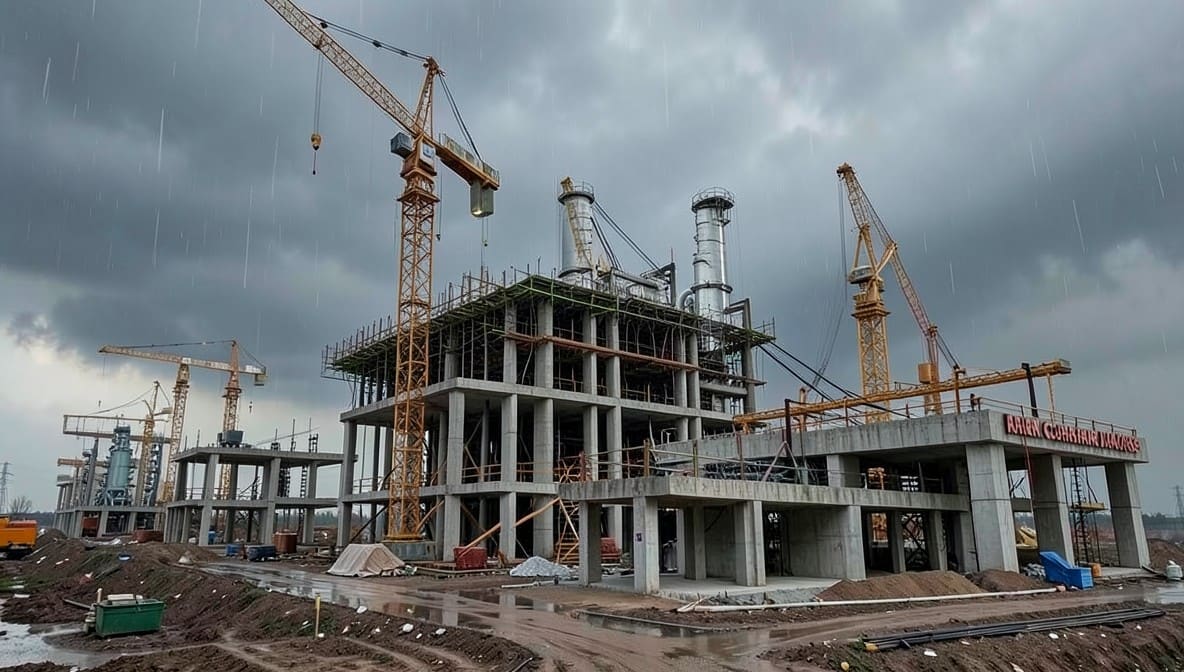
The appellant, North Eastern Electric Power Corporation Limited (NEEPCO), invited tenders on 12.06.1995 for the civil works of a Gas Turbine Power Project at Ram Chandra Nagar, Tripura. The respondent, Astra Construction Private Limited, had its tender accepted and a formal agreement was executed on 23.05.1996. The contract, valued at Rs. 17,09,26,913, stipulated completion by 26.03.1997 and incorporated Clause 54 of the General Conditions of Contract (GCC).
Key Facts
-
The estimated value of work under the contract was Rs. 17,09,26,913 (Rupees Seventeen Crore Nine Lakhs Twenty-Six Thousand Nine Hundred and Thirteen only).
-
The work was stipulated to be completed by 26.03.1997.
-
Disputes arose and the matter was referred to arbitration.
-
The Arbitral Tribunal, by its award dated 05.06.2015, held the delay attributable to NEEPCO and awarded a principal sum of Rs. 3.30 crores.
-
The Tribunal further awarded pre-reference interest at 12% per annum and pendente lite as well as future interest at 9% per annum on the awarded sums.
-
NEEPCO challenged the award before the Commercial Court under Section 34 of the Arbitration and Conciliation Act, 1996.
-
The Commercial Court, by judgment dated 15.02.2024, relied on Sayeed Ahmed & Company v. State of U.P. & Ors. and held that Clause 54 of the GCC bars the grant of interest, whether pre-reference or pendente lite. It set aside the interest on claim nos. 2, 3, 4 and 5 as being contrary to Clause 54 read with Section 31(7) of the Act, upholding the award otherwise.
-
Aggrieved, Astra Construction preferred an appeal under Section 37 of the 1996 Act.
-
The High Court of Meghalaya at Shillong, by judgment dated 19.06.2025, relied on State of U.P. v. Harish Chandra and Co. and held that the bar under Clause 54 was confined to interest on money held up owing to a dispute and did not extend to interest on the award itself. It restored the Arbitral Tribunal’s award in its entirety.
-
The present appeal challenges that restoration.
Procedural History
-
05.06.2015: Arbitral Tribunal award.
-
15.02.2024: Commercial Court judgment modifying the award.
-
19.06.2025: High Court judgment restoring the Tribunal’s award.
-
24.08.2025: Special Leave Petition filed (SLP (C) No. 24803 of 2025).
-
22.09.2026: Supreme Court judgment (date of judgment).
-
23.08.2012: Statement of Defence filed before the Arbitral Tribunal raising the plea based on Clause 54.
Relief Sought
NEEPCO sought to set aside the High Court’s judgment of 19.06.2025, to reinstate the Commercial Court’s modification, and to deny the grant of pre-reference and pendente lite interest on the arbitral award.
The Legal Issue
The central question was whether Clause 54 of the GCC, which bars claims for interest or damages on money lying with the Corporation owing to any dispute, difference or misunderstanding or on any delay on the part of the Engineer-in-Charge making periodical or final payments, precludes the arbitrator from awarding pre-reference interest under Section 31(7)(a) of the Arbitration and Conciliation Act, 1996.
Arguments Presented
For the Appellant (NEEPCO)
Reliance was placed on Sayeed Ahmed & Company v. State of U.P. & Ors. and Jaiprakash Associates Limited v. Tehri Hydro Development Corporation (India) Limited (THDC-II) to argue that Clause 54 constitutes an express, specific bar on interest for delayed payments, independent of any dispute. It was submitted that the plea was specifically taken in the Statement of Defence filed on 23.08.2012 before the Tribunal, thus no waiver could be inferred. The Appellant contended that the High Court erred in equating Clause 54 with the clause considered in State of U.P. v. Harish Chandra and Co., which only addressed dispute-related bars, and that party autonomy under Section 31(7) prevails over implied notions of interest.
For the Respondent (Astra Construction)
It was argued that the objection to interest was never raised before the arbitral tribunal, thereby amounting to a waiver, relying on Union of India v. Susaka Pvt. Ltd. and Ors. The Respondent maintained that the High Court correctly applied Harish Chandra and that Clause 54, read in its entirety, does not shut out interest arising purely from delay in payment. It further submitted that the impugned judgment calls for no interference.
The Court's Analysis
The Court began by tracing the evolution of interest awards under the 1940 and 1996 Acts. Under the 1940 Act, interest could be implied where the contract was silent, but a contractual bar had to be express and specific to be effective (Union of India v. Ambika Construction line). The 1996 Act, through Section 31(7)(a), expressly subordinated the arbitrator’s power to award interest to the parties’ agreement: “unless otherwise agreed by the parties”. This marked a clear departure from the strict-construction approach of the 1940 regime.
Examining the material clauses, the Court noted that the clause in Harish Chandra barred interest only on money held back because of a dispute, difference or misunderstanding, while Clause 54 of the GCC adds an independent ground: “any delay on the part of the Engineer-in-Charge making periodical or final payments”. The closing words “or in any other respect whatsoever” apply to both grounds. Consequently, Clause 54 operates as a complete bar on the arbitrator’s power to award interest for the pre-reference period, whether the delay is dispute-related or not.
The Court further observed that the plea was squarely on record: the Statement of Defence filed on 23.08.2012 specifically invoked Clause 54, negating the waiver argument. Reliance was placed on Pam Developments Private Limited v. State of West Bengal and Another and G&T Beckfield Drilling Services (supra) to reaffirm that under the 1996 Act, an express contractual bar ousts the tribunal’s jurisdiction under Section 31(7)(a).
“Clause 54 of the GCC is worded differently, and the difference matters. It bars claims for interest or damages in two separate situations, not one.”
Thus, the Arbitral Tribunal, by awarding pre-reference interest, exceeded the bounds of its jurisdiction. The High Court’s reliance on Harish Chandra was misplaced, and its judgment restoring the interest award cannot be sustained.
The Verdict
The appeal is allowed. The High Court judgment dated 19.06.2025 is set aside to the extent it restores pre-reference and pendente lite interest on the arbitral award. The Commercial Court’s order of 15.02.2024 is reinstated, confirming that the arbitral tribunal exceeded its jurisdiction by awarding Rs. 3.30 crores as principal sum with 12% pre-reference interest and 9% pendente lite interest. No order as to costs is passed.
What This Means For Similar Cases
Express Contractual Bars Trump Implied Assumptions
Parties must scrutinise contract clauses for express prohibitions on interest. A clear and specific bar, such as Clause 54, ousts the arbitrator’s power under Section 31(7)(a) regardless of whether the delay is dispute-related.
-
Draft or negotiate interest clauses with precision; vague language will not suffice to exclude liability.
-
Before arbitration, raise any objection based on such bars in the pleadings to preserve the right to challenge the award.
Party Autonomy Governs Interest Awards under the 1996 Act
The 1996 Act elevates the parties’ agreement over implied terms. Unless the contract expressly permits interest, the tribunal cannot award it for the pre-reference period.
-
Counsel should advise clients to include or exclude interest provisions explicitly in the GCC or special conditions.
-
In disputes, focus on the contractual text rather than relying on judicial presumptions from the 1940 era.
Precise Pleading Preserves Rights to Contest Interest
The Court emphasized that a waiver cannot be inferred where the objection is squarely on record.
-
File a clear defence invoking the relevant clause before the tribunal; mere silence does not constitute waiver.
-
Maintain copies of all pleadings to demonstrate timely objection in subsequent appeals or challenges.