The Calcutta High Court set aside a writ petition challenging the classification of loan accounts as NPA, holding that the borrowers could not approach the High Court under Article 226 when a statutory remedy under the SARFAESI Act was available, and that the RBI’s 2023 Fair Lending Guidelines, the basis of the petition, had been withdrawn in 2025.
Background & Facts
The Dispute
- The appellant is South Indian Bank Limited, a scheduled commercial bank.
- The respondents are Propello Innovations Private Limited, a micro-small-medium enterprise (MSME), and its director.
- The borrowers obtained credit facilities from the bank in 2013.
- In 2020, the loans were restructured on the pretext of a financial crisis caused by the global downturn and the stoppage of LOUs.
- Further renewal of the credit facilities was granted in 2020 citing the Covid-19 pandemic.
- In November 2023, the bank issued a renewal sanction order that increased the rate of interest on the borrowers’ accounts.
- On 19 June 2024, the bank emailed the borrowers stating that their accounts would be declared Non-Performing Assets (NPA).
- On 28 June 2024, the bank demanded the borrowers deposit funds to keep the accounts out of the NPA category; the borrowers complied by depositing money on 28 and 29 June 2024.
- On 8 July 2024, the bank formally declared the accounts as NPA and debited penal interest and additional interest.
- The borrowers filed a writ petition on 1 October 2024, alleging that the debiting of penal interest violated the RBI’s Fair Lending Practice - Penal Charges in Loan Accounts Guidelines dated 18 August 2023 and that the NPA classification was arbitrary.
Key Facts
- Loan amount: over Rs. 10 crores outstanding, of which Rs. 9.2 crores had been repaid by the borrowers.
- Recall notice: the bank issued a recall notice invoking a bank guarantee for Rs. 9 crores.
- Statutory notices: a notice under Section 13(2) of the SARFAESI Act was issued on 17 August 2024; the borrowers responded under Section 13(3)(A) on 8 January 2026, well after the statutory period.
- The bank also issued a possession notice under Section 13(4) on 8 January 2026 and a paper publication on 10 January 2026.
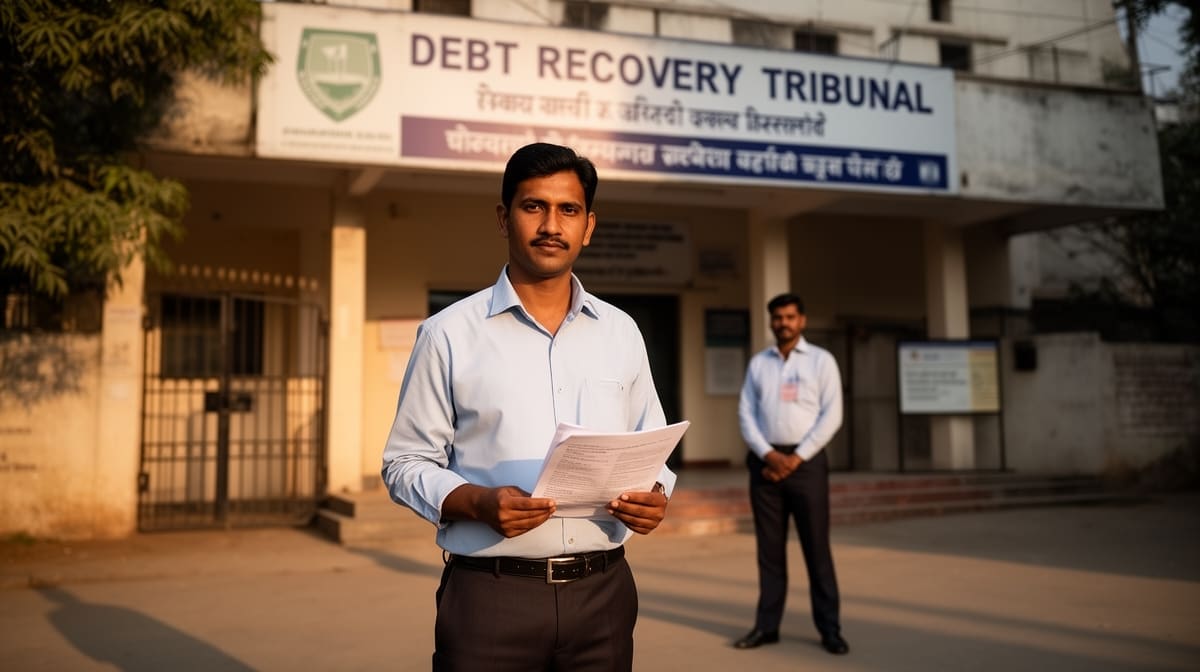
- An application under Section 17 of the SARFAESI Act (SA 522 of 2026) was filed before the Debts Recovery Tribunal (DRT) seeking quash of the notices and injunction.
Procedural History
- 1 Oct 2024: Writ petition filed in the High Court.
- 26 Feb 2026: Single Judge dismissed the writ, holding the bank violated the RBI Guidelines.
- 15 Jul 2026: Appeal (MAT 743 of 2026) heard before a Division Bench.
- 7 Aug 2026: Judgment delivered (2026:CHC-AS:1220-DB).
- Cross-appeal (COT 56 of 2026) filed by the borrowers was also disposed of.
- Application under Section 17 pending before the DRT.
The Parties' Positions
- Appellant bank: argued that the writ petition was not maintainable because the borrowers had an effective statutory remedy under the SARFAESI Act; also contended that the RBI Guidelines were no longer in force.
- Borrowers: contended that the bank had arbitrarily levied penal interest without prior intimation, violating the Guidelines, and that the NPA classification was unlawful.
Relief Sought
- Quash of the penal interest debits and additional interest.
- Injunction restraining the bank from acting upon the Section 13(2) and Section 13(4) notices.
- Set-aside of the paper publication and recall notice.
- Costs in favour of the bank.
Case Details
South Indian Bank Limited v. Propello Innovations Private Limited & Ors.
2026:CHC-AS:1220-DB
Court
Calcutta High Court
Date
2026-08-07
Case Number
FMAT/145/2026
Bench
Ravi Krishan Kapur
Counsel
Pet: Prabal Kumar Mukherjee, Senior Advocate, Anirban Pramanick, Advocate
Res: Deepan Sarkar, Advocate, Shahrukh Raja, Advocate, Deepti Priya, Advocate, Utpal Bose, Senior Advocate, D. K. Kundu, Advocate, Arjun Basu, Advocate, Aditi Biswas, Advocate
Frequently Asked Questions
The Court reiterated that when an effective remedy is available under a specific statute, such as the SARFAESI Act, a writ petition under Article 226 should ordinarily not be entertained, as held in United Bank of India v. Satyawati Tondon.
The Court observed that the RBI withdrew the 2023 Guidelines on 28 November 2025 and incorporated them into the 2025 Directions; consequently, the Guidelines could not be invoked as a basis for the writ.
No. The proper forum is the SARFAESI Act’s remedial mechanism under Sections 13(3)(A), 13(4) and 17, which provides for appeal before the DRT and the Appellate Tribunal.