The National Consumer Disputes Redressal Commission has reaffirmed a foundational principle of execution law: once a final order is passed, its scope cannot be expanded or modified during execution. This ruling brings much-needed clarity to disputes between homebuyers and builders, particularly where financial arrangements involving banks and subvention schemes complicate enforcement.
Background & Facts
The Dispute
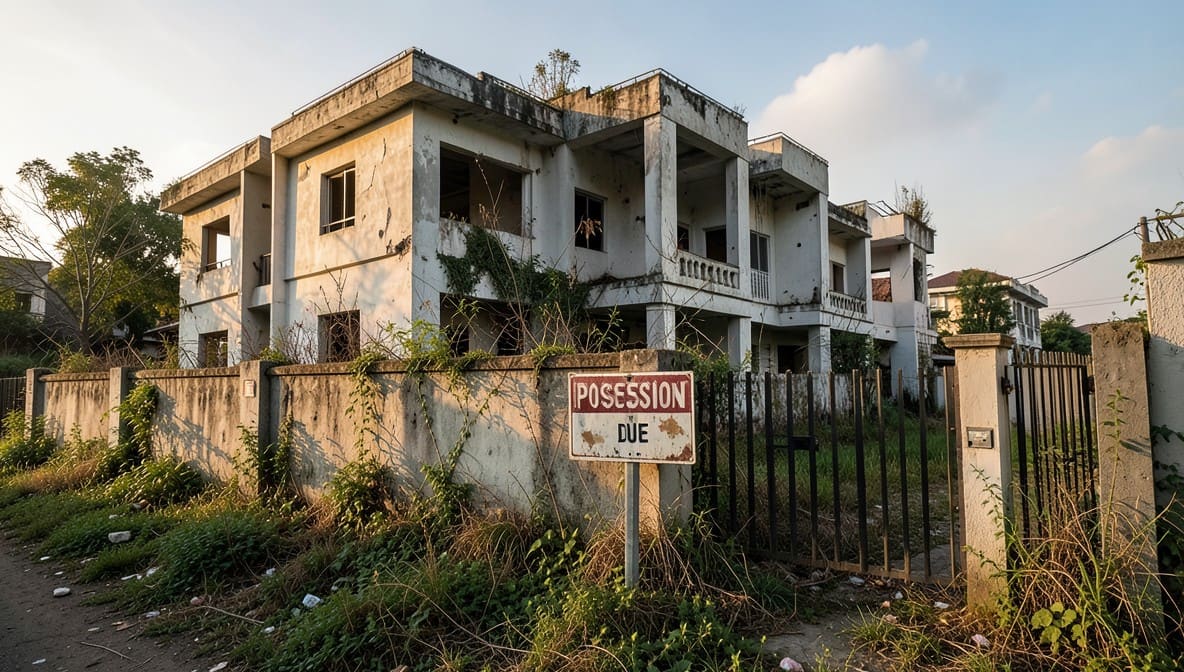
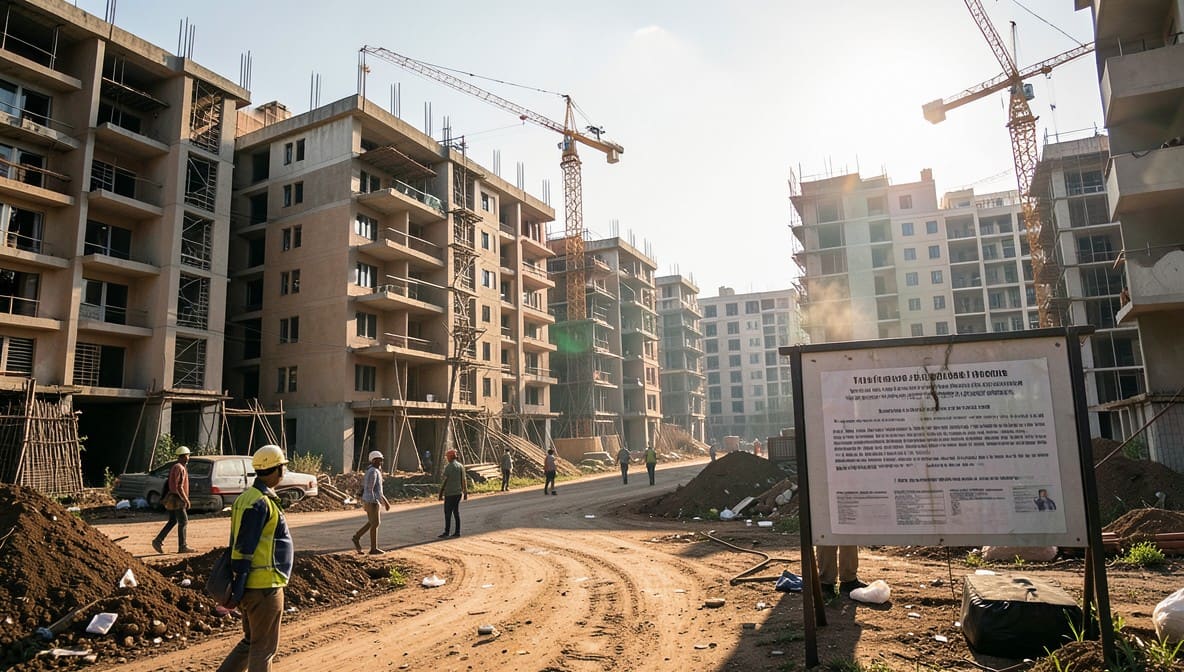
The complainants, Dr. Ramesh Baweja and another, purchased a residential flat from Emaar India Ltd. under a Builder Buyer Agreement dated 19.04.2011, with a stipulated delivery timeline of 30 months. The project suffered significant delays, prompting the complainants to file a complaint before the NCDRC seeking possession, compensation for delay, and litigation costs.
Procedural History
- 2015: Original complaint filed (CC No. 1197 of 2015)
- 2023: NCDRC passed a final order on 05.11.2023 directing the builder to revoke cancellation, hand over possession upon payment of original consideration, pay delay compensation, and ₹1,00,000 as litigation costs
- 2025: Execution applications filed by both parties to enforce and clarify the order
- 2025: NCDRC issued a clarification on 30.04.2025, rejecting the builder’s attempt to invoke tripartite bank agreements to alter liability
- 2026: Final order on execution applications issued after detailed financial recalculations
Relief Sought
The complainants sought enforcement of possession and compensation as per the 2023 order. The builder contended that the complainants owed additional amounts due to bank loan repayments made under a tripartite agreement, and sought to adjust the balance payable accordingly.
The Legal Issue
The central question was whether execution proceedings under the Consumer Protection Act, 2019 can be used to reopen, reinterpret, or expand the financial obligations originally determined in a final order, particularly when third-party financial arrangements (like bank subvention schemes) are involved.
Arguments Presented
For the Appellant/Petitioner
The complainants argued that the final order dated 05.11.2023 was conclusive and binding. They relied on the principle that execution is not a forum for re-litigation and that the builder’s payment to the bank under the tripartite agreement was a separate contractual arrangement, irrelevant to the buyer’s obligation under the Builder Buyer Agreement. They cited State of Haryana v. Bhagwan Das to affirm that execution must strictly adhere to the decree’s terms.
For the Respondent/State
The builder contended that since it had discharged the loan amount of ₹1,09,67,000 on behalf of the buyer under the tripartite agreement, the buyer’s liability should be recalculated to reflect this payment. It argued that the actual consideration received by the builder was only ₹89,78,375 from the bank, and therefore the buyer owed the balance of ₹1,07,09,010. It sought to treat the bank payment as a direct payment by the buyer.
The Court's Analysis
The Commission emphasized that execution proceedings are not appellate or revisional in nature. The order dated 05.11.2023 had attained finality, and its terms could not be altered by subsequent claims arising from third-party agreements. The Court held that the tripartite agreement between the builder, buyer, and bank was a separate transaction, and its terms could not override the contractual obligations established in the Builder Buyer Agreement.
"At the stage of execution, neither of the parties can enlarge the scope of liability determined under the final order dated 05.11.2023. The payment made by JD to the Bank pursuant to the Tripartite Agreement constitutes a separate arrangement and it cannot override or modify the operative directions already attained finality."
The Commission further clarified that the amount actually received by the builder - ₹89,78,375 - was the only relevant consideration for calculating the buyer’s outstanding liability. Interest calculations were adjusted based on actual payments and timelines, and the builder’s claim for interest at 9% was rejected as inadmissible under the prior clarification.
The Court applied the doctrine of res judicata in execution context, holding that any dispute regarding the tripartite arrangement must be pursued independently, not through execution proceedings.
The Verdict
The complainants prevailed. The NCDRC held that execution proceedings cannot modify or expand the terms of a final order, and that third-party financial arrangements do not alter the buyer-builder contractual obligations. The builder was directed to hand over possession upon receipt of ₹84,20,385, and all pending applications were disposed of.
What This Means For Similar Cases
Final Orders Are Binding in Execution
- Practitioners must argue that any attempt to introduce new financial claims during execution - such as bank repayments, interest recalculations, or third-party adjustments - is impermissible
- The operative terms of the decree are the sole basis for enforcement; no new liabilities can be imposed
Third-Party Agreements Are Irrelevant in Consumer Execution
- Builder-bank agreements (e.g., subvention schemes) are separate from buyer-builder contracts
- Buyers cannot be held liable for builder’s obligations to banks unless explicitly agreed in the sale agreement
- Any dispute over tripartite arrangements must be litigated separately
Interest Claims Must Be Explicitly Awarded
- Interest rates not specified in the original order cannot be imposed during execution
- Claims for higher interest (e.g., 9%) without prior adjudication are inadmissible
- Practitioners should meticulously document interest calculations in original complaints to avoid post-decree disputes