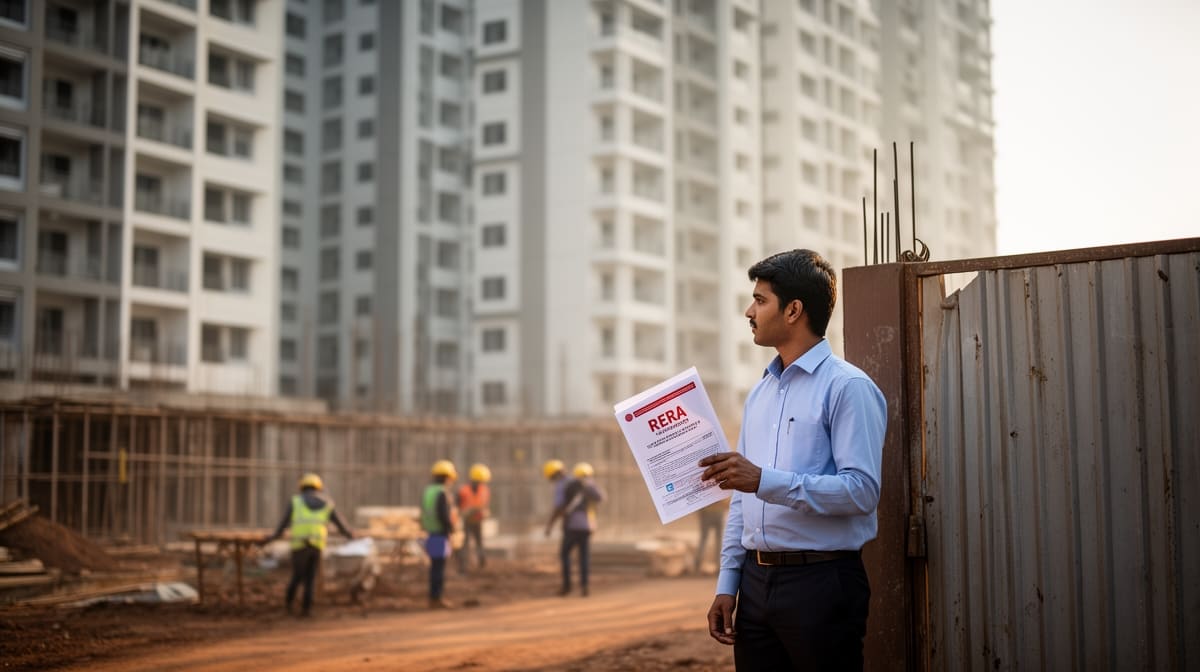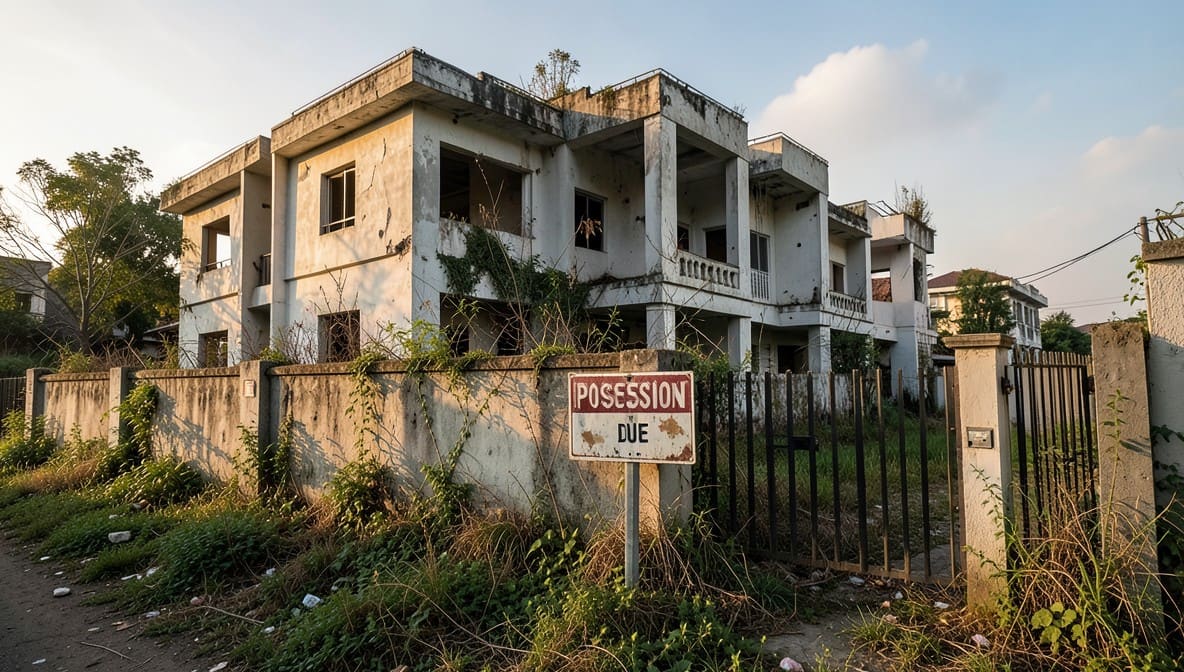
The Supreme Court has reaffirmed that statutory remedies under the Consumer Protection Act supersede one-sided contractual clauses that seek to limit compensation for delayed possession. In a landmark ruling, the Court held that builders cannot shield themselves from liability by invoking clauses that cap damages at nominal rates, especially when prolonged delays cause significant hardship to homebuyers.
Background & Facts
The Dispute
The three appeals before the Supreme Court arose from consumer complaints filed by flat purchasers against Parsvnath Developers Ltd. and its affiliates for failure to deliver possession of residential units in the Parsvnath Exotica project at Sector 53, Gurgaon. The respondents had paid nearly the entire sale consideration - ranging from ₹1.82 crore to ₹2.54 crore - under agreements that stipulated possession within 36 months of construction commencement, with a six-month grace period. Despite full or near-full payment, possession was not delivered for over a decade in some cases.
Procedural History
- 2017: Consumer complaints filed before the National Consumer Disputes Redressal Commission (NCDRC) seeking delivery of possession, compensation for delay, and reimbursement of increased stamp duty.
- 2018 - 2019: NCDRC passed orders directing the appellant to complete construction, obtain Occupancy Certificates, and pay 8% simple interest per annum from dates of contractual default, along with litigation costs and rebate adjustments.
- 2022 - 2025: Appeals filed before the Supreme Court challenging the NCDRC’s jurisdiction to override contractual terms under Clause 10 of the Flat Buyer Agreements.
Relief Sought
The respondents sought: (1) delivery of possession only upon issuance of a valid Occupancy Certificate; (2) compensation for delay at a rate higher than the contractual ₹10/sq.ft./month; (3) reimbursement of increased stamp duty borne by them due to the developer’s delay; and (4) litigation costs. The appellant sought to limit liability to the contractual compensation rate and shift all incidental costs to the buyers.
The Legal Issue
The central question was whether Section 14 of the Consumer Protection Act, 1986 permits consumer fora to award compensation exceeding a contractual cap when the clause is one-sided, disproportionate, and results in manifest injustice, and whether a developer can evade statutory liability by invoking clauses that absolve it of responsibility for delays caused by statutory non-compliance.
Arguments Presented
For the Appellant
The appellant contended that Clause 10(c) of the Flat Buyer Agreement explicitly capped compensation for delay at ₹10 per sq. ft. per month, and that the NCDRC exceeded its jurisdiction by awarding 8% interest. It relied on Pioneer Urban Land & Infrastructure Ltd v. Govindan Raghavan to argue that contractual terms must be respected unless proven unconscionable. It further asserted that delays were due to external factors - lack of approvals, policy changes, and labor shortages - beyond its control, and that the NCDRC failed to consider the developer’s efforts to comply with court directions, including payment of over ₹4 crore in interim compensation.
For the Respondent
The respondents argued that the contractual cap was manifestly inadequate and one-sided, as the agreement permitted the developer to charge 24% interest on delayed payments by buyers but limited buyer compensation to a fraction of market rates. They cited Lucknow Development Authority v. M.K. Gupta and IREO Grace Realtech v. Abhishek Khanna to establish that housing construction is a service under the Act, and delay in possession constitutes deficiency. They emphasized that the developer repeatedly failed to obtain Occupancy Certificates despite court orders, rendering any offer of possession legally invalid under Samruddhi Cooperative Housing Society v. Mumbai Mahalaxmi Construction and Dharmendra Sharma v. Agra Development Authority.
The Court's Analysis
The Court began by affirming that the jurisdiction of consumer fora is statutory, not contractual. Section 2(1)(o) of the Consumer Protection Act, 1986 explicitly includes housing construction as a service, and Section 2(1)(g) defines delay in possession as deficiency in service. The Court held that Section 14 empowers the NCDRC to award compensation not merely for financial loss but for mental agony, harassment, and deprivation caused by prolonged non-delivery.
"The word 'compensation' is again of very wide connotation... it may extend to physical, mental or even emotional suffering, insult or injury or loss."
The Court rejected the appellant’s reliance on Clause 10(c), noting that the agreement was a standard form contract with no room for negotiation. The disparity between the 24% interest charged on buyer defaults and the ₹10/sq.ft. cap on developer delays rendered the clause oppressive and unconscionable. Citing Pioneer Urban and Arifur Rahman Khan, the Court held that such one-sided clauses constitute an unfair trade practice under Section 2(1)(r).
The Court further emphasized that the failure to obtain an Occupancy Certificate is not a mere procedural lapse but a statutory deficiency. Quoting Samruddhi Cooperative Housing Society, it held that possession without an Occupancy Certificate is legally untenable and cannot be accepted as valid performance. The developer’s repeated assurances before the Court, followed by continued non-compliance, demonstrated bad faith.
The 8% interest rate was deemed reasonable and proportionate, considering the decade-long deprivation, the substantial sums paid by buyers, and the absence of any justifiable cause for delay. The Court also upheld the NCDRC’s directions regarding stamp duty and litigation costs as incidental to the main relief, falling squarely within Section 14.
The Verdict
The respondents won. The Supreme Court affirmed the NCDRC’s orders, holding that statutory compensation under the Consumer Protection Act cannot be curtailed by one-sided contractual clauses. The developer was directed to obtain Occupancy Certificates and deliver possession within six months, continuing to pay 8% interest until then. The Court dismissed all appeals with no order as to costs.
What This Means For Similar Cases
Contractual Caps Are Not Absolute
- Practitioners must challenge contractual delay compensation clauses that are disproportionately low compared to market rates or buyer obligations.
- A clause capping developer liability at ₹10/sq.ft./month while charging 24% interest on buyer defaults is prima facie unfair and unenforceable.
- Consumer fora are empowered to award higher interest rates where the contractual rate fails to compensate for actual loss or mental hardship.
Occupancy Certificate Is Non-Negotiable
- Possession offered without an Occupancy Certificate is legally invalid and cannot be accepted as performance.
- Buyers may refuse possession without prejudice to their right to claim compensation for delay.
- Developers must obtain statutory approvals before offering possession; failure to do so constitutes deficiency in service under Section 2(1)(g).
Delay Justifies Enhanced Compensation
- Prolonged delays (over 5 - 10 years) justify compensation beyond mere refund with interest.
- Compensation must account for mental agony, loss of opportunity, and increased cost of alternate accommodation.
- Courts will not permit developers to exploit procedural delays as a business strategy; repeated non-compliance with court orders aggravates liability.