A landmark ruling by the Bombay High Court has established that when identical parcels of land are acquired under the same notification for the same public purpose, coordinate benches must extend uniform compensation. This decision reinforces doctrinal consistency in land acquisition proceedings and prevents arbitrary disparities in awards to similarly situated landowners.
Background & Facts
The Dispute
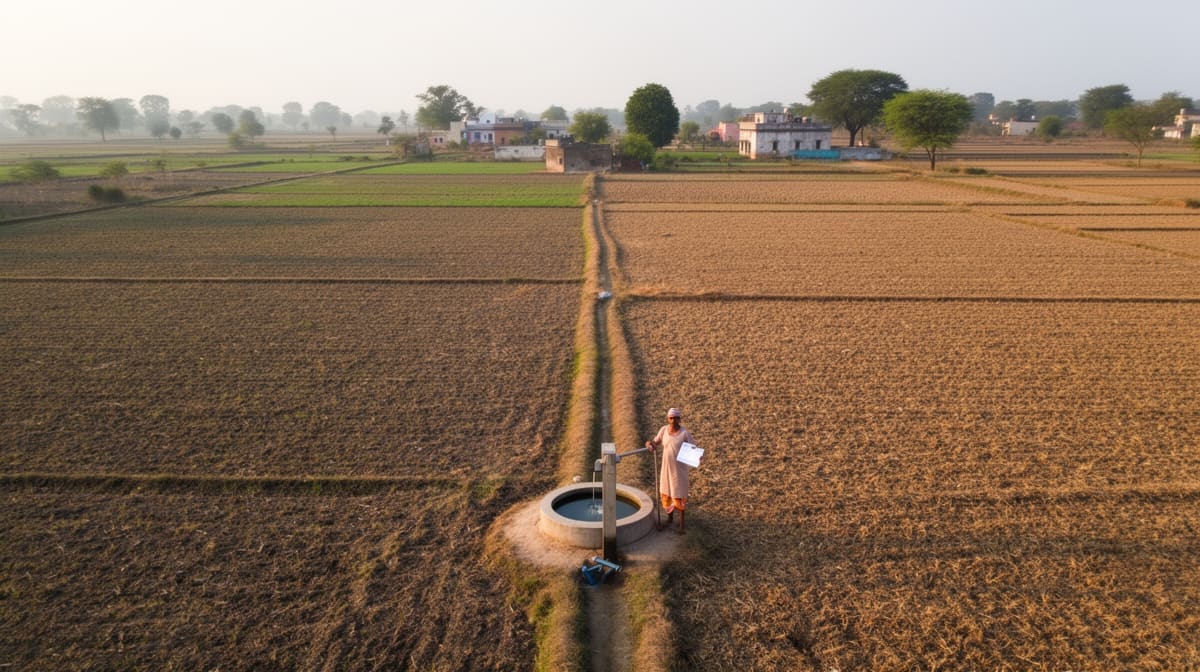
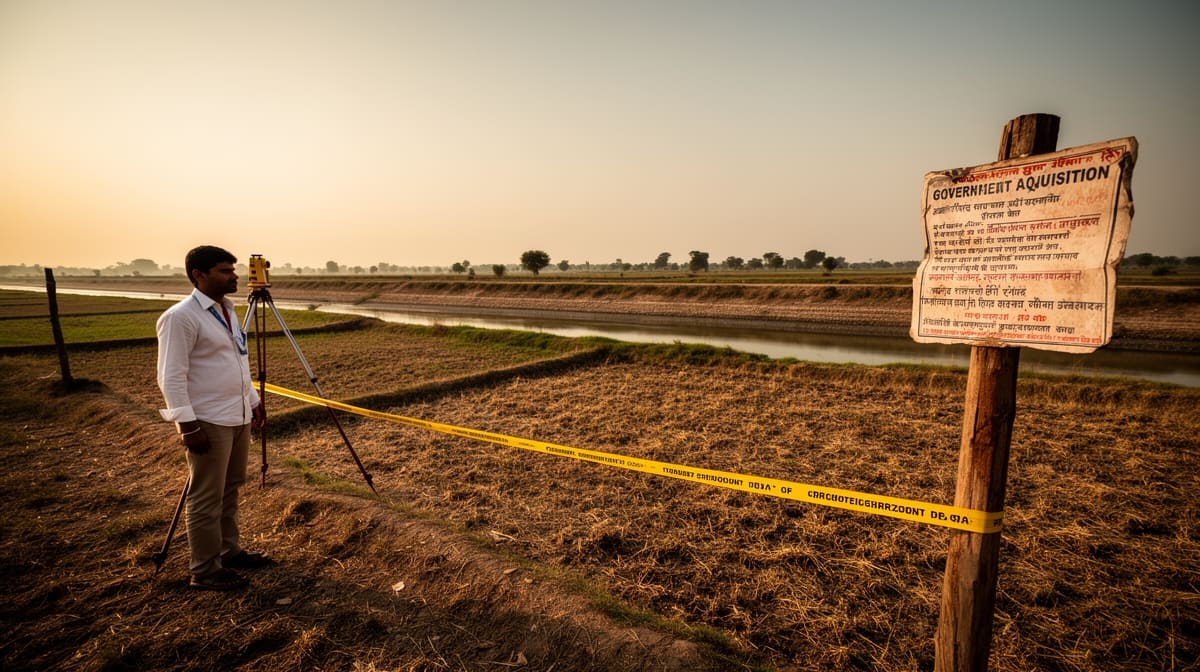
The appellants, agricultural landowners from Village Patoda in Jalna district, challenged the compensation of Rs.1,200 per R (approximately 0.25 acre) awarded by the Reference Court for dry crop land acquired under Notification dated 20 April 1995. The Special Land Acquisition Officer had initially offered Rs.425 per R, which the Reference Court enhanced to Rs.1,200 per R. The appellants sought further enhancement to match a prior award of Rs.2,400 per R granted by a coordinate Bench of the same Court in First Appeal No. 2290 of 2016, involving land from the same village, under the same notification, and for the same irrigation project.
Procedural History
- 1995: Land acquired under Section 4 notification for Lower Dudhana Project
- 1996: Special Land Acquisition Officer awarded Rs.425 per R
- 1997: Reference Court awarded Rs.1,200 per R to all claimants, including the appellants
- 2018: First Appeals filed before Bombay High Court challenging the Rs.1,200 rate
- 2026: Coordinate Bench in First Appeal No. 2290 of 2016 awarded Rs.2,400 per R for identical dry land in same village
Relief Sought
The appellants sought enhancement of compensation to Rs.2,400 per R, consistent with the prior coordinate Bench decision, and continuation of interest under Sections 28 and 34 of the Land Acquisition Act from the date of notification.
The Legal Issue
The central question was whether a coordinate Bench of the High Court is bound to follow its own prior decision on identical facts involving land acquired under the same notification, and whether claimants can invoke that precedent to seek enhanced compensation despite having claimed a lower amount before the Reference Court.
Arguments Presented
For the Appellant
Learned counsel relied on the principle of stare decisis and the doctrine of consistency in public law. He submitted that the land in question was identical in nature, location, and acquisition context to that in First Appeal No. 2290 of 2016. He argued that denying equal compensation to similarly situated landowners violated the principle of equality under Article 14 of the Constitution and undermined the integrity of judicial administration. The chart submitted by counsel, marked as Exhibit X, demonstrated the factual identity of the parcels.
For the Respondent
The State contended that the appellants had claimed only Rs.1,200 per R before the Reference Court and could not now seek a higher amount. It further argued that the prior decision in First Appeal No. 2290 of 2016 was not binding on the present appeals, as it was not a Full Bench ruling. The respondent also challenged the award of interest from the date of notification, citing State of Maharashtra v. Kailash Shiva Rangari to argue that interest should commence only from the date of the award.
The Court's Analysis
The Court examined the factual and legal identity between the two sets of acquisitions. It noted that the land in both cases was dry crop land, acquired under the same notification, for the same public purpose, and from the same village. The Court held that the principle of equal treatment under Article 14 mandates uniformity in compensation where the circumstances are indistinguishable.
"There is nothing to take a different view as the controversy involved in the present appeals and First Appeal No. 2290 of 2016 is the same."
The Court rejected the respondent’s argument that claimants are estopped from claiming more than what they sought before the Reference Court. It clarified that the Reference Court’s award is not a final adjudication on the quantum of compensation when a higher precedent exists. The Court emphasized that judicial consistency is not optional but a constitutional imperative in land acquisition matters, where the State acts as a sovereign acquirer.
Regarding interest, the Court affirmed the applicability of Kailash Shiva Rangari, holding that interest under Sections 28 and 34 must be computed as per the Full Bench ruling, but denied additional statutory benefits for delayed periods, as no separate claim was made.
The Verdict
The appellants succeeded. The Court held that compensation for identical dry land acquired under the same notification must be uniform, and granted Rs.2,400 per R as compensation. Interest was awarded under Sections 28 and 34 as per Kailash Shiva Rangari, but no additional statutory benefits were allowed.
What This Means For Similar Cases
Uniform Compensation Is Mandatory for Identical Acquisitions
- Practitioners must now cite prior coordinate Bench awards as binding precedent when challenging disparities in compensation
- Claimants need not re-litigate identical issues if a prior decision on the same notification and land type exists
- The State cannot justify lower awards on technical grounds like claimed amounts if the underlying land is indistinguishable
Coordinate Bench Precedents Are Binding in Land Acquisition
- A decision by a coordinate Bench on identical facts creates a de facto binding standard within the same jurisdiction
- This prevents forum shopping and ensures equitable treatment of landowners
- Lawyers should systematically compile and submit comparable awards as Exhibit X in all land acquisition appeals
Interest Calculation Must Follow Full Bench Guidelines
- Interest under Sections 28 and 34 must be computed in accordance with the Full Bench ruling in Kailash Shiva Rangari
- Interest cannot be denied merely because the claimant sought a lower amount before the Reference Court
- Practitioners must argue for interest from the date of notification unless the Full Bench has expressly restricted it