The Delhi High Court has reaffirmed the principle of judicial parity in land acquisition cases, holding that once a market value is judicially determined for land acquired under a common notification, that rate must uniformly apply to all similarly situated landowners - regardless of whether their appeals were heard in the same batch. This decision ensures equitable treatment under the Land Acquisition Act, 1894, and prevents arbitrary disparities in compensation.
Background & Facts
The Dispute
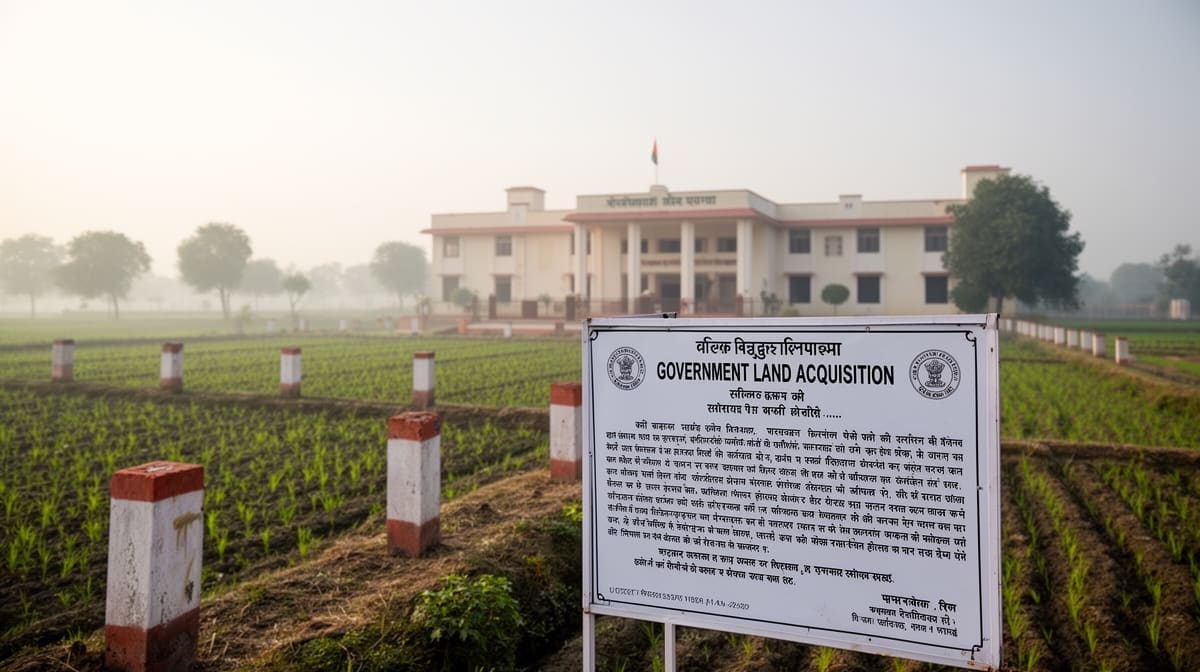
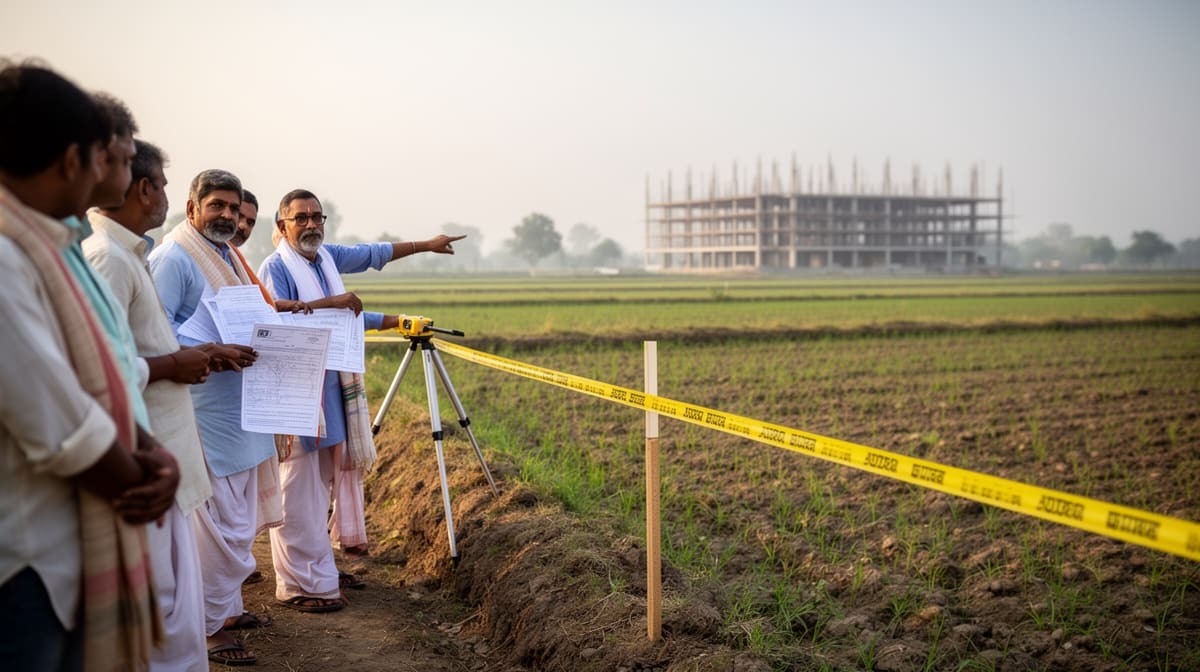
The present appeal arises from the acquisition of agricultural land in Village Kilokari, Delhi, for the channelization of the River Yamuna under a public purpose. The acquisition was initiated by a Notification dated 23.06.1989 issued under Section 4 of the Land Acquisition Act, 1894, followed by a declaration under Section 6 dated 22.06.1990. Urgency provisions under Section 17 were invoked. The Land Acquisition Collector issued Award No. 14/1992 - 93 dated 19.06.1992, fixing the market value of the land at Rs. 27,344/- per bigha, based on the Delhi Administration’s minimum price for agricultural land under Office Order No. F.9(20)/80-L&B/4313-16 dated 03.05.1990, with a 15% annual deduction for the delay in acquisition, classifying the land as ‘Sailabi’.
Key Facts
- The appellants’ land was acquired under the same Notification and Award as other lands in Kilokari and adjoining villages (Nangli Razapur, Khizrabad, Garhi Mendu)
- Possession of the land was taken in three phases: 27.12.1990, 22.09.1995, and 15.10.1996
- The appellants filed a reference petition under Section 18 of the Act on 29.07.1992, seeking compensation at Rs. 2,000/- per square yard
- The reference was not forwarded to the Reference Court until 08.01.2016 - over 23 years after filing - with no explanation provided by the Land Acquisition Collector
- The Reference Court, despite the delay, held the reference within limitation and enhanced compensation to Rs. 89,600/- per bigha, relying on a coordinate award from ADJ-02 (South)
- The original petitioners died during pendency and were substituted by their Legal Representatives
Procedural History
- 23.06.1989: Notification under Section 4 issued
- 22.06.1990: Declaration under Section 6 issued
- 19.06.1992: Award No. 14/1992 - 93 issued by Land Acquisition Collector at Rs. 27,344/- per bigha
- 29.07.1992: Reference petition filed under Section 18
- 27.12.1990, 22.09.1995, 15.10.1996: Possession taken in phases
- 08.01.2016: Reference petition forwarded to Reference Court after 23-year delay
- 10.04.2019: Reference Court awarded Rs. 89,600/- per bigha with statutory benefits
- LA.APP. No. 59/2007 (Bed Ram v. UOI): Heard along with other connected appeals from same notification; decided on 26.09.2025 by a Coordinate Bench of this Court, fixing compensation at Rs. 2,07,500/- per bigha
- 28.04.2026: Present appeal (LA.APP. 101/2019) decided - despite identical facts, it was inadvertently excluded from the Bed Ram batch
- CM APPL 76909/2025: Filed under Section 151 CPC seeking disposal in terms of Bed Ram judgment
The Parties' Positions
The appellants, through their Legal Representatives, contended that the issues in their appeal were identical to those in Bed Ram v. Union of India and adopted the submissions made in that batch. The respondents, Union of India and DDA, did not dispute the identity of facts or law and likewise adopted the submissions made on their behalf in the Bed Ram batch.
Relief Sought
The appellants sought enhancement of compensation from Rs. 89,600/- per bigha to Rs. 2,07,500/- per bigha, as determined in Bed Ram, along with payment of the balance amount with statutory benefits including solatium, interest under Section 23(1A), and additional interest under Section 23(2), as per the law.
The Legal Issue
The central question was whether a judicially determined market value for land acquired under the same notification and award, and on an identical evidentiary record, must be uniformly applied to all similarly situated landowners - even if their appeal was not heard in the same batch - under the principles of judicial parity and statutory mandate under Section 28A of the Land Acquisition Act, 1894.
Arguments Presented
For the Appellant
Counsel for the appellants submitted that the factual, evidentiary, and legal matrix of the present appeal was indistinguishable from that in Bed Ram v. Union of India. They relied on the Coordinate Bench’s findings in that case, which had accepted a registered sale deed dated 17.03.1988 at Rs. 2,07,500/- per bigha as the highest and most proximate exemplar, rejected the ‘Sailabi’ classification as unsupported, and recognized the land’s development potential. They argued that Section 28A of the LA Act mandates uniform compensation for all similarly situated landowners under the same notification, and that judicial discipline requires adherence to coordinate bench rulings on identical issues.
For the Respondent
The respondents did not contest the identity of facts or law. They adopted the submissions made in the Bed Ram batch, which had already been decided by the Coordinate Bench. No new arguments or distinguishing factors were raised.
The Court's Analysis
The Court emphasized that Section 54 of the Land Acquisition Act permits appellate review, but where the factual and evidentiary record is identical to a prior coordinate bench decision, independent re-assessment is neither necessary nor warranted. The Court observed:
"The exercise before this Court is, therefore, one of application of a determination rendered on an identical factual and evidentiary basis, guided by the principles of judicial discipline and parity, rather than of independent re-adjudication."
It noted that the Bed Ram judgment had comprehensively evaluated sale exemplars, land characteristics, development potential, and statutory framework, and had explicitly rejected the ‘Sailabi’ classification and unproved sale deeds relied upon by the Collector. The evidentiary record - including affidavits of witnesses examined and cross-examined in the Bed Ram batch - was identical and had been directed to be read across all connected appeals.
The Court further held that Section 28A of the LA Act is not merely procedural but substantive: once a judicially determined rate is established for land acquired under a common notification, it must extend to all similarly situated claimants, even those who did not file appeals. The Court stated:
"Once a particular rate of compensation is judicially determined, the benefit of such rate must be given to all persons whose land was acquired under the same Notification."
It rejected any notion that inadvertent exclusion from a batch hearing could justify differential treatment. To do so would violate the constitutional guarantee of equality under Article 14 and the statutory mandate of fair compensation.
The Verdict
The appeal was allowed. The Court set aside the Reference Court’s award of Rs. 89,600/- per bigha and directed compensation at Rs. 2,07,500/- per bigha, as determined in Bed Ram v. Union of India. The appellants are entitled to the balance amount (difference between Rs. 2,07,500/- and Rs. 89,600/- per bigha) along with statutory benefits: solatium at 30% under Section 23(2), interest at 12% per annum under Section 23(1A) from 23.06.1989 until possession, and additional interest at 9% per annum for the first year and 15% per annum thereafter until payment. The CM APPL 76909/2025 was allowed. No order as to costs.
What This Means For Similar Cases
Judicial Parity Is Mandatory in Land Acquisition
- Practitioners must cite Bed Ram and similar coordinate judgments when challenging disparate compensation rates under the same notification
- Courts cannot permit differential treatment of similarly situated landowners merely due to procedural lapses or administrative oversight
- Section 28A is not a technical provision - it is a substantive right to uniform compensation
Evidentiary Identity Overrides Procedural Delays
- A 23-year delay in forwarding a reference petition does not invalidate the claim if the underlying facts and evidence are identical to a judicially determined award
- The Reference Court’s finding on limitation, if unchallenged, stands, but the compensation rate must follow the precedent
- No new evidence is required if the record is identical to a binding coordinate judgment
Administrative Inadvertence Cannot Defeat Statutory Rights
- The failure to include an appeal in a batch hearing does not deprive the appellant of the benefit of a prior judicial determination
- Courts must proactively apply coordinate judgments to avoid arbitrary outcomes
- Legal representatives must file applications under Section 151 CPC to seek consolidation or application of a prior judgment when inadvertence occurs