The Bombay High Court’s judgment in these consolidated appeals clarifies critical principles governing compensation determination under the Land Acquisition Act, 1894, particularly regarding the admissibility of comparable sale instances and the allocation of delay-related statutory benefits. The ruling reinforces that compensation must reflect market reality, not administrative convenience, and establishes a nuanced framework for evaluating evidence of land value.
Background & Facts
The Dispute
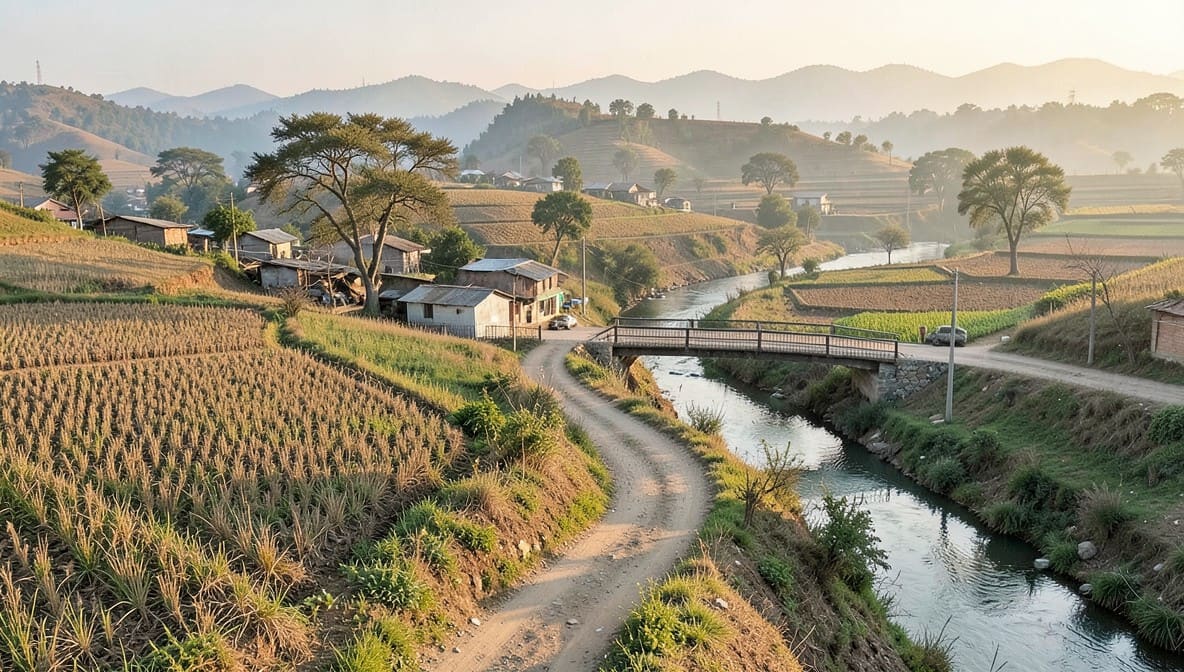
The appellants, landowners from villages Nipani Jawalka and Pachegaon in Beed District, challenged the compensation awarded by the Reference Court for lands acquired for Village Tank No.2. The Special Land Acquisition Officer (SLAO) classified all lands as dry land and awarded Rs.690 per Are. The Reference Court partially corrected this, awarding Rs.2,000 per Are for non-irrigated land and Rs.2,500 per Are for irrigated land, but rejected seven sale instances submitted by claimants as non-comparable.
Procedural History
- 13.01.2005: Notification under Section 4 published in Government Gazette
- 11.07.2005: Last date of publication under Section 4(1) - legally the relevant date for valuation
- 20.12.2003: Possession taken prior to formal notification
- 18.01.2008: References filed by claimants
- 17.06.2011: Deficit court fees paid
- 11.08.2014: References finally registered
- 02.05.2015: Reference Court award issued
- 13.02.2026: Bombay High Court delivers judgment
Relief Sought
Appellants sought enhanced compensation based on sale instances, particularly Exhibit-22 (sale of dry land in Pachegaon on 24.04.2005 at Rs.2,922 per Are), and claimed rental compensation for the period between possession and notification. They also sought interest under Section 28 and Section 34 of the Act.
The Legal Issue
The central questions were: (1) Whether a sale instance from an adjacent village can be treated as a comparable sale for determining market value under the Land Acquisition Act, and (2) Whether statutory benefits and interest should be denied to claimants for delays attributable to the acquiring authority.
Arguments Presented
For the Appellant
Learned counsel argued that Exhibit-22 - a sale of dry land in Pachegaon (adjacent to Nipani Jawalka) on 24.04.2005 at Rs.2,922 per Are - was correctly timed and geographically proximate, and thus should have been accepted. Reliance was placed on Mehrawal Khewaji Trust v. State of Punjab for the principle that the highest comparable rate must be considered. Counsel also contended that delays in registration after payment of deficit court fees (17.06.2011 to 11.08.2014) were due to administrative inaction, not claimant negligence, and thus statutory benefits must be granted for that period.
For the Respondent
The State contended that Exhibit-22 was rightly rejected because the Reference Court mistakenly treated 13.01.2005 as the notification date, not 11.07.2005. Counsel argued that other sale instances were non-comparable due to differing locations, sizes, or lack of corroborative evidence. They further asserted that the claimants’ failure to pay deficit court fees promptly justified denial of interest and benefits for the entire delay period.
The Court's Analysis
The Court conducted a rigorous analysis of the evidentiary standards for comparable sales under Section 23(1A) of the Land Acquisition Act. It held that the Reference Court erred in rejecting Exhibit-22 solely on the basis of an incorrect legal premise - that the notification date was 13.01.2005. The Court clarified that the last date of publication under Section 4(1) - 11.07.2005 - is the legally correct date for valuation, and Exhibit-22 (24.04.2005) was therefore contemporaneous.
"The sale instance at Exhibit-22 is not only proximate in time but also in location, as Pachegaon shares a boundary with Nipani Jawalka. The land is of the same nature - dry - and the transaction occurred within the same taluka. To discard it on a technical misreading of the notification date is to ignore the very purpose of Section 23(1A)."
The Court further distinguished between delays attributable to claimants and those attributable to the State. While the delay from 18.01.2008 to 17.06.2011 (failure to pay deficit court fees) was attributable to the appellants, the subsequent delay from 17.06.2011 to 11.08.2014 - when the references languished with the SLAO - was due to administrative inaction. The Court emphasized that the public exchequer cannot bear the cost of the State’s procedural lapses.
Regarding rental compensation, the Court relied on the Supreme Court’s 2024 judgment in Rajiv v. State of Punjab, which enhanced interest from 6% to 9% for the first year and 15% thereafter. The Court held that granting 9% per annum on enhanced compensation from the date of possession (20.12.2003) until notification (11.07.2005) was equitable and aligned with the principle of full compensation.
The Verdict
The appellants succeeded in part. The Bombay High Court held that comparable sale instances from adjacent villages may be accepted if they match in land type, timing, and proximity, and that statutory benefits must be granted for delays caused by the acquiring authority. Compensation rates were enhanced to Rs.2,922 per Are for dry land and Rs.4,383 per Are for semi-irrigated land, with interest at 9% on rental compensation.
What This Means For Similar Cases
Comparable Sales Must Be Evaluated on Substance, Not Proximity Alone
- Practitioners must now document and argue geographical adjacency, land use parity, and transaction timing as key criteria for comparable sales
- Sale instances from neighboring villages are admissible if they meet these thresholds - even if not from the exact survey number
- Mere distance is not a disqualifier; the focus must be on market similarity
Delay Attribution Is a Two-Part Test
- Claimants bear responsibility for delays caused by their own non-compliance (e.g., unpaid court fees)
- But delays caused by the SLAO or Collector - such as failure to register references - must not penalize claimants
- Practitioners should file applications under Section 54 to compel timely reference and preserve rights to statutory benefits
Rental Compensation Is Now a Presumptive Right
- Interest on rental value must be awarded from date of possession to date of notification
- The 9% rate for the first year and 15% thereafter, as per Rajiv v. Punjab, is now binding precedent in Maharashtra
- This applies even if the claimant did not specifically claim rental compensation - courts must consider it sua sponte