The National Green Tribunal has firmly delineated the boundaries of its jurisdiction, holding that environmental tribunals cannot adjudicate disputes over land ownership, title, or interest - even when such disputes arise in the context of wetland protection. This ruling reinforces the separation between environmental enforcement and civil property adjudication, offering critical clarity for practitioners navigating overlapping legal domains.
Background & Facts
The Dispute
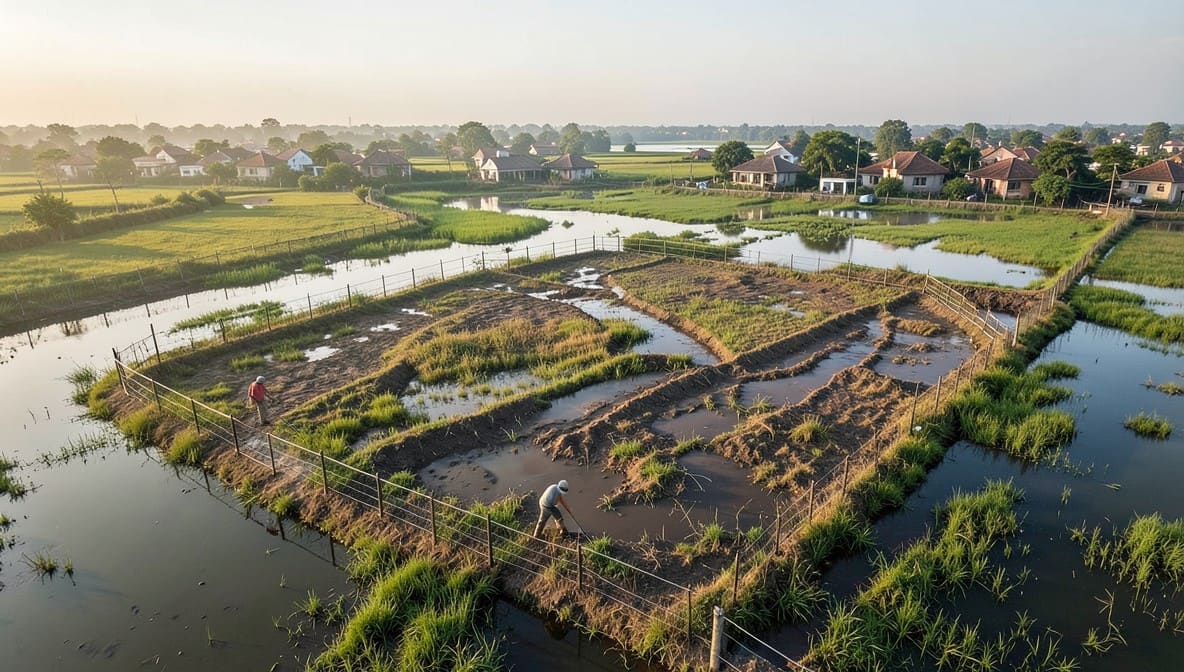
The Original Application No.77/2020 sought enforcement of environmental laws concerning the Bhoj Wetland in Bhopal, Madhya Pradesh. The applicant alleged illegal encroachments, unauthorized construction, and discharge of untreated sewage into the notified wetland, violating the Water (Prevention and Control of Pollution) Act, 1974, the Air (Prevention and Control of Pollution) Act, 1981, and the Wetlands (Conservation and Management) Rules, 2017.
Procedural History
- 2020: Original Application filed before the National Green Tribunal (NGT) seeking removal of encroachments and restoration of wetland.
- 2022: NGT issued directions for identification and demarcation of the wetland by state authorities.
- 2023 - 2025: Multiple writ petitions filed in the Madhya Pradesh High Court by affected parties challenging demarcation; all dismissed.
- 2024: Civil Appeal No.5304 of 2024 filed in the Supreme Court against High Court orders; dismissed.
- 2025: Intervener filed I.A. No.89/2025 seeking interim stay on removal of encroachments, arguing title disputes were unresolved.
- 2026: Hearing before NGT Central Zone Bench, Bhopal, on compliance and jurisdictional limits.
Relief Sought
The applicant sought immediate removal of encroachments and enforcement of environmental statutes. The intervenor sought stay on removal pending determination of property rights. The state and BMC sought dismissal of the interim application, asserting that title disputes fall outside the NGT’s mandate.
The Legal Issue
The central question was whether the National Green Tribunal has jurisdiction to adjudicate claims of right, title, and interest in land underlying a notified wetland, or whether such disputes must be resolved exclusively by revenue courts and civil courts under the Code of Civil Procedure.
Arguments Presented
For the Petitioner
The applicant argued that environmental degradation was directly linked to illegal occupation, and that the NGT, as a specialized tribunal, was best positioned to assess both environmental harm and the legitimacy of occupation. He contended that the Wetlands Rules, 2017 empower the NGT to remove encroachments regardless of underlying title disputes.
For the Respondent/State
The state and BMC countered that Schedule-I of the NGT Act, 2010 grants jurisdiction only over violations of specified environmental statutes - not over civil property rights. They cited multiple judicial orders from the High Court and Supreme Court dismissing title claims, emphasizing that revenue authorities had conducted exhaustive hearings, demarcation, and measurement using modern technology. They argued that re-litigating ownership before the NGT would violate the doctrine of res judicata and judicial comity.
The Court's Analysis
The Tribunal undertook a rigorous statutory interpretation of Schedule-I of the National Green Tribunal Act, 2010, which lists the enactments over which the NGT has exclusive jurisdiction. The Court observed that none of these statutes - Water Act, 1974, Air Act, 1981, or Wetlands Rules, 2017 - contain provisions for determining ownership, title, or interest in land.
"The matter of identification, demarcation and removal of encroachment have been raised before the revenue authorities which was heard and decided. The matter was again agitated before the Hon'ble High Court where the reliefs sought have not been granted."
The Court emphasized that property rights are governed by the Code of Civil Procedure and adjudicated by civil or revenue courts under the Madhya Pradesh Land Revenue Code. It noted that over 200 writ petitions had been filed and dismissed, and the Supreme Court had finally rejected the same claims in Civil Appeal No.5304 of 2024. The Tribunal held that allowing the intervenor to re-agitate title claims before it would amount to forum shopping and undermine the finality of judicial decisions.
The Court further clarified that while the NGT may order removal of encroachments based on environmental violations, it cannot substitute revenue courts in determining whether a person has a lawful right to occupy the land. The existence of a title dispute does not negate the NGT’s power to enforce environmental norms, but it does preclude the NGT from resolving the dispute itself.
The Verdict
The applicant’s application was partially allowed. The NGT dismissed I.A. No.89/2025 seeking interim stay, held that property rights must be determined by revenue and civil courts, and directed the Bhopal Municipal Corporation to file an action taken report within two weeks. The intervenor was permitted to be impleaded to present his version, but not to litigate title claims before the Tribunal.
What This Means For Similar Cases
Property Disputes Are Outside NGT’s Mandate
- Practitioners must not file applications before the NGT seeking adjudication of ownership, inheritance, or easement rights - even if tied to environmental degradation.
- Any claim based on title, possession, or boundary disputes must be raised before the appropriate revenue court or civil court under Section 9 CPC.
- Environmental NGOs and petitioners should separate their claims: one for environmental violation (NGT), another for property rights (civil court).
Environmental Enforcement Can Proceed Despite Title Disputes
- The NGT retains authority to order removal of encroachments if they violate environmental statutes, irrespective of pending title litigation.
- The existence of a civil suit or pending revenue appeal does not automatically stay environmental enforcement actions.
- Practitioners should cite this judgment to oppose stays sought by encroachers on grounds of ‘title dispute’.
Finality of Judicial Decisions Is Binding
- Where title claims have been dismissed by High Court and Supreme Court, re-litigation before the NGT is barred under principles of res judicata and abuse of process.
- Courts and tribunals must refuse to entertain applications that are merely re-packaged versions of previously adjudicated claims.
- Practitioners should verify the litigation history of property disputes before filing environmental applications to avoid dismissal on grounds of lis pendens.