The Bombay High Court has clarified a critical principle in electricity tariff law: liability for differential charges arises from the actual nature of electricity consumption, not the date on which the distributor discovers the misclassification. This judgment resolves a recurring conflict between distribution companies and commercial consumers over retrospective billing, establishing that statutory tariff orders govern liability from the moment the activity falls within a prescribed category.
Background & Facts
The Dispute
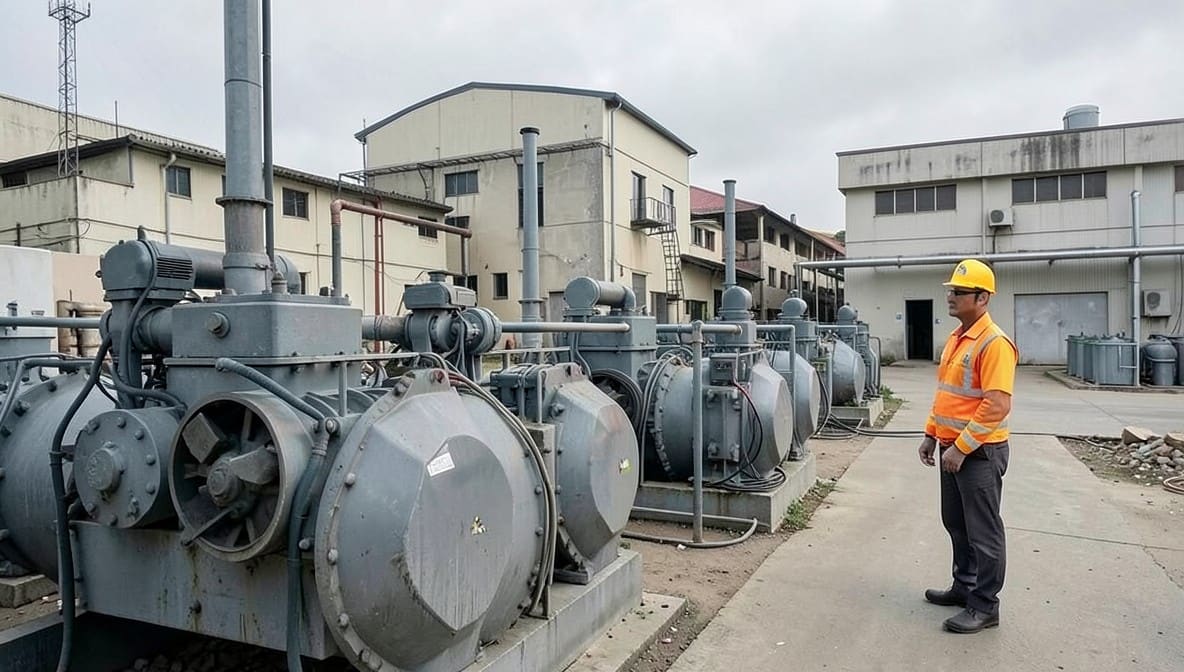
The petitioner, Maharashtra State Electricity Distribution Company Limited (MSEDCL), sought to recover differential tariff charges from several respondents engaged in tyre retreading activities. The respondents had been classified under the LT-V-B (Industrial) tariff category since 13 October 1997. However, an inspection by MSEDCL’s Flying Squad on 21 May 2015 revealed that electricity supplied under this connection was being used for tyre retreading - a commercial activity explicitly classified under the LT-II (Commercial) tariff category as per the Tariff Order dated 16 August 2012.
Key Facts
- The respondents had been billed under LT-V-B (Industrial) tariff continuously from 13 October 1997 until May 2015
- The Tariff Order dated 16 August 2012 classified tyre retreading under LT-II (Commercial) category
- MSEDCL issued a supplementary bill on 3 June 2015 demanding Rs. 3,58,160/- for differential charges from August 2012 to May 2015
- The respondents did not dispute that tyre retreading was being carried out prior to the inspection
- No evidence was presented to show that the activity commenced only on or after 21 May 2015
- MSEDCL issued a disconnection notice on 11 August 2015 after non-payment of the supplementary bill
Procedural History
- 21 May 2015: Flying Squad inspection reveals tyre retreading activity
- 3 June 2015: MSEDCL issues supplementary bill for differential charges (August 2012 - May 2015)
- 11 August 2015: Disconnection notice issued
- Before December 2015: Respondents file grievance with Internal Grievance Redressal Cell (IGRC)
- 4 December 2015: Consumer Grievance Redressal Forum (CGRF) rules in favor of respondents, holding recovery can only be from 21 May 2015 (date of inspection)
- 2016 - 2017: MSEDCL files five writ petitions (WP No. 9266/2016, WP(ST) 6443/2016, WP 5066/2016, WP 10592/2016, WP 9028/2017, WP 9029/2017) challenging the CGRF order
- 2016 - 2017: In some cases, respondents approached the Electricity Ombudsman, who upheld the CGRF view
- 8 June 2026: Bombay High Court delivers judgment on consolidated petitions
The Parties' Positions
Petitioner (MSEDCL): Argued that the Tariff Order dated 16 August 2012 created an automatic legal liability for any consumer using electricity for tyre retreading. The failure to detect the activity earlier was an administrative oversight, not a legal waiver of rights. Recovery of differential charges from the date the tariff became applicable is lawful under Section 56(2) of the Electricity Act, 2003.
Respondents: Contended that since MSEDCL had consistently billed them under the industrial tariff for nearly two decades, it could not unilaterally reclassify them retroactively. They argued that liability under the commercial tariff could only commence from the date of inspection (21 May 2015), as that was when MSEDCL acquired knowledge of the true nature of use.
Relief Sought
MSEDCL sought quashing of the CGRF and Ombudsman orders, and a declaration that it is entitled to recover differential tariff charges from the date the Tariff Order dated 16 August 2012 came into effect, subject to statutory compliance and procedural fairness.
The Legal Issue
The central question was whether the liability to pay differential electricity charges under a revised tariff category arises from the date the distributor discovers the true nature of consumption, or whether it relates back to the date the activity became chargeable under the applicable statutory tariff order.
Arguments Presented
For the Petitioner
MSEDCL relied on the statutory framework under the Electricity Act, 2003 and the Tariff Order dated 16 August 2012. It argued that tariff classification is determined by the purpose of electricity use, not by the licensee’s knowledge or billing error. The Tariff Order is a binding statutory instrument that applies automatically to all consumers engaged in the specified activity. The failure to detect the activity earlier does not extinguish the liability that arose by operation of law. Section 56(2) of the Electricity Act, 2003, which limits disconnection to two years, does not restrict recovery of lawful dues; it only governs the power to disconnect. Recovery of differential charges for a period during which the tariff was applicable is not retrospective in the legal sense.
For the Respondent
The respondents argued that MSEDCL’s long-standing practice of billing under the industrial tariff created a legitimate expectation. They contended that the distributor, as the entity responsible for accurate classification and billing, could not shift liability retroactively after nearly two decades of consistent billing. They relied on principles of equity and fair dealing, asserting that recovery should be limited to the period after the inspection, when the true nature of use was confirmed.
The Court's Analysis
The Court emphasized that tariff determination under the Electricity Act, 2003 is not a contractual arrangement but a statutory exercise. The Tariff Order dated 16 August 2012, once validly notified, became binding on all consumers whose electricity use fell within its scope. The liability to pay charges under the LT-II (Commercial) category arose the moment the respondents began using electricity for tyre retreading, irrespective of whether MSEDCL was aware of it.
"The liability did not depend upon a separate inspection, verification or detection by the licensee. The liability flowed from the tariff order itself, which possessed binding force and governed all consumers similarly situated."
The Court rejected the notion that detection equates to creation of liability. It distinguished between evidentiary discovery and legal obligation. The Flying Squad’s inspection merely revealed a pre-existing factual condition. The respondents did not dispute that tyre retreading had been ongoing prior to the inspection. Therefore, the tariff liability was not newly created on 21 May 2015; it had existed since the activity commenced.
The Court further held that accepting the respondents’ argument would undermine the entire tariff regime. It would allow consumers to benefit from misclassification indefinitely, simply because the distributor failed to detect the true nature of use. Such an outcome would violate the principle of uniformity in tariff application and create arbitrariness among similarly situated consumers.
"Detection merely establishes knowledge. Liability arises from the underlying facts and the law governing those facts."
The Court also clarified that Section 56(2) of the Electricity Act, 2003, which limits disconnection to two years, does not bar recovery of dues for longer periods. It only restricts the power to disconnect, not the right to recover lawful charges.
The reasoning of the CGRF and the Electricity Ombudsman was found to be legally flawed because it conflated the date of discovery with the date of liability. The Court held that the controlling factor is the nature of consumption, not the licensee’s awareness.
The Verdict
The petitioners succeeded. The Bombay High Court quashed the orders of the Consumer Grievance Redressal Forum and the Electricity Ombudsman. It declared that MSEDCL is entitled to recover differential tariff charges under the LT-II (Commercial) category from the date the Tariff Order dated 16 August 2012 became applicable to the respondents’ activities, subject to compliance with statutory procedures and due process. No costs were awarded.
What This Means For Similar Cases
Tariff Liability Is Not Dependent on Detection
- Practitioners must argue that liability under statutory tariffs arises from the actual use of electricity, not the utility’s knowledge or billing history
- A long-standing billing error by the distributor does not create a legal entitlement to continue under a lower tariff category
- Consumers cannot rely on past billing patterns to avoid liability for activities that fall under a higher tariff class
Recovery Is Lawful Even if Delayed
- Utilities may recover differential charges for periods prior to detection, provided the tariff was applicable at the time of consumption
- Section 56(2) of the Electricity Act, 2003, limits disconnection rights, not recovery rights
- Recovery must be procedurally fair - notice, opportunity to be heard, and adjustment of prior payments must be ensured
Procedural Compliance Is Non-Negotiable
- While recovery is lawful, it must follow due process: issuance of a proper supplementary bill, opportunity for representation, and compliance with tariff regulations
- Utilities must document the nature of use, the applicable tariff, and the period of misclassification with precision
- Failure to follow procedure may invalidate recovery even if the legal principle supports it