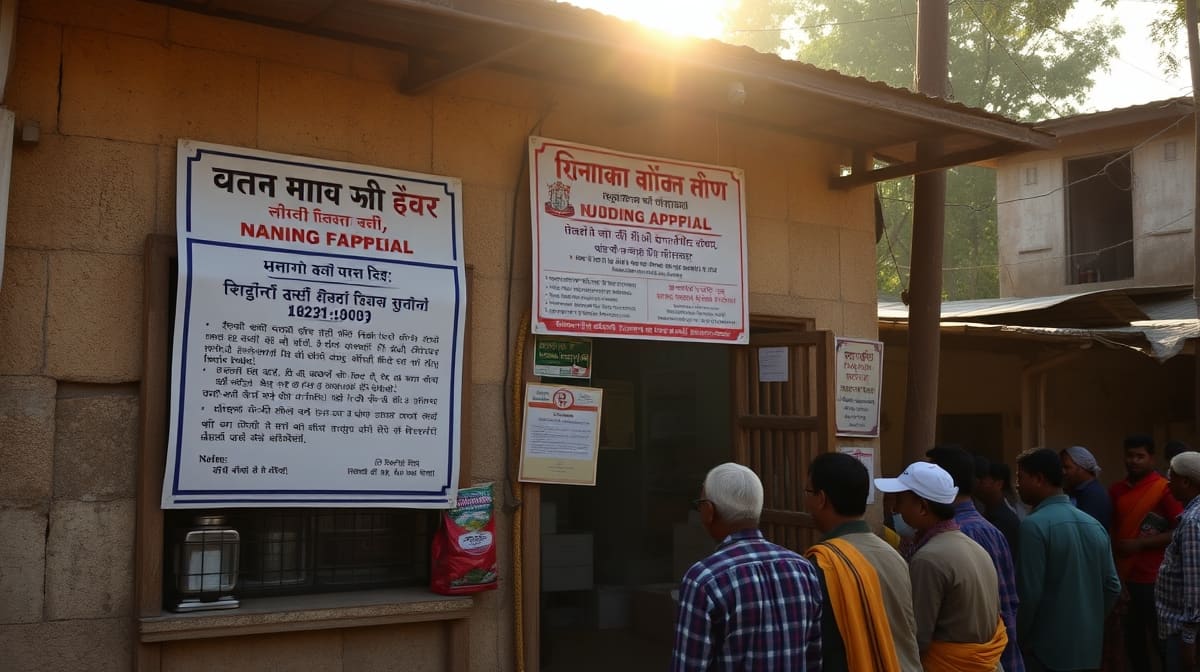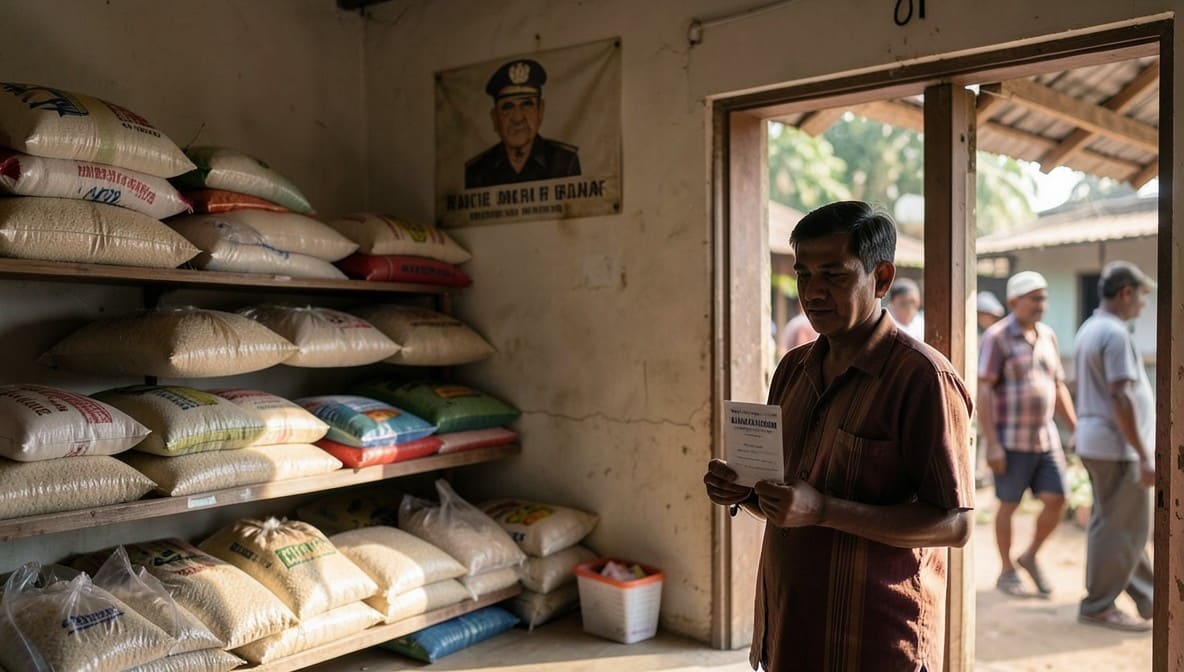
The Andhra Pradesh High Court has underscored the importance of due process in administrative actions concerning Fair Price Shop dealers. In a recent judgment, the Court held that authorities cannot attach the supply of essential commodities from a dealer without initiating disciplinary proceedings under the Andhra Pradesh State Targeted Public Distribution System (Control) Order, 2018. This ruling reinforces the principle that administrative actions must comply with statutory procedures to ensure fairness and legality.
Background & Facts
The Dispute
The petitioner, Gudimetla Satish, a Fair Price Shop (F.P. Shop) dealer holding authorization for Shop No. 0340015 in Revupolavaram Village, S-Rayavaram Mandal, Anakapalli District, approached the High Court under Article 226 of the Constitution of India. He sought a Writ of Mandamus to quash the actions of respondents 3 and 4 (the Revenue Divisional Officer and the Tahsildar (Civil Supplies), respectively) in attaching the supply of essential commodities from his shop and entrusting distribution to another dealer, Smt. K. Malleshwari of Shop No. 0340045, without following due procedure under the Andhra Pradesh State Targeted Public Distribution System (Control) Order, 2018 (hereinafter referred to as the Control Order, 2018).
Key Facts
The petitioner was appointed as a Fair Price Shop Dealer for Shop No. 0340015, with authorization valid until 31.03.2027.
On 06.07.2026, the Deputy Tahsildar (Civil Supplies), S-Rayavaram Mandal, inspected the petitioner’s shop and prepared a mediators’ report (Exhibit P1).
Despite the inspection, no disciplinary proceedings were initiated under Clause 8(4) of the Control Order, 2018.
Neither was the petitioner’s authorization suspended, nor was a show cause notice issued.
The respondents attached the supply of essential commodities from the petitioner’s shop and entrusted distribution to Smt. K. Malleshwari, dealer of Shop No. 0340045, without following the prescribed procedure.
Procedural History
14.07.2026: The petitioner filed Writ Petition No. 19067/2026 before the Andhra Pradesh High Court, seeking a Writ of Mandamus to direct the respondents to restore the supply of essential commodities to his shop.
IA No. 1 of 2026: An interlocutory application was filed under Section 151 of the Code of Civil Procedure (CPC), praying for an interim direction to supply essential commodities to the petitioner’s shop pending disposal of the writ petition.
Relief Sought
The petitioner sought the following reliefs:
A Writ of Mandamus declaring the actions of respondents 3 and 4 illegal and arbitrary.
Restoration of the supply of essential commodities to Shop No. 0340015.
An interim direction to supply essential commodities pending disposal of the writ petition.
The Legal Issue
The central question before the Court was whether the respondents could attach the supply of essential commodities from a Fair Price Shop dealer and entrust distribution to another dealer without initiating disciplinary proceedings under Clause 8(4) of the Control Order, 2018, or issuing a show cause notice or suspension order.
Arguments Presented
For the Petitioner
The petitioner’s counsel argued that the respondents’ actions were arbitrary and illegal, as no disciplinary proceedings were initiated under the Control Order, 2018.
The petitioner was not issued a show cause notice or given an opportunity to be heard before attaching the supply of essential commodities.
The respondents’ actions violated the principles of natural justice and the statutory procedure prescribed under the Control Order, 2018.
For the Respondents
The learned Assistant Government Pleader, on instructions, submitted that no disciplinary action had been initiated against the petitioner.
It was further submitted that after the inspection on 06.07.2026, the distribution of commodities was temporarily entrusted to Smt. K. Malleshwari, dealer of Shop No. 0340045, without prejudice to the petitioner’s rights.
The Court's Analysis
The Court observed that the respondents’ actions were impermissible under the Control Order, 2018. The key points of the Court’s reasoning were as follows:
Statutory Compliance: The Court emphasized that Clause 8(4) of the Control Order, 2018 mandates the initiation of disciplinary proceedings before any action can be taken against a Fair Price Shop dealer. The respondents failed to comply with this statutory requirement.
"Admittedly, no disciplinary proceedings are initiated against the petitioner as per the Control Order 2018. Therefore, preventing the petitioner from distributing the essential commodities and appointing respondent No.7 as in-charge dealer, without initiating disciplinary proceedings against the petitioner under Clause 8(4) of the Control Order, 2018; is impermissible."
Principles of Natural Justice: The Court reiterated that administrative actions must adhere to the principles of natural justice, which include providing an opportunity to be heard before any adverse action is taken. The respondents’ failure to issue a show cause notice or suspend the petitioner’s authorization rendered their actions arbitrary and illegal.
Consent-Based Disposal: The Court noted that the writ petition could be disposed of at the admission stage with the consent of both parties, as keeping the petition pending would serve no purpose. The respondents were directed to restore the supply of essential commodities to the petitioner’s shop immediately.
The Verdict
The Court disposed of the writ petition with the following directions:
Respondents 3 and 4 were directed to immediately supply essential commodities to the petitioner’s Shop No. 0340015 and allow him to distribute the commodities to the cardholders.
The order did not preclude the authorities from conducting an enquiry, if any, in accordance with the Control Order, 2018.
No costs were awarded.
Pending miscellaneous petitions, if any, were closed.
What This Means For Similar Cases
Administrative Actions Must Follow Due Process
This judgment reinforces the principle that administrative authorities cannot bypass statutory procedures while taking action against licensees or dealers. Practitioners should note:
Fair Price Shop dealers or similarly situated individuals cannot be deprived of their rights without following the prescribed procedure under the relevant statute.
Any action taken without initiating disciplinary proceedings or issuing a show cause notice will be liable to be set aside as arbitrary and illegal.
Principles of Natural Justice Are Non-Negotiable
The Court’s emphasis on natural justice underscores that even in administrative matters, authorities must provide an opportunity to be heard before taking adverse action.
Practitioners should argue for strict compliance with statutory procedures in cases involving suspension, cancellation, or attachment of licenses or authorizations.
Interim Relief Can Be Granted Without Full Adjudication
The Court’s decision to dispose of the writ petition at the admission stage highlights that interim relief can be granted where the illegality of the respondents’ actions is apparent.
This approach can be invoked in cases where the statutory violation is clear, and keeping the petition pending would cause irreparable harm to the petitioner.