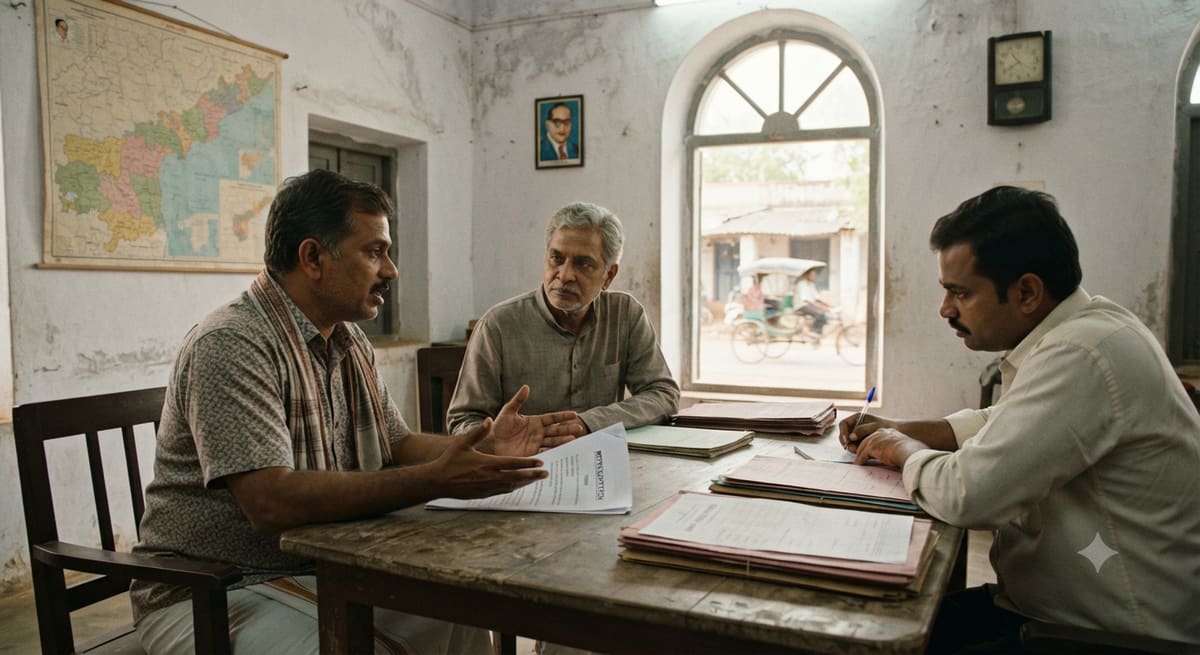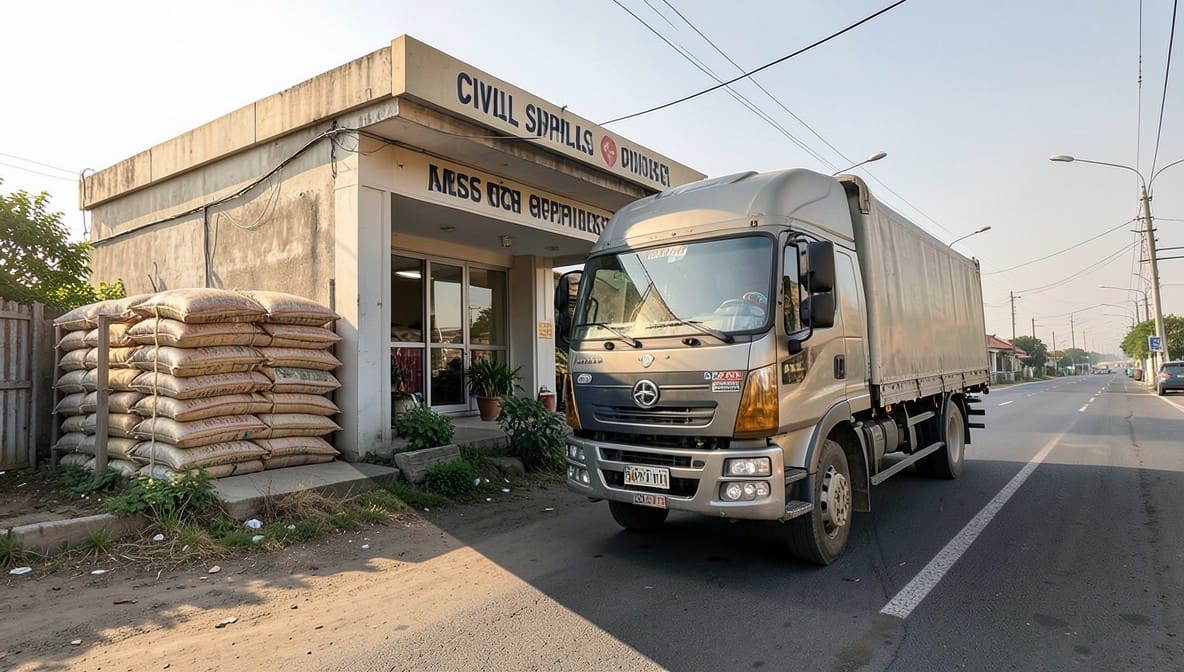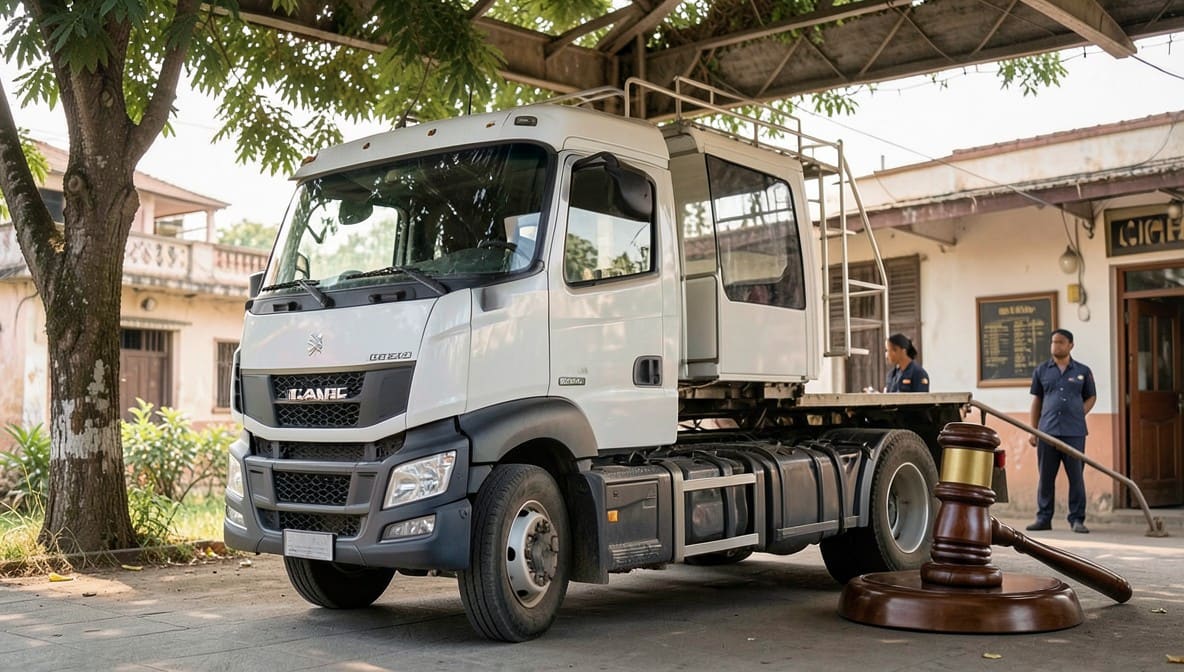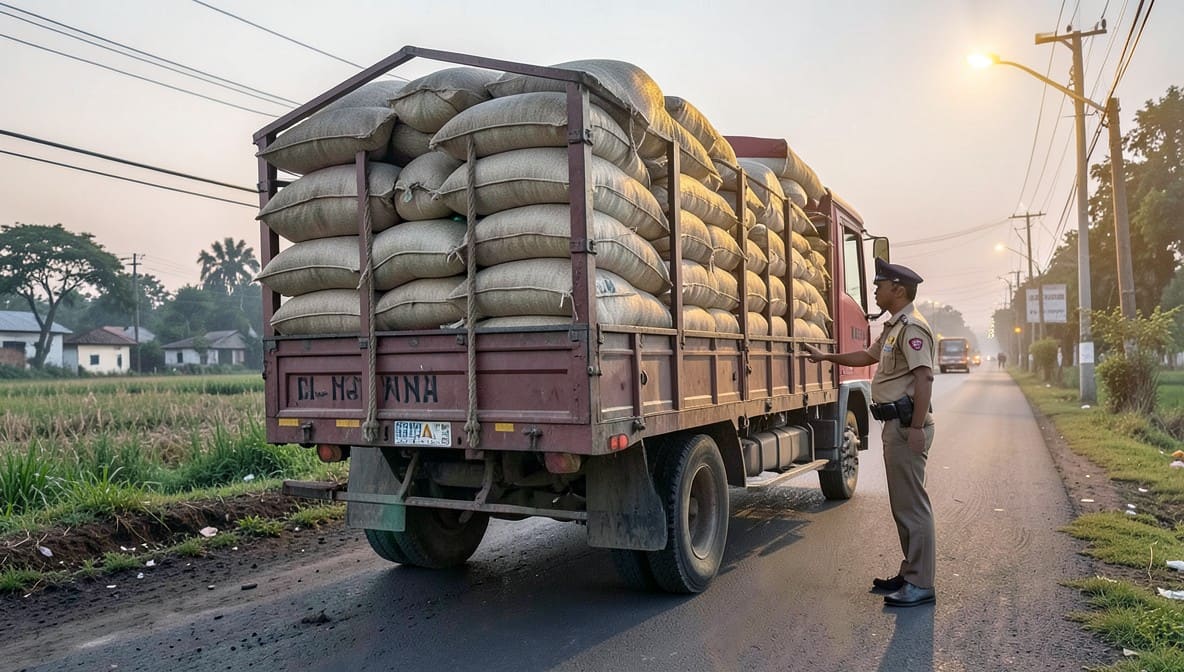
In a significant ruling on police powers under the Andhra Pradesh Targeted Public Distribution System (Control) Order, 2018, the Andhra Pradesh High Court held that police officers lack jurisdiction to seize vehicles carrying essential commodities like rice. The judgment reinforces the principle that seizures must be conducted by competent authorities under specific statutory provisions, failing which such actions are illegal and arbitrary.
Background & Facts
The Dispute
The petitioner, Uyyala Venkatesh, owner of an Ashok Leyland goods carriage (No. AP31 TE 4387), was transporting 45 bags of rice (2,250 kg) on 04.04.2026. At approximately 03:00 AM, the Head Constable of Mangalagiri Rural Police Station stopped the vehicle and demanded relevant documents. Upon the driver’s failure to produce the required papers, the police seized the vehicle and the rice stock under police proceedings dated 04.04.2026. Subsequently, FIR No. 126 of 2026 was registered for offences under Section 318(4) read with Section 3(5) of the Bharatiya Nyaya Sanhita (BNS) and Section 7 of the Essential Commodities Act.
Key Facts
- The petitioner is the absolute owner of the vehicle (Ashok Leyland Goods Carriage - LMV, No. AP31 TE 4387)
- On 04.04.2026, the vehicle was intercepted by the Head Constable of Mangalagiri Rural Police Station
- The vehicle was carrying 45 bags of rice (50 kg each, totaling 2,250 kg)
- The driver failed to produce the required documents, leading to seizure
- FIR No. 126 of 2026 was registered for offences under:
- Section 318(4) r/w Section 3(5) of the BNS
- Section 7 of the Essential Commodities Act
- The petitioner filed an application before the Additional Judicial Magistrate First Class-cum-Civil Judge (Junior Division), Mangalagiri, seeking release of the vehicle, which was returned
Procedural History
- 04.04.2026: Vehicle and rice stock seized by Mangalagiri Rural Police Station
- 04.04.2026: FIR No. 126 of 2026 registered
- Subsequent Date: Petitioner’s application for release of vehicle returned by the Magistrate
- 29.06.2026: Present writ petition filed under Article 226 of the Constitution of India seeking:
- Declaration that the seizure was illegal, arbitrary, and violative of Clause 20(a) of the Andhra Pradesh Targeted Public Distribution System (Control) Order, 2018
- Direction to respondent No. 4 to release the vehicle and rice stock
- IA No. 1 of 2026: Interim application seeking release of the vehicle pending disposal of the main writ petition
Relief Sought
The petitioner sought:
- A writ of mandamus declaring the seizure illegal and arbitrary
- Release of the vehicle (No. AP31 TE 4387) along with the 2,250 kg of rice
- Costs and other incidental reliefs
The Legal Issue
The central question before the Court was whether a police officer, specifically a Head Constable, has the jurisdiction under Clause 20(a) of the Andhra Pradesh Targeted Public Distribution System (Control) Order, 2018 to seize a vehicle carrying essential commodities like rice, in the absence of express statutory authority.
Arguments Presented
For the Petitioner
- The petitioner contended that the Head Constable of Mangalagiri Rural Police Station lacked jurisdiction to seize the vehicle and rice stock under Clause 20(a) of the Andhra Pradesh Targeted Public Distribution System (Control) Order, 2018
- Relied on the precedent in W.P. No. 31866 of 2022 (dated 30.09.2022), where a similar seizure by police was declared illegal
- Argued that the seizure violated principles of natural justice and was arbitrary
For the Respondents
- Respondents 1 to 3 (State of Andhra Pradesh, District Collector, Tahsildar): The Assistant Government Pleader for Civil Supplies submitted written instructions from the Tahsildar, Mangalagiri Mandal, stating that the Head Constable had no power to seize the vehicle under Clause 20(a) of the Order, 2018
- Respondent No. 4 (Station House Officer): The Assistant Government Pleader for Home did not contest the petitioner’s contentions, implying acquiescence to the lack of jurisdiction
The Court's Analysis
The Court examined the statutory framework governing the seizure of essential commodities, particularly Clause 20(a) of the Andhra Pradesh Targeted Public Distribution System (Control) Order, 2018. The provision empowers competent authorities, such as revenue or civil supplies officials, to seize vehicles and commodities in cases of violations. However, it does not confer such authority on police officers, including Head Constables.
The Court relied on its earlier judgment in W.P. No. 31866 of 2022 (dated 30.09.2022), which addressed an identical issue. In that case, the seizure of a vehicle by an Assistant Sub-Inspector of Police was declared illegal, as the police lacked statutory authority under the Order, 2018. The Court also cited the precedent in Sri Vigneswara Traders, Komerapudi Village v. Circle Inspector of Police, Porumamilla Police Station, Y.S.R. Kadapa (2013 (4) ALD 241), which held that police proceedings, searches, and seizures conducted by incompetent officers are illegal and without authority of law.
The Court observed that the Tahsildar, Mangalagiri Mandal, had explicitly stated in written instructions that the Head Constable had no power to seize the vehicle under Clause 20(a) of the Order, 2018. This admission by the respondents further strengthened the petitioner’s case.
Given the consent of both parties and the clear lack of jurisdiction, the Court disposed of the writ petition at the admission stage itself, without requiring a counter-affidavit.
The Verdict
The Court allowed the writ petition and issued the following directions:
- The police proceedings dated 04.04.2026 were set aside as the Head Constable of Mangalagiri Rural Police Station lacked jurisdiction to seize the vehicle and stock
- Respondent No. 4 was directed to release the vehicle (Ashok Leyland Goods Carriage - LMV, No. AP31 TE 4387) along with the 2,250 kg of rice to the petitioner forthwith
- No order as to costs was passed
- All pending miscellaneous petitions, if any, were closed
What This Means For Similar Cases
Police Cannot Seize Vehicles Under APPDS Control Order Without Authority
- Statutory Limitation: Police officers, including Head Constables, do not have inherent jurisdiction to seize vehicles or essential commodities under Clause 20(a) of the Andhra Pradesh Targeted Public Distribution System (Control) Order, 2018. Such powers are vested exclusively in competent authorities like revenue or civil supplies officials
- Precedent Reinforcement: The judgment reaffirms the principle established in Sri Vigneswara Traders and W.P. No. 31866 of 2022 that seizures by incompetent officers are illegal and liable to be set aside
Principles of Natural Justice Must Be Followed in Seizures
- Due Process: Even where seizures are conducted by competent authorities, principles of natural justice must be adhered to. This includes:
- Providing an opportunity for the vehicle owner to produce relevant documents
- Issuing a show-cause notice before seizure
- Following procedural safeguards under the Essential Commodities Act and the Order, 2018
- Arbitrary Actions: Seizures conducted without following due process are arbitrary and liable to be quashed under Article 226 of the Constitution
Practical Implications for Vehicle Owners and Transporters
- Immediate Relief: Vehicle owners whose vehicles are seized by police without authority can approach the High Court under Article 226 for immediate relief, as the Court may dispose of such petitions at the admission stage itself
- No Need for Prolonged Litigation: Where the lack of jurisdiction is clear, courts may dispose of writ petitions without requiring counter-affidavits, expediting the release of vehicles and commodities
- Costs and Damages: While the Court did not award costs in this case, aggrieved parties may seek compensation for illegal detention of vehicles in appropriate cases