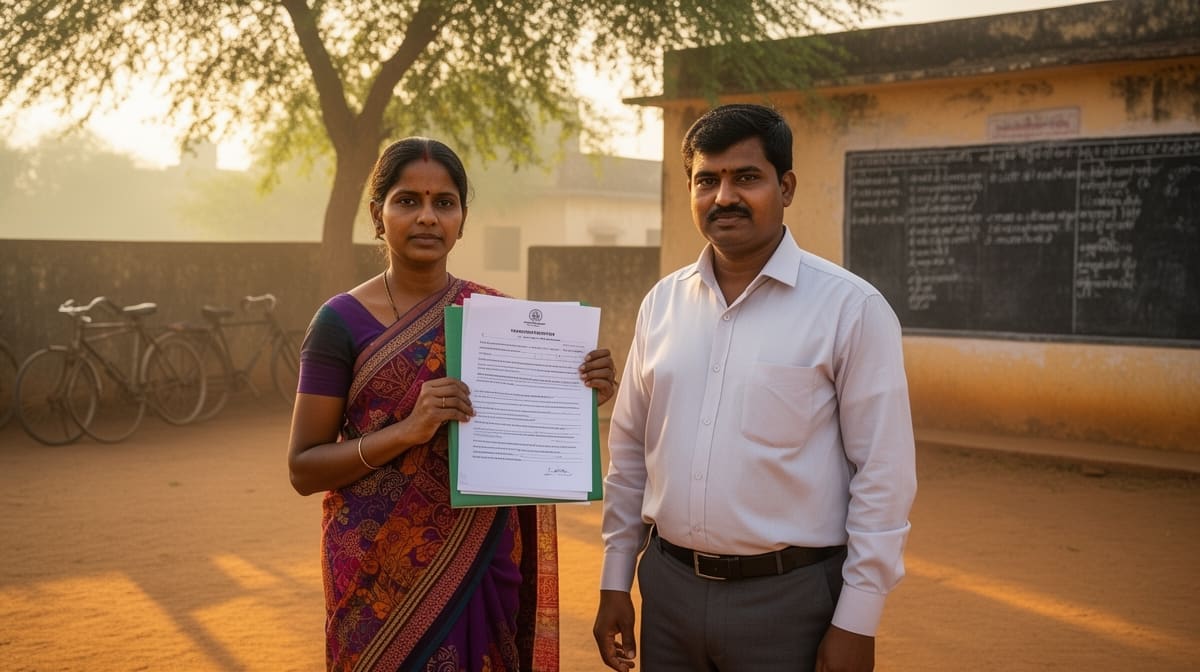
The Central Administrative Tribunal has clarified that while transfer of government employees is an administrative prerogative, it cannot be exercised in disregard of established policy guidelines concerning spouse employment and personal hardship. This judgment reinforces the duty of authorities to engage meaningfully with representations grounded in official instructions, even if judicial intervention remains limited.
Background & Facts
The Dispute
The applicant, Manoj Kumar, a Social Security Officer (SSO) with the Employees' State Insurance Corporation (ESIC), challenged his transfer from Sub-Regional Office (SRO), Faridabad, Haryana to SRO, Durgapur, West Bengal, via Order No.54/2026 dated 10.04.2026. He contended that the transfer violated DoPT instructions on spouse posting and ignored his personal hardships, including his wife’s non-transferable employment and his daughter’s ongoing education in Delhi.
Key Facts
- The applicant joined ESIC in 2011 as a Lower Division Clerk and was promoted to SSO in 2021.
- He was initially posted at ESIC Headquarters until March 2024.
- On 11.03.2024, he was transferred to SRO, Faridabad, after submitting preferences, with Delhi-NCR as his first choice.
- His current posting at Branch Office, NIT-5, Faridabad, is approximately 40 km from his residence.
- His wife is employed in a non-transferable post with the GNCTD in Delhi.
- His dependent daughter is studying in Class 10 during the academic year 2026-2027.
- On 11.04.2026, he submitted a representation (Annexure A-6) requesting retention in Delhi-NCR, citing DoPT Office Memoranda dated 30.09.2009 and 14.10.2009.
- The impugned transfer order dated 10.04.2026 did not address his representation or provide reasons for overriding his personal circumstances.
- The transfer distance from Faridabad to Durgapur is approximately 1,300 km.
- The applicant had been at Faridabad for only about two years prior to the transfer.
- The transfer order listed 20 other employees who were granted postings in Delhi-NCR on similar grounds, yet his request was ignored.
Procedural History
- 10.04.2026: Impugned transfer order issued by ESIC.
- 11.04.2026: Applicant filed representation (Annexure A-6) seeking reconsideration.
- 16.04.2026: Original Application (OA No.1415/2026) filed before the Central Administrative Tribunal.
- 16.04.2026: Tribunal heard arguments and disposed of the OA at admission stage.
The Parties' Positions
For the Applicant
- Argued that the transfer violated Clause 7.4 and 12.6 of ESIC’s Transfer Policy dated 19.12.2024.
- Cited DoPT OM dated 30.09.2009 and 14.10.2009, which permit posting of spouses together when one is in a non-transferable post.
- Highlighted that other employees with identical circumstances were granted postings in Delhi-NCR.
- Emphasized disruption to his daughter’s education and undue hardship due to distance.
- Contended that the transfer was mechanical, arbitrary, and lacked a rational nexus with administrative exigencies.
For the Respondents
- Accepted notice and acknowledged the representation.
- Relied on Union of India v. S.L. Abbas and Amarjeet Singh Dagar to argue that transfer is an incidence of service and courts should not interfere absent mala fide or statutory violation.
- Did not dispute the factual basis of the applicant’s hardship but maintained that policy compliance was discretionary.
- Fairly conceded during hearing that the representation should be considered sympathetically.
Relief Sought
The applicant sought:
- Quashing of the transfer order dated 10.04.2026.
- Direction to consider his representation dated 11.04.2026.
- Permission to continue working at SRO, Noida, or any location within Delhi-NCR.
- Review of the ESIC Transfer Policy dated 19.12.2024.
The Legal Issue
Can a government authority issue a transfer order that disregards established DoPT guidelines on spouse posting and personal hardship, and if so, what is the extent of judicial review available to ensure procedural fairness?
Arguments Presented
For the Appellant/Petitioner
The applicant relied on Union of India v. S.L. Abbas to argue that while courts generally refrain from interfering in transfers, they must intervene when administrative guidelines are violated. He cited Rajendra Roy v. Union of India to assert that personal hardships, especially involving children’s education and spouse employment, must be considered expeditiously. He further invoked Director of School Education v. Karuppa Thevan to emphasize that transfers during a child’s critical academic phase should be avoided unless urgent. He contended that the selective granting of similar requests to others (serial nos. 83, 84, 90, etc.) demonstrated arbitrariness and violation of Article 14.
For the Respondent/State
The respondents relied on Union of India v. S.L. Abbas and State Bank of India v. Anjan Sanyal to assert that transfer is an administrative function and guidelines do not create enforceable rights. They conceded that the representation was pending but maintained that the decision remained within the domain of the employer. They did not contest the factual claims regarding the applicant’s family circumstances but argued that policy compliance was not mandatory.
The Court's Analysis
The Tribunal acknowledged the settled principle that transfer is an incident of service and courts should not substitute their discretion for that of the administrative authority. However, it emphasized that this non-interference doctrine is not absolute. The Court observed:
"Until and unless the transfer is vitiated by mala fide or is made in violation of any statutory provisions, the Court cannot interfere with the order of transfer. If any administrative guidelines recalling transfer of an employee are violated, at best the same confers the right on the employee to approach the higher authorities for redressal of his grievance."
The Tribunal noted that the DoPT instructions dated 30.09.2009 and 14.10.2009, though not statutory, form part of the administrative framework governing service conditions. The failure to consider these guidelines, particularly when other employees with identical circumstances were accommodated, rendered the decision susceptible to arbitrariness.
The Court further relied on Rajendra Roy to hold that personal hardships, especially those involving dependent children’s education and non-transferable spouse employment, are matters that the department is expected to consider expeditiously. It also referenced Director of School Education v. Karuppa Thevan to underscore that transfers disrupting a child’s Class 10 education are prima facie unreasonable.
The Tribunal found that the applicant’s representation dated 11.04.2026 raised substantial grounds warranting a reasoned response. The absence of any indication that the authority had applied its mind to the representation, coupled with the selective treatment of similarly situated employees, indicated a failure to act objectively.
The Verdict
The applicant succeeded. The Tribunal directed:
- The respondents to decide the pending representation dated 11.04.2026 by passing a reasoned and speaking order as expeditiously as practicable.
- The transfer order dated 10.04.2026 shall not be implemented, and the applicant shall continue at his current posting until the representation is decided.
- If the representation is rejected, the impugned transfer order shall not be implemented for a further fifteen days from the date of communication of the decision.
- There shall be no order as to costs.
What This Means For Similar Cases
Administrative Guidelines Create a Duty to Consider, Not a Right to Demand
- Practitioners must argue that non-compliance with DoPT or departmental guidelines on spouse posting, children’s education, or medical hardship constitutes procedural arbitrariness.
- Even if guidelines are not statutory, their violation may trigger judicial scrutiny under Article 14 and principles of natural justice.
- A blanket refusal to consider such representations without reasons is legally unsustainable.
Interim Relief Is Available Pending Disposal of Representation
- Courts and tribunals may grant interim stays on transfer orders when personal hardship is demonstrable and representation is pending.
- The 15-day grace period after rejection is a novel procedural safeguard that allows time for appeal or reconsideration.
- This precedent supports similar applications in other central government departments, including railways, education, and health services.
Selective Application of Policy Is a Red Flag for Arbitrariness
- When similar requests from other employees are granted, denial to one without justification invites claims of discriminatory treatment.
- Practitioners should compile and annex lists of similarly situated employees granted relief to demonstrate inconsistency.
- Such evidence strengthens arguments under State of Haryana v. Kashmir Singh and R.S. Chaudhary v. State of M.P.