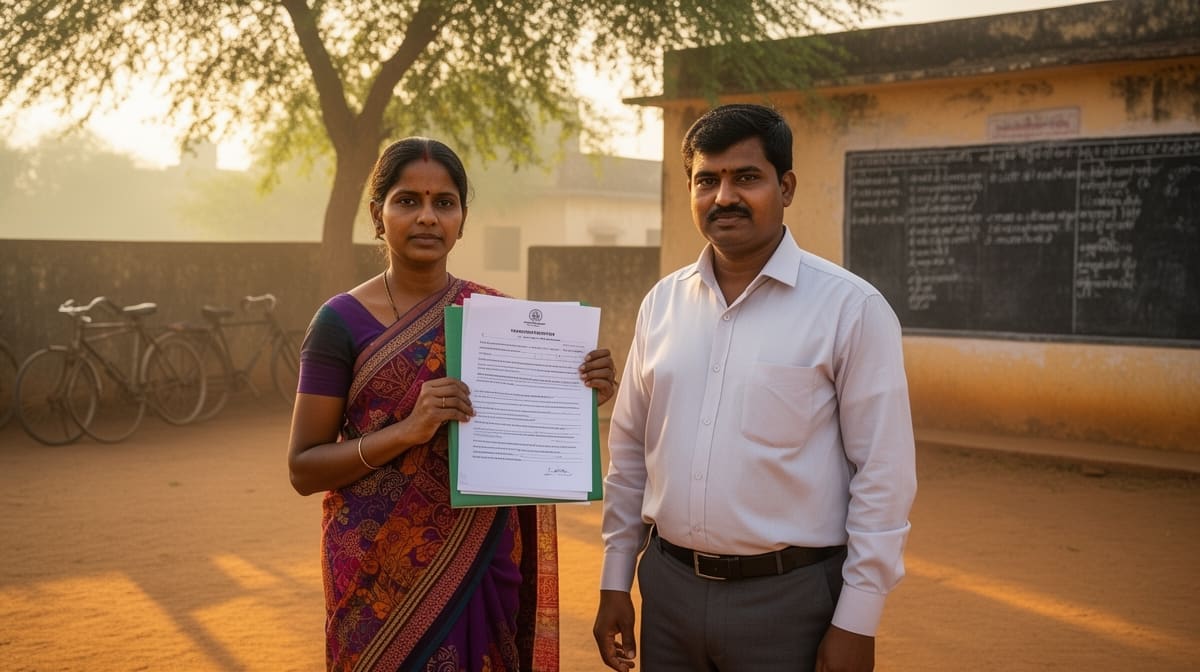
The Central Administrative Tribunal’s ruling in Shipra Shalini Aind’s case establishes a critical precedent: administrative authorities cannot deny spouse-based postings without recording and communicating specific, cogent reasons. This decision reinforces the principle that procedural fairness and transparency are non-negotiable in personnel decisions affecting women in public service.
Background & Facts
The Dispute
The applicant, Shipra Shalini Aind, was appointed as Junior Translator in the Office of the Principal Accountant General (Audit), Jharkhand, Ranchi in 2012. Her husband, a Section Officer in the Jharkhand Secretariat, holds a non-transferable post in Ranchi. In May 2025, she submitted her preference to remain at Ranchi under the Department of Personnel and Training (DoP&T) Office Memorandum dated 30.09.2009, which permits central government employees to seek posting at the same station as their spouse.
Procedural History
- 16.07.2012: Applicant appointed as Junior Translator in Ranchi
- 13.12.2024: Transferred within Ranchi to Principal Accountant General (Audit) office at her own request, under spouse ground policy
- 14.05.2025: Submitted formal request to retain posting at Ranchi on spouse ground
- 18.06.2025: Received promotion-cum-transfer order to Imphal, Manipur
- 19.06.2025: Submitted representation seeking retention and offering to relinquish promotion
- 10.07.2025: Rejection letter issued citing only "public interest" without specific reasons
- 09.02.2026: Oral arguments concluded before CAT Ranchi
- 13.02.2026: Judgment pronounced
Relief Sought
The applicant sought quashing of the transfer order, direction to retain her at Ranchi, and compensation for mental harassment. She offered to forego her promotion to Senior Translator if necessary to remain in Ranchi.
The Legal Issue
The central question was whether an administrative authority can deny a request for spouse-based posting under DoP&T guidelines without recording and communicating specific, reasoned grounds, and whether such a denial violates the principles of natural justice and administrative fairness.
Arguments Presented
For the Petitioner
The applicant’s counsel relied on DoP&T OM No. 28034/9/2009-Estt.(A) dated 30.09.2009, particularly Paragraphs 4(vii) and 5, which mandate sympathetic consideration for spouses posted in different governments. Counsel emphasized that Paragraph 5 requires authorities to communicate "specific reasons" when accommodation is not possible. The applicant’s prior transfer on spouse ground in December 2024 demonstrated the policy’s prior application to her. She offered to relinquish her promotion, and the post of Junior Translator remained available in Ranchi. The absence of any adverse report and the presence of minor children and cardiac health issues further strengthened her case. Counsel also cited IA&AD Circular No. 33/Staff Niyukti-IV/89-2016 dated 23.09.2024, which permits adjustment at the same station if promotion is declined within seven years - a condition not yet triggered.
For the Respondent
The respondents contended that the applicant’s appointment letter included an "All India Transfer Liability" clause, making her liable for transfer at any time. They argued that the transfer was issued in administrative exigencies and public interest. They also claimed that the applicant had already availed spouse-based transfer in December 2024 and that no post of Senior Translator was available in Ranchi. Further, they asserted non-joinder of the Principal Accountant General (Audit), Ranchi as a necessary party, rendering the OA defective.
The Court's Analysis
The Tribunal conducted a rigorous analysis of the governing policies and the nature of administrative discretion. It held that while transfer liability is inherent in service conditions, it is not absolute and must yield to established, policy-based accommodations, particularly when they align with gender-sensitive administrative goals.
"Mere use of the expression 'public interest' without disclosing the circumstances or administrative exigencies necessitating the transfer does not satisfy the test of transparency and fairness envisaged in the Office Memorandum."
The Court distinguished between general administrative discretion and the binding obligations under DoP&T guidelines. It noted that the respondents had previously applied the spouse ground policy in the applicant’s favor in December 2024, thereby acknowledging its applicability. The failure to assign specific reasons for denial - despite the applicant’s willingness to forego promotion and the availability of her pre-promotional post - constituted a violation of natural justice.
The Tribunal further rejected the non-joinder argument, holding that the Principal Director (Staff), Office of CAG, was properly impleaded as the competent authority under the 2024 transfer policy, and that the Deputy Accountant General was correctly named as the immediate administrative controller.
The Court emphasized the policy’s underlying intent: to facilitate women’s sustained participation in public service by mitigating the disproportionate burden of family separation. The absence of any adverse record, the presence of minor children, and the applicant’s medical condition were not mere personal details but relevant contextual factors under the spirit of the policy.
The Verdict
The applicant won. The Tribunal quashed the transfer order and directed the competent authority to reconsider her posting within 60 days, taking into account her offer to relinquish promotion and the availability of the Junior Translator post in Ranchi. The decision affirmed that reasoned administrative action is mandatory under spouse-based transfer policies.
What This Means For Similar Cases
Reasoned Denial Is Mandatory
- Practitioners must now insist on written, specific reasons whenever a spouse-based posting request is denied
- Vague assertions like "public interest" or "administrative exigency" without factual basis are legally insufficient
- Failure to provide reasons renders the order voidable under principles of natural justice
Promotion Relinquishment Is a Valid Accommodation Tool
- Employees may offer to forego promotion to remain at preferred station
- Authorities cannot refuse such offers without evaluating feasibility of pre-promotional posts
- Circulars like IA&AD’s 2024 policy explicitly permit such adjustments within seven years
Gender-Sensitive Policies Are Binding, Not Discretionary
- DoP&T guidelines are not mere advisory notes - they reflect statutory policy intent to promote women’s retention
- Courts and tribunals will interpret such policies liberally to achieve their social objectives
- Denial without justification may attract judicial intervention under Article 14 and 21 of the Constitution