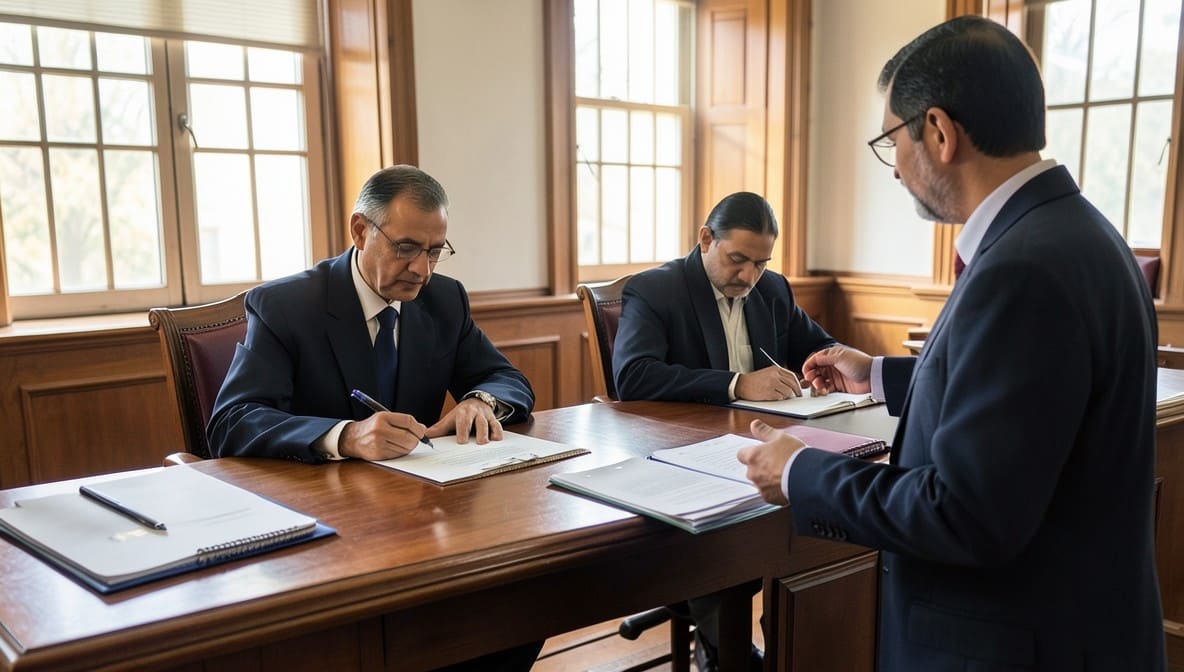
In a significant order emphasizing natural justice, the Central Administrative Tribunal, Kolkata Bench, directed the reconsideration of a Hydrogeologist's representation against her transfer order. The Tribunal stayed the transfer until a reasoned decision was communicated, underscoring the necessity of speaking orders in administrative actions affecting government employees.
Background & Facts
The Dispute
The applicant, Naseema Jamal, a Hydrogeologist working at the Eastern Regional Office, Kolkata, under the Central Ground Water Board (CGWB), Ministry of Jal Shakti, was transferred to Shillong via an order dated 01.04.2026. She filed a representation on 02.04.2026 citing personal grounds, including her spouse's posting in Kolkata, her child's education, and the dependence of her elderly parents and in-laws on her care. The Regional Director forwarded her representation with a recommendation to retain her services in Kolkata.
Key Facts
- 01.04.2026: Transfer order issued directing the applicant to join SUO, Shillong.
- 02.04.2026: Applicant filed a representation against the transfer, citing personal hardships.
- 27.04.2026: Representation summarily rejected without assigning any reasons.
- 29.04.2026: Applicant received the rejection order via email.
- 30.04.2026: Present Original Application (OA No. 350/696/2026) filed before CAT, Kolkata.
Procedural History
- The applicant's representation was forwarded by the Regional Director, Kolkata, with a recommendation for retention.
- The respondents rejected the representation on 27.04.2026 without providing reasons.
- The applicant approached CAT on 30.04.2026 due to the urgency of the matter, as the transfer order required her to join by the same date.
Relief Sought
The applicant sought:
- Stay on the transfer order dated 01.04.2026.
- Reconsideration of her representation dated 02.04.2026 with a reasoned and speaking order.
- Protection of her interests pending disposal of her representation.
The Legal Issue
The central question before the Tribunal was whether an administrative order rejecting a government employee's representation against a transfer could be sustained without assigning any reasons, thereby violating the principles of natural justice and fair play.
Arguments Presented
For the Applicant
The counsel for the applicant argued:
- The rejection order dated 27.04.2026 was arbitrary and violative of natural justice, as it failed to provide any reasons for dismissing the applicant's representation.
- The applicant had cited compelling personal grounds, including her spouse's posting in Kolkata, her child's education, and the dependence of her elderly parents and in-laws on her care.
- The urgency of the matter warranted immediate intervention by the Tribunal to prevent irreparable prejudice to the applicant's interests.
For the Respondents
No representation was made on behalf of the respondents during the proceedings.
The Court's Analysis
The Tribunal observed that the rejection order dated 27.04.2026 failed to assign any reasons for dismissing the applicant's representation, despite the applicant having cited several valid grounds. The Tribunal emphasized that administrative orders affecting the rights and interests of employees must be reasoned and speaking orders to comply with the principles of natural justice.
"It is observed that the order dated 27.04.2026 has not given any reason for rejection of the representation of the applicant in spite of the fact that the applicant had cited several grounds in support of her request for retention at Kolkata."
The Tribunal relied on established judicial pronouncements that mandate administrative authorities to provide reasons for their decisions, especially when rejecting representations made by employees. The absence of reasons rendered the order arbitrary and liable to be set aside.
The Verdict
The Tribunal disposed of the Original Application with the following directions:
- The respondents were directed to reconsider the applicant's representation dated 02.04.2026 within five weeks from the date of the order.
- The respondents were to convey their decision to the applicant by a reasoned and speaking order within the same time period.
- The operation of the transfer order dated 01.04.2026 was stayed until the disposal of the applicant's representation in terms of the Tribunal's order.
- No order as to costs was passed.
- The applicant was granted liberty to communicate the gist of the order to the respondents.
What This Means For Similar Cases
Administrative Orders Must Be Reasoned
The judgment reinforces the principle that administrative orders, particularly those rejecting representations or affecting the rights of employees, must be reasoned and speaking orders. Practitioners should argue:
- The absence of reasons in an administrative order renders it arbitrary and violative of natural justice.
- Courts are likely to intervene and direct reconsideration where orders lack reasoning, especially in cases involving personal hardships or compelling grounds.
Urgent Relief in Service Matters
- Employees facing imminent transfers or adverse orders can seek urgent relief from tribunals, even if the cause of action arises at the last moment.
- Tribunals may grant interim stays to prevent irreparable prejudice, particularly where the employee's personal circumstances warrant such protection.
Burden on Administrative Authorities
- Administrative authorities must ensure compliance with judicial pronouncements on natural justice and fair play.
- Failure to provide reasons for rejecting representations may lead to judicial intervention, including stays on the impugned orders and directions for reconsideration.