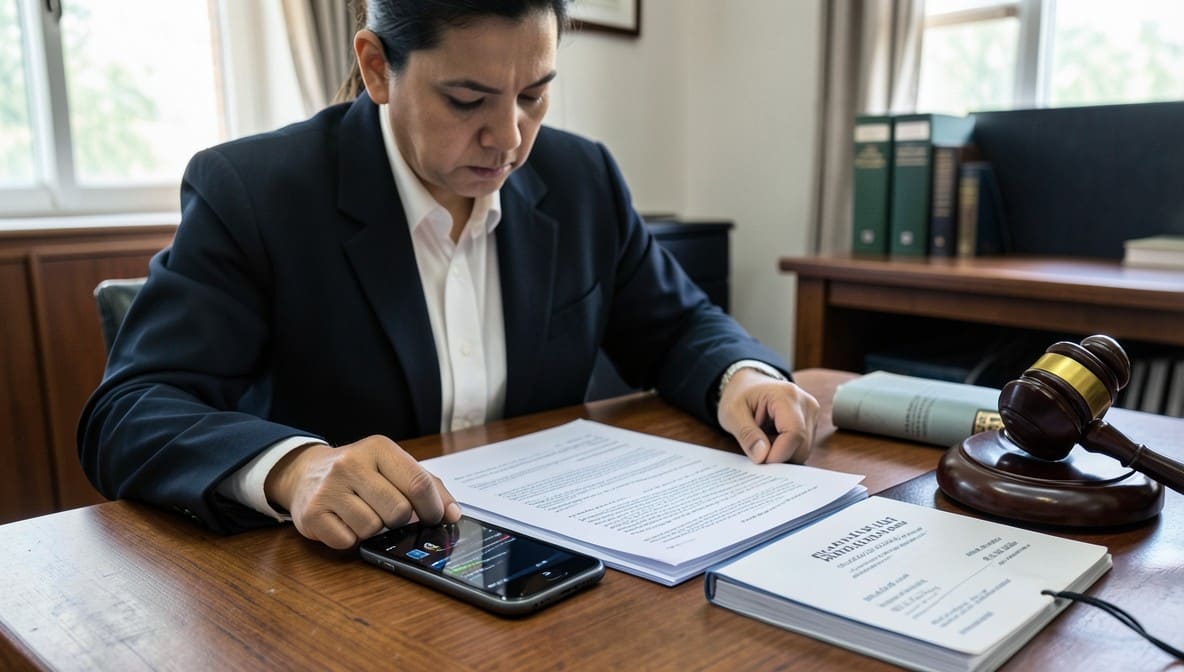
The Chhattisgarh High Court has clarified that mere possession of private intimate images shared consensually in a prior relationship does not constitute an offence under Section 67A of the Information Technology Act, 2000, absent proof of active dissemination or publication to third parties. This ruling reinforces the necessity of tangible evidence in cyber offences involving personal data.
Background & Facts
The Dispute
The applicant, Janak Sahu @ Jhanaklal Sahu, was arrested in connection with Crime No. 298/2025, registered at Police Station Chhuriya, District Rajnandgaon, Chhattisgarh. The case arises from allegations that the applicant, after a consensual romantic relationship with the complainant, misused private photographs she had voluntarily shared with him during their relationship. Following the complainant’s engagement to another person, the applicant allegedly sent obscene photographs and videos to her would-be husband’s mobile number and circulated them on WhatsApp and other internet platforms without her consent, threatening to ruin her marriage.
Key Facts
- The complainant and the applicant were in a consensual romantic relationship prior to her engagement
- The complainant voluntarily shared nude photographs with the applicant via WhatsApp during the relationship
- The complainant ceased communication with the applicant after her marriage was fixed
- The alleged transmission of obscene material occurred after the relationship ended
- The complainant lodged an FIR on the basis of her husband-to-be informing her of receiving unsolicited explicit content
- The applicant’s mobile numbers cited in the FIR are: 73896xxxxx, 62608xxxxx, and 99938xxxxx
- The complainant’s mobile number is 82097xxxxx
- The applicant was arrested on 30.12.2025
- No forensic or technical evidence was produced to prove the applicant transmitted or uploaded the content to public platforms
- No digital trail, server logs, or metadata linking the applicant to dissemination was presented
- The applicant has no criminal antecedents
- The applicant married another person after the alleged incident
Procedural History
- 30.12.2025: Applicant arrested in connection with Crime No. 298/2025
- 04.05.2026: First Bail Application filed under Section 483 of Bharatiya Nagarik Suraksha Sanhita, 2023
- 04.05.2026: Hearing before the High Court of Chhattisgarh, Bilaspur
The Parties' Positions
For the Applicant
The applicant’s counsel contended that:
- The complainant voluntarily shared the photographs during a consensual relationship
- There is no evidence the applicant transmitted, published, or circulated the content to third parties
- The prosecution has not established the applicant as the originator or active disseminator
- No forensic, technical, or documentary evidence supports the claim of viral circulation
- The allegations are vague, omnibus, and lack specificity
- The complainant’s motive is suspect, given the timing of the complaint after the applicant’s marriage to another person
- The applicant is a first-time offender with no criminal history
For the Respondent/State
The State opposed bail, arguing that:
- The applicant, out of anger and revenge, misused private photographs shared during the relationship
- The transmission of such material to the complainant’s would-be husband and on social media constitutes a serious violation under Section 67A IT Act
- The nature of the offence is grave, involving digital harassment and potential social stigma
- The complainant’s statement under Section 183 of BNSS corroborates the allegations
- Granting bail would risk tampering with evidence or influencing witnesses
Relief Sought
The applicant sought regular bail under Section 483 of Bharatiya Nagarik Suraksha Sanhita, 2023, pending trial for offences under Sections 351(4), 296 of BNS, 2023 and Section 67A of the Information Technology Act, 2000.
The Legal Issue
The central question was whether Section 67A of the Information Technology Act, 2000 is attracted when intimate images, voluntarily shared in a private relationship, are allegedly sent to a third party without proof of public dissemination, viral circulation, or active transmission by the accused.
Arguments Presented
For the Applicant
The applicant’s counsel relied on the principle that Section 67A requires proof of intentional transmission or publication of sexually explicit material in the public domain or to a third party. He cited the absence of any digital forensic report, IP logs, WhatsApp metadata, or server records linking the applicant to the alleged transmission. He emphasized that mere possession of images shared consensually cannot be equated with criminal dissemination. He further argued that the complainant’s delay in reporting and the timing of the FIR after the applicant’s marriage to another person indicate malice and false implication.
For the Respondent/State
The State contended that the act of sending private photographs to a third party without consent, even if not viral, constitutes an offence under Section 67A as it is intended to protect personal dignity and privacy. The State relied on the complainant’s statement under Section 183 of BNSS and argued that the gravity of the offence - threatening marital harmony and causing reputational harm - justifies continued detention. It asserted that the nature of digital crimes demands strict bail scrutiny.
The Court's Analysis
The Court examined the statutory requirements under Section 67A of the Information Technology Act, 2000, which criminalizes the transmission or publication of material containing sexually explicit acts in electronic form. The Court noted that the provision requires proof of intentional dissemination to a third party or the public, not mere possession or private exchange.
"The prosecution has not adduced any technical evidence to establish that the applicant transmitted, uploaded, or circulated the alleged content on any public platform or to any third party beyond the would-be husband."
The Court observed that the complainant herself admitted to voluntarily sharing the photographs during the relationship. The absence of forensic analysis, call detail records, WhatsApp export logs, or device fingerprints rendered the allegations speculative. The Court further noted that the complainant’s statement under Section 183 of BNSS, while recording her version, did not corroborate the technical mechanism of dissemination.
The Court distinguished between consensual sharing and criminal transmission, holding that the burden lies on the prosecution to prove active, intentional dissemination. The Court emphasized that bail is the rule, jail is the exception, and where the evidence is inconclusive and the accused has no prior record, liberty should not be denied on speculative grounds.
The Court also considered the applicant’s personal circumstances: his subsequent marriage, lack of criminal history, and the fact that he had not fled or obstructed justice. The Court found no risk of evidence tampering or witness intimidation, given the nature of the evidence and the stage of investigation.
The Verdict
The applicant succeeded. The Chhattisgarh High Court granted regular bail to Janak Sahu @ Jhanaklal Sahu in Crime No. 298/2025. He is released on a personal bond of Rs. 50,000 with two sureties of the like sum. He must comply with the following conditions: (i) file an undertaking not to seek adjournments when witnesses are present; (ii) appear before the trial court on all dates personally or through counsel; (iii) face proceedings under Section 209 of BNS if he absconds after proclamation; and (iv) personally appear for the opening of the case, framing of charge, and recording of statement under Section 351 of BNSS. Failure to comply may be treated as abuse of bail and result in cancellation.
What This Means For Similar Cases
Consent Does Not Equal Consent to Dissemination
- Practitioners must distinguish between consensual sharing of intimate content and criminal transmission under Section 67A IT Act
- Mere possession or receipt of such content, even if originally shared consensually, does not establish guilt
- Prosecution must prove active, intentional dissemination to a third party or public platform
Forensic Evidence Is Non-Negotiable
- In digital offences, absence of technical evidence (metadata, logs, device fingerprints) fatally weakens the case
- Courts will not rely on vague allegations or uncorroborated statements to deny bail
- Defence counsel should routinely demand forensic reports and challenge the chain of digital evidence
Bail in Cyber Crimes Should Be Context-Sensitive
- The gravity of cyber offences must be balanced against the right to liberty under Article 21
- First-time offenders with no history of flight risk or tampering are entitled to bail absent concrete proof of dissemination
- Conditions on bail should be specific, enforceable, and proportionate to the alleged offence