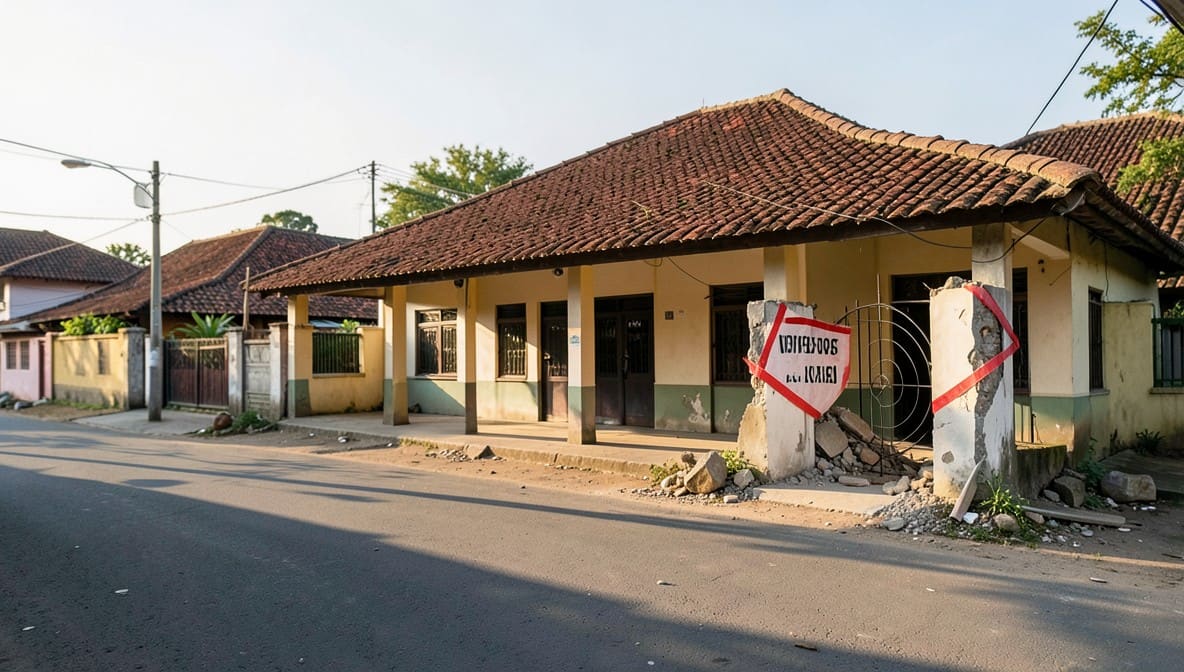
The Kerala High Court has clarified that a demolition notice issued without a prior show cause opportunity does not automatically violate procedural fairness if it is treated as a show cause notice and the affected party is given a meaningful chance to respond. This ruling reinforces the principle that substance must prevail over form in administrative proceedings, particularly where the right to be heard is preserved.
Background & Facts
The Dispute
The petitioner, Vivek K. Vijayan, challenged a demolition notice (Ext.P2) issued by the Tripunithura Municipality, alleging that it was issued without any prior show cause notice or opportunity to be heard. The notice, dated 21.05.2026, alleged unauthorized construction of a toilet on the petitioner’s property, based on a complaint filed by the petitioner’s own brother. The petitioner contended that the notice was issued in violation of natural justice and was therefore illegal.
Key Facts
- The petitioner is the lawful occupant of property at NFARA 67(A), Sree Ganapathy Madom, Tripunithura, Ernakulam
- Ext.P2, dated 21.05.2026, was issued by the 3rd respondent, Assistant Executive Engineer, Tripunithura Municipality
- The notice was issued following a complaint by the petitioner’s brother, alleging unauthorized construction of a toilet
- No prior notice, inquiry, or opportunity to explain was given before issuance of Ext.P2
- The petitioner produced Ext.P1, a building tax receipt dated 12.03.2026, to establish lawful possession and payment of taxes
- The petitioner filed the writ petition on or before 01.06.2026, seeking quashing of Ext.P2
Procedural History
- 21.05.2026: Ext.P2 demolition notice issued by the 3rd respondent
- 01.06.2026: Writ Petition (WP(C) No. 18225 of 2026) filed before the High Court of Kerala at Ernakulam
- 01.06.2026: Court heard arguments from petitioner’s counsel, Adv. C.Y. Vinod Kumar, and the Standing Counsel for the Municipality
- 01.06.2026: Judgment delivered on the same day of hearing
Relief Sought
The petitioner sought:
- Quashing of Ext.P2 demolition notice dated 21.05.2026
- Dispensation from producing English translations of Malayalam exhibits
- Any other relief deemed fit by the Court
The Legal Issue
The central question was whether a demolition notice issued without a prior show cause opportunity violates the principles of natural justice, and whether such a notice can be cured by treating it as a show cause notice and granting the affected party an opportunity to respond.
Arguments Presented
For the Petitioner
The petitioner’s counsel argued that Ext.P2 was a final order masquerading as a notice, issued without any prior inquiry, hearing, or opportunity to explain. He relied on the doctrine of audi alteram partem and cited State of U.P. v. Mohammad Noor to assert that administrative action without a hearing is void ab initio. He further contended that the notice was retaliatory, given that it originated from a family dispute, and that the petitioner’s tax payment receipt (Ext.P1) demonstrated lawful possession.
For the Respondent
The Standing Counsel for the Municipality did not contest the absence of a prior show cause notice but submitted that the notice was issued in the public interest to enforce building regulations. He argued that the petitioner had not been deprived of remedy and that the Court could direct the Municipality to consider objections if filed.
The Court's Analysis
The Court acknowledged that the issuance of Ext.P2 without a prior show cause notice was procedurally defective. However, it emphasized that the purpose of natural justice is not to punish procedural lapses but to ensure fairness. The Court observed that the notice, though flawed in form, contained sufficient details to inform the petitioner of the allegations and the proposed action.
"The notice dated 21.05.2026, though issued without prior hearing, clearly indicates the nature of the alleged violation and the proposed consequence. It is not a final order but a preliminary communication."
The Court held that the defect could be remedied by treating Ext.P2 as a show cause notice and granting the petitioner a fresh opportunity to respond. It rejected the argument that translation of Malayalam exhibits was necessary, noting that the petitioner had not raised any objection to the exhibits’ language prior to filing the petition and that the notice itself was in clear English.
The Court further noted that the Municipality’s duty to enforce building regulations must be balanced with the petitioner’s right to be heard. The remedy lies not in quashing the notice outright, but in ensuring that the petitioner is given a fair chance to present his case.
The Verdict
The writ petition was disposed of with the following directions:
- Ext.P2 shall be treated as a show cause notice
- The petitioner may file objections within two weeks from receipt of a certified copy of this judgment
- The competent authority shall consider the objections within one month of receipt, after affording a hearing to both the petitioner and his brother
- All coercive action under Ext.P2 shall remain in abeyance until final orders are passed
What This Means For Similar Cases
Procedural Defects Can Be Curative, Not Fatal
- Municipal authorities must issue show cause notices before demolition orders, but failure to do so does not automatically invalidate the notice
- Courts may treat defective notices as show cause notices if the substance of the allegation is clear and the affected party is given a timely opportunity to respond
- Practitioners should not seek quashing on technical grounds alone; instead, seek remedial directions under Article 226
Natural Justice Requires Opportunity, Not Formality
-
The principle of audi alteram partem is satisfied if the affected person receives notice of the allegations and a meaningful chance to respond
-
The timing and clarity of the opportunity matter more than the label of the document
-
In cases involving municipal enforcement, courts will favor remedies that preserve regulatory objectives while upholding fairness
-
Always request a hearing in writing after receiving a demolition notice, even if no prior notice was given
-
File objections within the court-mandated timeframe to preserve rights
-
Do not assume that a notice without "show cause" language is void - challenge its substance, not just its form