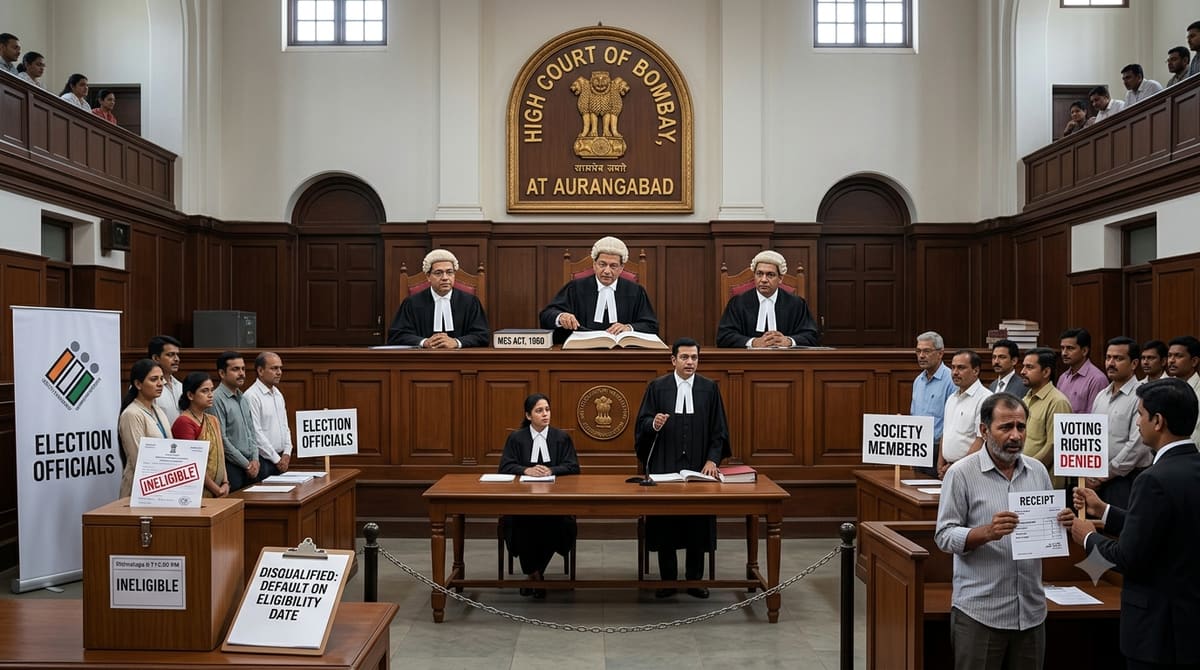
The Delhi High Court has reaffirmed a foundational principle in cooperative governance: only primary members of a housing society may vote or contest elections, and joint members are ineligible unless the primary member is legally incapacitated. This judgment resolves longstanding ambiguity in the application of the Delhi Cooperative Societies Act, 2003, and provides binding clarity for hundreds of cooperative societies across the National Capital Territory.
Background & Facts
The Dispute
The petitioners, members of the Managing Committee of the Fakhruddin Memorial Cooperative Group Housing Society in Sector 10, Dwarka, New Delhi, challenged the appointment of an Administrator by the Registrar of Cooperative Societies (RCS) under Section 37(1) of the Delhi Cooperative Societies Act, 2003. The RCS had superseded the Managing Committee citing multiple violations of statutory norms, including the illegal inclusion of joint members in the Committee, unauthorized increase in maintenance charges, and conduct of a Special General Body Meeting on a religious festival day in defiance of official directions.
Key Facts
- The Managing Committee’s term expired on 10th December 2025.
- Elections were scheduled for 14th December 2025, but allegations arose that non-primary members were included in the electoral roll.
- The petitioners include Mr. Amarjeet, Mr. Ramesh Varadarajan, Ms. Mini Jha, Mr. Vinod Bhatia, and Mr. Kamal Jeet Singh.
- The RCS’s order dated 12th November 2025 found that several Managing Committee members were joint members who had no legal right to vote or contest under Section 25(b) of the DCS Act, 2003 read with Rule 22(1) of the DCS Rules, 2007.
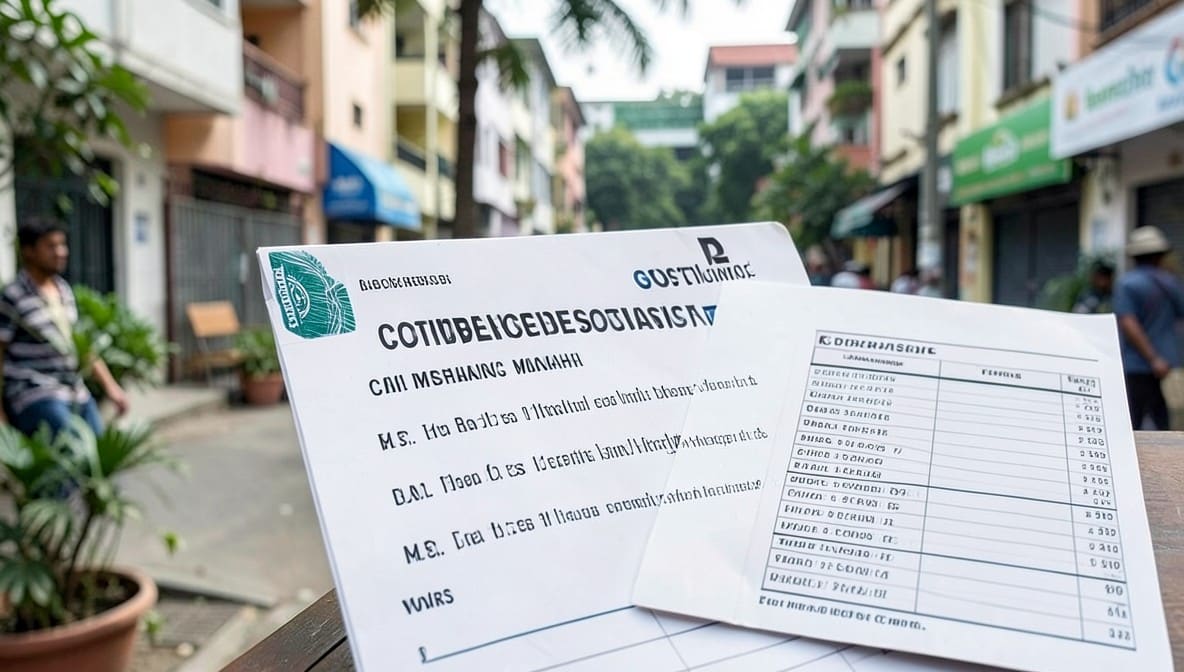
- The petitioners claimed that Mr. Amarjeet, as the primary member named first on the share certificate dated 18.08.2022, was lawfully eligible to contest.
- A sale deed dated 04.06.2014 was produced in favor of Mr. Amarjeet and his wife, suggesting joint ownership but not joint membership rights.
- The RCS and intervenors alleged manipulation of the electoral roll to include ineligible joint members.
- The impugned order was stayed by this Court on 26th November 2025 due to its non-speaking nature.
Procedural History
- 12.11.2025: RCS passed order superseding the Managing Committee and appointing Mr. Ram Kumar Savant as Administrator.
- 26.11.2025: Delhi High Court stayed the impugned order, citing lack of reasoning and non-compliance with natural justice.
- 08.01.2026: Court directed returnable date for hearing.
- 09.04.2026: Final hearing conducted in hybrid mode.
- 09.04.2026: Court appointed an Independent Observer/Returning Officer to oversee fresh elections.
The Parties' Positions
The petitioners contended that the Administrator’s appointment was premature since the Managing Committee’s term had not yet expired at the time of the order, and that the allegations were procedural rather than substantive. They relied on the fact that Mr. Amarjeet was a primary member and thus entitled to contest.
The RCS and intervenors argued that the electoral roll was tainted by inclusion of joint members who had no statutory right to vote or contest, rendering the entire election process invalid. They relied on the binding precedent in Sheetal Vihar Cooperative Group Housing Society Ltd. v. Registrar Cooperative Societies.
Relief Sought
The petitioners sought quashing of the Administrator’s appointment order dated 12.11.2025 and restoration of the Managing Committee’s authority until fresh elections could be lawfully conducted. They also sought directions to conduct elections without interference.
The Legal Issue
The central question was whether joint members of a cooperative housing society, who are not primary members, are legally entitled to vote or contest elections under Section 25(b) of the Delhi Cooperative Societies Act, 2003 and Rule 22(1) of the DCS Rules, 2007, and whether the inclusion of such members vitiated the election process.
Arguments Presented
For the Petitioner
Mr. A.K. Singla, Senior Advocate, argued that Mr. Amarjeet was a primary member as per the share certificate dated 18.08.2022 and the sale deed dated 04.06.2014. He contended that the allegations against the Managing Committee were exaggerated and that the RCS had acted without due process. He distinguished Sheetal Vihar on the ground that it involved different facts and that the current petitioners were not seeking to confer voting rights on joint members but to uphold the rights of a primary member.
For the Respondent
Ms. Harshita Nathrani and Mr. Sameer Vashisht, representing the RCS, relied on the binding precedent in Sheetal Vihar Cooperative Group Housing Society Ltd. v. Registrar Cooperative Societies. They emphasized that Section 25(b) explicitly bars joint members from voting, and Rule 22(1) permits voting rights only in case of legal inability of the primary member, not voluntary delegation. They argued that the electoral roll was fundamentally flawed and that the only lawful remedy was to conduct fresh elections under an independent observer.
The Court's Analysis
The Court undertook a detailed statutory interpretation of Section 25(b) and Rule 22(1) of the DCS Act and Rules. It reaffirmed the holding in Sheetal Vihar Cooperative Group Housing Society Ltd. v. Registrar Cooperative Societies, which had conclusively held that joint members have no inherent right to vote or contest. The Court emphasized that the first proviso to Rule 22(1) permits a joint member to vote only if the primary member suffers a legal inability - such as minority, insanity, or other incapacity - and not due to voluntary renunciation or delegation.
"The only way in which the first proviso to Rule 22(1) can be saved from being declared ultra vires the Act is to read it meaningfully, i.e., to limit the scope of the phrase ‘inability of the person’ to mean legal ‘inability’ or ‘disability’.
The Court rejected the petitioners’ attempt to distinguish Sheetal Vihar, noting that the legal principle was unambiguous and directly applicable. It observed that the inclusion of ineligible members in the electoral roll rendered the entire election process void ab initio. The Court further noted that the term of the Managing Committee had expired on 10.12.2025, making any continuation of its functions unlawful.
The Court declined to adjudicate the factual dispute over who qualifies as a primary member, stating that such determinations must be made by an impartial authority. It held that the only viable path forward was to appoint an independent Returning Officer to verify membership status based on share certificates and legal documentation, in strict conformity with the Sheetal Vihar precedent.
The Verdict
The petition was disposed of with directions for fresh elections. The Court appointed Mr. S.S. Ahluwalia, Advocate, as Independent Observer/Returning Officer. His mandate includes finalizing the electoral roll by verifying primary membership status under Section 25(b) and Rule 22(1), announcing the election schedule, overseeing nominations, and conducting free and fair elections. The Society shall bear his remuneration of Rs. 2.5 lakhs. The records of the Society were placed under his custody from 11.04.2026 at 11:30 am, and the current Managing Committee is prohibited from tampering with any documents. All rights and remedies of the parties regarding the elections are left open.
What This Means For Similar Cases
Voting Rights Are Strictly Limited to Primary Members
- Practitioners must now verify share certificates to determine primary membership before accepting any nomination in cooperative elections.
- Any candidate whose name does not appear as the first name on the share certificate must be disqualified unless they can prove legal incapacity of the primary member.
- Electoral rolls containing joint members as voters or candidates are voidable under Section 25(b).
Judicial Deference to Statutory Compliance Over Procedural Convenience
- Courts will not uphold elections tainted by statutory violations, even if the Managing Committee’s term has expired.
- The appointment of an independent Returning Officer is now a recognized remedy for systemic non-compliance in cooperative elections.
- The Sheetal Vihar precedent is binding across all cooperative societies in Delhi and must be applied uniformly.
Documentation Is Paramount
- Sale deeds, transfer deeds, or family arrangements cannot override the statutory requirement of primary membership.
- Only the share certificate issued by the society, as per Rule 22(1), determines voting eligibility.
- Societies must maintain and produce original share certificates during election disputes; digital records or affidavits are insufficient without documentary proof.