Tribunals and Commissions judgments

1767 Tribunals and Commissions judgments explained in plain English: what was decided, the law applied and why it matters. Page 9 of 74.

Natural Justice Requires Disclosure of Secret Evidence in 80G/12AB Proceedings | ITAT Delhi Quashes Cancellation of Trust Registration
Case Law Analysis
|Income Tax Appellate Tribunal

Natural Justice Requires Disclosure of Secret Evidence in 80G/12AB Proceedings | ITAT Delhi Quashes Cancellation of Trust Registration

The ITAT Delhi has ruled that tax authorities cannot cancel a charitable trust’s registration or deny 80G approval based on undisclosed field enquiry reports, violating the fundamental right to be heard. This sets a critical precedent for all trusts and NGOs facing tax scrutiny, ensuring procedural fairness in exemption decisions grounded in secret evidence.


Section 80G | Inadvertent Clause Selection in Form 10AB Is a Curable Procedural Defect: ITAT Pune
Case Law Analysis
|Income Tax Appellate Tribunal

Section 80G | Inadvertent Clause Selection in Form 10AB Is a Curable Procedural Defect: ITAT Pune

The ITAT Pune has ruled that a mistaken selection of clause in Form 10AB under Section 80G-such as filing under clause (ii) instead of (iii)-does not invalidate the application if the error is inadvertent. This sets a vital precedent for charitable trusts and NGOs, ensuring administrative oversights don't derail tax exemptions when substance and intent are intact.

Condonation of Delay | Service of Notice at Outdated Address Despite Portal Updates Constitutes Sufficient Cause: ITAT Delhi
Case Law Analysis
|Income Tax Appellate Tribunal

Condonation of Delay | Service of Notice at Outdated Address Despite Portal Updates Constitutes Sufficient Cause: ITAT Delhi

The ITAT Delhi has ruled that sending tax notices to an outdated address, even when the assessee updated their details on the Income Tax Portal and Form 35, amounts to sufficient cause for condoning delay in filing appeals. This sets a critical precedent for taxpayers with mobility or health constraints, reinforcing that procedural fairness must override technical non-compliance when the tax department fails to use verified digital records.

Section 249(3) IT Act | Delay in First Appeal Condoned for Widow Caring for Seriously Ill Daughter on Substantial Justice Grounds : ITAT Agra
Case Law Analysis
|Income Tax Appellate Tribunal

Section 249(3) IT Act | Delay in First Appeal Condoned for Widow Caring for Seriously Ill Daughter on Substantial Justice Grounds : ITAT Agra

The ITAT Agra bench condoned a 59-day delay in filing an appeal before the CIT(A), holding that personal hardship-specifically, a widow’s sole responsibility for her daughter’s prolonged medical care-constitutes sufficient cause under Section 249(3). The ruling reinforces that technical limitation bars cannot override substantive justice in tax appeals, especially when the appellant faces extraordinary personal circumstances with no mala fide intent.

Section 153C ITA | Jurisdiction Hinges on Date of AO's Satisfaction Note, Not Search or Handover Date: ITAT Delhi
Case Law Analysis
|Income Tax Appellate Tribunal

Section 153C ITA | Jurisdiction Hinges on Date of AO's Satisfaction Note, Not Search or Handover Date: ITAT Delhi

For assessments under Section 153C, the Income Tax Appellate Tribunal Delhi ruled that the assessing officer’s date of satisfaction - not the search date or handover of seized material - determines jurisdictional validity. This clarifies a critical procedural gap for post-2021 searches where handover records are missing, protecting assessees from invalid proceedings based on administrative delays.

Section 270A IT Act | Mere TDS Credit Mismatch Without Intent Constitutes Underreporting, Not Misreporting: ITAT Ahmedabad
Case Law Analysis
|Income Tax Appellate Tribunal

Section 270A IT Act | Mere TDS Credit Mismatch Without Intent Constitutes Underreporting, Not Misreporting: ITAT Ahmedabad

The ITAT Ahmedabad ruled that discrepancies between Form 26AS TDS credits and declared income, without evidence of intentional concealment, amount to underreporting - not misreporting - under Section 270A. This reduces penalty exposure from 200% to 50%, offering critical relief to businesses with clerical or documentation gaps in commission reporting.

Section 250 IT Act | Dismissing Tax Appeal Without Hearing Despite Adjournment Request Violates Natural Justice: ITAT Kolkata
Case Law Analysis
|Income Tax Appellate Tribunal

Section 250 IT Act | Dismissing Tax Appeal Without Hearing Despite Adjournment Request Violates Natural Justice: ITAT Kolkata

The ITAT Kolkata has held that the CIT(A)’s dismissal of an income tax appeal without considering a timely adjournment request constitutes a fatal breach of natural justice, rendering the order void. This reinforces that even in faceless appeal systems, the right to be heard is non-negotiable and cannot be waived by procedural technicalities or non-appearance.

Section 28(i) IT Act | PE Maintenance Expenses Not Automatically Disallowed After Business Transfer: ITAT Delhi
Case Law Analysis
|Income Tax Appellate Tribunal

Section 28(i) IT Act | PE Maintenance Expenses Not Automatically Disallowed After Business Transfer: ITAT Delhi

The ITAT Delhi ruled that expenses incurred to sustain a Permanent Establishment after a business transfer cannot be disallowed under Section 28(i) merely due to the transfer-each cost must be evaluated for its direct nexus to ongoing business operations. This clarifies a critical loophole for multinational firms restructuring Indian operations, ensuring tax treatment aligns with economic substance rather than corporate form.

Section 44AD Income Tax Act | Presumptive Taxation Invalid Beyond Rs. 1 Crore Turnover; Disallowed Expenses Must Be Reconsidered on Remand : ITAT Pune
Case Law Analysis
|Income Tax Appellate Tribunal

Section 44AD Income Tax Act | Presumptive Taxation Invalid Beyond Rs. 1 Crore Turnover; Disallowed Expenses Must Be Reconsidered on Remand : ITAT Pune

The ITAT Pune has ruled that a partnership firm cannot claim presumptive taxation under Section 44AD once gross receipts surpass Rs. 1 crore, even if income was initially declared at 8%. Crucially, it directed the Assessing Officer to reconsider disallowed business expenses on remand, reinforcing that denial of presumptive benefit does not automatically justify blanket expense rejection without proper scrutiny.

Section 12A(1)(ac)(ii) | No University Affiliation Required for Educational Exemption if Activities Are Purely Non-Profit & Educational : ITAT Delhi
Case Law Analysis
|Income Tax Appellate Tribunal

Section 12A(1)(ac)(ii) | No University Affiliation Required for Educational Exemption if Activities Are Purely Non-Profit & Educational : ITAT Delhi

The ITAT Delhi has ruled that an educational institution qualifies for tax exemption under Section 12A(1)(ac)(ii) even without formal affiliation to a university or board, provided its objects and activities are exclusively educational and non-profit. This clarifies a critical ambiguity for small schools, nurseries, and alternative education trusts seeking tax status without institutional ties, reinforcing that substance overrides formality under the Income-tax Act.

Section 87A Rebate Applies to STCG Under Section 111A Even Under New Tax Regime: ITAT Pune
Case Law Analysis
|Income Tax Appellate Tribunal

Section 87A Rebate Applies to STCG Under Section 111A Even Under New Tax Regime: ITAT Pune

ITAT Pune holds that the rebate under Section 87A of the Income Tax Act extends to short-term capital gains (STCG) taxable under Section 111A, even for assessees opting for the new tax regime. The ruling overturns CPC's denial of the full rebate, reinforcing that tax rebates must be applied to all eligible income heads without arbitrary restrictions.

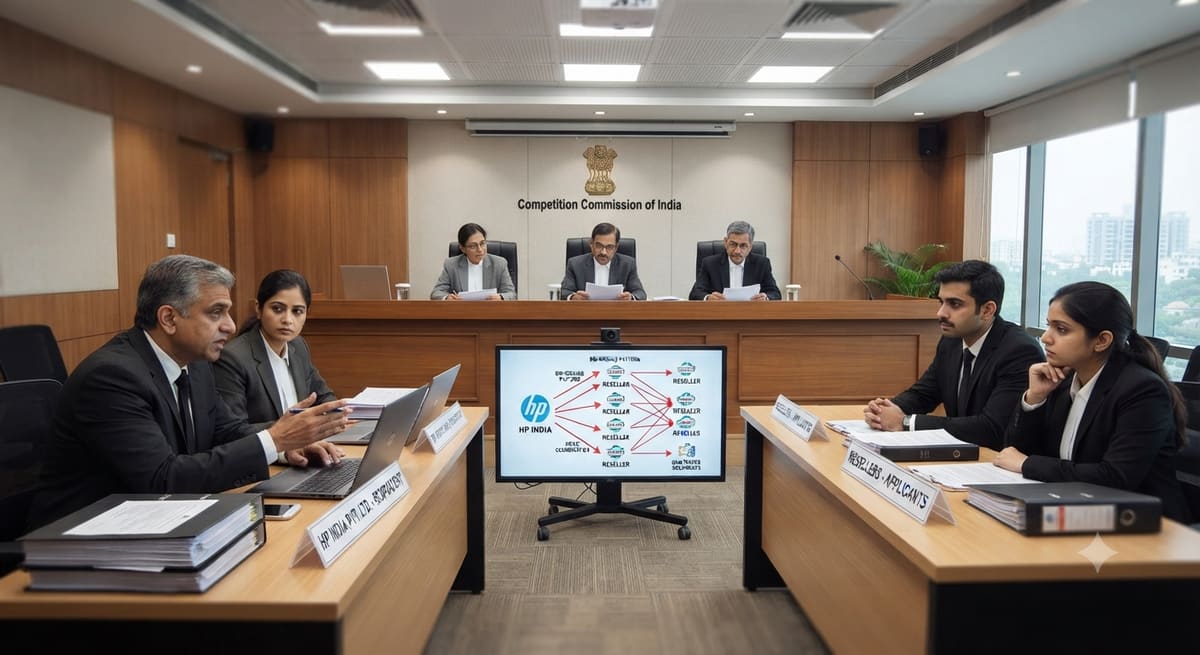
Section 3(3) Competition Act | OEM-Reseller Collusion in GeM Tenders Constitutes Horizontal Agreement: CCI Penalizes HP India & Resellers
Competition Law
|Competition Commission of India

Section 3(3) Competition Act | OEM-Reseller Collusion in GeM Tenders Constitutes Horizontal Agreement: CCI Penalizes HP India & Resellers

CCI holds that collusion between HP India and its resellers in Government e-Marketplace (GeM) tenders amounts to a horizontal agreement under Section 3(3) of the Competition Act, imposing penalties for cartelization. The ruling clarifies that OEM-reseller arrangements can violate competition law if they eliminate price competition, impacting public procurement integrity.

Section 271(1)(c) IT Act | Penalty Inapplicable on Ad-hoc Additions Even for Alleged Bogus Purchases: ITAT Surat
Case Law Analysis
|Income Tax Appellate Tribunal

Section 271(1)(c) IT Act | Penalty Inapplicable on Ad-hoc Additions Even for Alleged Bogus Purchases: ITAT Surat

ITAT Surat holds that penalties under Section 271(1)(c) of the Income Tax Act cannot be levied on ad-hoc or estimated additions, even in cases of alleged bogus purchases. The ruling reinforces that penalty provisions require concrete evidence of concealment, not mere presumptive additions, impacting tax assessments involving disputed transactions.

Section 80GGC | Cash-Back Political Donations Are Bogus Entries, Disallowing Deduction: ITAT Ahmedabad
Case Law Analysis
|Income Tax Appellate Tribunal

Section 80GGC | Cash-Back Political Donations Are Bogus Entries, Disallowing Deduction: ITAT Ahmedabad

The ITAT Ahmedabad has ruled that donations to political parties accompanied by cash-back arrangements constitute accommodation entries with no genuine economic substance, rendering them ineligible for tax deduction under Section 80GGC. This sets a critical precedent for the Income Tax Department to scrutinize politically linked donations and crack down on shell transactions disguised as electoral funding.

Section 271(1)(b) Penalty Deletion & Condonation of 578-Day Delay | ITAT Surat Rules NRI Residence Abroad as 'Sufficient Cause' for Non-Compliance : ITAT Surat
Case Law Analysis
|Income Tax Appellate Tribunal

Section 271(1)(b) Penalty Deletion & Condonation of 578-Day Delay | ITAT Surat Rules NRI Residence Abroad as 'Sufficient Cause' for Non-Compliance : ITAT Surat

ITAT Surat condoned a 578-day delay in appeal filing, holding that an assessee's residence abroad constitutes 'sufficient cause' for non-compliance with tax notices. The Tribunal deleted the penalty under Section 271(1)(b) and remanded the ex-parte assessment of NRE account credits, reinforcing leniency for NRIs in tax proceedings.

Service Tax Exemption for Whole-Time Directors' Meeting Fees Under Employer-Employee Relationship : CESTAT
Case Law Analysis
|Custom, Excise & Service Tax Tribunal

Service Tax Exemption for Whole-Time Directors' Meeting Fees Under Employer-Employee Relationship : CESTAT

CESTAT rules that meeting fees paid to whole-time directors are exempt from service tax under the Reverse Charge Mechanism, as they qualify as employer-employee remuneration per Section 65B(44)(b) of the Finance Act, 1994. This decision clarifies the tax liability for companies paying directors' fees, impacting corporate tax compliance and remuneration structures.

FTP Para 6.15 | Destruction of Duty-Free Inputs by 100% EOUs Does Not Attract Customs/Excise Duty: CESTAT Chennai Holds 2015 Amendments Retrospective
Case Law Analysis
|Custom, Excise & Service Tax Tribunal

FTP Para 6.15 | Destruction of Duty-Free Inputs by 100% EOUs Does Not Attract Customs/Excise Duty: CESTAT Chennai Holds 2015 Amendments Retrospective

CESTAT Chennai rules that 100% Export Oriented Units (EOUs) destroying duty-free inputs under FTP Para 6.15 are not liable for Customs or Excise duty, even pre-2015. The Tribunal held the 2015 amendments clarificatory and retrospective, shielding EOUs from duty demands, interest, and penalties for obsolete inputs destroyed with due intimation to authorities.

Natural Justice Mandate | ITAT Pune Quashes Assessment Order for Non-Disclosure of Third-Party Replies Under Section 133(6) IT Act : ITAT Pune
Case Law Analysis
|Income Tax Appellate Tribunal

Natural Justice Mandate | ITAT Pune Quashes Assessment Order for Non-Disclosure of Third-Party Replies Under Section 133(6) IT Act : ITAT Pune

ITAT Pune ruled that income tax assessments are vitiated if the Assessing Officer fails to provide the assessee with third-party replies obtained under Section 133(6) of the Income Tax Act, 1961. The Tribunal emphasized that non-disclosure violates principles of natural justice, setting aside the assessment order and reinforcing procedural fairness in tax proceedings.

Section 73(1) Finance Act 1994 | Extended Period for Service Tax Demand Invalid Without Proof of Wilful Suppression: CESTAT Chennai
Case Law Analysis
|Custom, Excise & Service Tax Tribunal

Section 73(1) Finance Act 1994 | Extended Period for Service Tax Demand Invalid Without Proof of Wilful Suppression: CESTAT Chennai

CESTAT Chennai rules that the extended period under Section 73(1) of the Finance Act 1994 for service tax demands cannot be invoked without concrete evidence of wilful suppression, fraud, or intent to evade tax. The ruling sets a precedent that mere non-filing or interpretational disputes do not justify extended limitation periods, impacting taxpayers facing retrospective demands.

SQC 1 & NFRA Orders | Audit Firms and Engagement Partners Jointly Liable for Professional Misconduct: NCLAT Upholds Penalties
Case Law Analysis
|National Company Law Appellate Tribunal

SQC 1 & NFRA Orders | Audit Firms and Engagement Partners Jointly Liable for Professional Misconduct: NCLAT Upholds Penalties

NCLAT affirmed NFRA's imposition of ₹3L and ₹5L penalties on a chartered accountant and his firm for professional misconduct in the Vikas WSP Limited audit. The ruling reinforces that audit firms and engagement partners share joint liability under Standards on Quality Control (SQC 1), setting a precedent for stricter accountability in statutory audits.

Condonation of Delay | Reliance on Unverified RMS-NMS Data Constitutes Sufficient Cause Under Limitation Act: ITAT Pune
Case Law Analysis
|Income Tax Appellate Tribunal

Condonation of Delay | Reliance on Unverified RMS-NMS Data Constitutes Sufficient Cause Under Limitation Act: ITAT Pune

ITAT Pune condoned a 79-day delay in filing an income tax appeal, holding that reliance on unverified data from the RMS-NMS insight portal constitutes sufficient cause under the Limitation Act. This ruling empowers taxpayers who act in good faith based on flawed government-generated alerts, reinforcing procedural fairness over technical non-compliance.