Tribunals and Commissions judgments

1767 Tribunals and Commissions judgments explained in plain English: what was decided, the law applied and why it matters. Page 28 of 74.

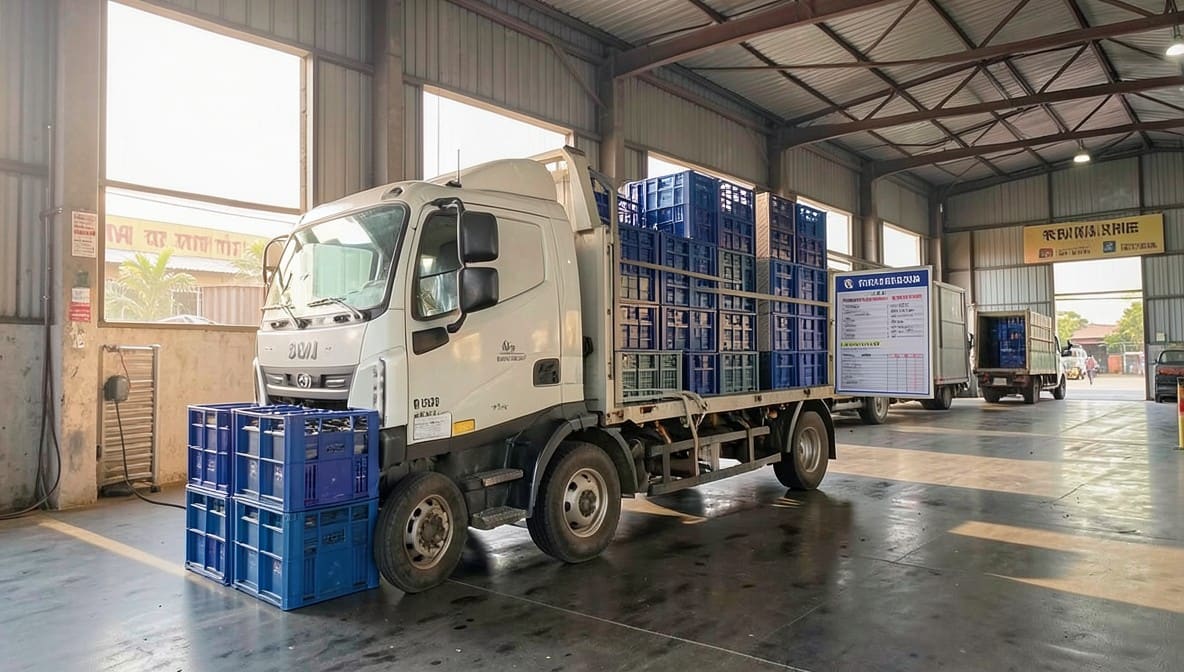
CBLR Regulation 10(d) | Penalty Under Customs Act Inapplicable Without Specific Provision for NDPS Violation : CESTAT
|Custom, Excise & Service Tax Tribunal

CBLR Regulation 10(d) | Penalty Under Customs Act Inapplicable Without Specific Provision for NDPS Violation : CESTAT

CESTAT rules that a customs broker cannot be penalized under Section 117 of the Customs Act for exporting controlled substances like Ergotamine without a No Objection Certificate (NOC), as CBLR 2018 requires a specific penalty provision. The decision underscores that general penalty clauses cannot override regulatory compliance mandates under NDPS regulations.


Natural Justice Mandates Opportunity to Respond Before Stigmatic Contractual Termination : CAT Allahabad
Case Law Analysis
|Central Administrative Tribunal

Natural Justice Mandates Opportunity to Respond Before Stigmatic Contractual Termination : CAT Allahabad

CAT Allahabad holds that contractual termination carrying stigmatic implications violates principles of natural justice, even if the contract permits termination without cause. The ruling mandates an opportunity for the employee to respond before adverse action, reinforcing procedural fairness in employment disputes under service law.

Service Tax Abatement Under Notification No. 1/2006-ST | Procedural Lapses Cannot Deny Substantive Benefit : CESTAT Kolkata
Case Law Analysis
|Custom, Excise & Service Tax Tribunal

Service Tax Abatement Under Notification No. 1/2006-ST | Procedural Lapses Cannot Deny Substantive Benefit : CESTAT Kolkata

CESTAT Kolkata holds that 67% service tax abatement under Notification No. 1/2006-ST cannot be denied merely due to procedural lapses like non-claim in ST-3 returns. The ruling reinforces that substantive benefits under tax laws prevail over technical non-compliance, impacting construction and works contract service providers.

Rule 6 CENVAT Credit Rules | Proportionate Reversal of Input Credit on Exempted Electricity Sales Does Not Constitute Non-Availment : CESTAT
Case Law Analysis
|Custom, Excise & Service Tax Tribunal

Rule 6 CENVAT Credit Rules | Proportionate Reversal of Input Credit on Exempted Electricity Sales Does Not Constitute Non-Availment : CESTAT

CESTAT ruled that reversing CENVAT credit proportionately on inputs used for exempted electricity sales does not amount to non-availment under Rule 6 of the CENVAT Credit Rules. The Tribunal set aside demands totaling ₹7.13 crore, clarifying that separate record-keeping is not mandatory if credit reversal is already effected, offering relief to manufacturers with captive power plants.

Section 4 Competition Act | Excessive Pricing Alone Does Not Constitute Abuse of Dominance: CCI Dismisses Case Against St. Stephen's Hospital
Competition Law
|Competition Commission of India

Section 4 Competition Act | Excessive Pricing Alone Does Not Constitute Abuse of Dominance: CCI Dismisses Case Against St. Stephen's Hospital

CCI holds that higher pricing of medical services and products, without evidence of anti-competitive conduct or market power abuse, does not violate Section 4 of the Competition Act. The ruling clarifies that excessive pricing complaints require proof of dominance and exploitative practices, not just price disparity.

SSI Exemption | Brand Name Use Does Not Invalidate Eligibility; Demand Invalid Without Physical Stock Verification : CESTAT Kolkata
|Custom, Excise & Service Tax Tribunal

SSI Exemption | Brand Name Use Does Not Invalidate Eligibility; Demand Invalid Without Physical Stock Verification : CESTAT Kolkata

CESTAT Kolkata quashes excise demands against small-scale manufacturers for alleged SSI exemption misuse, ruling that mere eye estimation and uncorroborated records cannot substantiate alleged clandestine removal. The decision reinforces that brand name usage alone does not disqualify SSI benefits and mandates physical verification as a non-negotiable condition for any duty demand, protecting genuine small units from arbitrary assessments.

Cenvat Credit on Outward Freight | Ownership Transfer at Buyer’s Premises Permits Credit Post-01.04.2008 Under Rule 2(l) : CESTAT Kolkata
Case Law Analysis
|Custom, Excise & Service Tax Tribunal

Cenvat Credit on Outward Freight | Ownership Transfer at Buyer’s Premises Permits Credit Post-01.04.2008 Under Rule 2(l) : CESTAT Kolkata

CESTAT Kolkata rules that manufacturers can claim Cenvat credit for service tax paid on outward freight even after April 1, 2008, if ownership of goods transfers at the buyer’s premises, as per the pre-amendment definition of 'place of removal'. This clarifies a critical ambiguity for manufacturers shipping to distant customers under contract terms requiring them to bear delivery costs and risk.

Jogeswar Sahoo Principle | Recovery of Excess Pay from Group-C Employees Violates Natural Justice : CAT Cuttack
Case Law Analysis
|Central Administrative Tribunal

Jogeswar Sahoo Principle | Recovery of Excess Pay from Group-C Employees Violates Natural Justice : CAT Cuttack

CAT Cuttack rules that recovery of excess pay from Group-C employees-even due to departmental error-is impermissible under Jogeswar Sahoo v. Dist. Judge, as it violates principles of natural justice and Articles 14 & 16 of the Constitution. The ruling protects low-ranking employees from arbitrary deductions without prior notice or opportunity to be heard.

'As Is Where Is' Sale Terms Under IBC | NCLAT Bars Post-Auction Bid Enhancements Absent Fraud or Procedural Illegality : NCLAT
Case Law Analysis
|National Company Law Appellate Tribunal

'As Is Where Is' Sale Terms Under IBC | NCLAT Bars Post-Auction Bid Enhancements Absent Fraud or Procedural Illegality : NCLAT

NCLAT reinforces the finality of liquidation auctions under 'as is where is' terms, holding that bidders cannot challenge confirmed sales through post-bid enhancements unless fraud or procedural violations are proven. The ruling protects auction integrity and prevents last-minute bid manipulations, ensuring certainty for liquidators and successful resolution applicants under the Insolvency and Bankruptcy Code.

TRCA Pay Protection Mandatory for GDS on Medical Transfer | Statutory Right Not Barred by Delay or Undertaking : CAT Ernakulam
Case Law Analysis
|Central Administrative Tribunal

TRCA Pay Protection Mandatory for GDS on Medical Transfer | Statutory Right Not Barred by Delay or Undertaking : CAT Ernakulam

CAT Ernakulam rules that Gramin Dak Sevaks (GDS) transferred on medical grounds are entitled to pay protection under TRCA guidelines, regardless of delay or prior undertakings. The ruling affirms that administrative guidelines create enforceable statutory rights, impacting thousands of postal department employees facing similar disputes.

IBC Regulation 34 | Stay on CoC Constitution Limits IRP Fees to Pro Rata Basis for Functions Performed : NCLAT
|National Company Law Appellate Tribunal

IBC Regulation 34 | Stay on CoC Constitution Limits IRP Fees to Pro Rata Basis for Functions Performed : NCLAT

NCLAT rules that an Interim Resolution Professional (IRP) is entitled only to proportional fees for duties performed during a stay on Committee of Creditors (CoC) constitution, rejecting claims for full statutory remuneration. The ruling clarifies that fee entitlement under IBC is contingent on actual functions discharged, not mere appointment duration.

Restoration of Service Mandatory for GDS Employees Upon Invalidation of Provisional Appointment | CAT Ernakulam Upholds Right to Prior Post with Full Benefits Till Age 65
Case Law Analysis
|Central Administrative Tribunal

Restoration of Service Mandatory for GDS Employees Upon Invalidation of Provisional Appointment | CAT Ernakulam Upholds Right to Prior Post with Full Benefits Till Age 65

CAT Ernakulam rules that employees provisionally appointed and later invalidated must be restored to their original GDS position with all benefits, including pension and service continuity, up to the age of 65. The judgment reinforces that service rendered under provisional appointments cannot be retrospectively nullified, ensuring statutory protection for retired employees.

Reverse Charge Mechanism Under Service Tax | Clear Identification of Imported Services & Revenue Neutrality Mandatory: CESTAT Allahabad Quashes ₹77 Crore Demand Against Samsung
Case Law Analysis
|Custom, Excise & Service Tax Tribunal

Reverse Charge Mechanism Under Service Tax | Clear Identification of Imported Services & Revenue Neutrality Mandatory: CESTAT Allahabad Quashes ₹77 Crore Demand Against Samsung

CESTAT Allahabad ruled that service tax liability under the Reverse Charge Mechanism requires unambiguous identification of imported services. The tribunal held that revenue neutrality precludes tax demands where Cenvat credit offsets liability, setting aside a ₹77 crore demand against Samsung for advertisement and sales promotion charges paid to foreign entities.

Section 5(8) IBC | Interest-Free Director Loans Constitute Financial Debt If Commercial Borrowing Effect Exists : NCLAT
Case Law Analysis
|National Company Law Appellate Tribunal

Section 5(8) IBC | Interest-Free Director Loans Constitute Financial Debt If Commercial Borrowing Effect Exists : NCLAT

NCLAT rules that interest-free loans from directors may qualify as financial debt under Section 5(8) of the Insolvency and Bankruptcy Code if they reflect a commercial borrowing effect, even without formal agreements. This expands the scope of financial creditors and impacts corporate governance and insolvency proceedings.

Cenvat Credit Denial Invalid Without Assessee's Knowledge Proof or Corroborative Evidence : CESTAT
|Custom, Excise & Service Tax Tribunal

Cenvat Credit Denial Invalid Without Assessee's Knowledge Proof or Corroborative Evidence : CESTAT

CESTAT rules that Cenvat credit cannot be denied based solely on third-party statements or fake invoices unless the Revenue proves the assessee's knowledge of fraud or provides corroborative evidence. The ruling reinforces natural justice principles, requiring direct evidence linking the assessee to fraudulent transactions to disallow credit claims.

Section 112(b) Customs Act | Penalty Invalid Without Proof of Mens Rea and Physical Possession of Confiscable Goods : CESTAT
Case Law Analysis
|Custom, Excise & Service Tax Tribunal

Section 112(b) Customs Act | Penalty Invalid Without Proof of Mens Rea and Physical Possession of Confiscable Goods : CESTAT

CESTAT quashed a ₹10 lakh penalty under Section 112(b) of the Customs Act, ruling that vague third-party statements and absence of proof of knowledge or physical possession of confiscable goods cannot sustain penalty imposition. The decision reinforces that strict compliance with mens rea and possession requirements is mandatory for penal action under the Customs Act.

RERA Section 70% Fund Protection | Operational Creditors Cannot Bypass CIRP to Claim Direct Access to Escrow: NCLAT
Case Law Analysis
|National Company Law Appellate Tribunal

RERA Section 70% Fund Protection | Operational Creditors Cannot Bypass CIRP to Claim Direct Access to Escrow: NCLAT

The NCLAT has clarified that operational creditors, even with admitted claims under the IBC, cannot invoke RERA’s statutory trust provisions to extract funds from the project’s 70% escrow account during corporate insolvency. This upholds the hierarchy of the IBC framework, ensuring resolution plans - not piecemeal claims - govern asset distribution, protecting homebuyers and the integrity of the insolvency process.

Solid Waste Management Rules 2016 | NGT Central Zone Imposes Environmental Compensation on Local Authorities for Non-Compliance with Waste Treatment Obligations : NGT
Case Law Analysis
|National Green Tribunal

Solid Waste Management Rules 2016 | NGT Central Zone Imposes Environmental Compensation on Local Authorities for Non-Compliance with Waste Treatment Obligations : NGT

NGT Central Zone holds Alwar Nagar Nigam and District Magistrate liable for failing to operationalize the waste treatment plant for over four years, violating SWM Rules 2016. The tribunal mandates environmental compensation, completion of a mechanized transfer station, and issuance of a Consent to Operate (CTO) within deadlines, reinforcing the 'Polluter Pays Principle' for municipal bodies.

Section 112(b) Customs Act | Penalty Quashed Absent Proof of Knowledge or Physical Possession of Contraband : CESTAT
Case Law Analysis
|Custom, Excise & Service Tax Tribunal

Section 112(b) Customs Act | Penalty Quashed Absent Proof of Knowledge or Physical Possession of Contraband : CESTAT

CESTAT rules that penalties under Section 112(b) of the Customs Act cannot be imposed without concrete evidence of the appellant's knowledge or physical possession of illicit goods. The tribunal underscores that mere association with a supplier or failure to prove mens rea invalidates penalty imposition, reinforcing natural justice principles in customs enforcement.

Section 43 IBC | Delayed Mortgage Perfection Within Look-Back Period Still Preferential Transaction : NCLAT
Case Law Analysis
|National Company Law Appellate Tribunal

Section 43 IBC | Delayed Mortgage Perfection Within Look-Back Period Still Preferential Transaction : NCLAT

NCLAT rules that a mortgage executed seven years after loan disbursement but within the one-year look-back period under Section 43 IBC constitutes a preferential transaction, regardless of prior contractual intent. The ruling clarifies that timing of security perfection-not just loan origination-determines vulnerability to avoidance, impacting lenders and resolution professionals in CIRP.