The Customs, Excise and Service Tax Appellate Tribunal (CESTAT) Kolkata has delivered a significant ruling affirming that mere embossing of a third-party brand name on plastic goods does not disqualify a manufacturer from Small Scale Industry (SSI) exemption, and that excise demands based on eye estimation or unverified records are legally unsustainable. This judgment reinforces the principle that revenue authorities must establish violations through concrete, corroborated evidence and cannot rely on assumptions or procedural lapses to impose duty liabilities.
Background & Facts
The Dispute
The appellants, comprising M/s. Arham Petro Products (a proprietorship), M/s. S.L. Polypack (Private) Limited (a private limited company), and their respective proprietors and directors, were assessed for alleged evasion of central excise duty during the financial years 2001-02 to 2004-05. The Department alleged multiple violations including shortage of finished goods and raw materials, clandestine removal of goods, misuse of the brand name "Essel", irregular availing of CENVAT credit, and maintenance of parallel invoices. These allegations formed the basis of a Show Cause Notice dated 07.07.2006, which led to an ex-parte order dated 23.11.2006. After remand by CESTAT in 2017, a fresh order was passed on 06.02.2018 confirming the demands.
Key Facts
- The appellants manufactured disposable plastic cups and glasses falling under Chapter Heading 39.24 of the Central Excise Tariff Act, 1985.
- They claimed SSI exemption under Notification No. 9/2001-CE dated 01.03.2001 and Notification No. 9/2003-CE dated 01.03.2003, paying concessional duty.
- On 16/17.01.2006, a search was conducted at the factory and office premises of the appellants.
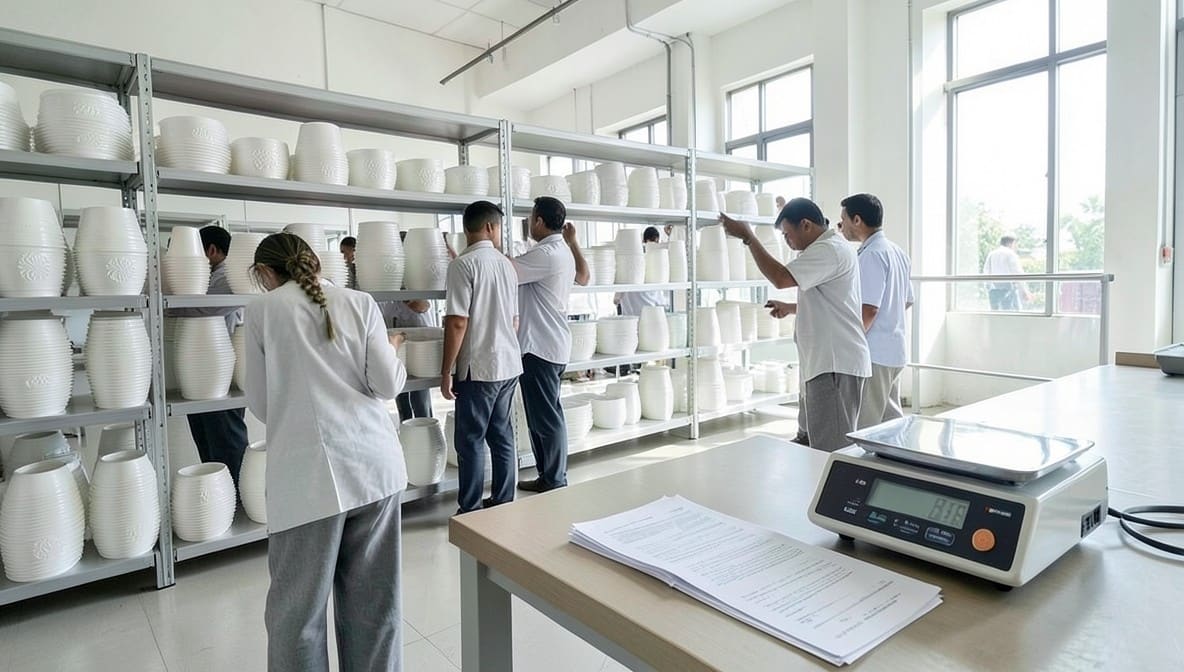
- During stock verification on 17.01.2006, officers recorded alleged shortages:
- Finished goods shortage: 498.075 kgs at Arham Petro Products (duty alleged: Rs.1,26,042/-)
- Finished goods shortage: 5,192.415 kgs at S.L. Polypack (duty alleged: Rs.12,163/-)
- Raw materials shortage: 41.390 kgs at Arham Petro Products (duty alleged: Rs.374/-)
- Raw materials shortage: 42,281.215 kgs at S.L. Polypack (duty alleged: Rs.3,82,966/-)
- Finished goods were found with "Essel" embossed on them, a brand owned by Essel Packaging Ltd. for different products.
- Alleged clandestine removal: Rs.4,20,102/- (Arham) and Rs.25,28,905/- (S.L. Polypack) based on discrepancy between statutory and private records.
- CENVAT credit irregularity: Rs.16,09,248/- alleged against S.L. Polypack due to mismatch between computerized input register and seized stock records.
- Parallel invoices: Rs.19,024/- alleged against Arham Petro Products based on duplicate invoices with same serial numbers but different values.
- No weighment slips, no buyer/supplier records, no transporter details, and no physical verification of stock were produced by the Department.
Procedural History
- 16/17.01.2006: Search and seizure conducted at premises of appellants.
- 17.01.2006: Stock verification conducted with signatures of authorized representatives; no physical weighment performed.
- 07.07.2006: Show Cause Notice issued on five grounds: shortage, clandestine removal, brand misuse, CENVAT irregularity, and parallel invoices.
- 23.11.2006: Ex-parte Order-in-Original passed due to non-submission of reply and non-appearance.
- 30.08.2017: CESTAT remanded the matter, directing fresh adjudication with opportunity to submit reply and access documents.
- 09.01.2018: Appellants submitted detailed reply disputing all allegations.
- 06.02.2018: Commissioner passed fresh Order-in-Original No. 36/COMMR/CGST&CE/HWH/Adjn/2017-18 confirming all demands.
- 2018: Appeals filed before CESTAT Kolkata (E/76468-76471/2018).
- 30.03.2026: Hearing held before CESTAT.
- 21.05.2026: Final order pronounced.
The Parties' Positions
For the Appellants
- Denied all allegations as speculative and unsupported.
- Argued that stock verification was based on eye estimation, not physical weighment, rendering shortages unreliable.
- Contended that "Essel" was merely embossed on products and not used as a brand for marketing; the brand belonged to another entity for different goods.
- Stated that CENVAT credit was availed only upon actual receipt of inputs, as per computerized records.
- Asserted that parallel invoices were not proven to have been issued to actual buyers or resulted in duty evasion.
- Relied on multiple precedents holding that revenue must prove violations with corroborative evidence.
For the Respondent
- Supported the impugned order, relying on seized documents and signatures on stock verification reports.
- Argued that discrepancies between statutory and private records indicated clandestine removal.
- Claimed that use of "Essel" embossing disqualified appellants from SSI exemption.
- Maintained that mismatch in computerized and seized records justified disallowance of CENVAT credit.
- Did not produce any independent evidence such as buyer statements, transport records, or supplier invoices.
Relief Sought
The appellants sought:
- Setting aside of the impugned order dated 06.02.2018.
- Quashing of all duty demands totaling Rs.64,74,472/- and Rs.29,95,210/- respectively.
- Cancellation of interest and penalties.
- Release of any seized documents or securities.
The Legal Issue
The central question was whether SSI exemption under Notification No. 9/2001-CE and 9/2003-CE can be denied solely on the basis of embossing a third-party brand name on goods, and whether excise demands based on unverified stock estimates, uncorroborated records, and absence of corroborative evidence are legally sustainable under the Central Excise Act, 1944 and CENVAT Credit Rules, 2004.
Arguments Presented
For the Appellant
The appellants relied on multiple precedents including Shivalaya Ispat & Power Pvt. Ltd., Hissar Pipes Pvt. Ltd., and Hisaria Electronics to argue that revenue authorities cannot impose duty based on assumptions or presumptions. They emphasized that physical verification must involve accurate weighment, not eye estimation. Regarding the brand name, they cited Karnavati Synthetics Ltd. and Raj Ratan Industries Ltd. to show that mere embossing without commercial use as a brand does not constitute misuse. On CENVAT credit, they relied on Super Iron & Steel Pvt. Ltd. and Anand Founders & Engineers to assert that credit cannot be denied unless it is proven that inputs were never received. They further argued that parallel invoices, without proof of issuance to buyers or actual evasion, cannot sustain a demand.
For the Respondent
The Revenue contended that signatures on stock verification reports constituted admission of shortages. They argued that discrepancies between computerized and seized records indicated manipulation. They maintained that use of "Essel" on products violated the condition of SSI exemption that goods must not bear another’s brand. However, they produced no independent evidence - no buyer statements, no transport records, no supplier invoices, and no verification of actual receipt of inputs.
The Court's Analysis
The Tribunal conducted a rigorous analysis of each ground of demand, applying the principle that the burden of proof lies squarely on the Revenue to establish violations with credible, corroborated evidence.
"It is a settled principle of law that on the basis of eye estimation alone, shortage of raw materials or finished goods cannot be established."
The Court held that the stock verification reports, signed by the appellants’ representatives, did not constitute admission of shortage, particularly in the absence of weighment slips or calibrated instruments. The mere act of signing a report prepared by the Department, without independent verification, could not be treated as conclusive proof.
Regarding the use of the brand name "Essel", the Tribunal observed:
"No corroborative evidence has been brought on record by the Revenue in support of their allegations... M/s. Essel Kitchenware Private Limited is having the said brand name, but that too, for other goods, and not for the goods in question."
The Court clarified that embossing a name on a product does not equate to "using" it as a brand for commercial purposes. The SSI exemption is not forfeited merely because a product bears a mark owned by another entity, especially when that entity manufactures entirely different goods.
On clandestine removal, the Court noted:
"No buyer of the finished goods or supplier of the raw materials... has been brought out by way of the investigation nor were the transporters investigated into."
The Revenue’s reliance on rough records and inferred discrepancies was deemed legally insufficient. The Tribunal emphasized that inference cannot replace evidence.
Regarding CENVAT credit, the Court held:
"It is not the case of the Revenue that the said goods have not been received by the said appellant for manufacture of their final goods."
The mismatch between computerized and seized records was not sufficient to prove non-receipt of inputs. The burden to prove non-receipt rested with the Department, which it failed to discharge.
On parallel invoices, the Court found no evidence that these invoices were issued to actual buyers or that they resulted in any duty evasion. The mere existence of duplicate invoices, without proof of fraudulent intent or actual loss to the exchequer, could not sustain a demand.
The Tribunal also held that penalties under Rule 26 of the Central Excise Rules, 2002, could not be imposed on the individual appellants (Alok Goyal and Suresh Chand Goyal) since the underlying demands against the companies were unsustainable.
The Verdict
The appeals were allowed in full. The impugned order dated 06.02.2018 was set aside. All duty demands of Rs.64,74,472/- and Rs.29,95,210/-, along with interest and penalties, were quashed. No penalty was imposed on any appellant. The Department was directed to release any seized documents or securities held in connection with these proceedings. The order was pronounced on 21.05.2026.
What This Means For Similar Cases
Physical Verification Must Be Scientific and Documented
- Practitioners must insist that revenue authorities produce weighment slips, calibrated instrument records, and signed verification protocols for any stock shortage claim.
- Eye estimation alone is legally invalid; any demand based on visual assessment is liable to be set aside.
- In appeals, challenge the methodology of stock verification at the earliest opportunity.
Brand Embossing ≠ Brand Use for SSI Exemption
- Merely having a third-party name embossed on goods does not disqualify a manufacturer from SSI exemption.
- The Revenue must prove commercial use of the brand to mislead consumers or gain unfair advantage.
- SSI exemption cannot be denied on speculative grounds of brand misuse without evidence of deception or misrepresentation.
CENVAT Credit Cannot Be Denied on Mere Record Mismatch
- CENVAT credit cannot be disallowed merely because computerized records differ from seized records.
- The Department must prove non-receipt of inputs, not just inconsistency in documentation.
- Maintain robust, contemporaneous records of input receipt and credit availing to rebut allegations.
Inference Without Corroboration Is Legally Invalid
- Revenue cannot rely on assumptions, inferences, or discrepancies in private records to establish evasion.
- Every allegation must be supported by independent evidence: buyer statements, transport documents, supplier invoices, or bank records.
- Precedents like Hisaria Electronics and Super Iron & Steel now stand reaffirmed as binding on all adjudicating authorities.
Penalty Under Rule 26 Requires Valid Underlying Demand
- Penalties against individuals under Rule 26 are contingent on the validity of the main demand against the entity.
- If the main demand is quashed, penalty against directors or proprietors automatically falls.
- Always challenge penalty imposition as a consequential relief, not as an independent ground.