The National Green Tribunal Central Zone has delivered a decisive ruling affirming that failure by municipal authorities to comply with the Solid Waste Management Rules, 2016, constitutes a violation of the fundamental right to life under Article 21 of the Constitution. The Tribunal imposed concrete obligations on Alwar’s civic bodies and the State Pollution Control Board to remediate systemic failures in waste handling, with strict timelines and financial accountability.
Background & Facts
The Dispute
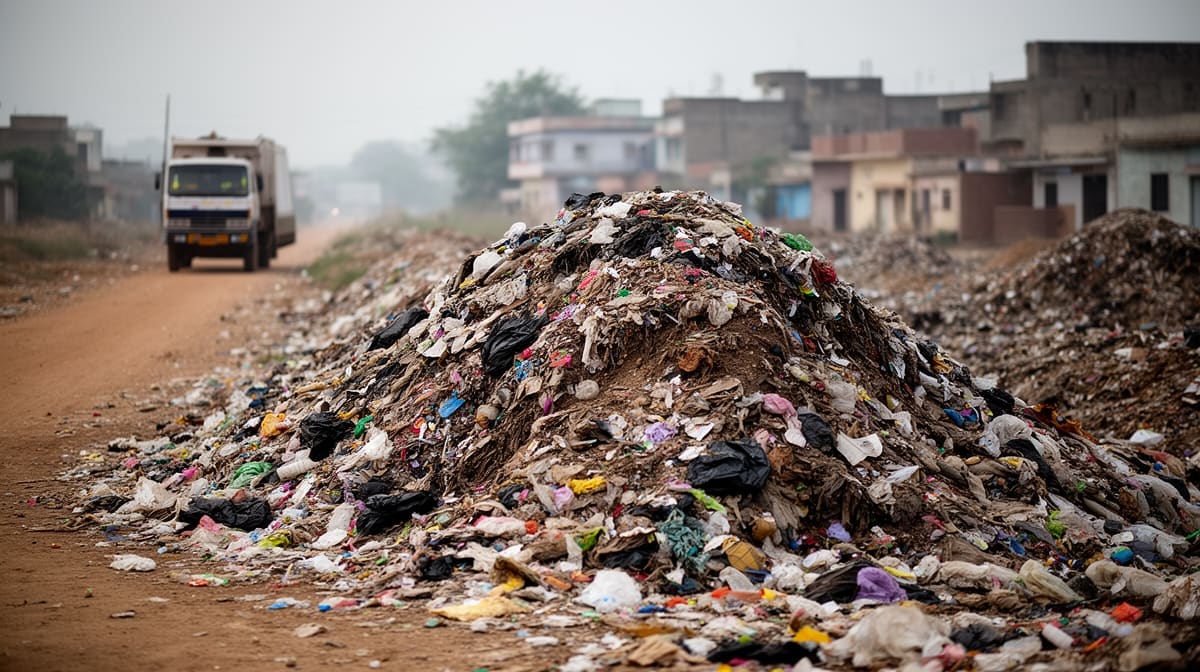
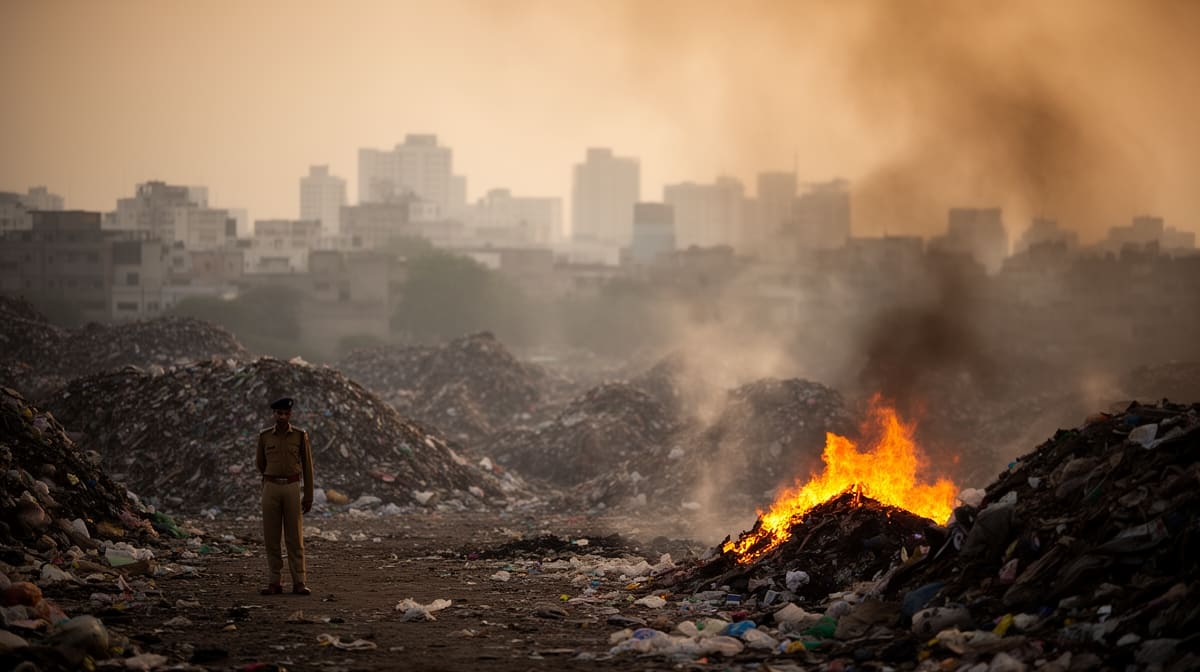
The applicant, Haider Ali, filed Original Application No. 205/2024(CZ) before the National Green Tribunal Central Zone, alleging gross non-compliance with the Solid Waste Management Rules, 2016, by the Commissioner of Nagar Nigam, Alwar; the District Magistrate, Alwar; and the Rajasthan State Pollution Control Board. The core grievance was the unscientific disposal of municipal solid waste, the prolonged non-functioning of the waste treatment plant at Agwara, and the absence of proper segregation, transportation, and processing infrastructure, leading to public health hazards and environmental degradation.
Key Facts
- Alwar city has a population of approximately 5 lakhs and is divided into 65 wards, grouped into three zones for waste collection.
- Municipal solid waste is collected door-to-door by auto tippers and transported to a transfer station near Ambedkar Nagar, Alwar.
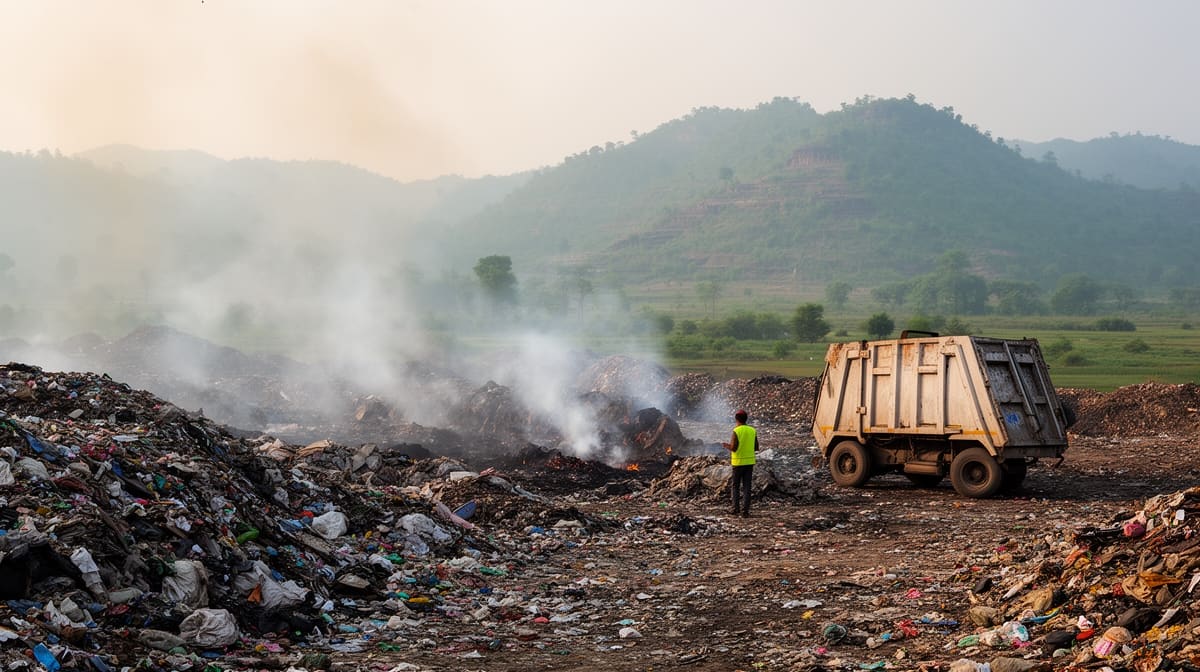
- The Municipal Solid Waste (MSW) Processing Plant at Agwara, intended for scientific treatment, had been non-operational for over four years at the time of filing.
- The transfer station near Ambedkar Nagar was found to have damaged tin sheds, allowing animal entry and posing fire risks.
- The legacy waste volume at Goleta (1,05,732 cubic meters) was fully disposed of by October 2024.
- The Municipal Corporation employed 1,380 workers (534 permanent, 836 contractual), but only half were reportedly engaged in waste management duties.
- The Rajasthan State Pollution Control Board (RSPCB) conducted six surprise inspections between September 2022 and May 2024, each time finding non-compliance with SWM Rules, 2016.
- On 03.09.2024, RSPCB issued a Show Cause Notice proposing an interim environmental compensation of Rs. 77 lakhs for 616 days of non-compliance under the Polluter Pays Principle.
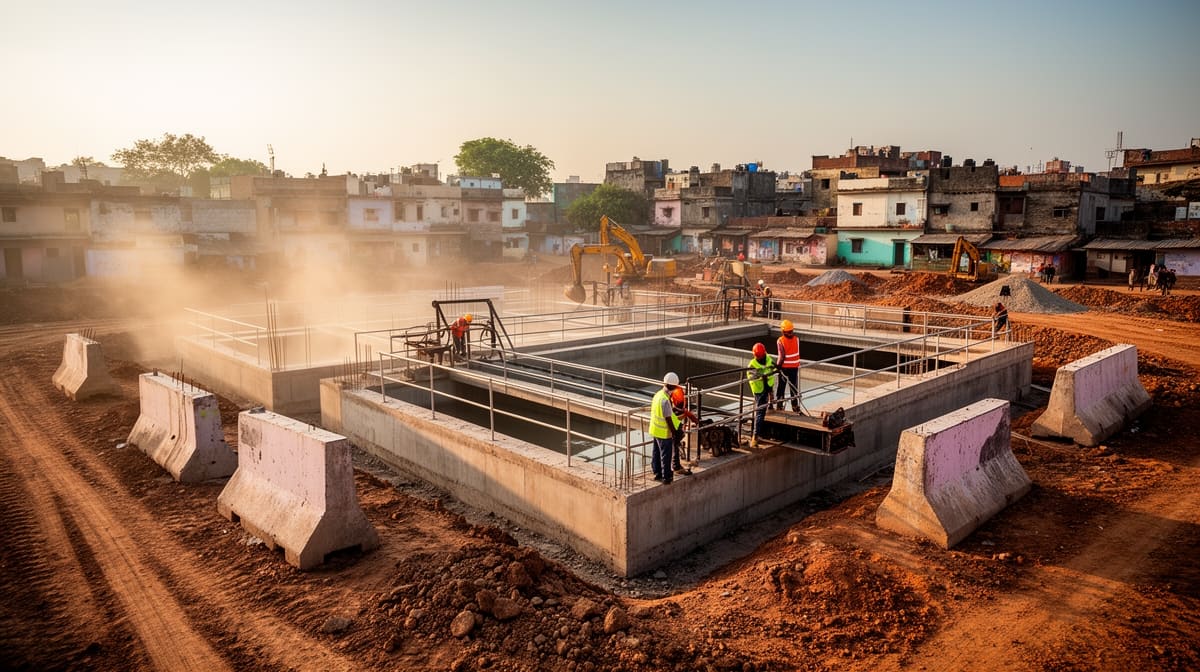
- A mechanized transfer station was proposed on 6,480 sq. m. of land allotted under the Murtikar Yojana, but construction was incomplete as of October 2024.
- The applicant’s allegations were corroborated by a joint inspection committee and RSPCB’s own reports.
Procedural History
- 15.01.2024: Original Application No. 205/2024(CZ) filed before NGT Central Zone, Bhopal.
- 07.11.2025: NGT constituted a joint inspection committee and directed RSPCB to submit a compliance report.
- 18.10.2024: Joint inspection of waste transfer and processing sites conducted.
- 01.01.2026: RSPCB submitted inspection report confirming operational deficiencies at MSW plant.
- 07.05.2026: Final hearing concluded; order reserved.
- 19.05.2026: Judgment uploaded on NGT website.
The Parties' Positions
For the Applicant
- Alleged systemic failure in implementation of SWM Rules, 2016, particularly Rules 11, 12, and 15.
- Highlighted non-functioning of Agwara MSW plant for over four years.
- Cited RSPCB’s repeated inspection reports showing non-compliance.
- Argued that unscientific dumping violates Article 21, as affirmed in M.C. Mehta v. Union of India, B.L. Wadhera v. Union of India, and Virender Gaur v. State of Haryana.
- Demanded enforcement of environmental compensation and immediate remedial action.
For the Respondents
- Contended that door-to-door collection, segregation, and mechanical sweeping were operational.
- Cited the “Atulya Alwar Abhiyan” launched on 02.10.2024 and the cleanalwar.in portal with 1,023 resolved complaints out of 1,071.
- Claimed legacy waste at Goleta had been fully cleared.
- Argued that the transfer station near Ambedkar Nagar was temporary and a mechanized replacement was under construction.
- Denied allegations of negligence, attributing media reports to misinformation.
- Stated that the MSW plant was operational with ballistic separator, fatka machine, and composting unit functional.
Relief Sought
The applicant sought:
- Immediate functional status of the Agwara MSW Processing Plant.
- Enforcement of environmental compensation for past non-compliance.
- Mandatory Environmental Clearance (CTO) for the transfer station.
- Completion of the mechanized transfer station within a stipulated timeframe.
- Accountability of officials through adverse entries in ACRs.
- Compliance with Rule 17 regarding manufacturer responsibility for packaging waste.
The Legal Issue
The central question was whether the failure of local authorities and the State Pollution Control Board to implement the Solid Waste Management Rules, 2016, constitutes a violation of the fundamental right to life under Article 21 of the Constitution, and whether environmental compensation under the Polluter Pays Principle is enforceable for prolonged non-compliance.
Arguments Presented
For the Appellant/Petitioner
The applicant relied on multiple precedents to establish that environmental degradation directly infringes upon the right to life. In M.C. Mehta v. Union of India (1987), the Supreme Court held that a clean environment is integral to Article 21. In B.L. Wadhera v. Union of India (1996), the Court affirmed that municipal bodies cannot plead financial incapacity to discharge their duty to maintain public health. The applicant cited Virender Gaur v. State of Haryana (1995) to argue that hygienic environment, sanitation, and ecological balance are constitutionally protected facets of human dignity. The applicant further invoked A.P. Pollution Control Board v. Prof. M.V. Nayudu (1999), which elevated environmental protection to the status of a fundamental human right. The Tribunal’s own order in OA No. 606/2018 was cited to establish the interim compensation framework of Rs. 5 lakh to Rs. 10 lakh per month per local body based on population.
For the Respondent/State
The respondents argued that operational measures were in place: door-to-door collection, mechanical sweeping, legacy waste clearance, and the launch of the Atulya Alwar Abhiyan. They emphasized the use of the cleanalwar.in portal for grievance redressal and the proposed mechanized transfer station as evidence of proactive reform. They contended that the MSW plant at Agwara was partially functional and that the transfer station’s temporary nature was justified due to lack of alternative land. They dismissed the applicant’s claims as exaggerated and politically motivated, asserting that media reports were misleading. They also argued that the Show Cause Notice for Rs. 77 lakhs was still under appeal and should not be adjudicated in this application.
The Court's Analysis
The Tribunal conducted a rigorous review of the inspection reports, compliance submissions, and statutory obligations under the SWM Rules, 2016. It found that while some administrative initiatives like the cleanalwar.in portal and legacy waste clearance were commendable, they did not substitute for statutory compliance.
"The mere existence of a portal or a campaign cannot absolve the local authority of its statutory duty to ensure scientific processing and disposal of waste as mandated under Rule 15 of the SWM Rules, 2016."
The Tribunal noted that the Agwara MSW plant, despite having some operational machinery, had been non-functional for over four years, violating Rule 15(q) and (r), which require bio-degradable waste to be transported to composting or biomethanation facilities and non-biodegradable waste to material recovery facilities. The damaged transfer station posed environmental and public safety risks, violating Rule 15(j) on safe storage and transportation.
The Tribunal emphasized that the Polluter Pays Principle, as applied in OA No. 606/2018, was not discretionary but mandatory. The Rs. 77 lakh interim compensation proposed by RSPCB for 616 days of non-compliance was deemed justified and legally sound. The Tribunal further held that the failure to obtain Environmental Clearance (CTO) for the proposed transfer station was a statutory violation under the Environment (Protection) Act, 1986.
The Court also examined the constitutional mandate under Article 21, reaffirming that the right to life includes the right to live with dignity in a pollution-free environment, as held in M.C. Mehta v. Kamal Nath (2000) and Virender Gaur v. State of Haryana (1995). The Tribunal rejected the respondents’ argument that public awareness campaigns could substitute for infrastructure compliance.
The Tribunal further noted that the Supreme Court’s recent order in Bhopal Municipal Corporation v. Dr. Subhash Chandra Pandey (05.05.2026) had reinforced the duty of District Collectors to constitute Special Cells for SWM enforcement and to issue directions for water/electricity disconnection to non-compliant bulk waste generators. This reinforced the Tribunal’s view that administrative inaction cannot be tolerated.
The Verdict
The applicant succeeded on all material grounds. The Tribunal directed:
- The Chief Executive Officer of Nagar Nigam, Alwar, and the District Magistrate, Alwar, to strictly enforce the Solid Waste Management Rules, 2016, and ensure all waste is processed scientifically.
- The Rajasthan State Pollution Control Board to enforce compliance and realize the interim environmental compensation of Rs. 77 lakhs for 616 days of non-compliance.
- The Municipal Council to obtain Environmental Clearance (CTO) from the competent authority within 60 days.
- The construction, supply, installation, and commissioning of the mechanized transfer station to be completed within 120 days from the date of the order.
- All manufacturers and brand owners of disposable products (plastic, glass, tin, sanitary napkins, diapers) to provide financial assistance for waste management systems or establish take-back mechanisms for packaging waste.
- Industrial units within 100 km of the MSW plant to replace at least 5% of their fuel with refuse-derived fuel within six months.
- Non-recyclable waste with a calorific value of 1,500 kcal/kg or more to be used exclusively for energy generation, not landfill.
- The Municipal Council to constitute an Environmental Cell with a qualified officer to train staff on SWM Rules.
- The matter of environmental compensation to be finalized in Appeal No. 11/2025.
The Original Application and Execution Application were disposed of accordingly.
What This Means For Similar Cases
Environmental Compensation Is Not Discretionary
- Practitioners must now treat interim environmental compensation under OA No. 606/2018 as a mandatory, non-negotiable liability for any local body failing to comply with SWM Rules beyond statutory timelines.
- The Rs. 5 lakh/month (for 5 - 10 lakh population) and Rs. 10 lakh/month (for >10 lakh population) rates are now binding benchmarks for non-compliance.
- Failure to pay compensation triggers liability on the State Government, with recourse against erring local bodies.
CTO Is Non-Negotiable for Waste Infrastructure
- Any new waste processing or transfer facility, even if temporary, requires prior Environmental Clearance (CTO) under the Environment (Protection) Act, 1986.
- Municipalities cannot rely on administrative convenience or pending approvals to justify construction without CTO.
- Non-compliance renders the entire project illegal and subject to closure.
Manufacturer Accountability Is Now Enforceable
- Brand owners of sanitary napkins, diapers, and packaged goods must now provide take-back systems or financial support for packaging waste management.
- Municipalities must identify and compel such manufacturers to enter into agreements for collection and disposal.
- Failure by manufacturers to comply opens them to enforcement action under Rule 17 and the Extended Producer Responsibility framework.
Duty to Act Is Absolute, Not Conditional
- Financial constraints or lack of manpower cannot excuse non-compliance with SWM Rules.
- The Supreme Court and NGT have consistently held that the State’s duty under Article 21 is non-delegable and absolute.
- Public awareness campaigns, while useful, cannot substitute for infrastructure, segregation, and scientific disposal.
Proactive Monitoring Is Now Mandatory
- District Collectors must constitute Special Cells as per Bhopal Municipal Corporation (05.05.2026) and conduct fortnightly virtual inspections.
- ACRs of senior officials must reflect compliance or non-compliance with SWM Rules.
- States must now integrate SWM compliance into ward-level rankings and incentive structures.