The Customs, Excise and Service Tax Appellate Tribunal (CESTAT), Kolkata, has clarified that substantive benefits under service tax abatement notifications cannot be denied on account of minor procedural lapses, such as failure to claim abatement in ST-3 returns. This ruling reinforces the principle that tax liability must be determined based on eligibility, not procedural omissions, offering relief to construction service providers who failed to claim abatement despite material usage in their contracts.
Background & Facts
The Dispute
The appellant, M/s. Singh Construction Corporation, is engaged in providing "Construction Service other than residential complex including commercial/industrial building or civil structure" and "Works Contract Service". Under the Voluntary Compliance Encouragement Scheme (VCES), 2013, the appellant disclosed a service tax liability of Rs. 59,03,166 and paid the amount. However, the Competent Authority rejected the VCES declaration, alleging non-disclosure of true liability, leading to a Show Cause Notice (SCN) dated 18.12.2014 under Section 111(1) of the Finance Act, 2013.
Key Facts
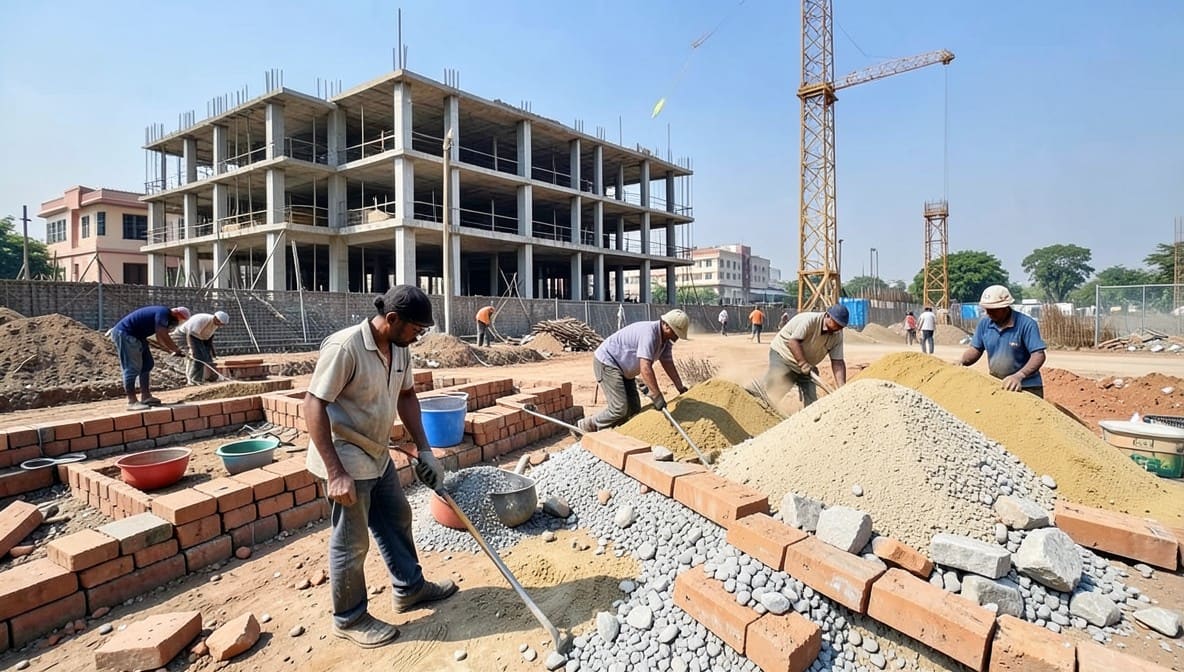
- The appellant rendered construction and works contract services during 2009-10 to 2012-13, utilizing materials like stone chips, sand, bricks, and MS pipes.
- The SCN proposed:
- Rejection of the VCES application for substantial falsity.
- Demand of Rs. 3,44,25,123 (including cess) for 2009-10 to 2012-13.
- Appropriation of Rs. 59,03,166 (VCES deposit) and Rs. 7,03,070 (interest).
- Penalties under Section 78(1) and Section 77(2) of the Finance Act, 1994.
- The appellant contended that 67% abatement under Notification No. 1/2006-ST applied to their services, as they supplied materials, but failed to claim it in ST-3 returns.
Procedural History
- 31.12.2013: Appellant filed VCES declaration and paid Rs. 59,03,166.
- 18.12.2014: SCN issued proposing demand of Rs. 3,44,25,123.
- 31.03.2016: Order-in-Original No. 147/COMMR/DGP/15-16 passed by the Commissioner:
- Rejected VCES declaration.
- Restricted demand to Rs. 1,88,33,055 with interest.
- Imposed penalty of Rs. 1,88,33,055 under Section 78.
- Appropriated Rs. 59,03,166 (VCES deposit) and Rs. 7,03,070 (interest).
- Imposed Rs. 20,000 penalty under Section 77(2) for non-filing of ST-3 returns.
- 20.05.2026: Hearing before CESTAT Kolkata.
- 22.05.2026: Final Order No. 75634/2026 passed.
Relief Sought
The appellant sought:
- Setting aside the demand of Rs. 1,88,33,055, interest, and penalties.
- Restoration of Rs. 59,03,166 (VCES deposit) and Rs. 7,03,070 (interest).
- Extension of 67% abatement under Notification No. 1/2006-ST.
The Legal Issue
The central question was whether abatement under Notification No. 1/2006-ST could be denied solely because the appellant failed to claim it in ST-3 returns, despite material usage being admitted in the services rendered.
Arguments Presented
For the Appellant
- Eligibility for abatement: The appellant supplied materials (stone chips, sand, bricks, etc.) in construction services, making them eligible for 67% abatement under Notification No. 1/2006-ST.
- Procedural lapse vs substantive benefit: The appellant relied on Jay Iron & Steel Industries Ltd. v. Commissioner of C.Ex, Raigad and Munna Construction v. Commissioner of C.Ex. & S.T., Jamshedpur to argue that substantive benefits cannot be denied due to minor procedural lapses.
- Excess tax payment: The appellant demonstrated that after applying 67% abatement, their actual tax liability was lower than the tax already paid (Rs. 1,01,90,797 vs Rs. 1,22,54,151).
For the Respondent
- Non-disclosure under VCES: The appellant’s VCES declaration was substantially false, justifying rejection.
- No evidence of material usage: The appellant failed to submit documents evidencing material usage, warranting denial of abatement.
- Procedural compliance: The appellant’s failure to claim abatement in ST-3 returns justified the denial of the benefit.
The Court's Analysis
The Tribunal examined the eligibility for abatement under Notification No. 1/2006-ST, which provides 67% abatement for construction services involving material supply. Key observations:
-
Admission of Material Usage: The adjudicating authority recorded in paragraph 5.4(a) of the impugned order that the appellant used materials like stone chips, sand, and bricks in their services. Despite this, the authority denied abatement solely because the appellant did not claim it in ST-3 returns.
-
Substantive Benefit vs Procedural Lapse: The Tribunal relied on Jay Iron & Steel Industries Ltd. v. Commissioner of C.Ex, Raigad, which held that abatement cannot be denied for minor procedural lapses. The Tribunal observed:
"The substantive benefit of abatement cannot be denied on account of minor procedural lapses... Though the appellant did not declare the closing stock specifically, the same stands complied with as the same was declared in the RG-1 and monthly returns."
-
Precedents Supporting Abatement: The Tribunal cited Makkar Construction Co. v. Commissioner of C.Ex., Ludhiana, where abatement was allowed despite non-claim in returns, as the contract involved material usage. Similarly, in Munna Construction v. Commissioner of C.Ex. & S.T., Jamshedpur, the Tribunal held that abatement cannot be denied even if not claimed in ST-3 returns.
-
Re-quantification of Tax Liability: The appellant submitted a work sheet showing that after applying 67% abatement, their actual tax liability was Rs. 1,01,90,797, whereas they had already paid Rs. 1,22,54,151. The Tribunal agreed that the appellant paid excess tax and thus no further liability arose.
The Verdict
The Tribunal allowed the appeal in part:
- Set aside the demand of Rs. 1,88,33,055 along with interest.
- Set aside the penalty of Rs. 1,88,33,055 under Section 78.
- Upheld the penalty of Rs. 20,000 under Section 77(2) for non-filing of ST-3 returns for 2011-12 and 2012-13.
- No consequential benefits were granted beyond the above directions.
What This Means For Similar Cases
Abatement Cannot Be Denied for Procedural Lapses
- Substantive eligibility prevails: Taxpayers can now argue that abatement benefits under Notification No. 1/2006-ST cannot be denied merely because they failed to claim it in ST-3 returns, provided material usage is admitted or proven.
- Burden of proof: While the onus is on the taxpayer to establish material usage, the Tribunal’s ruling suggests that admission by the adjudicating authority (as in this case) suffices to extend the benefit.
Excess Tax Payment Can Offset Liability
- Re-quantification is key: Taxpayers should recalculate their tax liability after applying abatement and compare it with taxes already paid. If the paid amount exceeds the liability, they can seek refund or adjustment.
- Documentary evidence: Maintaining invoices, VAT returns, and contracts evidencing material usage is critical to substantiate abatement claims.
Penalties for Non-Compliance Remain Strict
- Procedural penalties upheld: While substantive benefits may not be denied for procedural lapses, penalties for non-compliance (e.g., non-filing of ST-3 returns) remain enforceable. Taxpayers must ensure timely filing of returns to avoid penalties under Section 77(2).
VCES Rejection Does Not Preclude Abatement Claims
- Independent claims: Even if a VCES declaration is rejected, taxpayers can still claim abatement benefits in subsequent proceedings, provided they establish eligibility.
- No double jeopardy: The Tribunal did not revisit the VCES rejection but focused on the abatement issue, indicating that VCES and abatement claims are distinct.