
Income Tax Appellate Tribunal judgments

893 Income Tax Appellate Tribunal judgments explained in plain English: what was decided, the law applied and why it matters. Page 25 of 38.

Section 270AA Income Tax Act | Penalty Proceedings Must Be Suspended Until Form 68 Immunity Application Is Decided : ITAT Delhi
Case Law Analysis
|Income Tax Appellate Tribunal

Section 270AA Income Tax Act | Penalty Proceedings Must Be Suspended Until Form 68 Immunity Application Is Decided : ITAT Delhi

The ITAT Delhi has ruled that once a taxpayer files Form 68 seeking penalty immunity under Section 270AA, the tax officer cannot proceed with or finalize a penalty order until the immunity application is adjudicated. This establishes a mandatory procedural pause, protecting taxpayers from premature penal action and reinforcing statutory due process in income tax assessments.
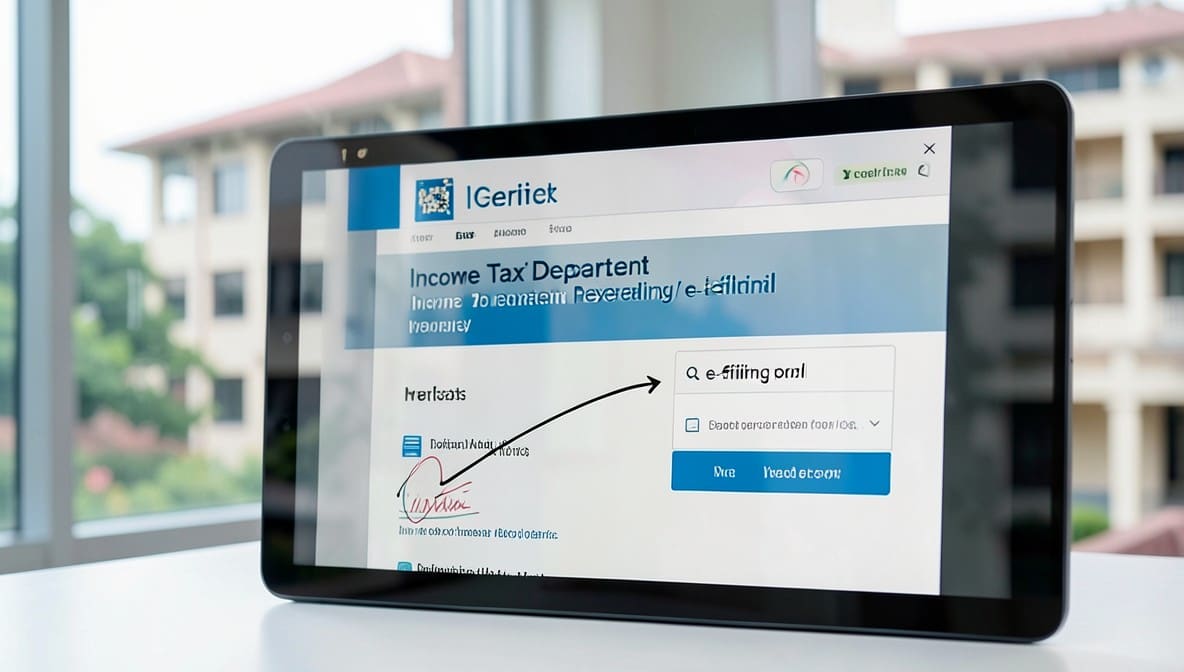

CBDT Instruction 1/2018 | Manual Signing of E-Proceedings Assessment Order Invalid : ITAT Delhi
Case Law Analysis
|Income Tax Appellate Tribunal

CBDT Instruction 1/2018 | Manual Signing of E-Proceedings Assessment Order Invalid : ITAT Delhi

The ITAT Delhi has ruled that any assessment order issued under e-proceedings must be digitally signed as mandated by CBDT Instruction 1/2018; manual signatures render the order legally void. This sets a binding precedent for all tax officers conducting online assessments, reinforcing procedural integrity in digital tax administration and protecting assessees from invalid orders.

Section 127 Income-tax Act | Assessment Void Ab Initio Without Valid Transfer Order : ITAT Delhi
Case Law Analysis
|Income Tax Appellate Tribunal

Section 127 Income-tax Act | Assessment Void Ab Initio Without Valid Transfer Order : ITAT Delhi

The ITAT Delhi has ruled that any income tax assessment conducted by an officer lacking a valid Section 127 transfer order is void from the outset, regardless of the assessee’s delay in challenging it or the merits of the case. This reinforces that jurisdictional compliance is non-negotiable in tax proceedings, affecting all assesses subject to inter-office transfers.

Section 271(1)(c) Income Tax Act | Penalty Invalid Where Disputed Issue Is Admitted as Substantial Question of Law by High Court : ITAT Mumbai
Case Law Analysis
|Income Tax Appellate Tribunal

Section 271(1)(c) Income Tax Act | Penalty Invalid Where Disputed Issue Is Admitted as Substantial Question of Law by High Court : ITAT Mumbai

ITAT Mumbai holds that penalty under Section 271(1)(c) cannot be imposed when the tax dispute involves a substantial question of law already admitted by the High Court, recognizing such claims as bona fide and not constituting concealment. This shields taxpayers from punitive action when legal uncertainty exists at the appellate level, reinforcing the principle that penalty requires deliberate intent, not mere disagreement with tax authorities.

Books of Accounts Cannot Be Rejected for Non-Response to Section 133(6) Notices Without Specific Defects : ITAT Kolkata
Case Law Analysis
|Income Tax Appellate Tribunal

Books of Accounts Cannot Be Rejected for Non-Response to Section 133(6) Notices Without Specific Defects : ITAT Kolkata

The ITAT Kolkata ruled that the Assessing Officer cannot disallow purchases and make a blanket addition merely because the assessee failed to respond to Section 133(6) notices. The burden lies on the department to identify concrete discrepancies in the books, not to penalize silence. This protects taxpayers from arbitrary assessments and reinforces procedural fairness in income tax scrutiny.

Section 68 IT Act | Documentary Proof of Share Capital Genuineness Overrides Non-Appearance to Section 131 Summons : ITAT Kolkata
Case Law Analysis
|Income Tax Appellate Tribunal

Section 68 IT Act | Documentary Proof of Share Capital Genuineness Overrides Non-Appearance to Section 131 Summons : ITAT Kolkata

The ITAT Kolkata has ruled that when taxpayers submit credible documentary evidence establishing the identity, creditworthiness, and genuineness of share subscribers, non-compliance with summonses under Section 131 cannot justify treating share capital as unexplained cash credit. This clarifies that procedural lapses cannot override substantive proof, offering critical relief to companies relying on legitimate equity infusions.

Section 12A Income Tax Act | Failure to Hear Assessee Before Rejecting Exemption Application Vitiates Order: ITAT Delhi
Case Law Analysis
|Income Tax Appellate Tribunal

Section 12A Income Tax Act | Failure to Hear Assessee Before Rejecting Exemption Application Vitiates Order: ITAT Delhi

The ITAT Delhi has ruled that denying an applicant an opportunity to be heard before rejecting their Section 12A registration application violates natural justice, regardless of the adequacy of submitted documents. This sets a critical precedent for all charitable entities seeking tax exemption, mandating procedural fairness even when substantive claims appear weak.

India-USA DTAA | Offshore Engine Repair Does Not Constitute 'Fees for Technical Services' Without 'Make Available' Element : ITAT Delhi
Case Law Analysis
|Income Tax Appellate Tribunal

India-USA DTAA | Offshore Engine Repair Does Not Constitute 'Fees for Technical Services' Without 'Make Available' Element : ITAT Delhi

The ITAT Delhi has ruled that offshore repair services for aircraft engines, performed outside India, do not trigger taxation as Fees for Technical Services under the India-USA tax treaty because the essential 'make available' requirement - transfer of technical knowledge or expertise to the recipient - remains unfulfilled. This clarifies the boundary between mere physical repair work and taxable technical service, impacting multinational aerospace and aviation service providers operating from offshore locations.

WhatsApp Chats Without Corroboration Cannot Justify Bogus Purchase Additions | ITAT Kolkata Upholds Sales-Accepted Purchases
Case Law Analysis
|Income Tax Appellate Tribunal

WhatsApp Chats Without Corroboration Cannot Justify Bogus Purchase Additions | ITAT Kolkata Upholds Sales-Accepted Purchases

The ITAT Kolkata ruled that when sales are accepted, corresponding purchases cannot be disallowed based solely on uncorroborated WhatsApp chats or suspicions of shell company links. This sets a critical precedent for taxpayers facing revenue scrutiny, reinforcing that mere association with flagged entities is insufficient without concrete, corroborated evidence of fabrication.

Section 153C Income Tax Act | Six-Year Reopening Window Tied to Satisfaction Note Date, Not Search Date : ITAT Delhi
Case Law Analysis
|Income Tax Appellate Tribunal

Section 153C Income Tax Act | Six-Year Reopening Window Tied to Satisfaction Note Date, Not Search Date : ITAT Delhi

The ITAT Delhi has ruled that assessments under Section 153C can only reopen income for six years preceding the date of the satisfaction note, not the search operation. This clarifies jurisdictional limits for non-searched persons and prevents retrospective expansion of assessments beyond the statutory window, offering critical relief to taxpayers caught in delayed post-search proceedings.

Section 271(1)(c) IT Act | Mere Disagreement on Income Classification Does Not Constitute Concealment or Inaccurate Particulars : ITAT Bangalore
Case Law Analysis
|Income Tax Appellate Tribunal

Section 271(1)(c) IT Act | Mere Disagreement on Income Classification Does Not Constitute Concealment or Inaccurate Particulars : ITAT Bangalore

The ITAT Bangalore has ruled that an assessee who fully discloses income but disputes its head of assessment cannot be penalized under Section 271(1)(c) for concealment or inaccurate particulars. This clarifies that legal interpretation differences, absent intent to evade, are not tax misconduct - protecting taxpayers from punitive action over bona fide accounting disagreements.

OECD Guidelines & Rule 10B Mandate Transaction Delineation Over Label for CCD Transfer Pricing : ITAT Bangalore
Case Law Analysis
|Income Tax Appellate Tribunal

OECD Guidelines & Rule 10B Mandate Transaction Delineation Over Label for CCD Transfer Pricing : ITAT Bangalore

ITAT Bangalore rules that the arm's-length price of interest on compulsorily convertible debentures (CCDs) must be determined by analyzing the transaction's economic substance under OECD Guidelines and Rule 10B, not merely by classifying the instrument as debt or equity. The decision impacts multinational enterprises and tax authorities by reinforcing the need for functional analysis in transfer pricing disputes involving hybrid instruments.

Section 90/90A IT Act | Foreign Tax Credit Cannot Be Denied If Full Evidence of Foreign Tax Paid Is Later Submitted : ITAT Mumbai
Case Law Analysis
|Income Tax Appellate Tribunal

Section 90/90A IT Act | Foreign Tax Credit Cannot Be Denied If Full Evidence of Foreign Tax Paid Is Later Submitted : ITAT Mumbai

The ITAT Mumbai ruled that denying foreign tax credit under Section 90/90A solely for delayed submission of US tax documents violates treaty relief principles, provided the taxpayer furnishes complete, verifiable evidence of foreign tax paid before final assessment. This sets a vital precedent for NRIs and cross-border earners facing procedural delays in foreign tax documentation.

Section 2(15) Income Tax Act | Vocational & Skill Development Training Qualifies as 'Education' for Charitable Exemption: ITAT Bangalore
Case Law Analysis
|Income Tax Appellate Tribunal

Section 2(15) Income Tax Act | Vocational & Skill Development Training Qualifies as 'Education' for Charitable Exemption: ITAT Bangalore

The ITAT Bangalore has ruled that charitable trusts offering vocational and skill-based training meet the legal definition of 'education' under Section 2(15), making them eligible for income tax exemption under Section 11. This landmark decision expands the scope of charitable activities eligible for tax relief, directly benefiting NGOs and trusts running skill development programs across India.

Section 272A(1)(d) IT Act | Penalty Automatically Nullified Upon Quantum Assessment Remand : ITAT Delhi
Case Law Analysis
|Income Tax Appellate Tribunal

Section 272A(1)(d) IT Act | Penalty Automatically Nullified Upon Quantum Assessment Remand : ITAT Delhi

ITAT Delhi rules that penalties under Section 272A(1)(d) of the Income Tax Act are automatically deleted when the quantum assessment is remanded for fresh adjudication, as the original proceedings are rendered void. This precedent shields taxpayers from penalties where the underlying assessment is reopened, ensuring procedural fairness in tax disputes.

Section 275(1)(c) IT Act | Penalty Invalid if Passed After 31/03/2016 for FY 2012-13: ITAT Delhi Relies on PCIT v. Turner General
Case Law Analysis
|Income Tax Appellate Tribunal

Section 275(1)(c) IT Act | Penalty Invalid if Passed After 31/03/2016 for FY 2012-13: ITAT Delhi Relies on PCIT v. Turner General

ITAT Delhi quashed a penalty under Section 271C for AY 2013-14 because the order was passed after the statutory deadline of 31/03/2016 under Section 275(1)(c), affirming that limitation is mandatory and not curable. The ruling reinforces that tax authorities cannot extend penalty timelines, affecting all assessees facing delayed proceedings under Chapter XXI of the Income Tax Act.

Section 270A IT Act | Probate Delay Constitutes 'Reasonable Cause' for Delayed Return Filing : ITAT Kolkata
Case Law Analysis
|Income Tax Appellate Tribunal

Section 270A IT Act | Probate Delay Constitutes 'Reasonable Cause' for Delayed Return Filing : ITAT Kolkata

ITAT Kolkata rules that executors of an estate cannot be penalized under Section 270A for delayed income tax return filing if the delay stems from probate proceedings. The tribunal affirms that probate delays qualify as a 'bona fide explanation' under Section 270A(6), protecting representative assessees from punitive penalties during estate administration.

Section 40A(2)(b) IT Act | Disallowance of Payments to Sister Concern Requires Proof of Excessiveness : ITAT Delhi
Case Law Analysis
|Income Tax Appellate Tribunal

Section 40A(2)(b) IT Act | Disallowance of Payments to Sister Concern Requires Proof of Excessiveness : ITAT Delhi

ITAT Delhi rules that disallowance under Section 40A(2)(b) cannot be sustained without concrete evidence of excess payment, even if detailed bills are absent. The ruling underscores that genuineness of business expenditure must be established before invoking tax disallowance, impacting corporate tax assessments involving related-party transactions.

Covid-19 Limitation Extension Applies to Income Tax Appeals | ITAT Delhi Excludes Pandemic Period and Reassesses Salary Based on Form 16A : ITAT Delhi
Case Law Analysis
|Income Tax Appellate Tribunal

Covid-19 Limitation Extension Applies to Income Tax Appeals | ITAT Delhi Excludes Pandemic Period and Reassesses Salary Based on Form 16A : ITAT Delhi

The ITAT Delhi has ruled that the Supreme Court's Covid-19 limitation extension applies to income tax appeals, condoning a 1523-day delay and directing reassessment based on Form 16A salary figures disclosed by the employer. This sets a precedent for taxpayers relying on official TDS certificates to challenge disputed income assessments, reinforcing procedural fairness during pandemic disruptions.

Section 10(37) IT Act | Interest on Enhanced Land Acquisition Compensation Exempt as Capital Receipt : ITAT Delhi
Case Law Analysis
|Income Tax Appellate Tribunal

Section 10(37) IT Act | Interest on Enhanced Land Acquisition Compensation Exempt as Capital Receipt : ITAT Delhi

ITAT Delhi rules that interest paid under Section 28 of the Land Acquisition Act, 1894, forms part of enhanced compensation and is exempt under Section 10(37) of the Income Tax Act. The decision overturns the CIT(A)'s order, clarifying that such interest cannot be taxed as income from other sources, impacting landowners receiving enhanced compensation.

Section 148 Income Tax Act | Reassessment Notice Invalid If Section 151(2)(b) Approval Not Obtained Within 3 Years : ITAT Delhi
Case Law Analysis
|Income Tax Appellate Tribunal

Section 148 Income Tax Act | Reassessment Notice Invalid If Section 151(2)(b) Approval Not Obtained Within 3 Years : ITAT Delhi

The ITAT Delhi has ruled that a reassessment notice under Section 148 is void if the mandatory prior approval from the Principal Chief Commissioner or Principal Director General of Income Tax under Section 151(2)(b) is obtained more than three years after the end of the relevant assessment year. This sets a strict temporal limit on procedural compliance, impacting all tax authorities issuing reopening notices and reinforcing the need for timely administrative due process in income tax reassessments.

Section 80P Deduction | Non-Filing of Return No Bar to Co-operative Society Tax Exemption : ITAT Ahmedabad
Case Law Analysis
|Income Tax Appellate Tribunal

Section 80P Deduction | Non-Filing of Return No Bar to Co-operative Society Tax Exemption : ITAT Ahmedabad

ITAT Ahmedabad holds that co-operative societies remain eligible for Section 80P deduction even if they fail to file income tax returns, remanding the case for fresh assessment. The ruling underscores that procedural non-compliance cannot override substantive tax exemption entitlements for co-operative societies under the Income Tax Act.